

Saint-Cyprien (Toulouse) Travel Guide - Free
Explore Saint-Cyprien in Toulouse with Evendo's free guide. Find the best shops, historic streets, restaurants, and gems on web or mobile.


Saint-Cyprien in Toulouse blends Garonne river views, the Saint-Cyprien market, Les Abattoirs, brick streets, cafés and contemporary culture.
A Neighbourhood Shaped by the Garonne
Saint-Cyprien occupies Toulouse’s left bank, immediately across the Garonne from the historic centre. Its position has always influenced its identity: close enough to the Capitole and Pont Neuf for easy access, yet distinct in its street plan, local institutions and everyday rhythms. The quarter grew around the former suburb of Saint-Cyprien, historically exposed to flooding and long associated with hospitals, charitable institutions, modest housing and working life along the river. Today, older brick buildings, market streets and broad waterside spaces sit alongside cultural venues and contemporary cafés.Read more about Saint-Cyprien
Markets, Museums and Public Spaces
Brick, Water and Contemporary Culture
Best attractions in Saint-Cyprien
Saint-Cyprien’s attractions are concentrated within a compact area shaped by the market, the river and contemporary culture. Les Abattoirs, established in a former municipal slaughterhouse, presents modern and contemporary art in an industrial setting and is the neighbourhood’s principal cultural institution. The Marché de Saint-Cyprien offers a more everyday form of sightseeing, with food stalls and local commerce beneath its historic covered structure. From there, visitors can walk towards Place Olivier, browse the surrounding streets and continue to the Garonne for views across Toulouse. The riverside spaces connect with Prairie des Filtres, a large green area on the left bank that is especially popular for walks and open-air leisure, although the precise boundary between the neighbourhood and adjacent riverfront areas is informal. Pont Neuf is nearby across the river and can be reached directly on foot, but belongs to the wider historic-centre experience rather than Saint-Cyprien itself.
-
Garden
Jardin des Plantes
Escape to Toulouse's historic Jardin des Plantes: a 7-hectare green space with gardens, playgrounds, and tranquil scenery for all ages.
18 min walk · 1.4 km from neighbourhood centre
-
City park
Prairie des Filtres
Escape to Toulouse's favorite green space: Prairie des Filtres, offering river views, cultural events, and a relaxing atmosphere.
14 min walk · 1.1 km from neighbourhood centre
-
Plaza
Place Saint-Pierre
Experience the vibrant heart of Toulouse at Place Saint-Pierre: history, culture, cuisine, and stunning Garonne River views await!
9 min walk · 0.7 km from neighbourhood centre
-
Cathedral
Saint Stephen's Cathedral
Explore Toulouse's Cathédrale Saint-Étienne: a captivating blend of Romanesque & Gothic architecture, centuries of history, and artistic treasures.
9 min walk · 0.7 km from neighbourhood centre


Best landmarks in Saint-Cyprien
Saint-Cyprien’s landmarks express its relationship with institutions, trade and the Garonne. The Marché de Saint-Cyprien is both a functioning market and a recognisable piece of the neighbourhood’s built identity, anchoring the streets around it with its covered structure and long commercial role. Les Abattoirs is significant for a different reason: its reused industrial architecture preserves the memory of the site’s former municipal purpose while housing a major art institution. Near the river, Hôtel-Dieu Saint-Jacques recalls Toulouse’s history of hospital and charitable foundations and the movement of pilgrims along the route to Santiago de Compostela, although its complex extends beyond the neighbourhood’s informal core. Pont Neuf, visible across the water and connected by direct pedestrian routes, is an essential landmark of the wider river landscape rather than a structure located wholly within Saint-Cyprien.
-
Church
Couvent des Jacobins
Explore the breathtaking Couvent des Jacobins, a stunning Gothic church and cultural landmark in Toulouse, showcasing rich history and architectural beauty.
4 min walk · 0.3 km from neighbourhood centre
-
City park
Prairie des Filtres
Explore the serene beauty of Prairie des Filtres, Toulouse's green gem along the Garonne River, perfect for relaxation and cultural events.
14 min walk · 1.1 km from neighbourhood centre
-
Plaza
Place Saint-Pierre
Explore the vibrant charm of Place Saint-Pierre in Toulouse, where history meets modern culture by the beautiful Garonne River.
9 min walk · 0.7 km from neighbourhood centre
-
Garden
Raymond VI Garden
Explore the tranquil beauty of Raymond VI Garden in Toulouse, a perfect blend of nature, art, and relaxation amid vibrant city life.
16 min walk · 1.3 km from neighbourhood centre


Explore Saint-Cyprien on the map
A handpicked selection of must-see spots in Saint-Cyprien, mapped for you.
Best hotels in Saint-Cyprien
Best restaurants in Saint-Cyprien
Saint-Cyprien’s dining scene combines the practical food culture of its market district with cafés, bakeries, casual restaurants and newer establishments around the streets leading towards Place Olivier and the Garonne. The Marché de Saint-Cyprien is useful for understanding the ingredients and shopping habits that underpin local cooking, while the surrounding quarter provides opportunities for coffee, a simple lunch or an evening meal without the formal atmosphere found in some of Toulouse’s historic-centre dining rooms. Menus across Toulouse commonly draw on south-west French traditions, including seasonal produce and regional specialities, but Saint-Cyprien’s offer is not limited to one cuisine. Its position close to the river and Pont Neuf also makes it convenient for combining food with a walk, though visitors should distinguish established local businesses from temporary or changing commercial listings and check current opening arrangements independently.
-
Hamburger
Burger'n'Co St Cyprien
Experience gourmet burgers at Burger'n'Co St Cyprien in Toulouse - where quality meets flavor in every bite.
12 min walk · 1.0 km from neighbourhood centre
-
Restaurant
Les Chimères
Discover Les Chimères in Toulouse: where traditional French cuisine meets modern flair in a cozy setting.
16 min walk · 1.3 km from neighbourhood centre
-
Restaurant
Bistrot 12
Discover authentic French flavors at Bistrot 12 in Toulouse, where every dish tells a story of culinary tradition and local charm.
15 min walk · 1.2 km from neighbourhood centre
-
Tapas
L'Extrapade
Discover the vibrant flavors at L'Extrapade in Toulouse - where tapas meets French cuisine in an unforgettable dining experience.
14 min walk · 1.1 km from neighbourhood centre


Best bars in Saint-Cyprien
Saint-Cyprien is livelier in the early evening than as a dedicated clubbing district. Bars and cafés around Place Olivier, the market quarter and the streets towards the river provide settings for an apéritif, conversation and an unhurried start to the night, while restaurants extend the area’s activity after dark. The neighbourhood’s cultural identity is reinforced by Les Abattoirs and occasional arts programming, although events and venues change and should be checked before making detailed plans. Visitors seeking large clubs or a concentrated late-night scene generally find a broader choice elsewhere in central Toulouse, across the Garonne. Around Saint-Cyprien, the atmosphere is more local and mixed-use, so respect for residents matters on residential streets and outside venues, particularly later in the evening.
-
Tapas Bar
Le Vasco
Dive into a world of Spanish flavors at Le Vasco, a lively tapas bar in Toulouse offering an unforgettable culinary experience.
14 min walk · 1.1 km from neighbourhood centre
-
Bar
Ô Boudu Pont
Discover the vibrant nightlife of Toulouse at Ô Boudu Pont, where exquisite drinks and a lively atmosphere await.
11 min walk · 0.9 km from neighbourhood centre
-
Bar
Dalidaark
Discover the lively atmosphere and unique drinks of Dalidaark, a must-visit bar in Toulouse for an unforgettable nightlife experience.
15 min walk · 1.2 km from neighbourhood centre
-
Beer hall
La Houblonnière
Discover La Houblonnière in Toulouse: A premier beer hall and wine store offering an extensive selection of craft beers and fine wines in a cozy, vibrant atmosphere.
14 min walk · 1.1 km from neighbourhood centre


Best nightclubs in Saint-Cyprien
Saint-Cyprien is livelier in the early evening than as a dedicated clubbing district. Bars and cafés around Place Olivier, the market quarter and the streets towards the river provide settings for an apéritif, conversation and an unhurried start to the night, while restaurants extend the area’s activity after dark. The neighbourhood’s cultural identity is reinforced by Les Abattoirs and occasional arts programming, although events and venues change and should be checked before making detailed plans. Visitors seeking large clubs or a concentrated late-night scene generally find a broader choice elsewhere in central Toulouse, across the Garonne. Around Saint-Cyprien, the atmosphere is more local and mixed-use, so respect for residents matters on residential streets and outside venues, particularly later in the evening.
-
Cabaret club
Cabaret Le Kalinka
Discover the magic of Cabaret Le Kalinka in Toulouse – a dazzling blend of captivating performances, exquisite French cuisine, and unforgettable entertainment.
15 min walk · 1.2 km from neighbourhood centre
-
Disco club
Péniche le Cri de la mouette
Discover the dynamic nightlife of Toulouse at Péniche le Cri de la mouette, a floating disco club offering an unforgettable party experience by the river.
17 min walk · 1.4 km from neighbourhood centre
-
Disco club
Le Bazar
Discover the vibrant nightlife of Toulouse at Le Bazar, a disco club offering an electric atmosphere and unforgettable dance experiences.
4 min walk · 0.3 km from neighbourhood centre
-
Disco club
ICE CLUB
Dive into the heart of Toulouse's nightlife at ICE CLUB, a vibrant disco club with electrifying music and an unforgettable atmosphere.
2 min walk · 0.2 km from neighbourhood centre


Best shops in Saint-Cyprien
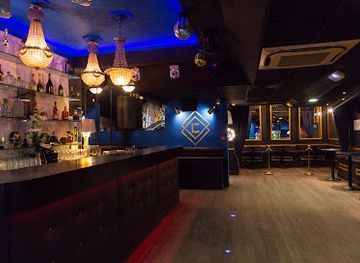
Shopping in Saint-Cyprien centres on food, everyday local services and independent businesses rather than a large-scale retail strip. The Marché de Saint-Cyprien is the principal destination, with stalls devoted to fresh produce and other foods that give the neighbourhood a tangible connection to Toulouse’s market culture. Around the market and Place Olivier, smaller shops, bakeries, cafés and specialist businesses create a mixed local high street, while the streets towards Les Abattoirs and the river offer a more dispersed selection. Visitors should expect browsing and eating to be stronger attractions than souvenir shopping or department-store retail. For a wider choice of major brands, Toulouse’s central commercial streets are across the Garonne; Saint-Cyprien’s appeal lies in observing ordinary neighbourhood commerce and selecting regional ingredients rather than following a formal shopping route.
-
Department store
Galeries Lafayette Toulouse
Explore the luxurious shopping experience at Galeries Lafayette Toulouse, where fashion, beauty, and lifestyle unite in a stunning department store.
2 min walk · 0.2 km from neighbourhood centre
-
Shopping mall
Centre Commercial Espace Saint Georges
Explore the vibrant Centre Commercial Espace Saint Georges, a premier shopping and entertainment destination in Toulouse, featuring diverse shops and a lively casino.
7 min walk · 0.5 km from neighbourhood centre
-
Gift shop
L'idée Cadeaux ️
Explore L'idée Cadeaux: Toulouse's premier gift shop offering unique collectibles, home goods, and heartfelt gifts for every occasion.
3 min walk · 0.2 km from neighbourhood centre
-
Gift basket store
Violet's Treasures
Explore Violet's Treasures in Toulouse for an enchanting selection of local gift baskets, handcrafted products, and gourmet delicacies, perfect for souvenirs.
1 min walk · 0.1 km from neighbourhood centre


Saint-Cyprien essentials
Getting There
Getting Around
Safety
Emergency Situations
Do's and Don'ts
Local Tips

From Eve
Local phrases worth knowing
You don't need to get them perfect. A few words go a long way, and locals appreciate the effort.
Basics
| English | Local | Say it |
|---|---|---|
| Hello | Bonjour | [bon-zhoor] |
| Goodbye | Au revoir | [oh ruh-vwahr] |
| Yes | Oui | [wee] |
| No | Non | [nohn] |
| Please/You're welcome | S'il vous plaît | [seel voo pley] |
| Thank you | Merci | [mehr-see] |
| Excuse me/Sorry | Excusez-moi | [ehk-skew-zay mwa] |
| How are you? | Comment ça va ? | [koh-mohn sa vah] |
| Fine. And you? | Bien. Et vous ? | [byen. eh voo] |
| Do you speak English? | Parlez-vous anglais ? | [par-lay voo ahn-glay] |
| I don't understand | Je ne comprends pas | [zhuh nuh kohm-prahn pah] |
Eating & Drinking
| English | Local | Say it |
|---|---|---|
| I'd like to see the menu, please | Je voudrais voir le menu, s'il vous plaît | [zhuh voo-dray vwar luh muh-nyuh, seel voo pley] |
| I don't eat meat | Je ne mange pas de viande | [zhuh nuh mahnj pah duh vyand] |
| Cheers! | Santé ! | [sahn-tay] |
| I would like to pay, please | Je voudrais payer, s'il vous plaît | [zhuh voo-dray pay-yay, seel voo pley] |
Emergencies
| English | Local | Say it |
|---|---|---|
| Help! | À l'aide ! | [ah layd] |
| Go away! | Allez-vous en! | [ah-lay voo zahn] |
| Call the Police! | Appelez la police ! | [ahp-lay lah poh-lees] |
| Call a doctor! | Appelez un docteur ! | [ahp-lay uh dohk-tuhr] |
| I'm lost | Je suis perdu | [zhuh swee pair-doo] |
| I'm ill | Je suis malade | [zhuh swee mah-lahd] |
Shopping
| English | Local | Say it |
|---|---|---|
| I'd like to buy... | Je voudrais acheter... | [zhuh voo-dray ash-tay] |
| I'm just looking | Je regarde juste | [zhuh ruh-gahrd zhewst] |
| How much is it? | Combien ça coûte ? | [kohm-byen sah koot] |
| That's too expensive | C'est trop cher | [say troh shair] |
| Can you lower the price? | Pouvez-vous baisser le prix ? | [poo-vay voo bay-say luh pree] |
Time & Numbers
| English | Local | Say it |
|---|---|---|
| What time is it? | Quelle heure est-il ? | [kell ur ay-teel] |
| It's one o'clock | Il est une heure | [eel ay tun ur] |
| Half past (10) | Dix heures et demie | [dees ur ay duh-mee] |
| Morning | Matin | [mah-tan] |
| Afternoon | Après-midi | [ah-pray-mee-dee] |
| Evening | Soir | [swahr] |
| Yesterday | Hier | [yehr] |
| Today | Aujourd'hui | [oh-zhoor-dwee] |
| Tomorrow | Demain | [duh-mahn] |
| 1 | Un | [uhn] |
| 2 | Deux | [duh] |
| 3 | Trois | [twa] |
| 4 | Quatre | [katr] |
| 5 | Cinq | [sank] |
| 6 | Six | [seece] |
| 7 | Sept | [set] |
| 8 | Huit | [wheat] |
| 9 | Neuf | [nuhf] |
| 10 | Dix | [dees] |
Transport & Directions
| English | Local | Say it |
|---|---|---|
| Where's a/the...? | Où est le/la...? | [oo ay luh/lah] |
| What's the address? | Quelle est l'adresse ? | [kell ay lah-dress] |
| Can you show me (on the map)? | Pouvez-vous me montrer (sur la carte) ? | [poo-vay voo muh mohn-tray (soor lah kart)] |
| When's the next (bus)? | Quand est le prochain (bus) ? | [kahn ay luh proh-shahn (bus)] |
| A ticket (to ....) | Un billet (pour ....) | [uhn bee-yay (poor)] |
History of Saint-Cyprien
A Riverside Suburb Beyond the Walls
Saint-Cyprien developed on the left bank of the Garonne outside Toulouse’s principal historic centre, taking its name from the parish and church dedicated to Saint Cyprian. Its position beyond the river crossings left it more exposed to seasonal flooding and less protected than the central districts on the opposite bank. The suburb nevertheless became an important place of passage and settlement, linked to the city by bridges and river traffic. Its distinct identity grew from this combination of proximity and separation: it was part of Toulouse’s urban life, but retained its own parish institutions, streets and local economy.
Hospitals, Charities and Local Institutions
From the early modern period onwards, the left bank contained institutions serving the wider city, including hospitals and charitable establishments. The former Hôtel-Dieu Saint-Jacques, associated with care for travellers and pilgrims on the route to Santiago de Compostela, stands near the river and remains an important reminder of this institutional history, although its complex extends beyond the everyday core of Saint-Cyprien. The neighbourhood’s social character was also shaped by modest housing and working communities. Flooding repeatedly affected the low-lying quarter, making the Garonne a practical force in local life rather than simply a scenic feature.
Urban Growth and the Market Quarter
Toulouse’s expansion in the nineteenth and early twentieth centuries strengthened Saint-Cyprien’s role as a substantial urban suburb. New roads, improved bridges and public transport connections made movement between the left bank and the city centre easier, while shops and services concentrated around the present market area. The covered Marché de Saint-Cyprien became a durable focal point for local commerce and social exchange. Public works also sought to manage the neighbourhood’s vulnerability to the river, while brick façades and institutional buildings gave parts of the quarter the architectural character visitors still encounter today.
From Industrial Site to Cultural Quarter
A significant later transformation came with the conversion of the former municipal slaughterhouse, Les Abattoirs, into a modern and contemporary art centre, which opened in 2000. The institution connected Saint-Cyprien’s industrial and working past with Toulouse’s present-day cultural life, attracting visitors without erasing the neighbourhood’s local core. The introduction of the Toulouse Metro further improved access, particularly through Saint-Cyprien–République station. Since then, cafés, restaurants, galleries and renovated housing have added new layers to the quarter, while the market, riverfront and older institutions continue to anchor its identity.
Saint-Cyprien in Photos
Browse through our photo collection highlighting the charm and character of the destination.
Neighbourhoods near Saint-Cyprien
The closest neighbourhoods to Saint-Cyprien, if you have time for more than one stop.
-
-

-

-


Swipe for more neighbourhoods
Explore more

Explore more of Toulouse
Toulouse, France’s Pink City, combines Roman and medieval heritage with aerospace museums, riverside walks, lively markets, southern cuisine and culture.
Explore Toulouse