

Free Society Islands Travel Guide & Mobile App
Explore Society Islands with free travel guides. Discover regional history, expert tips, proposed trips, and audio guides on web or mobile app.


Explore the Society Islands of French Polynesia for volcanic peaks, coral lagoons, Polynesian heritage, island cuisine and memorable water-based travel.
Read more about Society Islands
When is the best time to visit Society Islands?
Best: June–August · 28–29°C| Month | High (°C) | Rainfall (mm) |
|---|---|---|
| January | 30 | 260 |
| February | 30 | 270 |
| March | 30 | 230 |
| April | 30 | 190 |
| May | 29 | 120 |
| June (best) | 29 | 100 |
| July (best) | 28 | 80 |
| August (best) | 29 | 90 |
| September | 29 | 100 |
| October | 29 | 130 |
| November | 29 | 180 |
| December | 30 | 220 |
Getting to and around Society Islands
How to get there
Transportation
Best attractions in Society Islands
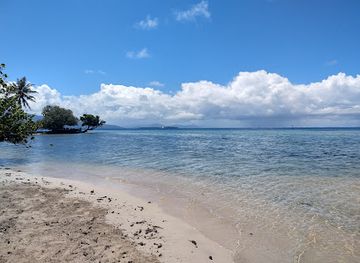
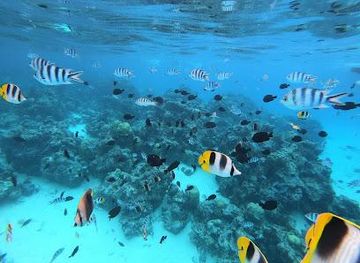
The Society Islands offer a varied combination of lagoon, mountain and cultural attractions. Tahiti has the greatest concentration of museums, markets, gardens, galleries and organised excursions, together with hiking routes into steep valleys and visits to waterfalls and archaeological sites. Moorea is well suited to lagoon cruises, snorkelling, hiking, scenic drives and encounters with the island's agricultural landscapes around Cook's Bay and Opunohu Bay. Raiatea and Taha'a appeal to visitors interested in sailing, marae, vanilla cultivation, pearl farms and quieter coastal exploration. Huahine combines beaches, plantations, lagoon trips and significant archaeological remains, while Bora Bora is known for resort-based water activities, diving and boat excursions across its sheltered lagoon. Maupiti provides a smaller-scale experience centred on cycling, walking, reef outings and community-run accommodation. Across the archipelago, activities are shaped by weather, tides and the health of the reef, so responsible operators and low-impact behaviour are important parts of exploring the islands.
-
Historical place
Marae Taputapuatea
Explore Polynesia's most sacred temple, Marae Taputapuatea, a UNESCO World Heritage site on Raiatea, rich in history and cultural significance.
-
Boat tour agency
Tohora Bora Bora Snorkeling Lagoon Tours & Whale Watching
Discover Bora Bora's underwater wonders with Tohora: Snorkeling, lagoon tours, and whale watching adventures in French Polynesia's paradise.
-
Boat tour agency
Bora Bora Moana Adventure Tours
Discover Bora Bora's breathtaking lagoons and marine life with Moana Adventure Tours. Snorkeling, whale watching, and private boat tours await!
-
Boat tour agency
H2O Bora Bora
Explore Bora Bora's breathtaking lagoon with H2O Bora Bora: Personalized snorkeling and diving tours for an unforgettable aquatic experience.


Best landmarks in Society Islands
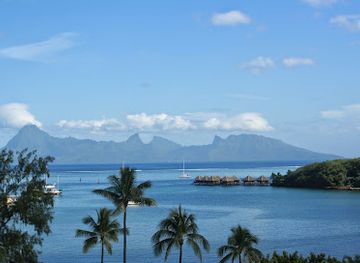
The Society Islands' most significant landmarks combine volcanic geography with Polynesian and colonial history. Mount Orohena, Tahiti's highest peak, dominates the central interior and represents the island's dramatic mountainous character, although climbing routes require preparation and local knowledge. Moorea's serrated ridges and the twin bays of Cook's Bay and Opunohu Bay form one of the archipelago's most recognisable landscapes. On Raiatea, the marae complex of Taputapuatea is a major cultural landmark and a UNESCO World Heritage site, recognised for its importance within eastern Polynesian religious and chiefly traditions. Tahiti's marae Arahurahu provides another important archaeological setting, while the island's churches, colonial-era public buildings and Papeete market reflect later layers of history. Bora Bora's Mount Otemanu rises above its lagoon as a distinctive natural symbol, and Huahine's preserved marae landscapes and stone fish traps reveal the depth of pre-European settlement. Coral motu, reef passes and lagoon horizons complete the region's physical identity.
-
Island
Bora Bora
Discover Bora Bora, the breathtaking island in French Polynesia, known for its stunning lagoons, luxurious resorts, and vibrant cultural experiences.
-
Market
Papeete Market
Explore the bustling Papeete Market in French Polynesia, where vibrant stalls, local delicacies, and handcrafted treasures await every traveler.
-
Scenic spot
Belvedere Lookout
Belvedere Lookout: A must-visit scenic spot in Moorea, offering stunning panoramic views of lush valleys and azure waters, perfect for nature lovers and photographers.
-
Island
Tahiti
Explore the stunning beauty and rich culture of Tahiti, a tropical paradise in French Polynesia known for its breathtaking landscapes and warm hospitality.


Explore Society Islands on the map
Plan your trip on one map. See where the top cities, national parks and sights are, and book hotels and experiences in a few clicks.
Best hotels in Society Islands
Best restaurants in Society Islands
Dining across the Society Islands reflects French Polynesia's relationship with the sea, tropical agriculture and French culinary influence. Raw fish marinated with lime and coconut milk is widely served, alongside grilled tuna and other fish, breadfruit, taro, sweet potato, plantain, rice and fresh fruit. Tahitian-style dishes vary between homes and islands, and visitors may encounter poisson cru in different preparations rather than one fixed recipe. Tahiti has the broadest selection, from market stalls and bakeries to French-influenced restaurants and casual roulottes, the local term for mobile food vendors. On smaller islands, meals are often centred on guesthouses, family-run restaurants, snack outlets and resort dining, with fish, coconut and locally grown produce prominent. Moorea is associated with fruit and agricultural products, while Taha'a is particularly known for vanilla cultivation. Markets are useful for sampling prepared food and seasonal produce, though opening patterns and choice are more limited outside the main population centres.
-
Restaurant
Fish & Blue
Discover exquisite seafood dining with breathtaking views at Fish & Blue in Raiatea - a must-visit culinary destination in French Polynesia.
-
Restaurant
Opoa Beach Hotel
Discover exquisite dining at Opoa Beach Hotel in French Polynesia, where local flavors meet stunning ocean views.
-
Restaurant
Restaurant Villa Ixora
Experience authentic Polynesian flavors at Restaurant Villa Ixora - a must-visit dining spot in French Polynesia.
-
Restaurant
Snack Tonoi
Experience authentic Polynesian flavors at Snack Tonoi in Uturoa - where every dish tells a story.


Best bars in Society Islands
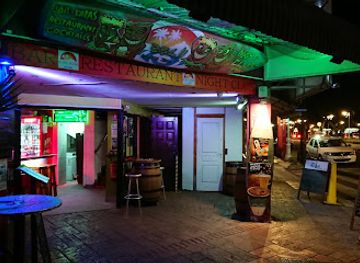
Evening life varies sharply between Tahiti's urban centre and the quieter outer islands. Papeete has the archipelago's widest choice of bars, restaurants, live music and late-opening venues, while coastal areas of Tahiti offer hotel bars, casual waterfront dining and occasional cultural performances. Moorea and Bora Bora concentrate nightlife around resorts, restaurants and lagoon-side hotels, with Polynesian dance and music often forming part of organised evening programmes. Raiatea, Huahine, Taha'a and Maupiti generally have a subdued evening scene based on local restaurants, guesthouses, hotel lounges and occasional live entertainment rather than a large nightclub culture. Opening arrangements can be seasonal, and some smaller-island venues close early or operate only on selected nights. Visitors should arrange transport back to their accommodation in advance, particularly where roads are dark and taxi availability is limited.
-
Sports bar
Les 3 Brasseurs
Experience the lively atmosphere of Les 3 Brasseurs in Papeete, where sports, great food, and local brews come together for an unforgettable night.
-
Restaurant
Restaurant Saint James
Experience the finest modern French cuisine and tapas in a stunning setting at Restaurant Saint James, Bora Bora's culinary masterpiece.
-
 Restaurant
Hôtel Raiatea Lodge
Experience the beauty of Raiatea at Hôtel Raiatea Lodge, blending comfort, adventure, and Polynesian culture in a breathtaking tropical paradise.
-
Lounge
Bora Bora lounge
Discover Bora Bora Lounge, a vibrant oasis in Papeete offering delicious drinks, local flavors, and stunning views of the tropical paradise.


Best nightclubs in Society Islands
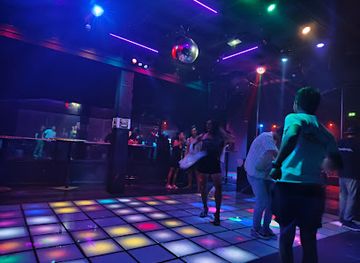
Evening life varies sharply between Tahiti's urban centre and the quieter outer islands. Papeete has the archipelago's widest choice of bars, restaurants, live music and late-opening venues, while coastal areas of Tahiti offer hotel bars, casual waterfront dining and occasional cultural performances. Moorea and Bora Bora concentrate nightlife around resorts, restaurants and lagoon-side hotels, with Polynesian dance and music often forming part of organised evening programmes. Raiatea, Huahine, Taha'a and Maupiti generally have a subdued evening scene based on local restaurants, guesthouses, hotel lounges and occasional live entertainment rather than a large nightclub culture. Opening arrangements can be seasonal, and some smaller-island venues close early or operate only on selected nights. Visitors should arrange transport back to their accommodation in advance, particularly where roads are dark and taxi availability is limited.
-
Restaurant
Bloody Mary's Bora Bora
Experience the taste of paradise at Bloody Mary's Bora Bora, where fresh seafood meets vibrant island culture in a stunning tropical setting.
-
Lounge
Bora Bora lounge
Experience the vibrant nightlife and tropical flavors at Bora Bora Lounge in Papeete, French Polynesia – a true island escape.
-
Disco club
Paradise Night Club Tahiti
Discover the pulse of Tahiti's nightlife at Paradise Night Club, where electrifying music and vibrant dancing come together under the stars.
-
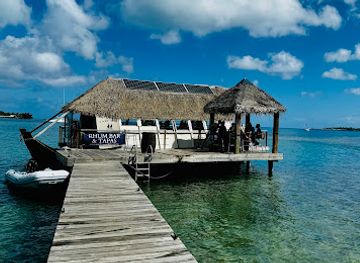
Bar
Fare Miti
Experience the vibrant flavors of Taha'a at Fare Miti, a charming bar and restaurant immersed in the beauty of French Polynesia.

Best shops in Society Islands
Shopping is most varied in Papeete, where the central market and surrounding streets offer fresh produce, prepared food, textiles, handicrafts, woven goods, carved objects, pareu fabrics and locally made souvenirs. Tahitian black pearls are among the region's best-known purchases and are sold through specialist jewellers and established retailers; buyers should request documentation explaining the pearl's quality and any treatment. Moorea has galleries, craft outlets and shops linked to its agricultural products, while smaller islands tend to offer locally made textiles, shell and wood crafts, vanilla, preserves and small-scale food products rather than extensive retail streets. Taha'a is particularly associated with vanilla, and local producers may sell it in different forms. Art galleries and resort boutiques are more common in the main tourist centres, but prices can vary considerably because many goods are imported. Compare quality and provenance, and remember that protected coral, shells and archaeological objects should not be purchased or removed.
-
Market
Papeete Market
Experience the vibrant culture and flavors of Tahiti at Papeete Market, where fresh produce, local crafts, and delicious street food await.
-
Jewelry store
P.Originals Pearls Moorea
Explore the enchanting P. Originals Pearls Moorea, where exquisite Tahitian pearl jewelry meets the breathtaking beauty of French Polynesia.
-
Jewelry store
Tahiti Pearl Market
Explore the enchanting Tahiti Pearl Market in Papeete, where exquisite Tahitian pearls meet rich cultural heritage for an unforgettable shopping experience.
-
Clothing store
Fantasy
Discover unique clothing, exquisite jewelry, and charming souvenirs at Fantasy in Bora-Bora, where shopping becomes a tropical adventure.


Get your free copy of our complete guide to Society Islands, delivered straight to you.
Everything on this page, from attractions and restaurants to essentials and local phrases, in one PDF you can read offline, print or share.
Already have an account? Sign in
Your Society Islands guide is ready.
We'll send it to · Not you? Sign out

Getting your guide ready…
We are putting together a fresh copy of the Society Islands guide. This can take up to a minute.
This can take a few moments. If your browser asks, choose Allow so the download can start. You'll find the guide in your Downloads folder.
Nothing happened? Download it again
Sorry, the guide is taking longer than usual. Please try again in a minute, or get it by email instead.
Society Islands essentials
Currency and Payment
Safety
Emergency Situations
Do's and Don'ts
Local Tips
From Eve
Local phrases worth knowing
You don't need to get them perfect. A few words go a long way, and locals appreciate the effort.
Basics
| English | Local | Say it |
|---|---|---|
| Hello | Ia ora na | [ee-ah oh-rah nah] |
| Goodbye | Nānā | [nah-nah] |
| Yes | Āe | [ah-eh] |
| No | Aita | [ah-ee-tah] |
| Please/You're welcome | E mea au | [eh meh-ah oh] |
| Thank you | Mauruuru | [mau-roo-roo] |
| Excuse me/Sorry | E kāoha | [eh kah-oh-hah] |
| How are you? | O te aha oe? | [oh teh ah-hah oy] |
| Fine. And you? | Ua ora. E oe? | [oo-ah oh-rah. eh oy] |
| Do you speak English? | E parau ana oe i te reo Pā'ōfare? | [eh pah-rau ah-nah oy ee teh reh-oh pah-oh-fah-ray] |
| I don't understand | Aita au e mā'iri | [ah-ee-tah ow eh mah-ee-ree] |
Eating & Drinking
| English | Local | Say it |
|---|---|---|
| I'd like to see the menu, please | E hi'o au i te menu, e mea au | [eh hee-oh ow ee teh meh-noo, eh meh-ah oh] |
| I don't eat meat | Aita au e 'ai i te 'i'a | [ah-ee-tah ow eh eye ee teh ee-ah] |
| Cheers! | Māuruuru! | [mah-oo-roo-roo] |
| I would like to pay, please | E 'oioi au i te utu, e mea au | [eh oh-ee-oh-ee ow ee teh oo-too, eh meh-ah oh] |
Emergencies
| English | Local | Say it |
|---|---|---|
| Help! | Tāuta! | [tah-oo-tah] |
| Go away! | E 'aere i te 'ā' | [eh eye-reh ee teh ah] |
| Call the Police! | E karanga i te pūna! | [eh kah-rah-ngah ee teh poo-nah] |
| Call a doctor! | E karanga i te taote! | [eh kah-rah-ngah ee teh tah-oh-teh] |
| I'm lost | Ua po'iri au | [oo-ah poh-ee-ree ow] |
| I'm ill | Ua ma'i au | [oo-ah mah-ee ow] |
Shopping
| English | Local | Say it |
|---|---|---|
| I'd like to buy... | E 'oioi au i te hoko i... | [eh oh-ee-oh-ee ow ee teh ho-ko ee...] |
| I'm just looking | E hi'o noa mai au | [eh hee-oh noh-ah my ow] |
| How much is it? | E aha te utu? | [eh ah-hah teh oo-too] |
| That's too expensive | Te mau utu roa ia | [teh mau oo-too roh-ah ee-ah] |
| Can you lower the price? | E taea anei e oe te ha'api'i i te utu? | [eh tah-eh ah-neh eh oy teh hah-ah-pee-ee ee teh oo-too] |
Time & Numbers
| English | Local | Say it |
|---|---|---|
| What time is it? | E aha te hora? | [eh ah-hah teh ho-rah] |
| It's one o'clock | E te tahi te hora | [eh teh tah-hee teh ho-rah] |
| Half past (10) | Te ha'ava i te (10) | [teh hah-ah-vah ee teh (10)] |
| Morning | Mā'ohi | [mah-oh-hee] |
| Afternoon | Ahiahi | [ah-hee-ah-hee] |
| Evening | Pō | [poh] |
| Yesterday | A te mahana i nānā | [ah teh mah-hah-nah ee nah-nah] |
| Today | I teie mahana | [ee teh-eh mah-hah-nah] |
| Tomorrow | I te mahana ā te āpo | [ee teh mah-hah-nah ah teh ah-poh] |
| 1 | Tahi | [tah-hee] |
| 2 | Rua | [roo-ah] |
| 3 | Toronui | [toh-roh-noo-ee] |
| 4 | Tahi | [tah-hee] |
| 5 | Rima | [ree-mah] |
| 6 | Ono | [oh-no] |
| 7 | Vaa | [vah-ah] |
| 8 | Vahine | [vah-hee-neh] |
| 9 | Iva | [ee-vah] |
| 10 | Tahi | [tah-hee] |
Transport & Directions
| English | Local | Say it |
|---|---|---|
| Where's a/the...? | E te aha te...? | [eh teh ah-hah teh...?] |
| What's the address? | E aha te adresse? | [eh ah-hah teh ah-dress] |
| Can you show me (on the map)? | E taea anei e oe te hi'o mai ia'u (i te mapu)? | [eh tah-eh ah-neh eh oy teh hee-oh my ee-ah-oo (ee teh mah-poo)?] |
| When's the next (bus)? | E aha te wā e 'aere mai? | [eh ah-hah teh vah eh eye-reh my?] |
| A ticket (to ....) | He tiketi (ki ...) | [heh tee-keh-tee (kee ...)] |
History of Society Islands
Lapita Settlement and Polynesian Voyaging
The Society Islands were settled by Polynesian navigators who crossed vast areas of the Pacific in voyaging canoes, bringing cultivated plants, animals, technologies and social traditions. Archaeological evidence places permanent settlement in the first millennium AD, after earlier Lapita expansion through western and central Oceania. Communities established themselves along productive coasts and valleys, developed complex systems of chiefly authority, and cultivated taro, breadfruit, bananas and other crops. Navigation, fishing and exchange linked the islands long before European ships arrived, creating a cultural world that extended well beyond the modern boundaries of individual islands.
Marae, Chiefdoms and Raiatea's Sacred Importance
Before European rule, the islands were organised into chiefdoms whose authority was expressed through kinship, landholding, warfare, ceremony and control of agricultural resources. Marae, usually stone ceremonial complexes, served religious and political purposes; their remains are among the clearest physical records of pre-contact society. Raiatea held particular spiritual significance in eastern Polynesian tradition, and Taputapuatea became an important ceremonial centre associated with the god 'Oro and long-distance relationships between island societies. Although many traditional structures were altered or abandoned after conversion to Christianity, their archaeological and cultural importance remains central to the region's identity.
European Contact in the Eighteenth Century
European voyages reached the Society Islands during the eighteenth century, including visits by Samuel Wallis, Louis-Antoine de Bougainville and James Cook. Cook charted the islands in 1769, and the name Society Islands became established in European usage. Contact introduced new goods, diseases, weapons and religious ideas, while European accounts recorded island societies through an outsider's perspective. Missionaries followed explorers and traders, beginning a far-reaching transformation of religious practice, political authority and education. The consequences were uneven across the archipelago, with local rulers adapting foreign alliances to strengthen their own positions.
The Pomare Dynasty and the Spread of Christianity
On Tahiti and nearby islands, the Pomare dynasty consolidated power during the late eighteenth and early nineteenth centuries, helped in part by access to firearms and foreign trade. Protestant missionaries from the London Missionary Society gained influence, and Pomare II adopted Christianity in the early nineteenth century. Conversion brought new forms of schooling, law and political organisation, while traditional religious institutions were suppressed or displaced. Churches, mission landscapes and surviving oral traditions still reflect this major social transformation. The dynasty's growing authority also shaped the political relationship between Tahiti and the neighbouring islands.
French Protectorate and Annexation
France established a protectorate over Tahiti in 1842, following growing European rivalry in the Pacific and disputes involving missionaries and foreign powers. Tahiti and its dependencies were annexed by France in 1880, although the Leeward Islands resisted French control for longer and were incorporated only after the 1890s. French administration gradually reshaped landholding, government, education and commerce. The Society Islands remained culturally Polynesian while becoming part of the French colonial system, a dual inheritance that continues in the territory's institutions, languages and public life.
War, Modernisation and the Growth of Tourism
During the Second World War, French Polynesia became strategically important in the Pacific, and Tahiti served as a base for Allied activity. After the war, improved transport, air links and public infrastructure connected the islands more closely to the outside world. Tourism expanded from the mid-twentieth century, first around Tahiti and later through resort development in Bora Bora and other lagoon islands. This brought employment and investment but also increased pressure on reefs, shorelines, freshwater supplies and traditional land use. Contemporary debates about development therefore sit alongside efforts to protect cultural heritage and marine environments.
Society Islands in Photos
Browse through our photo collection highlighting the charm and character of the destination.
Neighbouring regions of Society Islands
The closest regions to Society Islands, if you have time for more than one.
-

-

-

-

-


Swipe for more regions
Explore more

Explore more of French Polynesia
Discover French Polynesia, where turquoise waters, lush landscapes, and vibrant culture await. Dive into a paradise of adventure and relaxation in the heart of the South Pacific.
Explore French Polynesia