

Tuamotu Archipelago, French Polynesia Travel Guide
Discover the untouched beauty of Tuamotu Archipelago, a serene cluster of atolls in French Polynesia, perfect for snorkeling, diving, and ultimate relaxation.
The Tuamotu Archipelago in French Polynesia is a tropical paradise made up of 76 idyllic atolls scattered across the Pacific Ocean. Known for its stunning natural beauty, this archipelago is perfect for those looking to escape the hustle and bustle of city life. The crystal-clear waters of the Tuamotu Archipelago are a haven for water sports enthusiasts. The lagoons are teeming with vibrant marine life, making it a prime spot for snorkeling and scuba diving. Coral reefs, schools of colorful fish, and even the occasional dolphin or turtle can be seen just beneath the surface. For those who prefer to stay on land, the white sandy beaches offer a perfect place to relax and soak up the sun. The gentle rustling of palm trees and the soft sound of waves create a serene atmosphere that is hard to find anywhere else. The local culture is rich and welcoming, with opportunities to experience traditional Polynesian food, music, and dance. Accommodation options range from luxury resorts to charming guesthouses, ensuring that there is something for every type of traveler. Whether you are looking for adventure or relaxation, the Tuamotu Archipelago provides an unforgettable escape into nature's wonder.

Know before you go
Hi, I'm Eve. Here are a few practical things to know before exploring Tuamotu Archipelago.
- Pack reef-safe sunscreen to protect the delicate marine ecosystem.
- Bring cash, as some smaller islands may not have ATMs or accept credit cards.
- Learn a few basic French phrases; while locals are friendly, English is not widely spoken.
- Consider visiting during the dry season from May to October for the best weather.
- Book diving excursions in advance, as they can fill up quickly during peak season.
Explore Tuamotu Archipelago: Things to Do, Places to Eat, Hotels & More
Handpicked recommendations for top attractions, local dining, accommodations, and more

Top Attractions & Sightseeing in Tuamotu Archipelago
Top-rated picks
Best Attractions
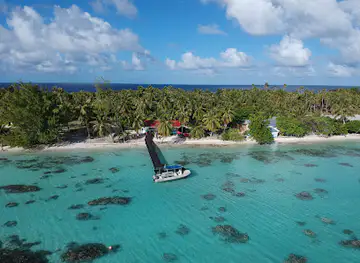
O2 Fakarava
Discover Fakarava's underwater paradise with O2 Fakarava: exceptional diving in a UNESCO Biosphere Reserve teeming with sharks and marine life.

Fakarava Atoll
Discover Fakarava Atoll: A pristine UNESCO Biosphere Reserve with world-class diving, untouched beauty, and a tranquil Polynesian escape.

Tikehau
Discover Tikehau: French Polynesia's serene atoll with pink sand beaches, a vibrant lagoon, and unparalleled tranquility. A must-see for nature lovers.

La cloche de Hina
Discover the legendary beauty of La Cloche de Hina in Tikehau, where Polynesian history meets stunning natural rock formations and crystal-clear pools.


Best restaurants in Tuamotu Archipelago
Top-rated picks
Best Restaurants

Snack Chez LiLi
Discover authentic Polynesian flavors at Snack Chez LiLi in Rangiroa - where every dish tells a story.

Chez Rua
Discover Chez Rua in Rangiroa - where fast food meets local flavor in a paradise setting.

Snack Puna
Experience authentic French Polynesian cuisine at Snack Puna in Rangiroa - where every dish tells a story.

Rotoava Grill
Discover culinary excellence at Rotoava Grill in Fakarava - where local flavors meet warm island hospitality.

Best bars in Tuamotu Archipelago
Top-rated picks
Best Bars

Bora Bora Beach Club
Experience the best of Bora Bora at the family-friendly Bora Bora Beach Club, where relaxation meets adventure in a tropical paradise.

Les 3 Brasseurs
Discover the vibrant atmosphere of Les 3 Brasseurs in Papeete, where handcrafted beers, delicious meals, and sports excitement come together.

Le Tikehau by Pearl Resorts
Experience the serene luxury of Le Tikehau by Pearl Resorts, a tropical paradise in the heart of Tikehau Atoll, French Polynesia.

Blue Banana
Discover the flavors of French Polynesia at Blue Banana, a seaside restaurant in Puna'auia offering fresh cuisine and stunning views.


Best shops in Tuamotu Archipelago
Top-rated picks
Best Shops

Papeete Market
Explore Papeete Market: A vibrant hub of culture, food, and crafts in the heart of French Polynesia.
Bounty Rangiroa | Lodge & Boutique Hotel
Discover tranquility and adventure at Bounty Rangiroa, a boutique hotel offering a perfect blend of luxury and Polynesian charm in French Polynesia.

P.Originals Pearls Moorea
Explore the stunning world of Tahitian pearls at P.Originals Pearls Moorea, where elegance meets island charm in every exquisite piece.

Musée de la Perle Robert Wan
Explore the enchanting world of pearls at the Musée de la Perle Robert Wan, a unique museum and jewelry store in Papeete, French Polynesia.

Explore Tuamotu Archipelago on the Map
A handpicked selection of must-see spots in Tuamotu Archipelago, mapped for you.
Tuamotu Archipelago Essentials
-
The Tuamotu Archipelago can be accessed via Faa'a International Airport (PPT) in Tahiti, which is the main gateway to French Polynesia. From there, you can take domestic flights operated by Air Tahiti to several islands in the Tuamotus, including Rangiroa, Fakarava, and Manihi. The flights are relatively short, typically ranging from 1 to 2 hours. Another option is to travel by boat, although this is less common and usually reserved for cargo and supply runs.
-
Transportation within the Tuamotu Archipelago largely depends on the island you are visiting. On larger islands like Rangiroa and Fakarava, you can find rental cars, scooters, and bicycles. Taxis are also available but can be expensive. For smaller atolls, walking is often the best way to get around. Boat transfers are commonly used to travel between nearby islands and atolls. Make sure to check local schedules, as services can be infrequent.
-
The official currency of French Polynesia is the CFP Franc (XPF). Credit cards are widely accepted in hotels, restaurants, and larger shops, especially on the more developed islands like Rangiroa. However, it is advisable to carry some cash for smaller establishments and remote areas where card payment might not be an option. ATMs are available on the larger islands but are scarce on smaller atolls.
-
The Tuamotu Archipelago is generally considered a safe destination for tourists. Crime rates are low, but standard precautions should still be taken. Avoid leaving valuables unattended, especially on the beach. While there are no specific high-crime areas, it's best to stay aware of your surroundings and avoid isolated areas at night. Always follow local guidelines and advisories, particularly concerning water activities, as currents can be strong.
-
In case of an emergency, dial 17 for police, 18 for fire, and 15 for medical assistance. Medical facilities are limited on smaller atolls, so it is crucial to have travel insurance that covers medical evacuations. On larger islands like Rangiroa, you can find basic medical services. For minor health issues, local pharmacies can provide over-the-counter medications. Always keep a list of emergency contact numbers handy.
-
Fashion: Do wear lightweight, breathable clothing suitable for tropical climates. Avoid overly revealing attire, especially in villages. Religion: Do respect local customs and traditions. Dress modestly when visiting religious sites and always ask for permission before taking photographs. Public Transport: Do be patient, as transport schedules can be irregular. Don't expect punctuality as you would in more urbanized areas. Greetings: Do greet locals with a friendly 'Ia Orana' (hello). A smile goes a long way in establishing rapport. Eating & Drinking: Do try local delicacies like poisson cru (raw fish marinated in coconut milk). Don't refuse food offerings, as it is considered impolite.
-
To experience the Tuamotu Archipelago like a local, visit the local markets to buy fresh produce and handicrafts. Engage with the islanders, who are often eager to share their culture and way of life. Participate in traditional activities like fishing, pearl farming, or attending a Polynesian dance performance. Don't miss out on exploring the stunning coral reefs, which are among the most pristine in the world. Snorkeling and diving are must-do activities to fully appreciate the underwater beauty.
When is the best time to visit Tuamotu Archipelago?
Useful Local Phrases for Tuamotu Archipelago
You don't need to speak the language perfectly. Even learning a few simple words can make conversations warmer—and locals usually appreciate the effort.
— Eve

Here are the phrases I use most often in Tuamotu Archipelago. Try a few—you'll be surprised how far they go! 😊
❤️
-
- HelloIa ora na
[Ee-ah oh-rah nah] - GoodbyeNana
[Nah-nah] - YesE
[Eh] - NoAita
[Eye-tah] - Please/You're welcomeE na ô
[Eh nah oh] - Thank youMauruuru
[Mau-roo-roo] - Excuse me/SorryE mea faatoia
[Eh meh-ah fah-toh-ee-ah] - How are you?Pehea oe?
[Peh-eh-ah oh-eh?] - Fine. And you?Maita'i. E oe?
[Mah-ee-tah-ee. Eh oh-eh?] - Do you speak English?E parau to te reo Engrish?
[Eh pah-rau toh teh reh-oh Engrish?] - I don't understandAita au e maitai
[Eye-tah ow eh my-tah-ee]
- HelloIa ora na
-
- I'd like to see the menu, pleaseE na ô e vai i te menui, e na ô
[Eh nah oh eh vai ee teh meh-noo-ee, eh nah oh] - I don't eat meatAita au e 'ai i te 'ita
[Eye-tah ow eh eye ee teh ee-tah] - Cheers!Maita'i!
[Mah-ee-tah-ee!] - I would like to pay, pleaseE na ô e utu, e na ô
[Eh nah oh eh oo-too, eh nah oh]
- I'd like to see the menu, pleaseE na ô e vai i te menui, e na ô
-
- Help!Aita!
[Eye-tah!] - Go away!A haere i te tahi atu!
[Ah hai-reh ee teh tah-hee ah-too!] - Call the Police!A faaitoito i te pori!
[Ah fie-eye-toi-toh ee teh po-ree!] - Call a doctor!A faaitoito i te taote!
[Ah fie-eye-toi-toh ee teh tau-teh!] - I'm lostE nita au
[Eh nee-tah ow] - I'm illE ma'i au
[Eh mah-ee ow]
- Help!Aita!
-
- I'd like to buy...E na ô e hoko i...
[Eh nah oh eh hoh-koh ee...] - I'm just lookingE vai noa ana au
[Eh vai noh-ah ah-nah ow] - How much is it?Ehia te utu?
[Eh-hee-ah teh oo-too?] - That's too expensiveTe reira e too te utu
[Teh ray-rah eh toh teh oo-too] - Can you lower the price?E nehenehe e huti i te utu?
[Eh neh-eh-neh eh hoo-tee ee teh oo-too?]
- I'd like to buy...E na ô e hoko i...
-
- What time is it?Ehia te hora?
[Eh-hee-ah teh ho-rah?] - It's one o'clockE tahi hora
[Eh tah-hee ho-rah] - Half past (10)Te hapahā i te (10)
[Teh hah-pah-hah ee teh (10)] - MorningAmanah
[Ah-mah-nah] - AfternoonAhi
[Ah-hee] - EveningApo
[Ah-poh] - YesterdayI te pō
[Ee teh poh] - TodayI teie nei
[Ee teh-eh nay] - TomorrowI te mahana
[Ee teh mah-hah-nah] - 1Tahi
[Tah-hee] - 2Puru
[Poo-roo] - 3Torutoru
[Toh-roo-toh-roo] - 4Pahā
[Pah-hah] - 5Rima
[Ree-mah] - 6Ono
[Oh-no] - 7Hitu
[Hee-too] - 8Valu
[Vah-loo] - 9Iva
[Ee-vah] - 10Tahi
[Tah-hee]
- What time is it?Ehia te hora?
-
- Where's a/the...?E hea te...?
[Eh he-ah teh...?] - What's the address?Ehia te adres?
[Eh-hee-ah teh ah-dres?] - Can you show me (on the map)?E nehenehe e faahiti mai ia'u (i te mapa)?
[Eh neh-eh-neh eh fah-hee-tee my ee-ah-oo (ee teh mah-pah)?] - When's the next (bus)?Ehia te bus i muri mai?
[Eh-hee-ah teh boos ee moo-ree my?] - A ticket (to ....)Te tike (i ....)
[Teh tee-keh (ee ....)]
- Where's a/the...?E hea te...?
History of Tuamotu Archipelago
-
The Tuamotu Archipelago, a chain of nearly 80 atolls in French Polynesia, was first settled by Polynesians around 1000 AD. These early inhabitants were remarkable navigators who used the stars, ocean currents, and bird movements to explore and settle vast areas of the Pacific Ocean. The Polynesians developed unique cultural practices and intricate social systems that were deeply connected to their maritime lifestyle.
-
The first recorded European contact with the Tuamotu Archipelago occurred in the early 17th century. Spanish explorer Pedro Fernández de Quirós sighted the islands in 1606. Later, in 1722, Dutch navigator Jacob Roggeveen visited the region, followed by British explorer Samuel Wallis in 1767 and French explorer Louis Antoine de Bougainville in 1768. These encounters marked the beginning of increased European interest in the Pacific.
-
During the 19th century, the Tuamotu Archipelago became an important stopover for whalers and traders. The islands' strategic location made them a crucial point for resupplying ships. This era brought significant changes to the local economy and culture as European goods and customs were introduced. The influx of foreign visitors also led to the spread of diseases, which had devastating effects on the indigenous population.
-
In 1880, the Tuamotu Archipelago was officially annexed by France, becoming part of the French colonial empire. The islands were administered as part of French Polynesia, and colonial rule brought new governance structures, economic systems, and education reforms. The introduction of Christianity by missionaries also played a significant role in transforming local beliefs and practices.
-
Between 1966 and 1996, the Tuamotu Archipelago was significantly impacted by French nuclear testing on the nearby atolls of Moruroa and Fangataufa. These tests brought both economic benefits and environmental concerns. The local population experienced health issues, and there were long-term environmental impacts on the region's delicate ecosystems. The nuclear testing era remains a contentious and sensitive topic in the archipelago’s history.
-
In recent decades, there has been a resurgence of interest in traditional Polynesian culture and heritage in the Tuamotu Archipelago. Efforts to revive traditional crafts, music, dance, and navigation techniques have been met with enthusiasm. Today, the Tuamotus are not only a destination for tourists seeking unspoiled natural beauty but also a vibrant community proud of its rich cultural legacy and history.
Neighbouring Regions of Tuamotu Archipelago
The closest regions to Tuamotu Archipelago, if you have time for more than one.




Your all‑in‑one travel companion app
Explore expert travel guides, compare and book tours, experiences, hotels, and more—all from the palm of your hand. Download now for seamless trip planning wherever your wanderlust takes you.


Explore More of French Polynesia

Looking beyond Tuamotu Archipelago? Discover French Polynesia for broader travel guides, local hot-spots, and regional highlights.
Explore French PolynesiaTuamotu Archipelago in Photos
Browse through our photo collection highlighting the charm and character of the destination.


The Pristine Beauty of Tuamotu Archipelago
The Tuamotu Archipelago in French Polynesia is a tropical paradise made up of 76 idyllic atolls scattered across the Pacific Ocean. Known for its stunning natural beauty, this archipelago is perfect for those looking to escape the hustle and bustle of city life. The crystal-clear waters of the Tuamotu Archipelago are a haven for water sports enthusiasts. The lagoons are teeming with vibrant marine life, making it a prime spot for snorkeling and scuba diving. Coral reefs, schools of colorful fish, and even the occasional dolphin or turtle can be seen just beneath the surface. For those who prefer to stay on land, the white sandy beaches offer a perfect place to relax and soak up the sun. The gentle rustling of palm trees and the soft sound of waves create a serene atmosphere that is hard to find anywhere else. The local culture is rich and welcoming, with opportunities to experience traditional Polynesian food, music, and dance. Accommodation options range from luxury resorts to charming guesthouses, ensuring that there is something for every type of traveler. Whether you are looking for adventure or relaxation, the Tuamotu Archipelago provides an unforgettable escape into nature's wonder.