

Free Lope National Park Area Travel Guide & Mobile App
Explore Lope National Park Area with free travel guides. Discover regional history, expert tips, proposed trips, and audio guides on web or mobile app.


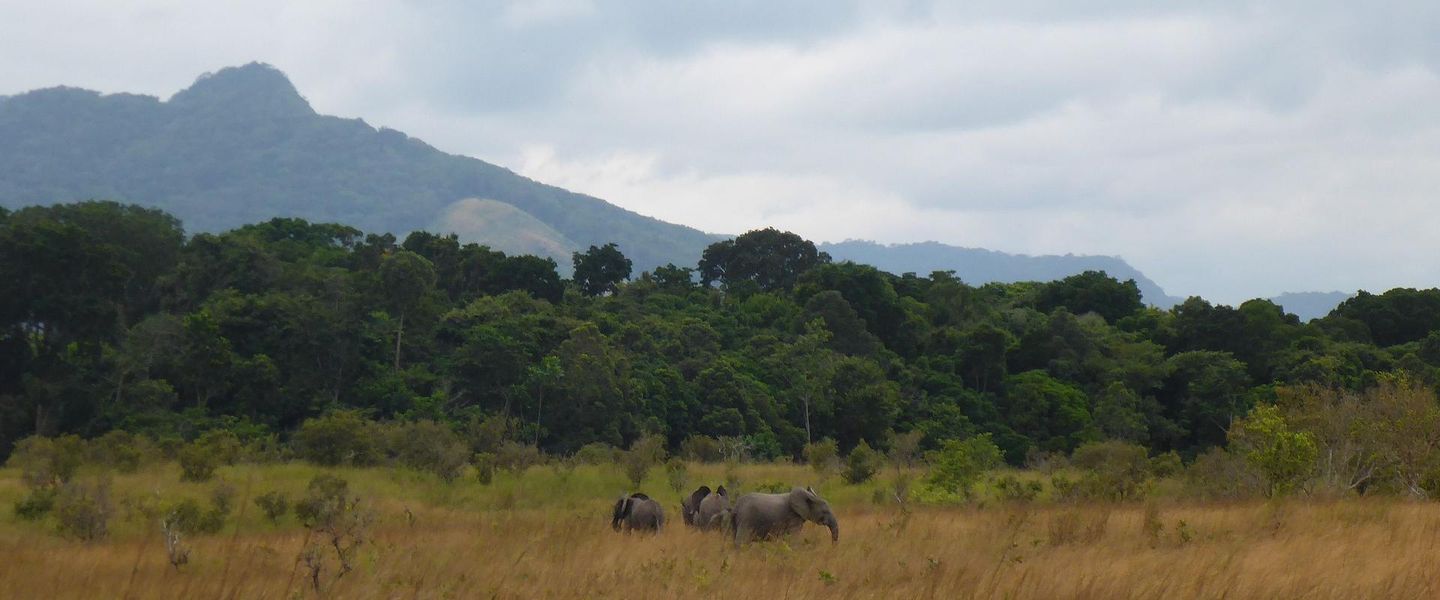


Lopé National Park Area combines Gabon's rainforest and savannah, rare wildlife, Ogooué landscapes and archaeological heritage in a remote central-Gabon setting.
Read more about Lope National Park Area
When is the best time to visit Lope National Park Area?
Best: January–March · 29–30°C| Month | High (°C) | Rainfall (mm) |
|---|---|---|
| January (best) | 29 | 150 |
| February (best) | 29 | 140 |
| March (best) | 30 | 150 |
| April | 30 | 160 |
| May | 30 | 170 |
| June | 29 | 180 |
| July | 29 | 190 |
| August | 29 | 200 |
| September | 29 | 210 |
| October | 30 | 220 |
| November | 30 | 230 |
| December | 29 | 240 |
Getting to and around Lope National Park Area
How to get there
Transportation
Destinations in Lope National Park Area
Resorts, valleys and scenic spots worth a trip of their own.

Swipe for more destinations
Best attractions in Lope National Park Area
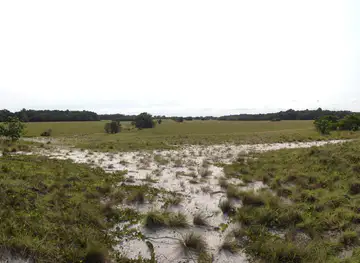
The principal attraction is Lopé National Park itself, whose unusual rainforest-and-savannah mosaic supports forest elephants, mandrills, western lowland gorillas, chimpanzees, red river hogs and a wide range of birds. Guided drives are suited to the more open savannah, while forest excursions offer a different, more intimate experience in which animal signs, calls and vegetation may be as important as clear sightings. The Ogooué River and surrounding waterways contribute to the landscape, although activities on them require locally organised guidance. Archaeological sites and rock engravings associated with Lopé-Okanda give the area an importance beyond wildlife tourism, linking field visits with the long history of human movement through central Gabon. The small settlement of Lopé functions as a practical base and a point of contact with the park, rather than as a conventional sightseeing town. Visitors should expect a concentrated, conservation-led experience with relatively few formal attractions, limited commercial infrastructure and a strong dependence on guides, park staff, weather and seasonal access.
-
Tourist attraction
Lopé National Park
Explore Lopé National Park: Gabon's UNESCO gem with diverse wildlife, lush landscapes, and ancient history.
-
Tourist attraction
Loango national Park, Lodge & wildlife camps
Explore Loango National Park in Gabon: where surfing hippos meet pristine beaches and diverse ecosystems in Africa's last Eden.
-
National reserve
Lope National Park Entrance
Discover Gabon's natural and cultural treasures at Lope National Park, a UNESCO World Heritage site with unique biodiversity and ancient history.
-
 National park
Ecosysteem en cultuurlandschap van Lopé-Okanda
Explore Gabon's Lopé-Okanda: Where ancient cultures meet diverse ecosystems in a UNESCO World Heritage Site.


Best landmarks in Lope National Park Area
The defining landmark of the area is Lopé National Park's meeting of forest and open savannah, a visible geographical transition that gives the landscape its character and supports varied wildlife habitats. The Ogooué River is another major natural landmark, forming part of the wider corridor through which people, materials and ideas have moved across central Gabon. The archaeological rock engravings and sites of the Lopé-Okanda cultural landscape are significant cultural landmarks, not simply curiosities: they record human presence and changing practices over long periods in an environment often imagined only as wilderness. Lopé railway station also has practical and historical importance as part of the Transgabon Railway, the modern transport link that connects this remote interior area with the rest of the country. Together, these places express the region's identity through geology, ecology, archaeology and infrastructure rather than through a dense concentration of monumental architecture.
-
National park
Lopé National Park
Explore the breathtaking biodiversity of Lopé National Park, a UNESCO World Heritage site in Gabon, where adventure and nature await.
-
National park
Ecosysteem en cultuurlandschap van Lopé-Okanda
Explore the diverse ecosystems and rich cultural heritage of Lopé-Okanda National Park, a stunning Gabonese gem for nature lovers and adventurers alike.

Explore Lope National Park Area on the map
Plan your trip on one map. See where the top cities, national parks and sights are, and book hotels and experiences in a few clicks.
Best hotels in Lope National Park Area
Best restaurants in Lope National Park Area
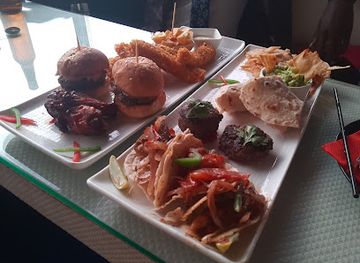
Dining in the Lopé area is generally provided by lodges, camps or organised accommodation rather than by a broad restaurant scene. Meals are likely to combine internationally familiar staples with Gabonese ingredients, including rice, plantain, cassava, vegetables, poultry and fish where available. In Gabon, sauces and stews are important parts of everyday cooking, and visitors may encounter preparations influenced by the country's forest and river environments. Fresh provisions can be less predictable in a remote park setting, so meals are usually planned in advance and dietary requirements should be communicated before arrival. The area is not a destination for restaurant-hopping or specialist food shopping; its culinary interest lies in eating in a remote landscape and, when arrangements permit, trying locally prepared dishes. Carrying suitable snacks is sensible, particularly for long railway or road journeys, because village shops and reliable food services are limited around the park.
-
Restaurant
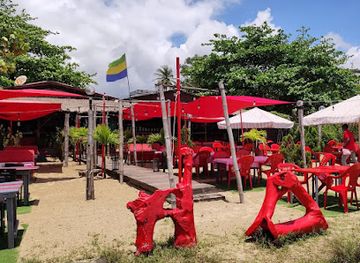
La Voile Rouge
Experience delightful coastal cuisine at La Voile Rouge in Libreville - where every meal tells a story.
-
Restaurant
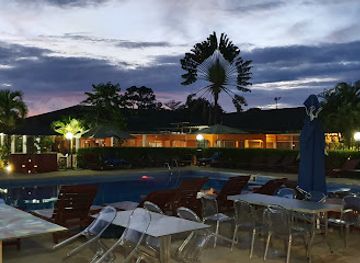
Tropicana
Experience authentic Gabonese flavors at Tropicana in Libreville—where culinary tradition meets modern dining.
-
French
Beach Club
Discover Beach Club in Libreville: where French elegance meets African vibrancy along stunning coastal views.
-
Restaurant
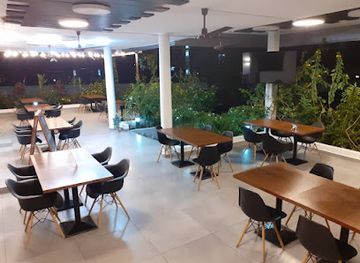
Le Moulin d'Okala
Discover the delightful flavors of Gabon at Le Moulin d'Okala - where culinary tradition meets modern dining.

Best bars in Lope National Park Area
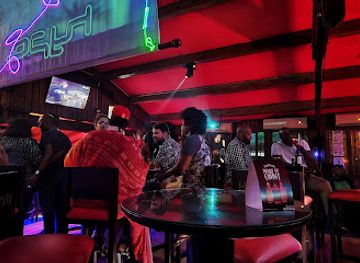
Lopé National Park Area has no substantial nightclub district and little conventional late-night entertainment. Evening life is centred on lodge dining rooms, simple bars and outdoor areas where visitors may discuss the day's sightings, listen to forest sounds or observe the changing sky. Alcoholic drinks may be available through accommodation providers, but supplies and choice are limited and should not be assumed outside established lodges. The small settlement of Lopé is not a major nightlife centre; railway and park schedules, darkness and remoteness all encourage an early, quiet routine. Night walks or nocturnal wildlife activities should only be undertaken when officially organised and accompanied by trained guides. The region's evening character is therefore shaped by conservation, rest and close attention to the natural environment rather than by clubs, live-music circuits or a large social scene.
-
Restaurant
La Voile Rouge
Experience the best of Gabonese cuisine with a twist at La Voile Rouge, Libreville's favorite dining destination.
-
Restaurant
Lamaia Lounge Bar & Restaurant
Experience the best of grill and lounge dining at Lamaia Lounge Bar & Restaurant in Libreville, where culinary excellence meets vibrant ambiance.
-
Bar
HYPE BAR LOUNGE
Discover the vibrant nightlife of Libreville at HYPE BAR LOUNGE, where great music and refreshing drinks create unforgettable experiences.
-
Tapas Bar
Marina Social Beach
Experience the vibrant culinary scene of Port-Gentil at Marina Social Beach, a tapas bar with a unique blend of local and international flavors.



Best nightclubs in Lope National Park Area
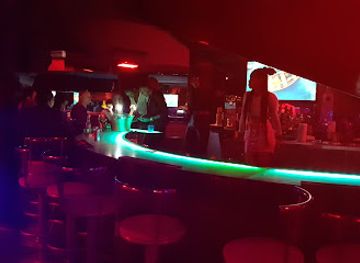
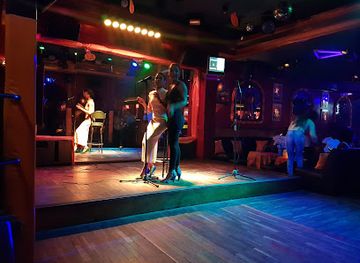
Lopé National Park Area has no substantial nightclub district and little conventional late-night entertainment. Evening life is centred on lodge dining rooms, simple bars and outdoor areas where visitors may discuss the day's sightings, listen to forest sounds or observe the changing sky. Alcoholic drinks may be available through accommodation providers, but supplies and choice are limited and should not be assumed outside established lodges. The small settlement of Lopé is not a major nightlife centre; railway and park schedules, darkness and remoteness all encourage an early, quiet routine. Night walks or nocturnal wildlife activities should only be undertaken when officially organised and accompanied by trained guides. The region's evening character is therefore shaped by conservation, rest and close attention to the natural environment rather than by clubs, live-music circuits or a large social scene.
-
Disco club
VIP
Discover the dynamic energy of VIP Disco Club in Libreville, where dance, art, and unforgettable nightlife converge.
-
Lounge
Yoka_Lounge
Discover the serene ambiance of Yoka Lounge in Libreville, where relaxation meets exceptional service and local flavors.
-
Night club
Cotton Club
Discover the pulse of Libreville's nightlife at Cotton Club, where music, dance, and culture come together for an unforgettable experience.
-
Night club
CEYO NIGHTCLUB
Discover the energetic nightlife at CEYO Nightclub in Libreville, where great music, vibrant ambiance, and unforgettable experiences await.

Best shops in Lope National Park Area
Shopping around Lopé is very limited and should be treated as a practical matter rather than a major travel activity. The settlement and accommodation providers may offer basic necessities, but visitors should bring medication, toiletries, insect repellent, batteries, snacks and other specialist supplies from Libreville or another larger Gabonese town. There is no large commercial shopping centre or established retail quarter in the park area. Small purchases may include locally made crafts or simple souvenirs when these are offered through reputable community or accommodation channels, but availability is inconsistent. Visitors should avoid buying archaeological objects, animal products or items made from protected species, and should ask about provenance for wildlife-related materials. The most appropriate souvenirs are durable, legally sourced crafts or locally produced goods that do not remove cultural or natural material from the landscape.
-
Handicraft
Village des Artisans
Discover the vibrant culture and unique handicrafts of Gabon at Village des Artisans in Libreville, a true artisan marketplace.
-
National park
Lopé National Park
Explore Lopé National Park: A UNESCO World Heritage Site with stunning wildlife, rich culture, and breathtaking landscapes in Gabon.
-
Shopping mall
OKANI CONCEPT STORE
Discover unique local crafts and fashion at the vibrant OKANI Concept Store in Libreville, a must-visit shopping destination for tourists.
-
National reserve
Lope National Park Entrance
Discover the breathtaking landscapes and rich wildlife at Lope National Park Entrance, Gabon's hidden gem for nature lovers and adventure seekers.


Get your free copy of our complete guide to Lope National Park Area, delivered straight to you.
Everything on this page, from attractions and restaurants to essentials and local phrases, in one PDF you can read offline, print or share.
Already have an account? Sign in
Your Lope National Park Area guide is ready.
We'll send it to · Not you? Sign out

Getting your guide ready…
We are putting together a fresh copy of the Lope National Park Area guide. This can take up to a minute.
This can take a few moments. If your browser asks, choose Allow so the download can start. You'll find the guide in your Downloads folder.
Nothing happened? Download it again
Sorry, the guide is taking longer than usual. Please try again in a minute, or get it by email instead.
Lope National Park Area essentials
Currency and Payment
Safety
Emergency Situations
Do's and Don'ts
Local Tips
From Eve
Local phrases worth knowing
You don't need to get them perfect. A few words go a long way, and locals appreciate the effort.
Basics
| English | Local | Say it |
|---|---|---|
| Hello | Bonjour | [Bohn-zhoor] |
| Goodbye | Au revoir | [Oh ruh-vwahr] |
| Yes | Oui | [Wee] |
| No | Non | [Nohn] |
| Please/You're welcome | S'il vous plaît | [Seel voo pleh] |
| Thank you | Merci | [Mehr-see] |
| Excuse me/Sorry | Pardon | [Par-dohn] |
| How are you? | Comment ça va? | [Koh-mohn sah vah] |
| Fine. And you? | Bien. Et vous? | [Byan. Ay voo] |
| Do you speak English? | Parlez-vous anglais? | [Par-lay voo ahn-glay] |
| I don't understand | Je ne comprends pas | [Zhuh nuh kohm-prahn pah] |
Eating & Drinking
| English | Local | Say it |
|---|---|---|
| I'd like to see the menu, please | Je voudrais voir le menu, s'il vous plaît | [Zhuh voo-dray vwar luh meh-nu, seel voo pleh] |
| I don't eat meat | Je ne mange pas de viande | [Zhuh nuh mahnzh pah duh vyahnd] |
| Cheers! | Santé! | [Sahn-tay] |
| I would like to pay, please | Je voudrais payer, s'il vous plaît | [Zhuh voo-dray pay-ay, seel voo pleh] |
Emergencies
| English | Local | Say it |
|---|---|---|
| Help! | Au secours! | [Oh suh-koor] |
| Go away! | Allez-vous-en! | [Ah-lay voo zahn] |
| Call the Police! | Appelez la police! | [Ah-peh-lay lah poh-lees] |
| Call a doctor! | Appelez un médecin! | [Ah-peh-lay uhn may-deh-sahn] |
| I'm lost | Je suis perdu | [Zhuh swee pair-doo] |
| I'm ill | Je suis malade | [Zhuh swee mah-lahd] |
Shopping
| English | Local | Say it |
|---|---|---|
| I'd like to buy... | Je voudrais acheter... | [Zhuh voo-dray ah-sheh-tay] |
| I'm just looking | Je regarde juste | [Zhuh ruh-gard zhuhst] |
| How much is it? | C'est combien? | [Say kohm-byen] |
| That's too expensive | C'est trop cher | [Say troh shair] |
| Can you lower the price? | Pouvez-vous baisser le prix? | [Poo-vay voo beh-say luh pree] |
Time & Numbers
| English | Local | Say it |
|---|---|---|
| What time is it? | Quelle heure est-il? | [Kel uhr eh-teel] |
| It's one o'clock | Il est une heure | [Il eh eewn uhr] |
| Half past (10) | Dix heures et demie | [Deeze uhr eh deh-mee] |
| Morning | Matin | [Mah-tahn] |
| Afternoon | Après-midi | [Ah-pray mee-dee] |
| Evening | Soir | [Swahr] |
| Yesterday | Hier | [Ee-air] |
| Today | Aujourd'hui | [Oh-zhoor-dwee] |
| Tomorrow | Demain | [Duh-manh] |
| 1 | Un | [Uhn] |
| 2 | Deux | [Duh] |
| 3 | Trois | [Trwah] |
| 4 | Quatre | [Kah-truh] |
| 5 | Cinq | [Sank] |
| 6 | Six | [Sees] |
| 7 | Sept | [Seht] |
| 8 | Huit | [Wheat] |
| 9 | Neuf | [Nuhf] |
| 10 | Dix | [Deez] |
Transport & Directions
| English | Local | Say it |
|---|---|---|
| Where's a/the...? | Où est un/une...? | [Oo eh uhn/ewn] |
| What's the address? | Quelle est l'adresse? | [Kel eh luh-dress] |
| Can you show me (on the map)? | Pouvez-vous me montrer (sur la carte)? | [Poo-vay voo muh mohn-tray (sur lah kart)] |
| When's the next (bus)? | Quand est le prochain (bus)? | [Kahn eh luh proh-shen (boos)] |
| A ticket (to ....) | Un billet (pour ....) | [Uhn bee-yay (poor ....)] |
History of Lope National Park Area
Early Human Occupation and Rock Art
The Lopé-Okanda landscape contains evidence of human activity extending deep into the Pleistocene, together with later archaeological sites and rock engravings. The engravings, found on exposed rock surfaces in the wider park landscape, depict animals, geometric forms and other motifs associated with successive periods of occupation. They demonstrate that the forest and savannah mosaic was not an untouched wilderness but a landscape repeatedly used, traversed and interpreted by human communities. Their archaeological value is one reason the area is so important to Gabon's cultural heritage.
Bantu Movements and Ironworking
Lopé-Okanda provides important evidence for the movement and settlement of farming and ironworking communities through the equatorial forest. Archaeological remains indicate changing technologies, routes and patterns of occupation over many centuries. The Ogooué valley acted as a major natural corridor between interior regions, linking ecological zones that could support different forms of subsistence. This history is central to the area's UNESCO recognition, which considers the landscape a record of interaction between human migration, resource use and the forest environment.
The Ogooué as a Regional Corridor
The Ogooué River has long shaped movement across central Gabon. Before modern roads and railways, rivers and established forest routes connected communities, facilitated the exchange of materials and helped organise settlement. The Lopé area sits within this wider riverine geography, where savannah openings and forest margins offered different resources. The river's historical importance remains visible in the placement of settlements and transport links, even though contemporary visitors generally arrive by railway or road rather than by a long-distance river journey.
Colonial Administration and Forest Exploitation
During the colonial period, European administration introduced new territorial boundaries, commercial systems and transport requirements into the region. Forest products, including timber and other natural resources, became increasingly significant to the wider Gabonese economy. Railway construction later connected the interior with the coast and transformed the movement of people and goods. These developments altered the relationship between communities, forests and markets, while also creating some of the transport infrastructure through which the Lopé area is reached today.
Creation of Lopé National Park
Lopé National Park was established in 2002 as part of Gabon's national network of protected areas, created to conserve representative ecosystems and important wildlife populations. Its boundaries encompass rainforest, savannah and the archaeological landscapes associated with Lopé-Okanda. The park's conservation role includes protection of forest elephants, great apes, mandrills and other species affected elsewhere by habitat loss and hunting pressure. Management combines biodiversity protection with research, tourism and the safeguarding of cultural sites.
UNESCO Recognition of Lopé-Okanda
In 2007, the Ecosystem and Relict Cultural Landscape of Lopé-Okanda was inscribed on the UNESCO World Heritage List. The designation recognises both exceptional natural values and archaeological evidence of human movement through the equatorial forest. It also reflects the unusual continuity between a living tropical ecosystem and a cultural landscape marked by ancient routes, occupation and rock art. For visitors, the inscription is a reminder that wildlife viewing and archaeological interpretation are complementary parts of the area's identity.
Lope National Park Area in Photos
Browse through our photo collection highlighting the charm and character of the destination.
Neighbouring regions of Lope National Park Area
The closest regions to Lope National Park Area, if you have time for more than one.
-
-

-

-

-


Swipe for more regions
Explore more
Explore more of Gabon
Gabon: Discover Africa's untouched paradise with pristine beaches, diverse wildlife, and rich cultural heritage.
Explore Gabon