

Free Middle Ogooué Province Travel Guide & Mobile App
Explore Middle Ogooué Province with free travel guides. Discover regional history, expert tips, proposed trips, and audio guides on web or mobile app.


Middle Ogooué Province reveals Gabon through Lambaréné, the Ogooué River, forest landscapes and the enduring history of Albert Schweitzer’s hospital.
Read more about Middle Ogooué Province
When is the best time to visit Middle Ogooué Province?
Best: February, July–August · 29–30°C| Month | High (°C) | Rainfall (mm) |
|---|---|---|
| January | 29 | 150 |
| February (best) | 30 | 140 |
| March | 30 | 160 |
| April | 31 | 170 |
| May | 30 | 180 |
| June | 30 | 190 |
| July (best) | 29 | 150 |
| August (best) | 29 | 140 |
| September | 30 | 160 |
| October | 30 | 170 |
| November | 30 | 180 |
| December | 30 | 190 |
Getting to and around Middle Ogooué Province
How to get there
Transportation
Best landmarks in Middle Ogooué Province
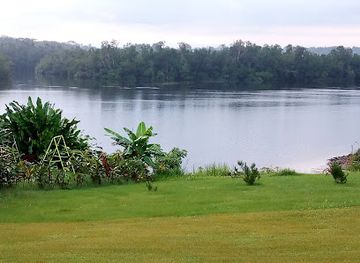
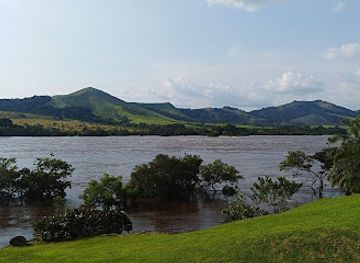
The Ogooué River is Middle Ogooué’s defining natural landmark, widening and dividing around Lambaréné before carrying its waters towards the coast. Its channels, islands, forested banks and changing seasonal levels explain the province’s settlement pattern and give the capital its distinctive geography. The historic Albert Schweitzer hospital complex is the region’s most recognisable cultural landmark, associated with the medical mission founded in 1913 and with the international image of Lambaréné. Its significance lies not only in Schweitzer’s biography but also in the long history of African medical work and colonial-era institutions at the site. Lambaréné’s bridges, river approaches and waterfront views provide further visual reminders of the town’s relationship with the Ogooué. In Ndjolé, the railway and road corridor functions as a landmark of modern infrastructure, marking the transition from river-dominated transport to national networks. Together these places express the province’s central themes: water, mobility, healthcare, forest and the meeting of local and international histories.
-
Handicraft
Village des Artisans
Discover the heart of Gabonese craftsmanship at the Village des Artisans in Libreville, where tradition meets creativity in a vibrant marketplace.
-
Catholic church
Cathédrale Sainte Marie
Experience the rich history and serene beauty of Cathédrale Sainte Marie, a stunning landmark in Libreville that reflects Gabon's vibrant culture.
-
National park
Akanda National Park
Explore Akanda National Park: A sanctuary of lush mangroves, vibrant wildlife, and tranquil beaches near Libreville, perfect for nature lovers.
-
National park
Lopé National Park
Experience the breathtaking biodiversity and rich cultural heritage of Lopé National Park, a UNESCO World Heritage site in the heart of Gabon.
Explore Middle Ogooué Province on the map
Plan your trip on one map. See where the top cities, national parks and sights are, and book hotels and experiences in a few clicks.
Best hotels in Middle Ogooué Province
Best restaurants in Middle Ogooué Province
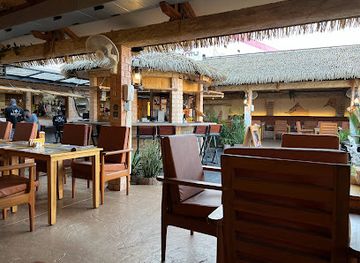
Dining in Middle Ogooué is generally informal and closely tied to local markets, household cooking and the river economy. In Lambaréné, visitors can find simple restaurants, hotel dining rooms and cafés serving Gabonese staples such as grilled or braised fish, chicken, rice, plantain, cassava and sauces made with leafy vegetables or groundnuts. Freshwater fish is particularly relevant to the Ogooué setting, although availability varies with season and supply. Smaller settlements have fewer dedicated visitor-oriented restaurants, so meals may be arranged through accommodation or bought from local vendors. Gabon’s wider culinary influences are also present, including French-style bread and pastries in urban areas, while spicy relishes and regional preparations reflect Central African tastes. Markets are useful for seeing the ingredients that underpin everyday meals, but visitors should choose food that is freshly cooked and served hot. Dining is usually more about nourishing, locally available food than elaborate restaurant presentation.
-
Pizza
BANTU Restaurant – Restaurant – Bar – Pizzeria
Discover the vibrant flavors of BANTU Restaurant in Libreville - where delicious pizzas meet refreshing drinks in a lively atmosphere.
-
Restaurant
La Voile Rouge
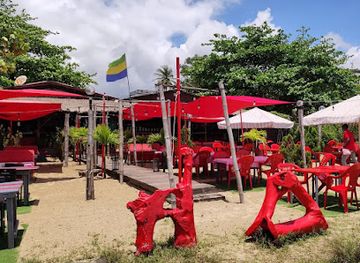
Discover La Voile Rouge: A Culinary Haven in Libreville Blending Local Flavors with International Cuisine for Unforgettable Dining.
-
French
Beach Club
Experience the fusion of French and African flavors at Beach Club in Libreville's stunning coastal setting.
-
Restaurant
Le Moulin d'Okala
Experience the best of Libreville's culinary scene at Le Moulin d'Okala - your go-to spot for delightful meals and sweet treats.
Best bars in Middle Ogooué Province
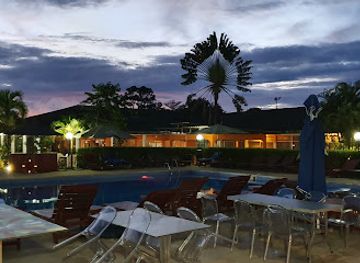
Nightlife in Middle Ogooué is modest and concentrated mainly in Lambaréné. Evenings are more likely to centre on relaxed bars, hotel terraces, small restaurants and conversations over locally available beer or soft drinks than on a large nightclub scene. Music may feature in bars and community gatherings, but venues, hours and entertainment can change, particularly outside busy periods. Ndjolé and smaller settlements offer fewer formal options, with social life often organised around neighbourhood bars, family occasions and local events. Visitors should return to accommodation by arranged transport after dark and avoid assuming that riverbanks or quiet roads are suitable for late-night walks. The province’s evening character is best understood through its towns and riverside communities rather than through a branded entertainment district.
-
Restaurant
La Voile Rouge
Experience the vibrant culinary scene of Libreville at La Voile Rouge, where local flavors meet international cuisine in a stunning setting.
-
Bar
Lamaia Lounge Bar & Restaurant
Experience the vibrant culinary scene at Lamaia Lounge Bar & Restaurant in Libreville, where exquisite flavors meet a lively atmosphere.
-
Tapas Bar
Marina Social Beach
Discover the vibrant culinary scene of Port-Gentil at Marina Social Beach, where tapas and seaside views create an unforgettable dining experience.
-
Restaurant
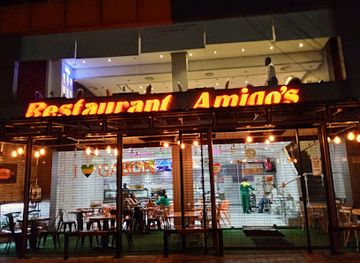
Amigo's Restaurant
Explore the vibrant culinary scene of Libreville with a visit to Amigo's Restaurant, where local flavors meet international cuisine.
Best nightclubs in Middle Ogooué Province
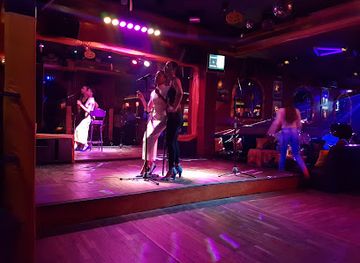
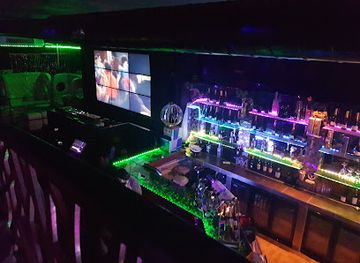
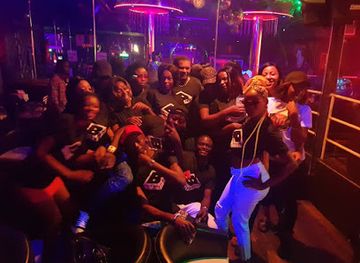
Nightlife in Middle Ogooué is modest and concentrated mainly in Lambaréné. Evenings are more likely to centre on relaxed bars, hotel terraces, small restaurants and conversations over locally available beer or soft drinks than on a large nightclub scene. Music may feature in bars and community gatherings, but venues, hours and entertainment can change, particularly outside busy periods. Ndjolé and smaller settlements offer fewer formal options, with social life often organised around neighbourhood bars, family occasions and local events. Visitors should return to accommodation by arranged transport after dark and avoid assuming that riverbanks or quiet roads are suitable for late-night walks. The province’s evening character is best understood through its towns and riverside communities rather than through a branded entertainment district.
-
Night club
Cotton Club
Dive into the energetic nightlife at Cotton Club, the ultimate destination for dance and drinks in Libreville, Gabon.
-
Disco club
Vogue
Experience the vibrant nightlife at Vogue, Libreville's premier disco club, where music and culture seamlessly blend for an unforgettable evening.
-
Night club
CEYO NIGHTCLUB
Experience the vibrant nightlife of Libreville at CEYO NIGHTCLUB, where music, dancing, and local culture come together for an unforgettable evening.
-
Night club
Boomerang Night Club
Discover the pulse of Libreville's nightlife at Boomerang Night Club, where the music is vibrant and the atmosphere is electric.

Best shops in Middle Ogooué Province
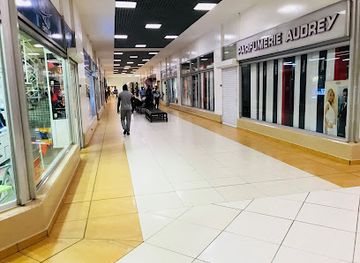
Shopping in Middle Ogooué is practical and local rather than centred on large retail complexes. Lambaréné’s markets and small shops are the best places to find everyday food, household goods, clothing and seasonal produce, while market stalls may offer smoked or fresh fish, plantains, cassava products and other ingredients associated with the river and forest economy. Visitors can look for locally made baskets, woven articles, carved objects and other crafts, but availability and quality vary, and purchases should be made respectfully rather than treating cultural items as curiosities. Ndjolé and smaller settlements have more limited retail options, generally serving residents and travellers along the road and railway routes. Packaged Gabonese food products, locally available crafts and books or souvenirs connected with Lambaréné’s medical history may be easier to find in the provincial capital. Prices should be agreed clearly where goods are not marked, and cash in Central African CFA francs is the most useful form of payment.
-
Shopping mall
Géant Casino (Mbolo)
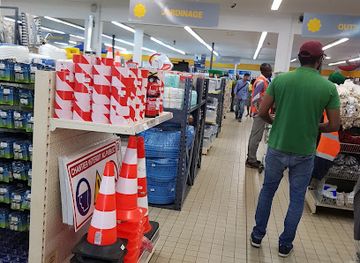
Discover a world of shopping at Géant Casino in Libreville, a vibrant hub featuring diverse stores and local flavors, perfect for every tourist.
-
Supermarket
Maxi Ckdo Akanda
Explore the vibrant Maxi Ckdo Akanda supermarket, where local flavors meet global finds in the heart of Akanda.
-
Handicraft
Village des Artisans
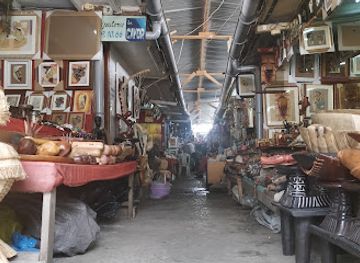
Explore the vibrant Village des Artisans in Libreville, where Gabonese culture and craftsmanship come alive through unique handcrafted treasures.
-
Hardware store
Sogame Equip
Explore Sogame Equip in Libreville for top-notch hardware supplies and tools, ideal for professionals and DIY enthusiasts alike.
Get your free copy of our complete guide to Middle Ogooué Province, delivered straight to you.
Everything on this page, from attractions and restaurants to essentials and local phrases, in one PDF you can read offline, print or share.
Already have an account? Sign in
Your Middle Ogooué Province guide is ready.
We'll send it to · Not you? Sign out

Getting your guide ready…
We are putting together a fresh copy of the Middle Ogooué Province guide. This can take up to a minute.
This can take a few moments. If your browser asks, choose Allow so the download can start. You'll find the guide in your Downloads folder.
Nothing happened? Download it again
Sorry, the guide is taking longer than usual. Please try again in a minute, or get it by email instead.
Middle Ogooué Province essentials
Currency and Payment
Safety
Emergency Situations
Do's and Don'ts
Local Tips
From Eve
Local phrases worth knowing
You don't need to get them perfect. A few words go a long way, and locals appreciate the effort.
Basics
| English | Local | Say it |
|---|---|---|
| Hello | Bonjour | [Bohn-zhoor] |
| Goodbye | Au revoir | [Oh ruh-vwahr] |
| Yes | Oui | [Wee] |
| No | Non | [Nohn] |
| Please/You're welcome | S'il vous plaît | [Seel voo pleh] |
| Thank you | Merci | [Mehr-see] |
| Excuse me/Sorry | Excusez-moi | [Ex-kew-zay mwah] |
| How are you? | Comment ça va? | [Koh-mohn sah vah] |
| Fine. And you? | Bien. Et vous? | [Byehn. Ay voo] |
| Do you speak English? | Parlez-vous anglais? | [Par-lay voo ahn-glay] |
| I don't understand | Je ne comprends pas | [Zhuh nuh kohm-prahnd pah] |
Eating & Drinking
| English | Local | Say it |
|---|---|---|
| I'd like to see the menu, please | Je voudrais voir le menu, s'il vous plaît | [Zhuh voo-dray vwar luh meh-nu, seel voo pleh] |
| I don't eat meat | Je ne mange pas de viande | [Zhuh nuh mahnj pah duh vyahnd] |
| Cheers! | Santé! | [Sahn-tay] |
| I would like to pay, please | Je voudrais payer, s'il vous plaît | [Zhuh voo-dray pay-ay, seel voo pleh] |
Emergencies
| English | Local | Say it |
|---|---|---|
| Help! | À l'aide! | [Ah lehd] |
| Go away! | Allez-vous-en! | [Ah-lay voo zahn] |
| Call the Police! | Appelez la police! | [Ah-peh-lay lah poh-lees] |
| Call a doctor! | Appelez un docteur! | [Ah-peh-lay uhn dok-teur] |
| I'm lost | Je suis perdu | [Zhuh swee pehr-due] |
| I'm ill | Je suis malade | [Zhuh swee mah-lahd] |
Shopping
| English | Local | Say it |
|---|---|---|
| I'd like to buy... | Je voudrais acheter... | [Zhuh voo-dray ah-sheh-tay] |
| I'm just looking | Je regarde juste | [Zhuh ruh-gard zhuhst] |
| How much is it? | C'est combien? | [Say kohm-byen] |
| That's too expensive | C'est trop cher | [Say troh shair] |
| Can you lower the price? | Pouvez-vous baisser le prix? | [Poo-vay voo beh-say luh pree] |
Time & Numbers
| English | Local | Say it |
|---|---|---|
| What time is it? | Quelle heure est-il? | [Kel uhr eh teel] |
| It's one o'clock | Il est une heure | [Il eh oon uhr] |
| Half past (10) | Dix heures et demie | [Dee uhr eh deh-mee] |
| Morning | Matin | [Mah-tahn] |
| Afternoon | Après-midi | [Ah-pray mee-dee] |
| Evening | Soir | [Swahr] |
| Yesterday | Hier | [Yair] |
| Today | Aujourd'hui | [Oh-zhoor dwee] |
| Tomorrow | Demain | [Duh-mahn] |
| 1 | Un | [Uhn] |
| 2 | Deux | [Duh] |
| 3 | Trois | [Twah] |
| 4 | Quatre | [Kah-truh] |
| 5 | Cinq | [Sank] |
| 6 | Six | [Sees] |
| 7 | Sept | [Set] |
| 8 | Huit | [Wheat] |
| 9 | Neuf | [Nuhf] |
| 10 | Dix | [Dee] |
Transport & Directions
| English | Local | Say it |
|---|---|---|
| Where's a/the...? | Où est un/une...? | [Oo eh uhn/oon] |
| What's the address? | Quelle est l'adresse? | [Kel eh la-dress] |
| Can you show me (on the map)? | Pouvez-vous me montrer (sur la carte)? | [Poo-vay voo muh mohn-tray (sur lah kart)] |
| When's the next (bus)? | Quand est le prochain (bus)? | [Kahn eh luh proh-shen (boos)] |
| A ticket (to ....) | Un billet (pour ....) | [Uhn bee-yay (poor ....)] |
History of Middle Ogooué Province
River Communities and Precolonial Trade
Long before European administration, the Ogooué and its tributaries provided routes for movement, fishing, exchange and communication across central Gabon. Communities including Galoa and other riverine peoples developed livelihoods closely tied to seasonal water levels, forest resources and agriculture. The river connected settlements rather than simply separating them, allowing goods and information to travel through an otherwise heavily forested landscape. These older patterns remain visible in the importance of riverside settlements, canoe travel and fishing in the Middle Ogooué.
European Exploration of the Ogooué Basin
During the nineteenth century, European explorers and trading interests increasingly entered the Ogooué basin. French explorer Pierre Savorgnan de Brazza travelled through parts of the region during his expeditions in the 1870s, helping establish French claims in the area that later became Gabon. Exploration was followed by commercial and administrative activity along river routes. These encounters brought new forms of political control and trade while disrupting existing relationships between communities and the riverine economy.
Colonial Rule and the River Port of Lambaréné
Under French colonial rule, Lambaréné grew as an administrative and commercial centre on the Ogooué. River transport was essential for moving people and goods through the forest, and the town became a point of contact between inland communities, colonial officials, missionaries and traders. The colonial economy drew on forest products, including rubber and timber, while imposing systems of labour and taxation. The surviving townscape and transport geography reflect this period, although local societies continued to shape everyday life.
Albert Schweitzer and the Lambaréné Hospital
Albert Schweitzer arrived in Lambaréné in 1913 and established a medical mission on the banks of the Ogooué. The hospital became internationally famous through his writings, lectures and the 1952 Nobel Peace Prize, and it continued to develop after his death in 1965. Its history is important but should not be reduced to a heroic European narrative: the institution depended on African staff, patients and communities, and it operated within the structures of colonial central Africa. The museum and historic site offer a way to examine this layered legacy.
Transport Links and the Modern Province
In the twentieth century, roads and the Transgabon Railway altered the relationship between the Ogooué settlements and the rest of Gabon. Ndjolé became significant within the transport corridor linking the coast with inland towns, reducing the river’s former monopoly over long-distance movement while leaving it vital for local travel. Following independence in 1960, Lambaréné remained the administrative centre of Middle Ogooué Province. Modern development has brought stronger national connections, but forest distance and uneven infrastructure continue to influence economic life.
Contemporary Conservation and Forest Livelihoods
In recent decades, Gabon’s efforts to protect forests and biodiversity have influenced how central provinces are managed and visited. Middle Ogooué contains extensive forest and wetland environments, although it is distinct from Gabon’s better-known national-park destinations elsewhere in the country. Conservation, timber activity, agriculture, fishing and transport can sometimes compete for space and resources. For visitors, this history is visible in the contrast between growing environmental awareness and the practical needs of communities whose livelihoods remain connected to the river and forest.
Middle Ogooué Province in Photos
Browse through our photo collection highlighting the charm and character of the destination.
Neighbouring regions of Middle Ogooué Province
The closest regions to Middle Ogooué Province, if you have time for more than one.
-

-
-

-

-


Swipe for more regions
Explore more
Explore more of Gabon
Gabon: Discover Africa's untouched paradise with pristine beaches, diverse wildlife, and rich cultural heritage.
Explore Gabon