

Free Ogooué-Lolo Province Travel Guide & Mobile App
Explore Ogooué-Lolo Province with free travel guides. Discover regional history, expert tips, proposed trips, and audio guides on web or mobile app.


Explore Ogooué-Lolo Province in Gabon for rainforest roads, river towns, Lastoursville’s caves and mountain landscapes around Iboundji.
Read more about Ogooué-Lolo Province
When is the best time to visit Ogooué-Lolo Province?
Best: July–September · 27°C| Month | High (°C) | Rainfall (mm) |
|---|---|---|
| January | 28 | 150 |
| February | 28 | 130 |
| March | 28 | 140 |
| April | 28 | 170 |
| May | 28 | 200 |
| June | 27 | 130 |
| July (best) | 27 | 110 |
| August (best) | 27 | 100 |
| September (best) | 27 | 120 |
| October | 28 | 150 |
| November | 28 | 180 |
| December | 28 | 160 |
Getting to and around Ogooué-Lolo Province
How to get there
Transportation
Destinations in Ogooué-Lolo Province
Resorts, valleys and scenic spots worth a trip of their own.
-

-


Swipe for more destinations
Best attractions in Ogooué-Lolo Province
-
National reserve
Lope National Park Entrance
Explore Gabon's Lope National Park: Where ancient history meets incredible biodiversity in a stunning rainforest-savanna landscape.
-
 National park
Ecosysteem en cultuurlandschap van Lopé-Okanda
Explore Gabon's Lopé-Okanda National Park: A UNESCO site where ancient cultures meet diverse ecosystems and rare wildlife encounters.
-
Tourist attraction
Mont Brazza Lopé
Discover breathtaking views and diverse wildlife at Mont Brazza, the gateway to Gabon's Lopé National Park, a UNESCO World Heritage Site.
-
Garden
Beau lieu
Escape to Beau Lieu, a serene garden in Gabon, where lush greenery and vibrant flowers create a tranquil retreat for nature lovers and peace seekers.

Best landmarks in Ogooué-Lolo Province
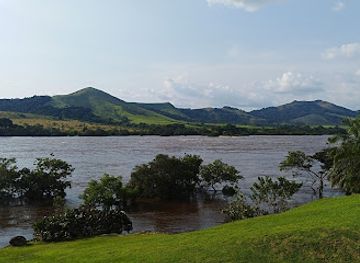
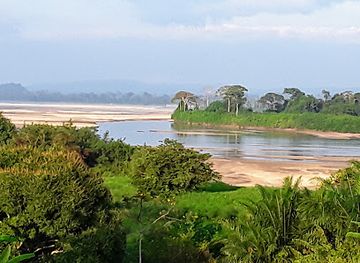
Mount Iboundji is Ogooué-Lolo’s most prominent natural landmark and is regarded as Gabon’s highest summit. Its forested slopes and relative remoteness give it significance beyond its height, although reaching the upper areas is a demanding undertaking rather than a developed tourist walk. The caves around Lastoursville form another defining landscape: their limestone chambers, underground passages and evidence of human use make them important geological and archaeological places. The Ogooué and its tributaries are less a single viewpoint landmark than the geographic framework of the province, shaping settlements, travel and livelihoods across the forest. In the towns, Koulamoutou’s administrative and market areas express the provincial capital’s role, while Lastoursville’s railway environment reflects the modern opening of Gabon’s interior. These landmarks are best understood together: mountain, cave, river and railway reveal the physical conditions and historical routes that have shaped Ogooué-Lolo. Because formal visitor infrastructure is limited, access to natural landmarks should be arranged through local authorities, guides or trusted accommodation providers.
-
National park
Lopé National Park
Explore the breathtaking landscapes and rich biodiversity of Lopé National Park, a UNESCO World Heritage Site in Gabon, ideal for nature lovers and adventurers.
-
River
Ogooue River
Discover the breathtaking beauty and diverse wildlife of the Ogooue River, a hidden gem in Gabon that promises adventure and tranquility.
-
Wildlife park
Parc de la Lekedi
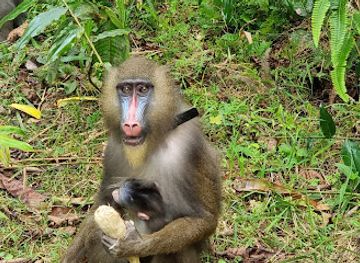
Discover Parc de la Lekedi, Gabon’s premier wildlife park, where adventure meets conservation in a breathtaking natural setting.
-
Observation deck
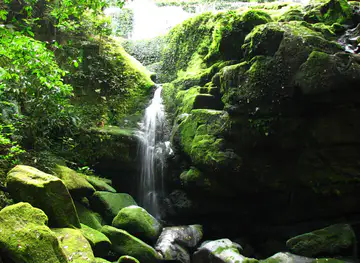
Chutes de Poubara
Explore the stunning Chutes de Poubara in Gabon, where majestic waterfalls and lush landscapes await every adventurous traveler.
Explore Ogooué-Lolo Province on the map
Plan your trip on one map. See where the top cities, national parks and sights are, and book hotels and experiences in a few clicks.
Best hotels in Ogooué-Lolo Province
Best restaurants in Ogooué-Lolo Province
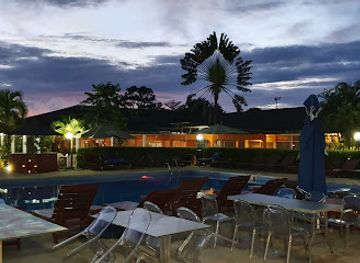
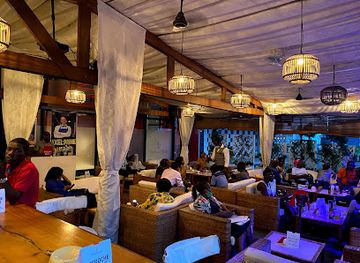
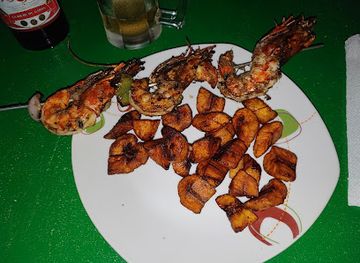
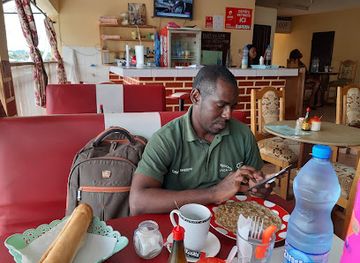
Dining in Ogooué-Lolo is informal and closely tied to household cooking, market produce and small local eateries. Cassava, plantain, rice and maize accompany sauces made with vegetables, peanuts or palm ingredients, while fish from rivers and regional markets is commonly prepared fresh, smoked or grilled. Chicken and other meats may appear in town restaurants, although menus are usually limited and supplies can vary. In Koulamoutou and Lastoursville, visitors will find modest restaurants, cafés and roadside food stalls rather than a concentrated fine-dining scene. Ask about seasonal forest produce, but treat unfamiliar wild foods conservatively and rely on reputable local preparation. Bottled water is the prudent choice, and travellers heading into rural areas should carry snacks because food options become sparse outside settlements. Markets offer the best opportunity to see the ingredients that shape provincial cooking, including plantains, cassava products, fruit and smoked fish.
-
French
Beach Club
Experience the best of French and African cuisine at Beach Club in Libreville - where every meal is a celebration of flavor.
-
Restaurant
Bodega Mbolo
Discover the diverse flavors at Bodega Mbolo in Libreville - where local cuisine meets international delights!
-
Restaurant
Restaurant mimosa
Experience the authentic flavors of Gabon at Restaurant Mimosa – where local ingredients meet culinary creativity.
-
Restaurant
Restaurant La Teranga
Experience authentic African hospitality and vibrant flavors at Restaurant La Teranga in Franceville.
Best bars in Ogooué-Lolo Province
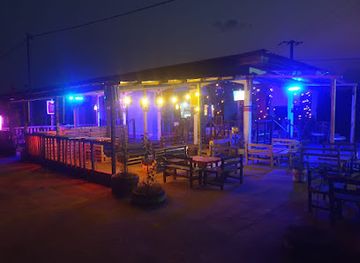
Evening life in Ogooué-Lolo is centred on neighbourhood bars, small restaurants, music and socialising rather than a large nightclub circuit. Koulamoutou has the province’s broadest choice of places to eat and meet in the evening, while Lastoursville’s atmosphere is influenced by its role as a railway and commercial town. In smaller settlements, activity generally winds down earlier and may focus on local bars, food stalls or community gatherings. Music is an important part of social life, but venues and schedules are changeable, so ask locally rather than relying on old online listings. Visitors should keep valuables secure, arrange transport back to their accommodation before drinking and respect local preferences about photography. Evening forest or cave excursions should only take place with an experienced guide and suitable lighting.
-
Bar
9 Provinces Bar Guinness
Discover the lively nightlife at 9 Provinces Bar Guinness in Makanda, where refreshing drinks and a vibrant atmosphere await!
-
Bar
Le Mercato
Discover the vibrant atmosphere of Le Mercato, a local bar in Mouila offering refreshing drinks and a taste of Gabonese culture.
-
Bar
Maison Mère Bar - Guinness
Visit Maison Mère Bar - Guinness in Mouila for a vibrant atmosphere and refreshing drinks, perfect for mingling with locals and tourists.
-
Restaurant
CDI Paul Kouya
Experience authentic Gabonese cuisine at CDI Paul Kouya in Koulamoutou, a must-visit restaurant for food lovers seeking local flavors.

Best nightclubs in Ogooué-Lolo Province
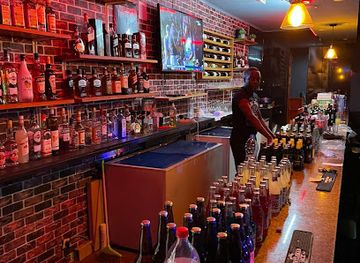
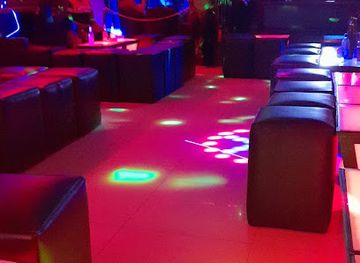
Evening life in Ogooué-Lolo is centred on neighbourhood bars, small restaurants, music and socialising rather than a large nightclub circuit. Koulamoutou has the province’s broadest choice of places to eat and meet in the evening, while Lastoursville’s atmosphere is influenced by its role as a railway and commercial town. In smaller settlements, activity generally winds down earlier and may focus on local bars, food stalls or community gatherings. Music is an important part of social life, but venues and schedules are changeable, so ask locally rather than relying on old online listings. Visitors should keep valuables secure, arrange transport back to their accommodation before drinking and respect local preferences about photography. Evening forest or cave excursions should only take place with an experienced guide and suitable lighting.
-
Night club
Le Moanda
Dive into the vibrant nightlife of Moanda at Le Moanda, where music, dance, and unforgettable moments await you.
-
Night club
Kiss Night Club
Discover the energetic nightlife of Libreville at Kiss Night Club, a premier destination for music, dance, and socializing.
-
Night club
Club XL
Discover the vibrant nightlife of Libreville at Club XL, where music and dance create unforgettable experiences.
-
Bar
Cap Renaissances
Experience the vibrant nightlife at Cap Renaissances, a bar in Gabon with a lively atmosphere and diverse drink selection.

Best shops in Ogooué-Lolo Province
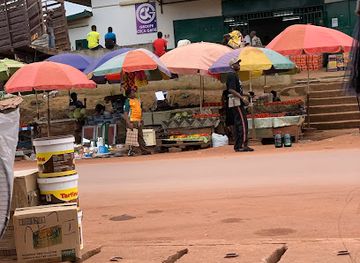
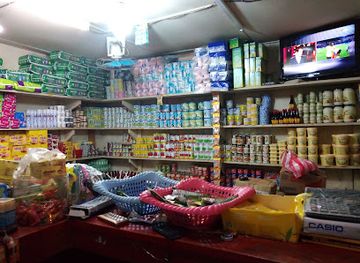
Shopping in Ogooué-Lolo is focused on everyday markets and small independent traders rather than large retail centres. Koulamoutou offers the widest choice for food, household goods and locally produced items, while Lastoursville’s market activity reflects its position on the railway corridor. Visitors can look for cassava products, plantains, smoked fish, seasonal fruit and other foodstuffs, although fresh produce is usually more practical to consume locally than carry long distances. Small craft items, carved objects, woven goods and textiles may be available through local contacts, but quality and provenance vary; buy respectfully and do not purchase archaeological material, protected wildlife products or items made from questionable forest species. Gabonese music, books and art may occasionally be found in larger towns, but stock is not consistent. Carry CFA francs, ask permission before photographing traders or goods, and remember that market purchases are part of everyday commerce rather than a staged souvenir experience.
-
Shopping mall
Lastoursville Grand Marché
Discover the heart of Lastoursville at Grand Marché, where local culture and vibrant commerce come together in a unique shopping experience.
-
Grocery store
Airtel Money A1910 Mikalou Concord
Experience Koulamoutou's local charm at Airtel Money A1910 Mikalou Concord, your essential grocery stop for fresh products and friendly service.
-
Used clothing store
Grècie-shopping
Explore Grècie-shopping in Mounana, where second-hand fashion meets unique treasures for every style and budget.
-
Supermarket
Gare Routière
Explore the vibrant Gare Routière in Koulamoutou, where local culture and everyday life come together in a unique shopping experience.
Get your free copy of our complete guide to Ogooué-Lolo Province, delivered straight to you.
Everything on this page, from attractions and restaurants to essentials and local phrases, in one PDF you can read offline, print or share.
Already have an account? Sign in
Your Ogooué-Lolo Province guide is ready.
We'll send it to · Not you? Sign out

Getting your guide ready…
We are putting together a fresh copy of the Ogooué-Lolo Province guide. This can take up to a minute.
This can take a few moments. If your browser asks, choose Allow so the download can start. You'll find the guide in your Downloads folder.
Nothing happened? Download it again
Sorry, the guide is taking longer than usual. Please try again in a minute, or get it by email instead.
Ogooué-Lolo Province essentials
Currency and Payment
Safety
Emergency Situations
Do's and Don'ts
Local Tips
From Eve
Local phrases worth knowing
You don't need to get them perfect. A few words go a long way, and locals appreciate the effort.
Basics
| English | Local | Say it |
|---|---|---|
| Hello | Bonjour | [Bohn-zhoor] |
| Goodbye | Au revoir | [Oh ruh-vwahr] |
| Yes | Oui | [Wee] |
| No | Non | [Nohn] |
| Please/You're welcome | S'il vous plaît | [Seel voo pleh] |
| Thank you | Merci | [Mehr-see] |
| Excuse me/Sorry | Excusez-moi | [Ex-kew-zay mwah] |
| How are you? | Comment ça va? | [Koh-mohn sah vah] |
| Fine. And you? | Bien. Et vous? | [Byehn. Eh voo] |
| Do you speak English? | Parlez-vous anglais? | [Par-lay voo ahn-glay] |
| I don't understand | Je ne comprends pas | [Zhuh nuh kom-prahn pah] |
Eating & Drinking
| English | Local | Say it |
|---|---|---|
| I'd like to see the menu, please | Je voudrais voir le menu, s'il vous plaît | [Zhuh voo-dray vwah le meh-nu, seel voo pleh] |
| I don't eat meat | Je ne mange pas de viande | [Zhuh nuh mahnj pah duh vyahnd] |
| Cheers! | À votre santé! | [Ah voh-truh sahn-tay] |
| I would like to pay, please | Je voudrais payer, s'il vous plaît | [Zhuh voo-dray pay-ay, seel voo pleh] |
Emergencies
| English | Local | Say it |
|---|---|---|
| Help! | Au secours! | [Oh suh-koor] |
| Go away! | Allez-vous-en! | [Ah-lay voo-zahn] |
| Call the Police! | Appelez la police! | [Ah-peh-lay lah poh-lees] |
| Call a doctor! | Appelez un médecin! | [Ah-peh-lay uhn med-sin] |
| I'm lost | Je suis perdu | [Zhuh swee pair-dyoo] |
| I'm ill | Je suis malade | [Zhuh swee mah-lahd] |
Shopping
| English | Local | Say it |
|---|---|---|
| I'd like to buy... | Je voudrais acheter... | [Zhuh voo-dray ah-sheh-tay] |
| I'm just looking | Je regarde juste | [Zhuh reh-gard zhoost] |
| How much is it? | C'est combien? | [Say kohm-byen] |
| That's too expensive | C'est trop cher | [Say troh shair] |
| Can you lower the price? | Pouvez-vous baisser le prix? | [Poo-vay voo beh-say luh pree] |
Time & Numbers
| English | Local | Say it |
|---|---|---|
| What time is it? | Quelle heure est-il? | [Kell uhr eh-teel] |
| It's one o'clock | Il est une heure | [Eel eh ewn uhr] |
| Half past (10) | Dix heures et demie | [Dees uhr eh duh-mee] |
| Morning | Matin | [Mah-tahn] |
| Afternoon | Après-midi | [Ah-preh-mee-dee] |
| Evening | Soir | [Swahr] |
| Yesterday | Hier | [Ee-air] |
| Today | Aujourd'hui | [Oh-zhoor-dwee] |
| Tomorrow | Demain | [Duh-mehn] |
| 1 | Un | [Uhn] |
| 2 | Deux | [Duh] |
| 3 | Trois | [Trwah] |
| 4 | Quatre | [Kah-truh] |
| 5 | Cinq | [Sank] |
| 6 | Six | [Sees] |
| 7 | Sept | [Set] |
| 8 | Huit | [Wheet] |
| 9 | Neuf | [Nuhf] |
| 10 | Dix | [Dees] |
Transport & Directions
| English | Local | Say it |
|---|---|---|
| Where's a/the...? | Où est un/une...? | [Oo eh uhn/oon] |
| What's the address? | Quelle est l'adresse? | [Kell eh lah-dress] |
| Can you show me (on the map)? | Pouvez-vous me montrer (sur la carte)? | [Poo-vay voo muh mohn-tray (sur lah kart)] |
| When's the next (bus)? | Quand est le prochain (bus)? | [Kahn eh luh pro-shen (boos)] |
| A ticket (to ....) | Un billet (pour ...) | [Uhn bee-yay (poor ...)] |
History of Ogooué-Lolo Province
Early Forest Settlement and Archaeological Evidence
Ogooué-Lolo’s forests and river corridors have supported human settlement for many centuries. Archaeological material from caves and rock shelters around Lastoursville demonstrates that these spaces were used by earlier communities, although the evidence is still being studied and should not be reduced to a single simple narrative. Rivers provided routes through dense forest, while hunting, fishing, gathering and cultivation shaped local economies. The province’s archaeological record is especially valuable because caves can preserve traces of past activity that are less likely to survive in exposed forest environments.
Bantu-Speaking Communities and Forest Cultures
The communities of present-day Ogooué-Lolo emerged from long-term movements and exchanges among Bantu-speaking peoples in the wider central African forest zone. Kota and Punu cultural influences are particularly associated with parts of Gabon, while forest peoples, including Babongo communities, have maintained detailed knowledge of plants, animals and seasonal routes. These histories are not confined to the past: language, kinship, foodways, craft traditions and relationships with the forest continue to shape life in the province. Cultural identities vary between towns, villages and forest settlements.
The Ogooué River and Regional Exchange
The Ogooué system has long connected inland settlements with other parts of Gabon. Although the province is not principally a modern river-tourism destination, waterways historically helped people move goods, communicate and reach wider markets through the forest. The middle Ogooué corridor linked local production and communities with coastal and colonial trading networks. This river geography still helps explain the location of settlements and the importance of road and rail links that later took over much of the long-distance movement of people and commodities.
Colonial Administration and the Naming of Lastoursville
French colonial expansion brought new administrative boundaries, trading practices and transport priorities to the region during the late nineteenth and early twentieth centuries. Lastoursville, formerly known as Mandji in local usage, became associated with the colonial presence and was named after the French explorer and colonial official François Rigail de Lastours. Colonial rule did not replace existing societies; it imposed taxation, labour demands and administrative structures upon them, while missions, trading posts and transport routes altered patterns of settlement and exchange.
Railways and the Opening of the Interior
The modern history of Ogooué-Lolo was transformed by the development of Gabon’s railway system. The Transgabon Railway, built in stages from the late twentieth century, connected the Atlantic port area with the interior and Franceville. Lastoursville became one of the province’s significant railway points, strengthening its role as a transport and commercial centre. Rail travel and associated roads reduced the province’s relative isolation, although many villages and forest areas remain dependent on rural roads, local vehicles and seasonal routes.
Post-Independence Provincial Development
Gabon became independent from France in 1960, and Ogooué-Lolo subsequently developed within the country’s decentralised provincial system. Koulamoutou grew as the administrative capital, while Lastoursville retained its railway and commercial importance. Public services, roads and access to markets have expanded unevenly, and the province remains more lightly developed for tourism than Gabon’s best-known national parks. Contemporary debates about forest protection, rural livelihoods, transport and the value of biodiversity reflect the continuing challenge of balancing economic development with the conservation of the province’s natural environments.
Ogooué-Lolo Province in Photos
Browse through our photo collection highlighting the charm and character of the destination.
Neighbouring regions of Ogooué-Lolo Province
The closest regions to Ogooué-Lolo Province, if you have time for more than one.
-
-

-

-

-


Swipe for more regions
Explore more
Explore more of Gabon
Gabon: Discover Africa's untouched paradise with pristine beaches, diverse wildlife, and rich cultural heritage.
Explore Gabon