

Free Ngounié Province Travel Guide & Mobile App
Explore Ngounié Province with free travel guides. Discover regional history, expert tips, proposed trips, and audio guides on web or mobile app.


Ngounié Province reveals southern Gabon's rainforest, rivers, waterfalls, cultural traditions and quieter routes around Mouila, Fougamou and Waka.
Read more about Ngounié Province
When is the best time to visit Ngounié Province?
Best: June–August · 28°C| Month | High (°C) | Rainfall (mm) |
|---|---|---|
| January | 29 | 150 |
| February | 29 | 140 |
| March | 29 | 160 |
| April | 29 | 170 |
| May | 28 | 140 |
| June (best) | 28 | 130 |
| July (best) | 28 | 120 |
| August (best) | 28 | 130 |
| September | 28 | 141 |
| October | 29 | 151 |
| November | 29 | 161 |
| December | 29 | 171 |
Getting to and around Ngounié Province
How to get there
Transportation
Top city travel guides in Ngounié Province
The cities of Ngounié Province, and the easiest places to base yourself.

Swipe for more cities
Destinations in Ngounié Province
Resorts, valleys and scenic spots worth a trip of their own.

Swipe for more destinations
Best attractions in Ngounié Province
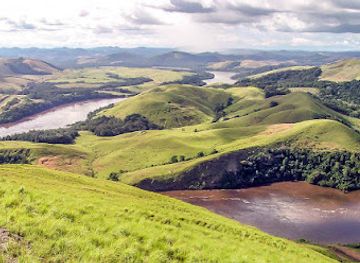
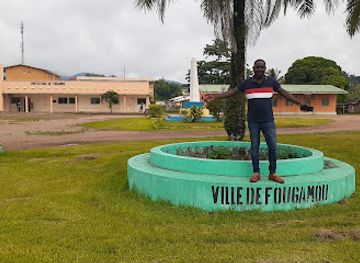
Ngounié's attractions are primarily natural and cultural rather than heavily built for mass tourism. Around Fougamou, the Ngounié River and its rapids and waterfalls provide the province's most accessible landscape experiences, although safe viewing and swimming decisions should always follow local advice. Waka National Park offers rainforest, steep valleys, streams and opportunities for guided wildlife observation, birdwatching and forest interpretation, but facilities and access are limited compared with Gabon's better-known coastal parks. Mouila adds markets, everyday urban life and a useful base for arranging journeys. The roads towards Lébamba, Mbigou and Mimongo lead through village landscapes, forest margins and changing terrain rather than a chain of formal attractions. Cultural experiences can include local food, craft traditions, music and conversations arranged through community hosts, while outdoor excursions may involve boat journeys, short forest walks or visits to rural viewpoints. Ngounié rewards patient travellers who value landscape and local knowledge, but visitors should not expect guaranteed wildlife sightings, marked trails or extensive visitor infrastructure.
-
Water
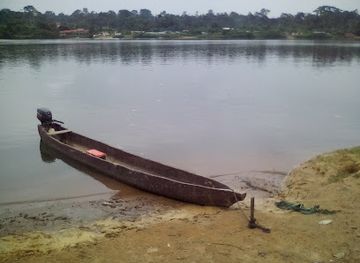
Ngounie River
Discover the serene beauty and rich biodiversity of Gabon's Ngounie River, a haven for nature lovers and adventurers alike.
Best landmarks in Ngounié Province
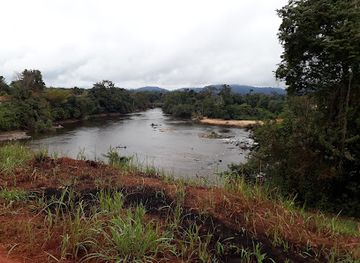
The Ngounié River is the province's defining natural landmark, linking the landscapes around Mouila and Fougamou with a wider network of southern Gabonese waterways. The waterfalls and rapids associated with Fougamou are particularly memorable because they show the river's power in a settled part of the province, close enough to be incorporated into a road journey. In the eastern interior, Waka National Park is a landmark of conservation rather than architecture: its forested valleys represent a protected portion of Gabon's equatorial landscape and help explain the province's ecological importance. Mouila's role as the provincial capital is visible in its administrative centre, roads, markets and riverside setting, although it is not a monumental city. Further south, the forested hills and rural approaches around Lébamba, Mbigou and Mimongo create a landscape identity shaped more by terrain and community life than by individual buildings. These places are best understood through local guidance, since signage and formal interpretation can be limited.
-
National park
Lopé National Park
Discover the breathtaking landscapes and diverse wildlife of Lopé National Park, Gabon's premier destination for eco-tourism and adventure.
-
River
Ngounie River
Experience the serene beauty of Ngounie River, a perfect retreat for nature lovers and adventure seekers in a breathtaking landscape.
-
Tourist attraction
Monument de l'unité
Discover the Monument de l'Unité in Moanda, a powerful symbol of solidarity and pride in Gabon's rich cultural heritage.
-
 National park
Ecosysteem en cultuurlandschap van Lopé-Okanda
Explore the breathtaking landscapes and diverse wildlife of Lopé-Okanda National Park, a UNESCO World Heritage site in Gabon.

Explore Ngounié Province on the map
Plan your trip on one map. See where the top cities, national parks and sights are, and book hotels and experiences in a few clicks.
Best hotels in Ngounié Province
Best restaurants in Ngounié Province
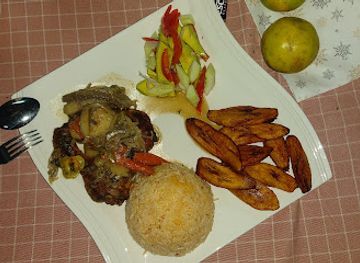
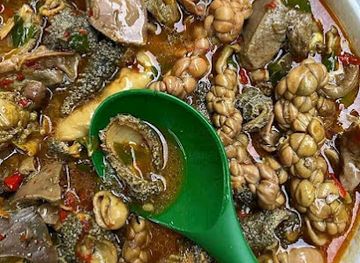
Dining in Ngounié is centred on everyday Gabonese cooking rather than a concentrated restaurant scene. In Mouila and the larger towns, small restaurants and informal eateries commonly serve cassava, plantain, rice, vegetables, grilled or smoked fish, chicken and sauces made with local ingredients. Forest and river environments influence the availability of fish and bush-market produce, although visitors should choose food responsibly and avoid dishes involving protected or threatened wildlife. Markets are useful for fruit, cassava products, peanuts and other provisions, while roadside stalls may offer simple meals when travelling between towns. Gabon's wider culinary influences are also visible in French-style bread, prepared drinks and imported goods. Ask about ingredients and hygiene where menus are informal, and do not assume that a rural eatery will accept cards. Local hosts are often the best source for understanding seasonal produce and finding a dependable meal outside Mouila.
-
Bar
9 Provinces Bar Guinness
Discover the vibrant nightlife at 9 Provinces Bar Guinness in Makanda – where good times and great drinks await!
-
Restaurant
Auberge TSAMBA MAGOTSI
Discover authentic Gabonese cuisine at Auberge TSAMBA MAGOTSI in Fougamou – where every meal is a celebration of local flavors.
-
Brasserie
Société des Brasserie de la Ngounie - SBN ( SOBRAGA )
Experience authentic Gabonese flavors at Société des Brasserie de la Ngounie - SBN (SOBRAGA), where great food meets local brewing traditions.
-
Restaurant
Cafetaria Radina
Discover authentic Gabonese cuisine at Cafetaria Radina in Mouila – where every meal tells a story.

Best bars in Ngounié Province
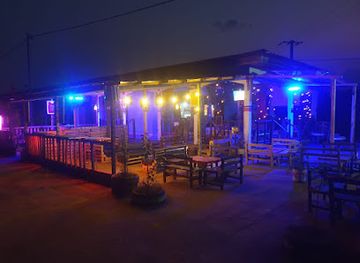
Ngounié has a modest evening scene concentrated in Mouila and other larger settlements. Local bars, small restaurants and hotel terraces are more characteristic than dedicated nightclub districts, with conversation, football, music and occasional dancing shaping the social atmosphere. Fougamou and the smaller towns offer fewer venues and may become quiet early, particularly outside busy periods. Visitors should not expect a continuous late-night service or a large choice of organised entertainment in rural areas. Evening travel beyond town centres can be difficult because roads and streets may be poorly lit, so arrange transport in advance. As elsewhere in Gabon, drinking is only one part of local social life; markets, food, music and community gatherings provide other ways to experience the province after dark.
-
Restaurant
Cafétérias Ahidjo
Discover the authentic flavors of Gabon at Cafétérias Ahidjo in Mouila, where delicious local cuisine meets a welcoming atmosphere.
-
Bar
9 Provinces Bar Guinness
Discover the lively ambiance and diverse beverage selection at 9 Provinces Bar Guinness in Makanda, the perfect destination for relaxation and socializing.
-
Brasserie
Société des Brasserie de la Ngounie - SBN ( SOBRAGA )
Experience the authentic taste of Gabon at Société des Brasserie de la Ngounie, where local brews and rich culture come together.
-
Bar
Le Mercato
Discover the vibrant nightlife at Le Mercato, Mouila's premier bar offering refreshing drinks and a lively atmosphere for tourists.

Best nightclubs in Ngounié Province
Ngounié has a modest evening scene concentrated in Mouila and other larger settlements. Local bars, small restaurants and hotel terraces are more characteristic than dedicated nightclub districts, with conversation, football, music and occasional dancing shaping the social atmosphere. Fougamou and the smaller towns offer fewer venues and may become quiet early, particularly outside busy periods. Visitors should not expect a continuous late-night service or a large choice of organised entertainment in rural areas. Evening travel beyond town centres can be difficult because roads and streets may be poorly lit, so arrange transport in advance. As elsewhere in Gabon, drinking is only one part of local social life; markets, food, music and community gatherings provide other ways to experience the province after dark.
-
Bar
9 Provinces Bar Guinness
Discover the lively spirit of Makanda at 9 Provinces Bar Guinness, where vibrant atmosphere meets refreshing drinks in a local favorite.
-
Night club
Le Moanda
Discover the energetic nightlife at Le Moanda, a premier night club and bar in Moanda, offering vibrant music and local drinks for an unforgettable experience.
-
Night club
Le Phoenix Night Club
Discover the electrifying nightlife at Le Phoenix Night Club, a premier destination in Libreville for pulsating music and an energetic crowd.
-
Night club
Hotel NGOUNIE
Discover the vibrant nightlife of Fougamou at Hotel NGOUNIE, where music and fun blend seamlessly for an unforgettable experience.

Best shops in Ngounié Province
Shopping in Ngounié is practical and local, with Mouila providing the widest choice of markets, small shops and everyday supplies. Fresh produce, cassava, plantains, peanuts, vegetables, smoked fish and other foodstuffs reveal more about the province's economy than formal souvenir outlets do. Smaller towns and villages have roadside stalls and periodic market activity, but selection, trading days and payment arrangements can vary. Visitors may find locally made baskets, carved objects, textiles or other crafts, although quality and availability depend on individual makers rather than a standardised regional craft industry. Ask permission before photographing artisans or their work, and buy cultural objects only when their origin and legal transport are clear. Outside Mouila, carry cash and do not rely on card payments. Gabonese food products and modest handmade goods are generally more practical souvenirs than fragile or unverified forest materials.
-
Shopping mall
Lébamba,gabon
Explore Lébamba, Libreville's premier shopping mall, blending local culture, vibrant shops, and unique business networking opportunities.
-
Clothing store
Marché Central
Discover the vibrant styles of Gabonese fashion at Marché Central in Mouila, where every garment tells a story.
-
Grocery store
Plaza del mercado de Gabón
Experience local flavors and vibrant culture at Plaza del Mercado de Gabón, a must-visit grocery store in Mouila for every traveler.
-
Shopping mall
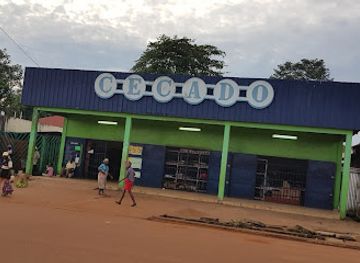
Cecado Lebamba
Discover a vibrant mix of shopping and local culture at Cecado Lebamba in Nzenzélé, where unique finds and delicious cuisine await.


Get your free copy of our complete guide to Ngounié Province, delivered straight to you.
Everything on this page, from attractions and restaurants to essentials and local phrases, in one PDF you can read offline, print or share.
Already have an account? Sign in
Your Ngounié Province guide is ready.
We'll send it to · Not you? Sign out

Getting your guide ready…
We are putting together a fresh copy of the Ngounié Province guide. This can take up to a minute.
This can take a few moments. If your browser asks, choose Allow so the download can start. You'll find the guide in your Downloads folder.
Nothing happened? Download it again
Sorry, the guide is taking longer than usual. Please try again in a minute, or get it by email instead.
Ngounié Province essentials
Currency and Payment
Safety
Emergency Situations
Do's and Don'ts
Local Tips
From Eve
Local phrases worth knowing
You don't need to get them perfect. A few words go a long way, and locals appreciate the effort.
Basics
| English | Local | Say it |
|---|---|---|
| Hello | Ndzong | [ndzong] |
| Goodbye | Ndzogha | [ndzogha] |
| Yes | Eyi | [eyi] |
| No | Ote | [ote] |
| Please/You're welcome | Mokoko | [mokoko] |
| Thank you | Mekeng | [mekeng] |
| Excuse me/Sorry | Nganga | [nganga] |
| How are you? | O ndzong na? | [o ndzong na] |
| Fine. And you? | Ndzong, na o? | [ndzong, na o] |
| Do you speak English? | O kanga English? | [o kanga English] |
| I don't understand | Nda ombwa | [nda ombwa] |
Eating & Drinking
| English | Local | Say it |
|---|---|---|
| I'd like to see the menu, please | Nda vanda menu, mokoko | [nda vanda menu, mokoko] |
| I don't eat meat | Nda ombwa nyama | [nda ombwa nyama] |
| Cheers! | O ngoma! | [o ngoma] |
| I would like to pay, please | Nda vanda bonga, mokoko | [nda vanda bonga, mokoko] |
Emergencies
| English | Local | Say it |
|---|---|---|
| Help! | Ndzong! | [ndzong] |
| Go away! | Vanda nkitanga! | [vanda nkitanga] |
| Call the Police! | Ndzong a Police! | [ndzong a Police] |
| Call a doctor! | Ndzong a nganga! | [ndzong a nganga] |
| I'm lost | Nda ombwa | [nda ombwa] |
| I'm ill | Nda ombwa nzambi | [nda ombwa nzambi] |
Shopping
| English | Local | Say it |
|---|---|---|
| I'd like to buy... | Nda vanda tanga... | [nda vanda tanga] |
| I'm just looking | Nda nde mbandja | [nda nde mbandja] |
| How much is it? | O mbana na? | [o mbana na] |
| That's too expensive | O ngoma mbana na | [o ngoma mbana na] |
| Can you lower the price? | O vanda zinga mbana? | [o vanda zinga mbana] |
Time & Numbers
| English | Local | Say it |
|---|---|---|
| What time is it? | O na mbana? | [o na mbana] |
| It's one o'clock | O na moanda | [o na moanda] |
| Half past (10) | O na nzo (10) | [o na nzo] |
| Morning | Ombala | [ombala] |
| Afternoon | Mbandja | [mbandja] |
| Evening | Ngoma | [ngoma] |
| Yesterday | Ena | [ena] |
| Today | Oye | [oye] |
| Tomorrow | O linga | [o linga] |
| 1 | Mokolo | [mokolo] |
| 2 | Mboka | [mboka] |
| 3 | Mokomi | [mokomi] |
| 4 | Mokolo nze | [mokolo nze] |
| 5 | Mokolo ntu | [mokolo ntu] |
| 6 | Mokolo nli | [mokolo nli] |
| 7 | Mokolo nzu | [mokolo nzu] |
| 8 | Mokolo nanga | [mokolo nanga] |
| 9 | Mokolo nene | [mokolo nene] |
| 10 | Mokolo kumi | [mokolo kumi] |
Transport & Directions
| English | Local | Say it |
|---|---|---|
| Where's a/the...? | O na a...? | [o na a] |
| What's the address? | O na mbana a...? | [o na mbana a] |
| Can you show me (on the map)? | O vanda kanga (na mboko)? | [o vanda kanga na mboko] |
| When's the next (bus)? | O na mbandja (bus)? | [o na mbandja bus] |
| A ticket (to ....) | Mokolo a (....) | [mokolo a] |
History of Ngounié Province
Early Forest Communities and Archaeological Landscapes
The forests and river valleys of present-day Ngounié have supported human communities for many centuries. Archaeological evidence from the wider southern Gabonese region includes stone tools, pottery and iron-working traditions, although many sites remain insufficiently documented for visitors. Forest peoples developed detailed knowledge of seasonal plants, animals and waterways, while farming communities cultivated crops suited to humid equatorial conditions. The province's later cultural diversity grew from longstanding movement and interaction among communities speaking related Bantu languages, rather than from a single historical population.
Bantu Migrations and Regional Cultural Formation
Over the long precolonial period, Bantu-speaking peoples moved through and settled the forests and savannah margins of Gabon. In Ngounié, Punu, Tsogo, Nzebi and other communities formed connected but distinct social and cultural worlds. Rivers and forest routes linked villages, while kinship, exchange, farming, fishing and specialist crafts shaped local economies. Masks, music and initiation traditions associated with southern and central Gabonese cultures are part of this broader historical inheritance, though their meanings belong to specific communities and should not be treated as interchangeable tourist folklore.
Trade, Missionary Activity and Colonial Expansion
During the nineteenth century, European commercial and missionary interests expanded through Gabon's river networks and coastal connections. Colonial administration gradually extended inland, bringing new boundaries, taxation, labour demands, roads and trading posts. The Ngounié corridor became increasingly connected to Libreville and other parts of the territory, while local societies adapted to Christianity, colonial schooling and new commercial systems. The effects were uneven: administrative towns changed more rapidly than remote villages, and older political and cultural structures continued alongside colonial institutions.
Gabonese Independence and the Growth of Mouila
Gabon became independent from France in 1960, and Mouila developed as the administrative centre of the newly defined Ngounié Province. Provincial institutions, schools, health services and road links strengthened the town's regional role. Independence did not erase older patterns of connection: villages remained tied to family land, farming and forest resources, while Mouila grew as a place of commerce, education and public administration. The province's contemporary identity therefore reflects both national state-building and enduring local community networks.
Forest Conservation and Waka National Park
The late twentieth and early twenty-first centuries brought greater international attention to Gabon's rainforests and biodiversity. Waka National Park was established in 2002 as part of Gabon's national park system, protecting a substantial forest landscape in Ngounié. Its importance lies in habitat conservation, ecological research and the protection of river valleys and forest species rather than in heavily developed tourism infrastructure. Access and activities can be seasonal and require local arrangements, so the park is best visited with realistic expectations and respect for conservation rules.
Contemporary Rural Change
Ngounié today combines provincial administration, small-town commerce, subsistence and market agriculture, forestry interests and conservation. Roads have widened access to some communities, but distance, rain and maintenance still influence movement across the province. Mouila and the larger road corridors provide services that are much less available in forest settlements. This balance between development and environmental protection is central to the region's present character, as communities seek livelihoods while the province's forests and rivers remain nationally and internationally significant.
Ngounié Province in Photos
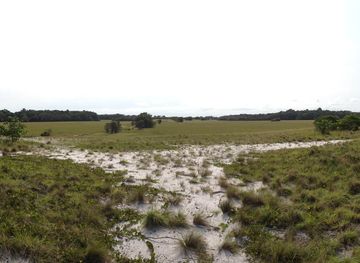
Browse through our photo collection highlighting the charm and character of the destination.
Neighbouring regions of Ngounié Province
The closest regions to Ngounié Province, if you have time for more than one.
-
-

-

-

-


Swipe for more regions
Explore more
Explore more of Gabon
Gabon: Discover Africa's untouched paradise with pristine beaches, diverse wildlife, and rich cultural heritage.
Explore Gabon