

Free Ogooué-Maritime Province Travel Guide & Mobile App
Explore Ogooué-Maritime Province with free travel guides. Discover regional history, expert tips, proposed trips, and audio guides on web or mobile app.


Ogooué-Maritime combines Port-Gentil’s Atlantic heritage with Loango’s forests, lagoons, beaches and wildlife in western Gabon.
Read more about Ogooué-Maritime Province
When is the best time to visit Ogooué-Maritime Province?
Best: July–September · 29–30°C| Month | High (°C) | Rainfall (mm) |
|---|---|---|
| January | 30 | 200 |
| February | 30 | 180 |
| March | 30 | 220 |
| April | 30 | 230 |
| May | 30 | 210 |
| June | 30 | 140 |
| July (best) | 29 | 110 |
| August (best) | 29 | 100 |
| September (best) | 30 | 120 |
| October | 30 | 180 |
| November | 30 | 210 |
| December | 30 | 190 |
Getting to and around Ogooué-Maritime Province
How to get there
Transportation
Top city travel guides in Ogooué-Maritime Province
The cities of Ogooué-Maritime Province, and the easiest places to base yourself.

Swipe for more cities
Best attractions in Ogooué-Maritime Province
Ogooué-Maritime’s attractions are divided between Port-Gentil’s urban and maritime character and the protected landscapes of the southern and western coast. In Port-Gentil, visitors can explore the port environment, older streets, markets, churches and waterfront life, while boat excursions reveal the estuarine geography around Mandji Island. The province’s major natural draw is Loango National Park, where guided journeys may combine rainforest, open savannah, lagoons, rivers and Atlantic beaches. Wildlife watching can include forest elephants, hippopotamuses, buffalo, monkeys and many bird species, although sightings are never guaranteed. The park is also suited to boat-based exploration and carefully managed coastal activities rather than self-guided touring. Around Gamba and the Ndougou Lagoon, the landscape brings together wetlands, forest and conservation areas with the visible presence of the petroleum industry. Omboué and smaller coastal settlements provide access points and a window onto riverine and fishing livelihoods, but visitor infrastructure is limited. Travellers should expect a nature destination requiring advance arrangements, local guides and patience rather than a dense chain of conventional attractions.
-
Lagoon
Ndogo Lagoon
Discover Ndogo Lagoon: A peaceful Gabonese paradise with serene waters, lush landscapes, and abundant wildlife, perfect for nature lovers and adventurers.
-
Amusement park
Complexe RIVERLAND
Experience thrilling rides and family fun at Complexe RIVERLAND, Port-Gentil's top amusement park. Open daily for unforgettable adventures!
-
Catholic church
Cathédrale Saint Louis
Discover the serene beauty and rich history of Cathédrale Saint Louis, Port-Gentil's oldest church and a cultural landmark.
-
Tourist attraction
Liana Bridge of Poubara
Experience the thrill of crossing a unique liana vine bridge, a testament to Gabonese tradition and natural beauty near Franceville.


Best landmarks in Ogooué-Maritime Province
The most recognisable built landmark in Ogooué-Maritime is Port-Gentil itself, whose position on Mandji Island expresses the province’s relationship with the Atlantic, the Ogooué delta and maritime trade. Its port, waterfront and older urban fabric reflect successive phases of commerce, colonial administration and petroleum development, although industrial areas may have restricted access. The province’s defining natural landmarks are found in Loango National Park, where long Atlantic beaches meet coastal forest, open grassland, lagoons and river mouths. These contrasts create a distinctive coastal landscape and explain the park’s importance for wildlife and conservation. The Ndougou Lagoon around Gamba is another major geographical feature, combining broad water, wetlands and forest with settlements and oil infrastructure. Rather than a region dominated by castles or monumental civic architecture, Ogooué-Maritime is marked by estuaries, island settlements, beaches, port facilities and the visible meeting of protected ecosystems with a modern extractive economy.
-
Movie theater
CanalOlympia Mandji'Ozangué
Discover the vibrant cinematic culture at CanalOlympia Mandji'Ozangué in Port-Gentil, Gabon. Experience films like never before!
-
Lagoon
Ndogo Lagoon
Explore the serene beauty of Ndogo Lagoon in Gabon, a tranquil escape perfect for nature lovers and adventure seekers alike.
-
Catholic church
Cathédrale Saint Louis
Explore the architectural beauty and serene atmosphere of Cathédrale Saint Louis in Port-Gentil, a cultural gem rich in Gabon's heritage.
-
Tourist attraction
Loango national Park, Lodge & wildlife camps
Experience the breathtaking landscapes and rich wildlife of Loango National Park, an untouched gem in Gabon perfect for eco-adventures and relaxation.


Explore Ogooué-Maritime Province on the map
Plan your trip on one map. See where the top cities, national parks and sights are, and book hotels and experiences in a few clicks.
Best hotels in Ogooué-Maritime Province
Best restaurants in Ogooué-Maritime Province
Dining in Ogooué-Maritime reflects Gabon’s Atlantic coast, river systems and cosmopolitan port life. In Port-Gentil, restaurants, cafés and hotel dining rooms commonly offer fish, prawns and other seafood alongside Gabonese staples such as cassava, plantain, rice, grilled meats and spicy sauces. Smoked fish and seafood are important in coastal food culture, while markets provide a more direct view of produce used in household cooking. French and wider West and Central African influences appear in urban menus, but locally prepared fish, stews and grilled dishes offer the clearest sense of place. Outside Port-Gentil, choices are narrower and meals are often linked to accommodation, camp kitchens or pre-arranged excursions, particularly in the Loango and Gamba areas. Travellers heading into remote districts should confirm meal arrangements and carry suitable snacks, as restaurants and reliable food supplies cannot be assumed. Responsible visitors should favour seasonal local produce and respect community rules when buying food in smaller settlements.
-
Tapas Bar
Marina Social Beach
Discover Marina Social Beach: A vibrant tapas bar in Port-Gentil offering delightful small plates and stunning ocean views.
-
Restaurant
Le Copacabana
Savor the best of Gabonese cuisine at Le Copacabana - a vibrant dining experience in Port-Gentil.
-
Restaurant
Planet Grill
Experience exquisite dining at Planet Grill in Port-Gentil with diverse flavors and a welcoming atmosphere perfect for all travelers.
-
Restaurant
COCORICO
Experience the vibrant flavors of Gabon at Cocorico in Port-Gentil - where every meal is a celebration!


Best bars in Ogooué-Maritime Province
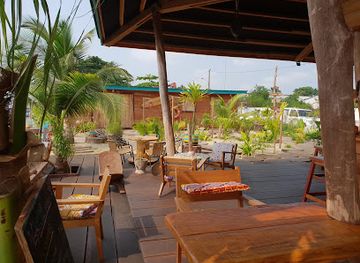
Port-Gentil has the province’s broadest evening scene, with hotel bars, cafés, restaurants and informal drinking places serving residents, business travellers and the city’s maritime and petroleum communities. Evening entertainment is generally concentrated in the urban area rather than spread across the province, and the character of individual venues can change, so current local advice is more dependable than fixed listings. In smaller towns such as Omboué and Gamba, nightlife is modest and centres on local bars, accommodation facilities, conversation and occasional music rather than a large nightclub circuit. Lodges and camps near Loango may offer a quiet drink after guided activities, but guests should not expect late-night services or extensive entertainment. Alcohol is not necessary for experiencing local culture; markets, waterfront activity, food and conversations provide more representative ways to spend an evening.
-
Tapas Bar
Marina Social Beach
Experience the vibrant culinary scene at Marina Social Beach, where exquisite tapas meet stunning ocean views in Port-Gentil.
-
Restaurant
Joe's Restaurant & Bar
Experience the vibrant culinary scene at Joe's Restaurant & Bar in Port-Gentil, where local flavors meet international cuisine in a lively setting.
-
Pub
Le Maestro
Discover the vibrant nightlife at Le Maestro in Port-Gentil, where great drinks and dancing come together in a lively atmosphere.
-
Bar
Premium Bar
Discover the vibrant nightlife of Port-Gentil at Premium Bar, where great drinks and a lively atmosphere await.


Best nightclubs in Ogooué-Maritime Province
Port-Gentil has the province’s broadest evening scene, with hotel bars, cafés, restaurants and informal drinking places serving residents, business travellers and the city’s maritime and petroleum communities. Evening entertainment is generally concentrated in the urban area rather than spread across the province, and the character of individual venues can change, so current local advice is more dependable than fixed listings. In smaller towns such as Omboué and Gamba, nightlife is modest and centres on local bars, accommodation facilities, conversation and occasional music rather than a large nightclub circuit. Lodges and camps near Loango may offer a quiet drink after guided activities, but guests should not expect late-night services or extensive entertainment. Alcohol is not necessary for experiencing local culture; markets, waterfront activity, food and conversations provide more representative ways to spend an evening.
-
Tapas Bar
Marina Social Beach
Enjoy a vibrant dining experience at Marina Social Beach, the premier tapas bar in Port-Gentil, known for its delicious bites and stunning seaside views.
-
Pub
Le Maestro
Discover the vibrant nightlife of Port-Gentil at Le Maestro, where great drinks and lively atmosphere come together for an unforgettable experience.
-
Bar
Le Calu Swimming
Experience the vibrant nightlife of Port Gentil at Le Calu Swimming, where culture, music, and refreshing drinks create unforgettable memories.
-
Bar
Premium Bar
Discover the lively atmosphere of Premium Bar in Port-Gentil, offering affordable drinks and a vibrant social scene perfect for tourists.


Best shops in Ogooué-Maritime Province
Port-Gentil is the province’s main shopping centre, with markets, small food shops, pharmacies, supermarkets and independent retailers serving the urban population. Markets are useful for observing the everyday trade in fruit, vegetables, cassava products, smoked fish and seafood, while larger shops are the more dependable places for packaged provisions before travel into remote areas. In smaller settlements around Omboué and Gamba, retail choice is limited and supplies should not be left until the last minute. Appropriate souvenirs may include locally made baskets, carved woodwork, textiles and regional food products, but buyers should check that natural materials have been legally and sustainably sourced. Shells, wildlife products, archaeological objects and plants should never be removed from protected areas or purchased without clear proof of lawful origin. Port-Gentil is better for practical shopping than luxury retail, and community-based purchases arranged through reputable guides can provide a more direct connection with local craft traditions.
-
Supermarket
Supermarché Casino
Explore the vibrant selection at Supermarché Casino, the go-to supermarket in Port-Gentil for all your grocery needs.
-
Home goods store
Tout à 1000 francs
Explore Tout à 1000 Francs for unique home goods and local crafts in Port-Gentil, perfect for capturing the essence of Gabonese culture.
-
Supermarket
River dock - SAM GABON
Experience the local culture at River Dock - SAM GABON, a vibrant supermarket in Port-Gentil filled with Gabonese flavors and everyday essentials.
-
Supermarket
Supermarché SAMBA
Explore local flavors and everyday essentials at Supermarché SAMBA in Port-Gentil, the bustling supermarket offering a taste of Gabon.


Get your free copy of our complete guide to Ogooué-Maritime Province, delivered straight to you.
Everything on this page, from attractions and restaurants to essentials and local phrases, in one PDF you can read offline, print or share.
Already have an account? Sign in
Your Ogooué-Maritime Province guide is ready.
We'll send it to · Not you? Sign out

Getting your guide ready…
We are putting together a fresh copy of the Ogooué-Maritime Province guide. This can take up to a minute.
This can take a few moments. If your browser asks, choose Allow so the download can start. You'll find the guide in your Downloads folder.
Nothing happened? Download it again
Sorry, the guide is taking longer than usual. Please try again in a minute, or get it by email instead.
Ogooué-Maritime Province essentials
Currency and Payment
Safety
Emergency Situations
Do's and Don'ts
Local Tips
From Eve
Local phrases worth knowing
You don't need to get them perfect. A few words go a long way, and locals appreciate the effort.
Basics
| English | Local | Say it |
|---|---|---|
| Hello | Ndjabi | [ndʒabi] |
| Goodbye | Ombu | [ɔmbu] |
| Yes | Ewi | [ɛwi] |
| No | Nda | [nda] |
| Please/You're welcome | Mokolo | [mokolo] |
| Thank you | Meké | [mɛkɛ] |
| Excuse me/Sorry | Kele mabe | [kɛlɛ mabe] |
| How are you? | Nangou? | [naŋɡu] |
| Fine. And you? | Nzamba. Na nga? | [nzaɱba. na ŋa] |
| Do you speak English? | Oya lingui anglé? | [ɔja liŋɡi aŋɡle] |
| I don't understand | Ongou ndanga | [ɔŋɡu ndanga] |
Eating & Drinking
| English | Local | Say it |
|---|---|---|
| I'd like to see the menu, please | Nda yé menu, mokolo | [nda je menu, mokolo] |
| I don't eat meat | Nda nanga nyama | [nda naŋa ɲama] |
| Cheers! | Ngwama! | [ŋɡwama] |
| I would like to pay, please | Nda yé libala, mokolo | [nda je libala, mokolo] |
Emergencies
| English | Local | Say it |
|---|---|---|
| Help! | Bongo! | [bɔŋɡo] |
| Go away! | Koleka! | [kɔlɛka] |
| Call the Police! | Koleka police! | [kɔlɛka pɔlis] |
| Call a doctor! | Koleka dokita! | [kɔlɛka dɔkita] |
| I'm lost | Nda zali mboka | [nda zali mbɔka] |
| I'm ill | Nda zali kitoko | [nda zali kiˈtɔkɔ] |
Shopping
| English | Local | Say it |
|---|---|---|
| I'd like to buy... | Nda yé benga... | [nda je bɛŋa] |
| I'm just looking | Nda zali kanga | [nda zali kaŋa] |
| How much is it? | Nangou boti? | [naŋɡu bɔti] |
| That's too expensive | Ongou se boti | [ɔŋɡu se bɔti] |
| Can you lower the price? | Oya kanga boti? | [ɔja kaŋa bɔti] |
Time & Numbers
| English | Local | Say it |
|---|---|---|
| What time is it? | Nangou ntango? | [naŋɡu ntaŋɡo] |
| It's one o'clock | Zali moko ntango | [zali mɔkɔ ntaŋɡo] |
| Half past (10) | Mbala na (10) | [mbala na (10)] |
| Morning | Mokili | [mɔkili] |
| Afternoon | Ngonga | [ŋɔŋɡa] |
| Evening | Mokolo | [mɔkolo] |
| Yesterday | Mokili ya | [mɔkili ja] |
| Today | Lelo | [lɛlo] |
| Tomorrow | Bokolo | [bɔkɔlo] |
| 1 | Moko | [mɔkɔ] |
| 2 | Mbale | [mbaɪle] |
| 3 | Misala | [misaɭa] |
| 4 | Nne | [nɛ] |
| 5 | Tano | [tano] |
| 6 | Sita | [sita] |
| 7 | Saba | [saba] |
| 8 | Nane | [nane] |
| 9 | Tisa | [tisa] |
| 10 | Kumi | [kumi] |
Transport & Directions
| English | Local | Say it |
|---|---|---|
| Where's a/the...? | E na ...? | [ɛ na ...?] |
| What's the address? | Oyo adresse? | [ɔjo adɾɛs] |
| Can you show me (on the map)? | Oya yele ngai (na map)? | [ɔja jɛlɛ ŋaɪ (na map)] |
| When's the next (bus)? | Nangou mbanda (bus)? | [naŋɡu mbanda (bus)] |
| A ticket (to ....) | Billet (na ...) | [biˈjɛt (na ...)] |
History of Ogooué-Maritime Province
Early Coastal Communities and Exchange
Long before the modern province existed, peoples living along the Ogooué delta, Atlantic shore and lagoon systems developed economies based on fishing, forest resources, farming and river travel. Communities including the Orungu and related coastal groups participated in regional exchange networks linking the estuary with inland societies. Waterways were the principal routes through this difficult terrain, and their importance remains visible in the settlement pattern of Port-Gentil, Omboué and the communities around the Ndougou Lagoon.
Portuguese Contact and the Atlantic Trade
Portuguese navigators reached the Gabonese coast during the early period of European maritime exploration, and the estuaries of the region subsequently became connected to Atlantic commercial networks. European traders sought ivory, wax, timber and enslaved people, while coastal leaders controlled access to inland routes and negotiated with foreign merchants. The effects of this trade were profound but uneven, altering political relationships and population patterns along the coast. Later European commerce continued to rely on the same navigable waterways and port approaches.
French Colonial Administration
During the late nineteenth century, France established colonial control over Gabon, gradually extending administrative and commercial authority along the coast and inland waterways. Port-Gentil developed as a port and trading centre on Mandji Island, while smaller coastal settlements remained linked to river transport and subsistence economies. Colonial rule introduced new administrative boundaries, Christian missions and export-oriented commerce, but it also imposed taxation, labour demands and external control over land and resources. Many of the province’s modern urban and transport patterns date from this period.
Port-Gentil and the Rise of Petroleum
The discovery and development of petroleum transformed Port-Gentil during the twentieth century, giving the city a central role in Gabon’s economy and making it one of the country’s most important industrial and maritime centres. Oil operations also expanded around the Gamba area, particularly at Rabi-Kounga. The industry brought employment, infrastructure and international connections, while creating lasting questions about environmental management, coastal development and the relationship between extractive activity and local livelihoods.
Independence and Urban Transformation
Gabon became independent from France in 1960, and Port-Gentil continued to grow as a national economic centre. The city’s identity has since been shaped by petroleum, shipping, migration from other parts of Gabon and longstanding coastal communities. Its history is therefore visible not only in older buildings and religious institutions but also in industrial infrastructure, civic life and the contrast between a commercially connected city and the province’s more isolated rural and lagoon settlements.
National Parks and Conservation
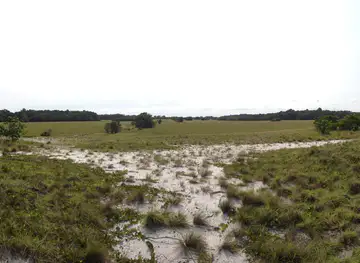
Gabon created a network of national parks in 2002, including Loango National Park in Ogooué-Maritime. The park brought formal protection to a remarkable combination of coastal forest, savannah, lagoons, rivers and beaches, supporting efforts to conserve elephants, hippopotamuses, buffalo, primates and birdlife. Conservation in the province is closely connected to surrounding communities, tourism operators and the petroleum sector. Loango’s significance lies not simply in individual species but in the protection of a large, connected coastal ecosystem.
Ogooué-Maritime Province in Photos
Browse through our photo collection highlighting the charm and character of the destination.
Neighbouring regions of Ogooué-Maritime Province
The closest regions to Ogooué-Maritime Province, if you have time for more than one.
-
-

-

-

-


Swipe for more regions
Explore more
Explore more of Gabon
Gabon: Discover Africa's untouched paradise with pristine beaches, diverse wildlife, and rich cultural heritage.
Explore Gabon