

Uplistsikhe Travel Guide - Free Web & App
Your ultimate guide to Uplistsikhe. Discover top landmarks, proposed trips, and local tips. Free on the web or via the Evendo companion app.


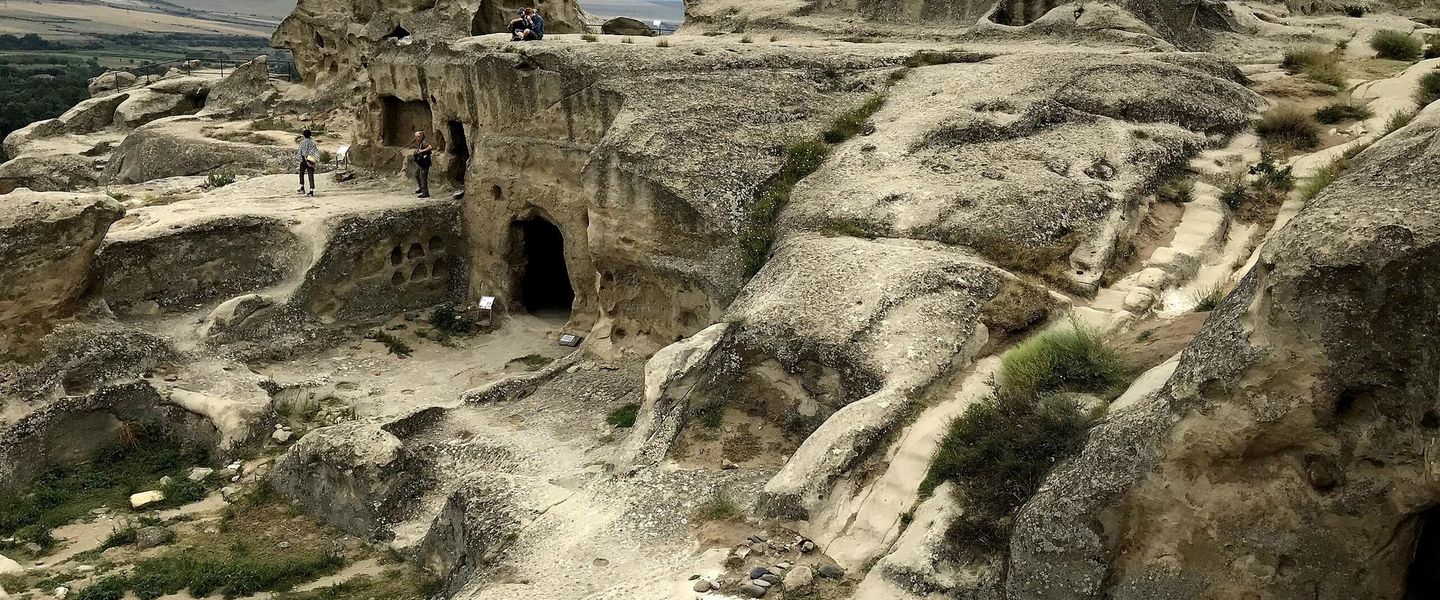


Uplistsikhe, Georgia, is an ancient rock-hewn town near Gori, with cave streets, Mtkvari views and a vivid window onto the country’s early history.
A Rock-Hewn Settlement Above the River
Uplistsikhe is one of Georgia’s most remarkable archaeological landscapes: an ancient town carved into a sandstone ridge above the left bank of the Mtkvari River, near the city of Gori in the Shida Kartli region. Its name is commonly translated as “Lord’s Fortress”, and the surviving caves, chambers, terraces and passageways reveal a settlement that developed over many centuries rather than a single engineered complex. Open courtyards and exposed rock create a striking setting, with broad views towards the river valley and the surrounding plains.Read more about Uplistsikhe
Layers of Pagan and Christian History
Visiting from Gori
When is the best time to visit Uplistsikhe?
Best: April–May, September · 21–27°C| Month | High (°C) | Rainfall (mm) |
|---|---|---|
| January | 8 | 50 |
| February | 10 | 40 |
| March | 16 | 40 |
| April (best) | 21 | 40 |
| May (best) | 25 | 60 |
| June | 29 | 80 |
| July | 31 | 90 |
| August | 30 | 80 |
| September (best) | 27 | 60 |
| October | 20 | 60 |
| November | 14 | 50 |
| December | 9 | 50 |
Getting to and around Uplistsikhe
How to get there
Transportation
Best attractions in Uplistsikhe

Explore Uplistsikhe on the map
Plan your trip on one map. See where the top attractions, landmarks, restaurants and hotels are, and book hotels and experiences in a few clicks.
Best hotels in Uplistsikhe
Best restaurants in Uplistsikhe
Uplistsikhe has limited on-site dining, so most visitors eat in Gori or arrange food as part of a private excursion. Gori’s restaurants, cafés and family-run establishments provide opportunities to try Georgian staples such as khinkali dumplings, khachapuri cheese bread, lobio, grilled meats, walnut-based dishes and seasonal salads. Shida Kartli is also associated with fruit growing, and apples, peaches and other produce may appear in local markets or home-style cooking. Visitors travelling through the surrounding villages may encounter small roadside sellers or informal food stops, but these are not a substitute for a fully developed dining district. Wine is central to Georgian food culture, although the most famous wine areas lie elsewhere in the country; local meals in Gori may still include regional Georgian wines, chacha or non-alcoholic fruit drinks. Carrying water for the archaeological visit is sensible, particularly in hot weather.
Best bars in Uplistsikhe
Uplistsikhe itself has no established nightlife district and is generally visited during daylight hours. Evening options are concentrated in Gori, where cafés, restaurants, hotel lounges and traditional venues provide a quieter social atmosphere rather than a large club scene. Georgian hospitality often centres on long meals, conversation and shared toasts, with the supra tradition forming an important cultural reference, although a formal supra is not guaranteed at an ordinary restaurant. Visitors staying in the countryside may find evenings shaped more by guesthouse dining, village quiet and views across the Mtkvari valley than by organised entertainment. Seasonal cultural events in Gori and the wider region can add evening activity, but programmes vary, so visitors should check locally rather than assume that a performance or festival will be taking place.
Get your free copy of our complete guide to Uplistsikhe, delivered straight to you.
Everything on this page, from attractions and restaurants to essentials and local phrases, in one PDF you can read offline, print or share.
Already have an account? Sign in
Your Uplistsikhe guide is ready.
We'll send it to · Not you? Sign out

Getting your guide ready…
We are putting together a fresh copy of the Uplistsikhe guide. This can take up to a minute.
This can take a few moments. If your browser asks, choose Allow so the download can start. You'll find the guide in your Downloads folder.
Nothing happened? Download it again
Sorry, the guide is taking longer than usual. Please try again in a minute, or get it by email instead.
Uplistsikhe essentials
Currency and Payment
Safety
Emergency Situations
Do's and Don'ts
Local Tips
From Eve
Local phrases worth knowing
You don't need to get them perfect. A few words go a long way, and locals appreciate the effort.
Basics
| English | Local | Say it |
|---|---|---|
| Hello | გამარჯობა | [gamardjoba] |
| Goodbye | ნახვამდი | [nakhvamdi] |
| Yes | კი | [ki] |
| No | არა | [ara] |
| Please/You're welcome | გთხოვ | [gtkhov] |
| Thank you | მადლობა | [madloba] |
| Excuse me/Sorry | ბოდიში | [bodishi] |
| How are you? | როგორ ხარ? | [rogor khar?] |
| Fine. And you? | კარგად. შენ? | [kargad. shen?] |
| Do you speak English? | იცით ინგლისური? | [itsit inglisuri?] |
| I don't understand | არ ვარგისი | [ar vargisi] |
Eating & Drinking
| English | Local | Say it |
|---|---|---|
| I'd like to see the menu, please | გთხოვ მენიუს ნახო | [gtkhov menius nakh'o] |
| I don't eat meat | არ მინდა ხორცი | [ar minda khorts'i] |
| Cheers! | გაუმარჯოს! | [gaumardjos] |
| I would like to pay, please | გთხოვ გადახდო | [gtkhov gadakhdo] |
Emergencies
| English | Local | Say it |
|---|---|---|
| Help! | დახმარება! | [dakhmareba!] |
| Go away! | წადი პირველად! | [ts'adi p'irvelad!] |
| Call the Police! | შეაძენეთ პოლიცია! | [sheadzenet politsia!] |
| Call a doctor! | შეაძენეთ მკვლელი! | [sheadzenet mk'vleli!] |
| I'm lost | გავკაზი | [gavkazi] |
| I'm ill | მე ავადმყოფი ვარ | [me avadmyopi var] |
Shopping
| English | Local | Say it |
|---|---|---|
| I'd like to buy... | გთხოვ ყიდვას... | [gtkhov q'idvas...] |
| I'm just looking | მხოლოდ ვიყიდებ | [mkholod viq'ideb] |
| How much is it? | რამდენი არის? | [ramdeni aris?] |
| That's too expensive | ეს ძალიან ზღვრავია | [es dzalian zghvravia] |
| Can you lower the price? | შეიძლება თანხის შემცირება? | [sheidzleba tank'is shemts'ireba?] |
Time & Numbers
| English | Local | Say it |
|---|---|---|
| What time is it? | რა დროა? | [ra droa?] |
| It's one o'clock | ერთი საათია | [erti saati] |
| Half past (10) | თავი თერთმეტი | [tavi termeti] |
| Morning | დილი | [dili] |
| Afternoon | საღამო | [saghamo] |
| Evening | საღამო | [saghamo] |
| Yesterday | გუშინ | [gushin] |
| Today | დღევანდე | [dg'evande] |
| Tomorrow | ხვალ | [khval] |
| 1 | ერთი | [erti] |
| 2 | ორი | [ori] |
| 3 | სამი | [sami] |
| 4 | ოთხი | [ot'khi] |
| 5 | ხუთი | [khuti] |
| 6 | ექვსი | [ekvsi] |
| 7 | შვიდი | [shvidi] |
| 8 | რვა | [rva] |
| 9 | ცხრა | [tskhra] |
| 10 | ათი | [ati] |
Transport & Directions
| English | Local | Say it |
|---|---|---|
| Where's a/the...? | სადაა... | [sad'a...] |
| What's the address? | რა არის მისამართი? | [ra aris misamarti?] |
| Can you show me (on the map)? | შეიძლება მაჩვენო? | [sheidzleba machveno?] |
| When's the next (bus)? | როდის არის შემდეგი? | [rodis aris shemdegi?] |
| A ticket (to ....) | ბილეთი (მიმართავისთვის ...) | [bileti (mimartavistvis ...)] |
History of Uplistsikhe
Origins in Ancient Kartli
The earliest archaeological evidence at Uplistsikhe dates from the second millennium BC, when the sandstone ridge above the Mtkvari became a defensible settlement and ritual location. Its position connected the interior of eastern Georgia with routes running through the river valley, while the elevated rock offered protection and control over movement through the surrounding landscape. The settlement expanded gradually through excavation, construction and adaptation of the natural rock rather than through one unified plan. Early Uplistsikhe belonged to the cultural world of ancient Kartli, the eastern Georgian kingdom whose political and religious traditions shaped much of the region.
A Pagan Religious and Urban Centre
In the pre-Christian period, Uplistsikhe developed into an important urban and religious centre. Rock-cut halls, terraces, storage spaces and ceremonial areas suggest a community with both domestic and public functions, while sacred spaces reflect the importance of pagan worship in ancient Kartli. Its connection with regional trade and political power helped the settlement grow beyond a simple fortress. The exact purpose of every chamber cannot be established with certainty, and some traditional names preserve later interpretations rather than securely documented original uses. Even so, the surviving layout demonstrates the complexity of early urban life carved into the ridge.
Christian Transformation
Christianity became established in Georgia during the fourth century, and Uplistsikhe was gradually reshaped by the new religious order. Older pagan spaces survived alongside Christian buildings and practices, creating the layered character visible today. The settlement remained significant during the early medieval period, when control of eastern Georgia repeatedly shifted between local rulers and larger regional powers. The medieval Uplistsulis Eklesia, built within the cave complex, is the clearest surviving expression of this later Christian phase. Its presence illustrates how an ancient sacred and civic centre was incorporated into a changing Georgian religious landscape.
Decline and Natural Damage
Uplistsikhe’s importance declined as political centres and routes shifted, and the settlement suffered during the upheavals and invasions that affected medieval Georgia. By the later medieval period it no longer functioned as the substantial urban centre represented by its earlier remains. The exposed sandstone chambers were subsequently affected by weathering and seismic activity, including the earthquake that struck the Gori area in 1920. Archaeological study and conservation have helped preserve the site, although its fragile surfaces require careful treatment. Today Uplistsikhe is valued as a major archaeological monument illustrating the long development of Georgian settlement and worship.
Uplistsikhe in Photos
Browse through our photo collection highlighting the charm and character of the destination.
Neighbouring destination travel guides
The closest destinations to Uplistsikhe, if you have time for more than one.
-

-

-

-

-


Swipe for more destinations
Explore more

Explore more of Shida Kartli
Explore Shida Kartli for Uplistsikhe, medieval churches, Gori’s history, Ateni wine and rural landscapes between Georgia’s east and west.
Explore Shida Kartli
Explore more of Georgia
Discover Georgia: A vibrant mix of ancient history, stunning landscapes, and warm hospitality at the crossroads of Europe and Asia.
Explore Georgia