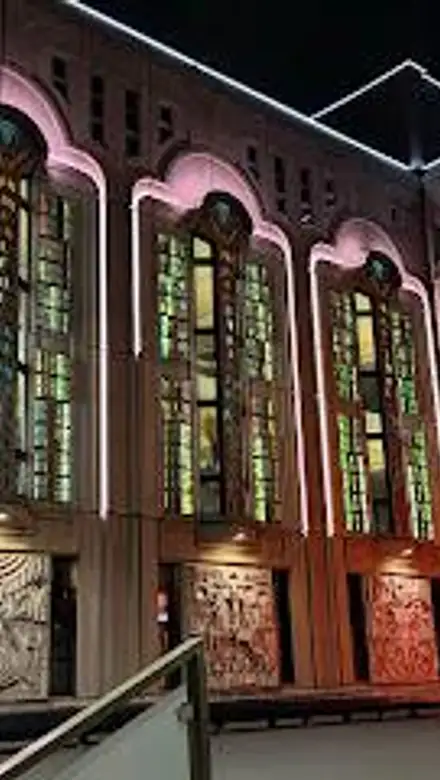
Friedrichstraße 107, Berlin Travel Guide
Free Guide: Experience Berlin's dazzling entertainment legacy at Friedrichstraße 107, home to Europe's largest revue theater, the Friedrichstadt-Palast, a symbol of the city's vibrant cultural history.


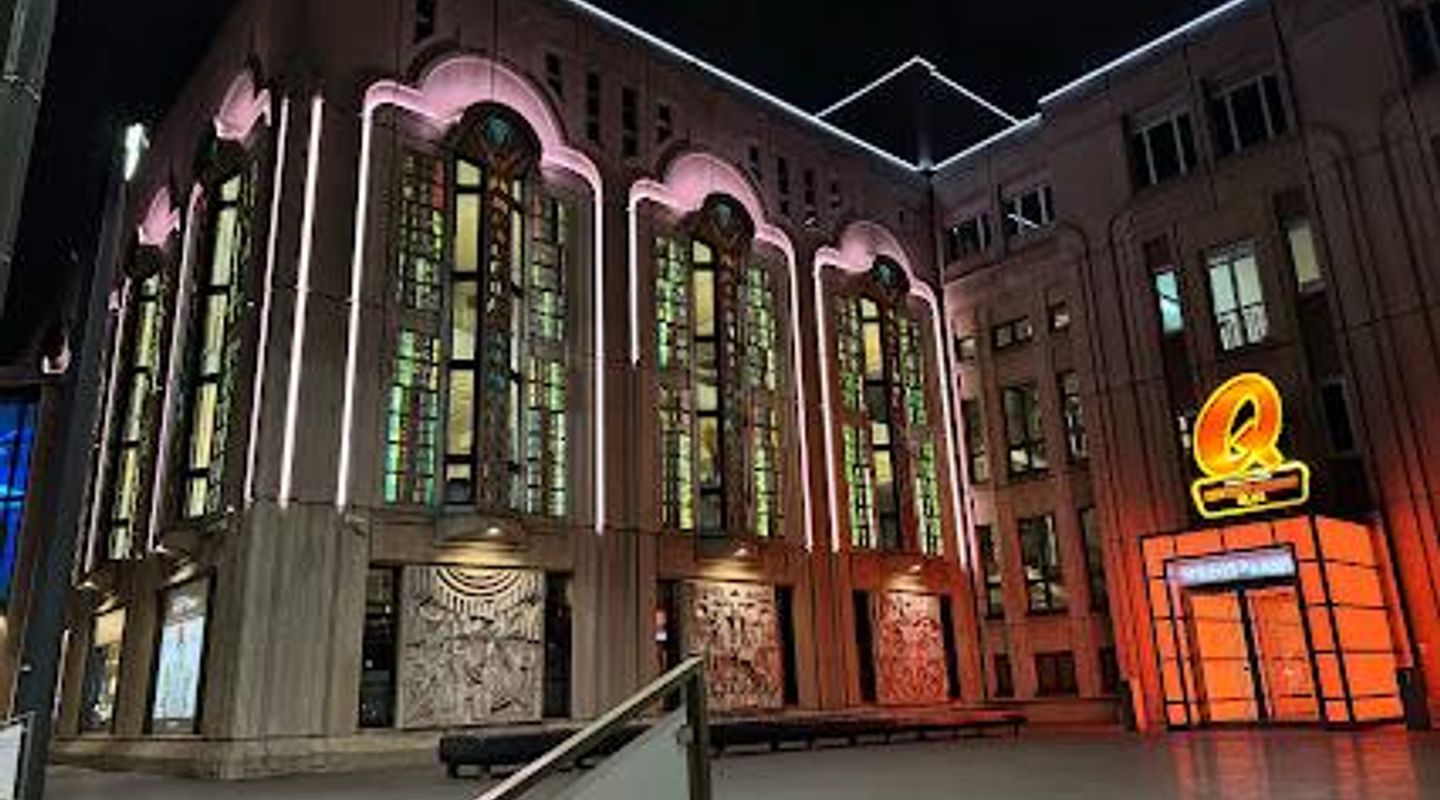
A brief summary of Friedrichstraße 107
Experience Berlin's dazzling entertainment legacy at Friedrichstraße 107, home to Europe's largest revue theater, the Friedrichstadt-Palast, a symbol of the city's vibrant cultural history.
Friedrichstraße 107 is more than just an address in Berlin's vibrant Mitte district; it's a historical and cultural touchstone. Home to the renowned Friedrichstadt-Palast, Europe's largest revue theater, the location has been a center for entertainment for over a century. From its origins as a market hall and later the Großes Schauspielhaus under Max Reinhardt, the site has evolved through various iterations, surviving war and division to emerge as a beacon of spectacle and artistic expression. Today, Friedrichstraße 107 draws visitors with its grand shows, stunning stage technology, and a legacy deeply intertwined with Berlin's dynamic history, offering a glimpse into the city's past and present.
- Address
- Friedrichstraße 107, 10117 Berlin
Getting there
Public Transport
Taxi/Ride-Share
Driving
Discover more about Friedrichstraße 107
Overview
Friedrichstraße 107 stands as a testament to Berlin's enduring spirit of entertainment and reinvention. This address, located in the heart of the city's Mitte district, is synonymous with the Friedrichstadt-Palast, a revue theater with a history stretching back over a century. The story of this location is a microcosm of Berlin's own tumultuous journey, reflecting its cultural shifts, political upheavals, and unwavering commitment to artistic expression. Originally, the site was home to Berlin's first market hall, constructed in 1867. However, the market quickly proved unsustainable, and the building was repurposed as a circus venue. For decades, it operated as the Circus Schumann, drawing large crowds with its spectacular displays of animals and acrobatics. This marked the beginning of the location's association with entertainment, a legacy that would continue to evolve. In 1918, the renowned theater director Max Reinhardt acquired the building, transforming it into the Großes Schauspielhaus (Great Playhouse). Reinhardt enlisted the architect Hans Poelzig to redesign the space, resulting in an expressionist masterpiece that was both celebrated and controversial. The theater's interior was a radical departure from traditional designs, featuring a vast, cavernous space with stalactite-like forms hanging from the ceiling. While some critics derided it as a "dripstone cave," the Großes Schauspielhaus quickly became known for its innovative staging and ambitious productions. During the Weimar era, the Großes Schauspielhaus became a symbol of Berlin's vibrant cultural scene. The theater staged large-scale spectacles, attracting audiences from all over Europe. The revues of Erik Charell were particularly popular, known for their lavish costumes, elaborate sets, and daring choreography. The theater became a place where boundaries were pushed and conventions were challenged. The rise of the Nazi regime brought an end to this period of artistic freedom. The Großes Schauspielhaus was renamed the Theater des Volkes (People's Theater) and repurposed as a venue for propaganda and light entertainment. The expressionist features of the building were deemed "degenerate art," and the theater's artistic direction was brought under strict control. Following World War II, the theater reopened under its original name, the Friedrichstadt-Palast. In the post-war years, the theater became a symbol of East Berlin, hosting political events, variety shows, and performances by international stars. However, the building itself was aging and in need of significant repairs. In 1980, the decision was made to demolish the old Friedrichstadt-Palast and construct a new, modern theater on the same site. The new Friedrichstadt-Palast opened in 1984, becoming the largest and most modern revue theater in Europe. The building's architecture is a blend of socialist modernism and theatrical flamboyance, with a vast stage, state-of-the-art technology, and a seating capacity of nearly 1,900. The theater's productions are known for their spectacular scale, featuring elaborate costumes, dazzling special effects, and a cast of hundreds. Today, the Friedrichstadt-Palast continues to be a major cultural attraction in Berlin, drawing visitors from around the world. The theater's revues are a celebration of spectacle and entertainment, offering a glimpse into Berlin's vibrant artistic scene. The Friedrichstadt-Palast is not just a theater; it is a symbol of Berlin's resilience, creativity, and enduring love of entertainment. Visiting Friedrichstraße 107 offers more than just a night at the theater. It's an opportunity to connect with Berlin's rich history and experience the city's unique cultural landscape. Whether you're a fan of grand shows, a history buff, or simply looking for a memorable night out, Friedrichstraße 107 is a destination that should not be missed. The area surrounding Friedrichstraße 107 is also worth exploring. Friedrichstraße itself is a major shopping street, with a mix of high-end boutiques, department stores, and souvenir shops. Nearby attractions include Checkpoint Charlie, the Brandenburg Gate, and Museum Island, making it easy to combine a visit to the Friedrichstadt-Palast with other sightseeing activities. The street has transformed from a water-filled ditch to a commercial avenue in the 18th century, severely damaged during the Second World War but has since been regenerated and has become more of a modern shopping precinct. The street also has a vibrant nightlife with bars, clubs, and theaters. Friedrichstraße 107 and the Friedrichstadt-Palast embody Berlin's unique blend of history, culture, and entertainment. It's a place where the past and present collide, where spectacle and artistry come together, and where visitors can experience the true spirit of Berlin.
Evendo Review Centre
 Google
Guest reviews
Explore Friedrichstraße 107 on the map
A handpicked selection of must-see spots near Friedrichstraße 107, mapped for you.
Get your free copy of our complete guide to Friedrichstraße 107, delivered straight to you.
Everything on this page, from opening hours and how to get there to Eve’s tips and the best time to go, in one PDF you can read offline, print or share.
Already have an account? Sign in
Your Friedrichstraße 107 guide is ready.
We'll send it to · Not you? Sign out

Getting your guide ready…
We are putting together a fresh copy of the Friedrichstraße 107 guide. This can take up to a minute.
This can take a few moments. If your browser asks, choose Allow so the download can start. You'll find the guide in your Downloads folder.
Nothing happened? Download it again
Sorry, the guide is taking longer than usual. Please try again in a minute, or get it by email instead.
Other nearby places you may find interesting
The closest places of the same kind, if this one is not quite what you had in mind.
-
-
-
-
-


Swipe for more places
More to explore near Friedrichstraße 107

 Best experiences near Friedrichstraße 107
 Best hotels near Friedrichstraße 107
 Best landmarks near Friedrichstraße 107
 Best attractions near Friedrichstraße 107
 Best shops near Friedrichstraße 107
 Best restaurants near Friedrichstraße 107
 Best bars near Friedrichstraße 107
Do you manage this location?
Take control to get all the benefits, like improved information, better appearance, and stronger visibility across AI-powered discovery.
Explore more

Explore more of Berlin
Berlin: A fascinating blend of history, culture, and modernity, offering everything from historic landmarks to vibrant nightlife and culinary delights.
Explore Berlin
Explore more of Germany
Experience Germany: where history meets innovation, and urban energy blends with natural beauty. Discover diverse cultures, delicious cuisine, and stunning landscapes.
Explore Germany