

Brandenburg Gate Travel Guide
Free Guide: Experience the grandeur of Berlin's iconic Brandenburg Gate, a symbol of German unity and a witness to history, standing proudly on Pariser Platz for centuries.


A brief summary of Brandenburg Gate
Experience the grandeur of Berlin's iconic Brandenburg Gate, a symbol of German unity and a witness to history, standing proudly on Pariser Platz for centuries.
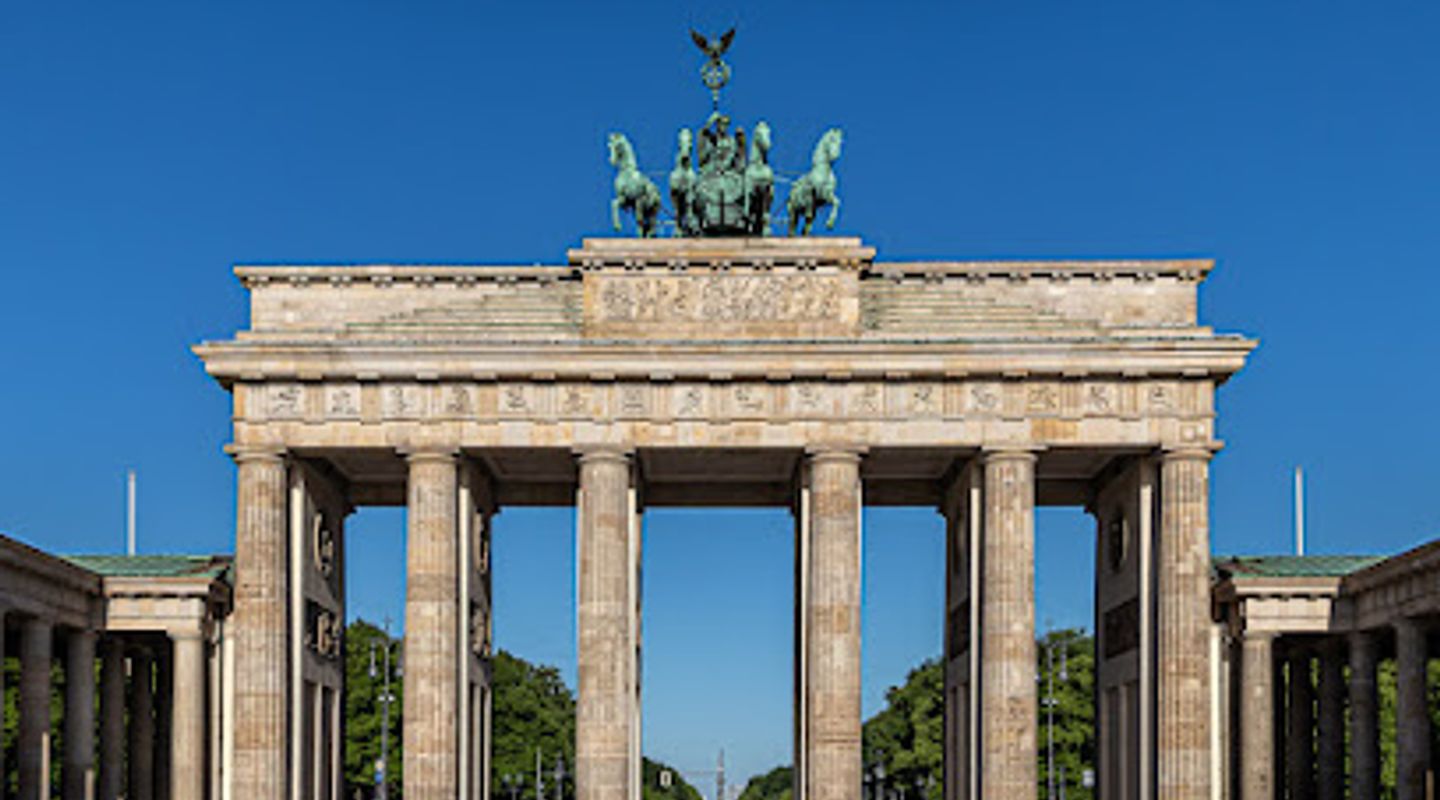
The Brandenburg Gate, standing proudly on Pariser Platz, is more than just a historical landmark; it's the very soul of Berlin. This iconic neoclassical monument, completed in 1791, has witnessed centuries of German history, from Prussian triumphs to the devastating divisions of the Cold War. Today, it stands as a powerful symbol of unity, peace, and resilience, drawing millions of visitors each year. Its imposing sandstone structure, adorned with the Quadriga statue, offers a breathtaking sight, especially when illuminated at night. A visit to the Brandenburg Gate is a must for anyone seeking to understand Berlin's past and celebrate its vibrant present. Explore the surrounding Pariser Platz, lined with embassies, hotels, and the iconic Unter den Linden boulevard, and immerse yourself in the heart of this dynamic city.
- Address
- Pariser Platz, 10117 Berlin
- Website
Getting there
Public Transport
Walking
Taxi/Ride-Share
Driving
Discover more about Brandenburg Gate
Overview
The Brandenburg Gate, an enduring symbol of Berlin and Germany, stands as a testament to the nation's tumultuous history and its unwavering spirit. Located on Pariser Platz, at the end of the grand Unter den Linden boulevard, this iconic neoclassical monument is not merely a structure of sandstone and bronze; it is a living embodiment of German identity, a silent witness to pivotal moments that have shaped the country's destiny. Commissioned by King Frederick William II of Prussia and completed in 1791, the Brandenburg Gate was designed by Carl Gotthard Langhans, who drew inspiration from the Propylaea of the Athenian Acropolis. Originally conceived as a peace gate, it marked the entrance to Berlin and served as a triumphal arch, celebrating Prussian military victories. The gate's imposing structure features twelve Doric columns, six on each side, supporting a massive entablature. Above this, the Quadriga, a chariot pulled by four horses driven by Victoria, the goddess of victory, crowns the monument. This iconic statue, created by Johann Gottfried Schadow, has become synonymous with the Brandenburg Gate itself. Throughout its history, the Brandenburg Gate has been a focal point of major historical events. In 1806, Napoleon Bonaparte marched through the gate after defeating Prussia, seizing the Quadriga as a trophy and taking it to Paris. However, following Napoleon's defeat, the Quadriga was returned to Berlin in 1814, and Victoria was adorned with an Iron Cross, symbolizing Prussia's victory and renewed national pride. During the Weimar Republic, the Brandenburg Gate served as a backdrop for political rallies and demonstrations, reflecting the era's social and political unrest. However, it was during the Nazi regime that the gate was most overtly exploited as a symbol of German power and military might. The Nazis used the Brandenburg Gate as a stage for propaganda events, seeking to legitimize their rule and project an image of strength and invincibility. Following World War II, Berlin was divided, and the Brandenburg Gate found itself in the no-man's land between East and West Berlin. With the construction of the Berlin Wall in 1961, the gate became an inaccessible symbol of division, a poignant reminder of the city's separation. For nearly three decades, the Brandenburg Gate stood isolated, a silent sentinel in a divided city. The fall of the Berlin Wall in 1989 marked a turning point in German history and the Brandenburg Gate's destiny. On December 22, 1989, the gate was officially reopened, becoming a symbol of reunification and a beacon of hope for a nation yearning for unity. Over one hundred thousand people gathered to celebrate this historic moment, marking the end of Germany's division and the beginning of a new era. Today, the Brandenburg Gate stands as a powerful symbol of German unity, freedom, and democracy. It is a place of remembrance, celebration, and reflection, attracting millions of visitors from around the world each year. The gate is open to the public at all times, allowing visitors to walk through its arches and experience its grandeur firsthand. Pariser Platz, the square surrounding the gate, is a vibrant hub of activity, hosting events, performances, and cultural gatherings throughout the year. Visitors can explore the gate's history and significance at the nearby Brandenburg Gate Museum, which offers interactive exhibits and historical artifacts. They can also climb to the top of the Reichstag building for panoramic views of the city, including the Brandenburg Gate and Pariser Platz. A stroll down Unter den Linden, the grand boulevard leading to the gate, offers a glimpse into Berlin's rich architectural heritage, with its elegant buildings, embassies, and cultural institutions. The Brandenburg Gate is more than just a monument; it is a living symbol of Berlin's past, present, and future. It is a place where history comes alive, where visitors can connect with the spirit of a nation that has overcome adversity and emerged stronger and more united than ever before. Whether you are a history buff, an architecture enthusiast, or simply a traveler seeking to experience the heart of Berlin, a visit to the Brandenburg Gate is an unforgettable experience. As you stand beneath its towering columns, gazing up at the Quadriga, take a moment to reflect on the Brandenburg Gate's enduring legacy. It is a symbol of peace, unity, and the indomitable human spirit, a reminder that even in the face of division and conflict, hope and reconciliation can prevail. The Brandenburg Gate is not just a landmark; it is a testament to the power of the human spirit to overcome adversity and build a better future.
Evendo Review Centre
 Google
Guest reviews
Explore Brandenburg Gate on the map
A handpicked selection of must-see spots near Brandenburg Gate, mapped for you.
Get your free copy of our complete guide to Brandenburg Gate, delivered straight to you.
Everything on this page, from opening hours and how to get there to Eve’s tips and the best time to go, in one PDF you can read offline, print or share.
Already have an account? Sign in
Your Brandenburg Gate guide is ready.
We'll send it to · Not you? Sign out

Getting your guide ready…
We are putting together a fresh copy of the Brandenburg Gate guide. This can take up to a minute.
This can take a few moments. If your browser asks, choose Allow so the download can start. You'll find the guide in your Downloads folder.
Nothing happened? Download it again
Sorry, the guide is taking longer than usual. Please try again in a minute, or get it by email instead.
Unlock the best of Brandenburg Gate
Skip-the-line tickets, guided tours with entry, and walking tours of the area, booked in a few clicks.
 Tour with entry
Self-Guided Tours In Berlin With 100 Captivating Audio Stories
from $3.19 Tour with entry
Berlin’s Hidden Chronicles A Self-Guided Journey
from $3.19 Tour with entry
Berlin: Self-Guided Photo Safari with premium Photobook
from $3.19 Tour with entry
Berlin Must-see Tour – offer at the end of the tour
from $3.20


Other nearby places you may find interesting
The closest places of the same kind, if this one is not quite what you had in mind.
-
-
-
-
-


Swipe for more places
More to explore near Brandenburg Gate

 Best experiences near Brandenburg Gate
 Best hotels near Brandenburg Gate
 Best landmarks near Brandenburg Gate
 Best attractions near Brandenburg Gate
 Best shops near Brandenburg Gate
 Best restaurants near Brandenburg Gate
 Best bars near Brandenburg Gate
Do you manage this location?
Take control to get all the benefits, like improved information, better appearance, and stronger visibility across AI-powered discovery.
Explore more

Explore more of Brandenburg
Discover Brandenburg: Explore a region rich in history, culture, and natural beauty, featuring stunning landscapes, historic sites, and vibrant cultural experiences.
Explore Brandenburg
Explore more of Germany
Experience Germany: where history meets innovation, and urban energy blends with natural beauty. Discover diverse cultures, delicious cuisine, and stunning landscapes.
Explore Germany
