
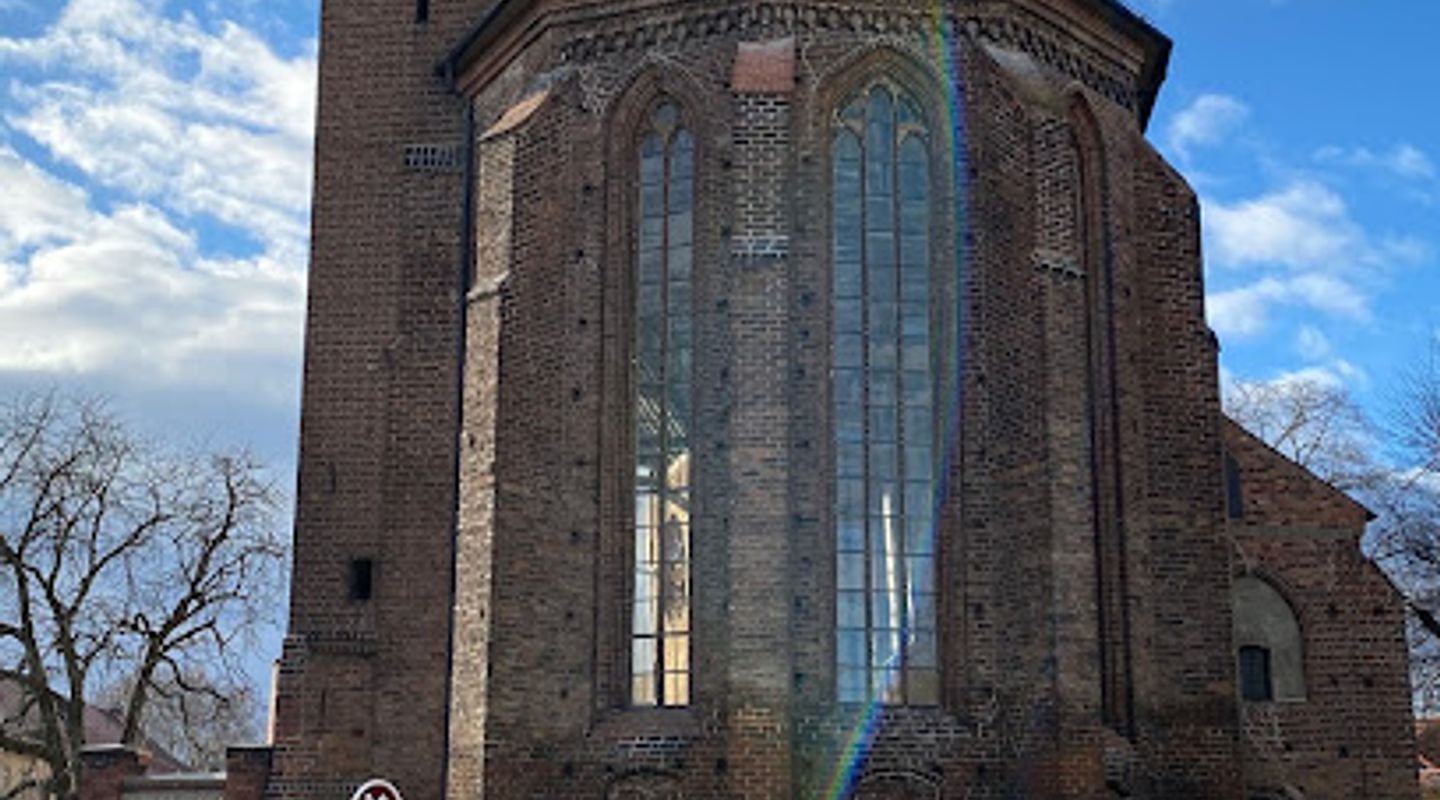
St. Johannis, Brandenburg Travel Guide
Explore St. Johannis Church in Brandenburg: a historic Franciscan monastery turned unique event venue, blending medieval architecture with modern cultural experiences.
St. Johannis Church, a former Franciscan monastery in Brandenburg an der Havel, stands as a compelling testament to the city's rich history. Originally built around 1250, the church underwent significant expansion in the 15th century, showcasing late-Gothic architecture. Severely damaged during World War II, the church has been lovingly restored and now serves as a unique event venue. Its brick construction, intricate friezes, and the remnants of a once grand ceramic rose window offer visitors a glimpse into the past. Located near the Jahrtausendbrücke (Millennium Bridge) in the Altstadt (Old Town), St. Johannis is a reminder of Brandenburg's medieval heritage and its ongoing cultural revival. Explore the layers of history within its walls and experience the blend of sacred space and modern functionality.
A brief summary to St. Johannis
- Johanniskirchpl., Brandenburg, 14770, DE
- Click to display

Know before you go
Hi, I'm Eve. Here are a few practical things to know before exploring St. Johannis.
- Check the event schedule: St. Johannis hosts various concerts and exhibitions; plan your visit around an event for a unique experience.
- Explore the Altstadt: St. Johannis is located in the heart of the Old Town, making it a perfect starting point for exploring other historical sites.
- Visit the Jahrtausendbrücke: Take a stroll across the Millennium Bridge for picturesque views of the Havel River and the surrounding area.
Do you manage this location?
Take control to get all the benefits, like improved information, better appearance, and stronger visibility across AI-powered discovery. Learn more about listing your business on Evendo
Activate your presenceOther nearby places you may find interesting
The closest places of the same kind, if this one is not quite what you had in mind.


Explore St. Johannis on the Map
A handpicked selection of must-see spots near St. Johannis, mapped for you.
Getting There
-
Walking
From the Neustädtischer Markt, walk southwest along Hauptstraße, cross the Jahrtausendbrücke (Millennium Bridge). Once across the bridge, St. Johannis Church will be immediately visible on your right. The walk is approximately 5-10 minutes. Alternatively, from Nicolaiplatz, walk east along Mühlendamm, then turn left onto Johanniskirchplatz. St. Johannis Church will be on your left. This walk is also approximately 5-10 minutes.
-
Public Transport
The closest public transport stop is 'Brandenburg Neustädtischer Markt'. From there, follow the walking directions. A single ticket costs €2.50.
-
Taxi/Ride-Share
A taxi or ride-share from Brandenburg Hauptbahnhof (main train station) to St. Johannis Church will cost approximately €8-€12, depending on traffic. The journey takes about 5-10 minutes.
-
Driving
If driving, be aware that parking near St. Johannis Church is limited. There are parking spaces available near Nicolaiplatz, a short walk away. Parking fees typically range from €1-€2 per hour.
Discover more about St. Johannis













Your all‑in‑one travel companion app
Explore expert travel guides, compare and book tours, experiences, hotels, and more—all from the palm of your hand. Download now for seamless trip planning wherever your wanderlust takes you.


Explore More of Brandenburg
Looking beyond St. Johannis? Discover Brandenburg for broader travel guides, local hot-spots, and regional highlights.
Explore Brandenburg
Discover St. Gotthardt Church in Brandenburg an der Havel: a captivating blend of Romanesque and Gothic architecture, rich history, and artistic treasures, offering panoramic city views.

Discover the Loriotdenkmal in Brandenburg, a charming tribute to the beloved German comedian, surrounded by scenic beauty and cultural richness.
