Frauenkirche, Franconia Travel Guide
Discover Nuremberg's iconic Church of Our Lady, a stunning example of brick Gothic architecture with a rich history, remarkable art, and the famous Männleinlaufen mechanical clock.
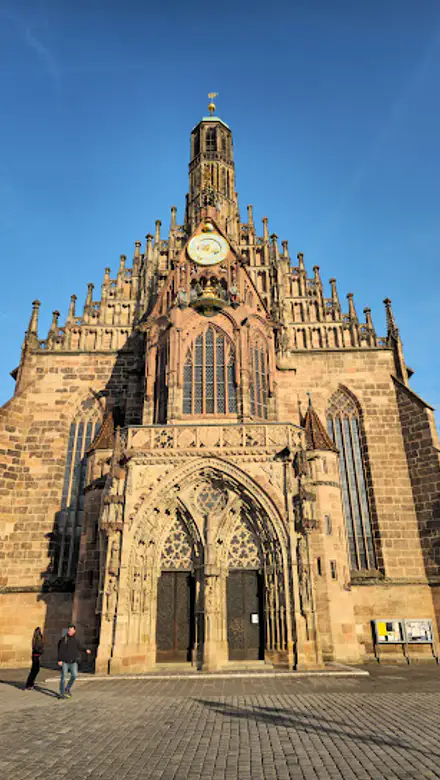
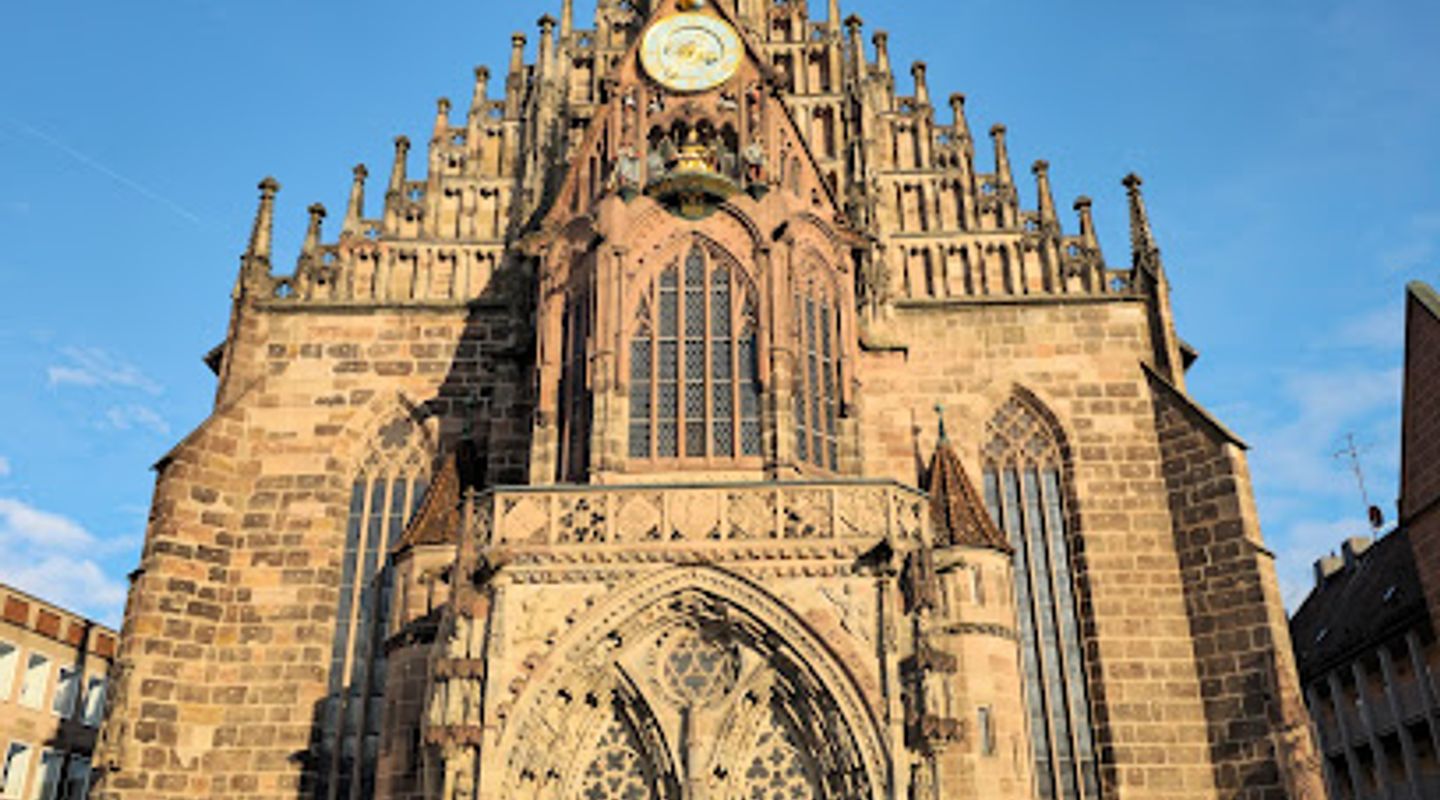
The Frauenkirche, or Church of Our Lady, stands proudly on Nuremberg's Hauptmarkt as a striking example of brick Gothic architecture. Built in the 14th century on the site of a former synagogue, it served as a royal chapel for Emperor Charles IV. The church boasts an intricately decorated west facade, a richly adorned interior housing medieval art, and the famous Männleinlaufen, a mechanical clock that commemorates the Golden Bull of 1356. Heavily damaged during World War II, the Frauenkirche was meticulously restored, becoming a symbol of Nuremberg's resilience and a must-see landmark for visitors exploring the city's rich history and cultural heritage. Its location in the heart of the Old Town makes it easily accessible and a captivating highlight of any Nuremberg itinerary.
A brief summary to Frauenkirche
- Hauptmarkt 14, Nuremberg, Mitte, 90403, DE
- Click to display
- Click to display
- Monday 9 am-6 pm
- Tuesday 9 am-6 pm
- Wednesday 9 am-6 pm
- Thursday 9 am-6 pm
- Friday 9 am-6 pm
- Saturday 9 am-6 pm
- Sunday 9 am-6 pm

Know before you go
Hi, I'm Eve. Here are a few practical things to know before exploring Frauenkirche.
- Time your visit for noon to witness the Männleinlaufen, the mechanical clock's performance, a highlight of the Frauenkirche experience.
- Explore the interior to admire the Tucher Altar and other medieval artworks, remnants of Nuremberg's artistic past.
- Check the church's schedule for services or guided tours to deepen your understanding of its history and significance.
- Combine your visit with a stroll through the Hauptmarkt, especially enchanting during the Christkindlesmarkt in December.
- Look for the Star of David on the floor in front of the altar, a memorial to the synagogue that once stood on the site.
Do you manage this location?
Take control to get all the benefits, like improved information, better appearance, and stronger visibility across AI-powered discovery. Learn more about listing your business on Evendo
Activate your presenceOther nearby places you may find interesting
The closest places of the same kind, if this one is not quite what you had in mind.


Explore Frauenkirche on the Map
A handpicked selection of must-see spots near Frauenkirche, mapped for you.
Unlock the Best of Frauenkirche
Buy tickets
-
No tickets available
Book tours with entry


Getting There
-
Walking
The Frauenkirche is centrally located on the Hauptmarkt in Nuremberg's Old Town, making it easily accessible on foot from most central locations. From the Nuremberg Central Station (Hauptbahnhof), walk north for approximately 15 minutes, crossing the Museumsbrücke bridge over the Pegnitz River into the Old Town. Once in the Old Town, follow signs to the Hauptmarkt. The Frauenkirche will be visible on the eastern side of the square. No special transport or tolls are required. As you approach the Hauptmarkt, be aware of pedestrian traffic and market stalls. During the Christkindlesmarkt (usually late November to December 24), the area is particularly crowded.
-
Public Transport
If arriving by public transport, the closest U-Bahn (subway) station is Lorenzkirche, a short 3-minute walk north of the Hauptmarkt. From the Nuremberg Central Station (Hauptbahnhof), take the U1 line to Lorenzkirche. Alternatively, several bus lines stop near the Hauptmarkt, including bus number 36 which stops directly at Hauptmarkt. A single ticket (Einzelfahrkarte) for a short trip within Nuremberg (Zone A) costs €2.10 for adults and €1.00 for children (6-14 years). Tickets can be purchased at vending machines in the U-Bahn station or online via the VGN app. Remember to validate your ticket before boarding the U-Bahn or bus.
-
Taxi/Ride-Share
Taxis and ride-sharing services are readily available in Nuremberg. A taxi ride from the Nuremberg Central Station (Hauptbahnhof) to the Hauptmarkt typically takes around 5-10 minutes, depending on traffic, and costs approximately €9-€11. Ride-sharing services like Uber are also available. Be aware that traffic around the Hauptmarkt can be congested, especially during peak hours and events like the Christkindlesmarkt. There are designated taxi stands near the Hauptmarkt.
-
Driving
While driving to the Frauenkirche is possible, parking in the immediate vicinity can be challenging, especially during busy periods. The closest parking garage is Parkhaus Hauptmarkt (Augustinerstraße 4), which is a 2-minute walk to the church. Parking rates are approximately €2.00 per hour, with a daily maximum of €18.00. Other nearby parking garages include Parkhaus Katharinenhof (Katharinengasse 14) and Parkhaus Hans-Sachs-Platz (Hans-Sachs-Platz 1), both within a 5-minute walk. Be aware of the parking guidance system in Nuremberg, which directs drivers to available parking spaces. Consider using public transport or walking if possible, as parking can be limited and expensive.
Discover more about Frauenkirche













Your all‑in‑one travel companion app
Explore expert travel guides, compare and book tours, experiences, hotels, and more—all from the palm of your hand. Download now for seamless trip planning wherever your wanderlust takes you.


Explore More of Franconia
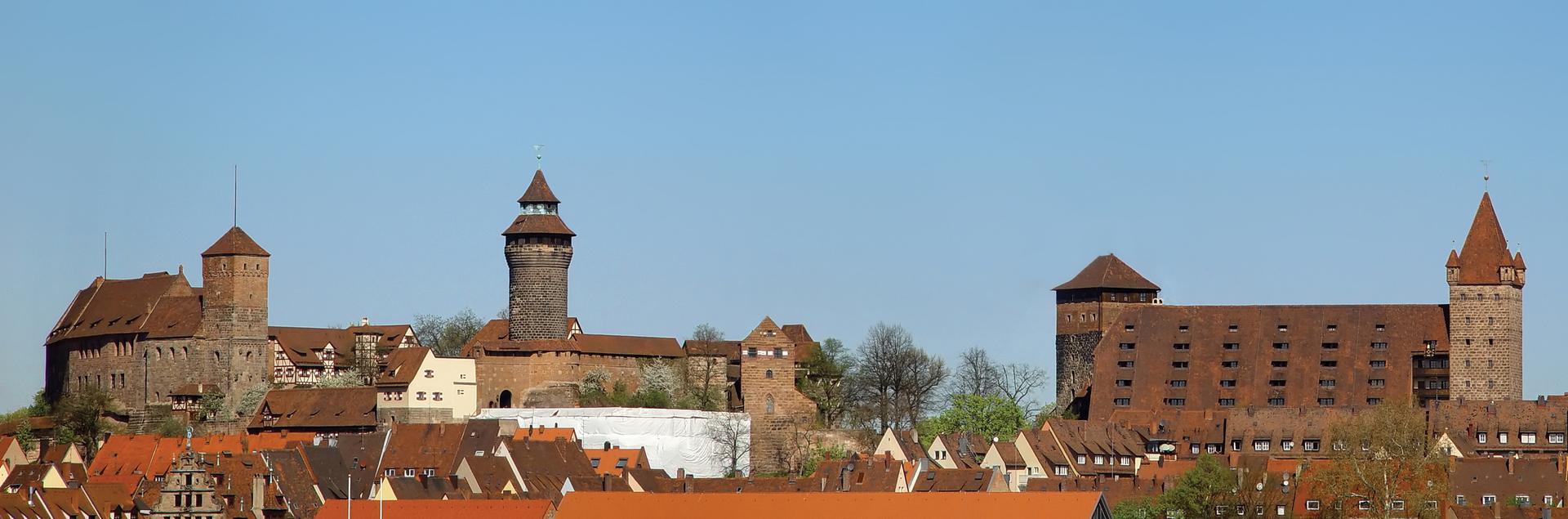
Looking beyond Frauenkirche? Discover Franconia for broader travel guides, local hot-spots, and regional highlights.
Explore Franconia
Discover the enchanting Felsenkellergänge in Nuremberg, a historical underground marvel showcasing the city's rich heritage and architectural brilliance.
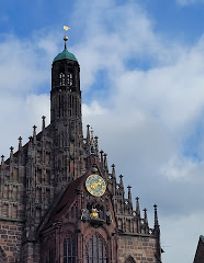
Discover the Church Tower Clock in Nuremberg, a stunning historical landmark that reflects the city's rich heritage and timeless beauty.