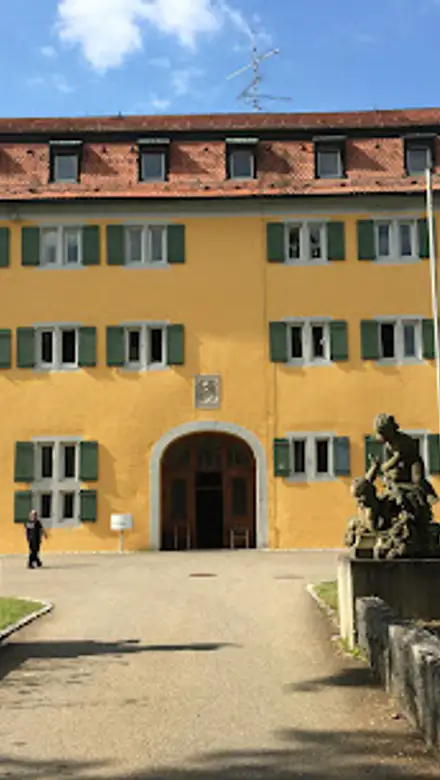
Grafeneck Memorial Travel Guide
Free Guide: Reflect on a dark chapter of history at the Grafeneck Memorial in Gomadingen, a place of remembrance and education dedicated to the victims of Nazi "euthanasia".


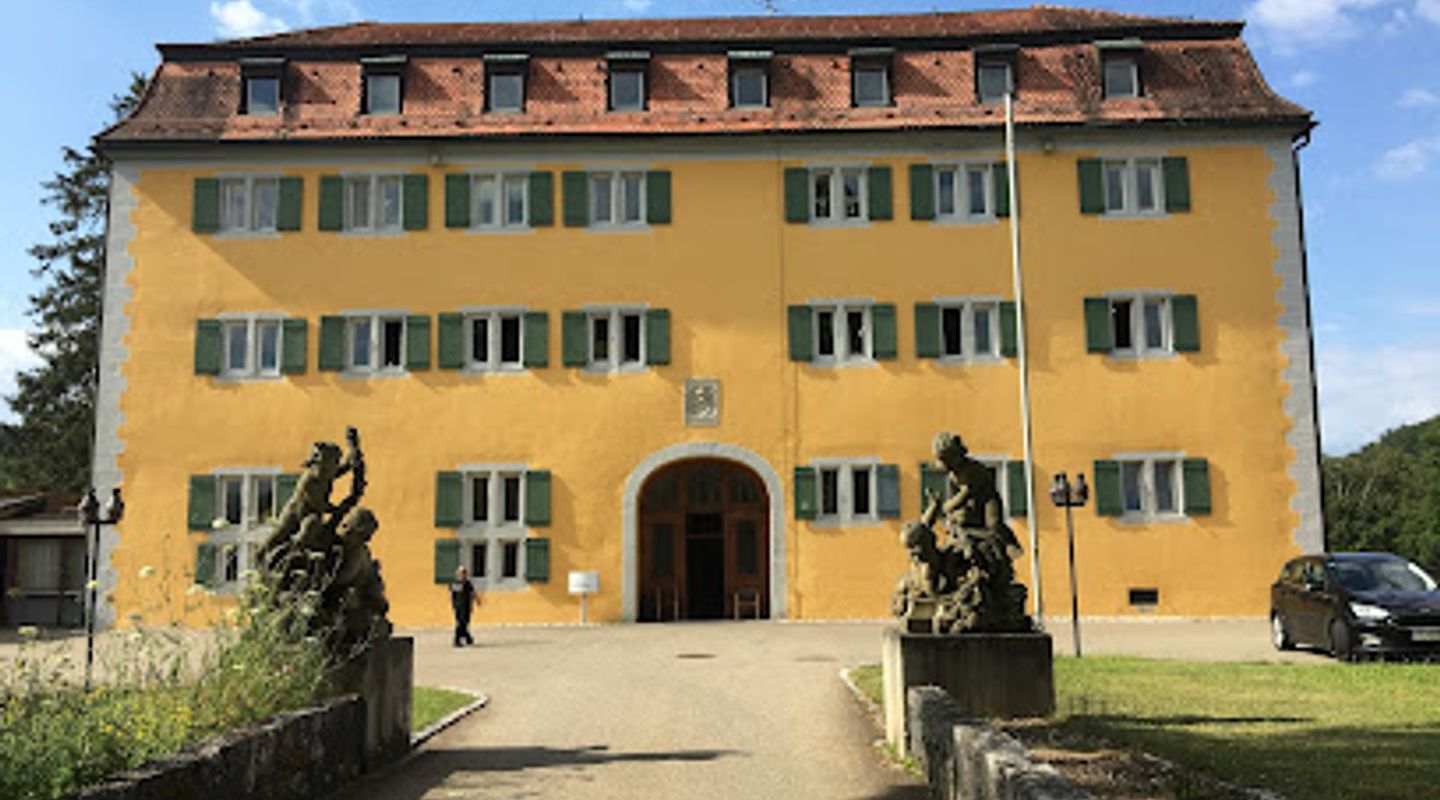
A brief summary of Grafeneck Memorial
Reflect on a dark chapter of history at the Grafeneck Memorial in Gomadingen, a place of remembrance and education dedicated to the victims of Nazi "euthanasia".
The Grafeneck Memorial, located in Gomadingen, stands as a somber reminder of the Nazi's systematic "euthanasia" program, Aktion T4. From January to December 1940, over 10,500 individuals with mental and physical disabilities were murdered here in a gas chamber disguised as a shower room. Today, the site serves as a memorial and documentation center, offering visitors a chance to reflect on this dark chapter of history and learn about the victims. The serene atmosphere, marked by landscaped gardens and monuments, encourages contemplation and remembrance. The Documentation Centre provides in-depth information about the historical context, individual victims, and the broader implications of the Nazi regime's actions. Grafeneck is not only a place of remembrance but also a center for learning and civic education, emphasizing the importance of human dignity and human rights, making it a significant, albeit sobering, destination for those seeking to understand the past and its relevance to the present.
Opening hours
- Every day9 am–6 pm
Opening hours as listed on the venue’s Google Business Profile. Hours can change for services and special events, so check with the venue before you go.
- Address
- Grafeneck 3, 72532 Gomadingen
- Phone
- Website
Getting there
Public Transport
Driving
Discover more about Grafeneck Memorial
Overview
Grafeneck Memorial, situated near the town of Gomadingen in Baden-Württemberg, Germany, marks the site of one of the most horrific chapters in Nazi history. From January to December 1940, Grafeneck Castle was the location of a Nazi "euthanasia" center where over 10,500 people with mental and physical disabilities were systematically murdered as part of the Aktion T4 program. Today, the site stands as a memorial and documentation center, offering visitors a place for reflection, remembrance, and education about the atrocities that occurred here. The history of Grafeneck dates back centuries, with the castle itself undergoing several transformations. Originally a medieval fortress, it was converted into a Renaissance-style hunting lodge in the 16th century. In 1928, the Samaritan Foundation acquired the property and established a care facility for people with disabilities. However, this peaceful existence was shattered in 1939 when the Nazis seized the castle and repurposed it as a killing center. Between October 1939 and January 1940, the castle underwent significant modifications to facilitate its new, sinister purpose. A gas chamber, disguised as a shower room, was constructed, along with a crematorium to dispose of the bodies. Staff were recruited from across Germany, including doctors, police officers, clerks, and maintenance personnel. The first victims arrived in January 1940, transported in grey buses from psychiatric clinics and care facilities throughout southwestern Germany. Within hours of their arrival, they were led into the gas chamber and murdered with carbon monoxide. The systematic killing continued for months, claiming the lives of men, women, and children. A special registry office was established to issue falsified death certificates, and "consolation letters" were sent to the victims' families, masking the true cause of death. The killings at Grafeneck were eventually halted in December 1940, partly due to growing public awareness and the achievement of the Nazi's goals for eliminating institutionalized patients in the region. The staff were then transferred to other killing centers, such as Hadamar, to continue their gruesome work. After the war, the castle was returned to the Samaritan Foundation, which reopened it as a care facility. However, the memory of the atrocities committed at Grafeneck remained largely suppressed for decades. It wasn't until the 1990s that significant efforts were made to create a proper memorial and documentation center. Today, the Grafeneck Memorial includes a memorial garden, a symbolic open chapel, and a Documentation Centre that opened in 2005. The Documentation Centre provides detailed information about the history of the site, the Aktion T4 program, and the individual victims. Visitors can learn about the lives of those who were murdered, their families, and the broader context of Nazi "euthanasia" policies. The memorial site is designed to evoke a sense of tranquility and respect, encouraging visitors to contemplate the events that took place here. Monuments and plaques provide historical context, while the beautifully landscaped gardens offer a serene atmosphere for reflection. The site is open daily, allowing ample opportunity for tourists to visit and immerse themselves in the reflective atmosphere. Grafeneck stands not only as a memorial to the victims of Nazi "euthanasia" but also as a center for learning and civic education. The memorial hosts educational programs, guided tours, lectures, and workshops, all aimed at promoting understanding of the events that took place here and their implications on humanity. The site receives a growing number of visitors of all ages, from Germany and abroad, seeking to learn about this dark chapter of history and its relevance to contemporary issues such as bioethics, discrimination, and human rights. The co-existence of the memorial and the Samaritan Foundation's care facility for people with disabilities makes Grafeneck a truly unique place. It serves as a reminder of the importance of inclusivity, compassion, and respect for human dignity. The memorial's mission is to ensure that the memory of the victims is never forgotten and that the lessons of the past are used to build a more just and equitable future. Visiting Grafeneck is a sobering experience, but it is also an essential one for anyone seeking to understand the complexities of the Nazi regime and the importance of safeguarding human rights. The memorial offers a powerful reminder of the consequences of intolerance, discrimination, and the abuse of power. It is a place where visitors can connect with the past, reflect on the present, and commit to building a better future for all.
Evendo Review Centre
 Google
Guest reviews
Explore Grafeneck Memorial on the map
A handpicked selection of must-see spots near Grafeneck Memorial, mapped for you.
Get your free copy of our complete guide to Grafeneck Memorial, delivered straight to you.
Everything on this page, from opening hours and how to get there to Eve’s tips and the best time to go, in one PDF you can read offline, print or share.
Already have an account? Sign in
Your Grafeneck Memorial guide is ready.
We'll send it to · Not you? Sign out

Getting your guide ready…
We are putting together a fresh copy of the Grafeneck Memorial guide. This can take up to a minute.
This can take a few moments. If your browser asks, choose Allow so the download can start. You'll find the guide in your Downloads folder.
Nothing happened? Download it again
Sorry, the guide is taking longer than usual. Please try again in a minute, or get it by email instead.
Unlock the best of Grafeneck Memorial
Skip-the-line tickets, guided tours with entry, and walking tours of the area, booked in a few clicks.


Other nearby places you may find interesting
The closest places of the same kind, if this one is not quite what you had in mind.
-
-
-
-
-


Swipe for more places
More to explore near Grafeneck Memorial

 Best experiences near Grafeneck Memorial
 Best hotels near Grafeneck Memorial
 Best landmarks near Grafeneck Memorial
 Best attractions near Grafeneck Memorial
 Best shops near Grafeneck Memorial
 Best restaurants near Grafeneck Memorial
 Best bars near Grafeneck Memorial
Do you manage this location?
Take control to get all the benefits, like improved information, better appearance, and stronger visibility across AI-powered discovery.
Explore more

Explore more of Franconia
Discover Franconia in Germany: A region bursting with medieval charm, natural beauty, and culinary delights, perfect for travelers seeking history, nature, and local flavors.
Explore Franconia
Explore more of Germany
Experience Germany: where history meets innovation, and urban energy blends with natural beauty. Discover diverse cultures, delicious cuisine, and stunning landscapes.
Explore Germany