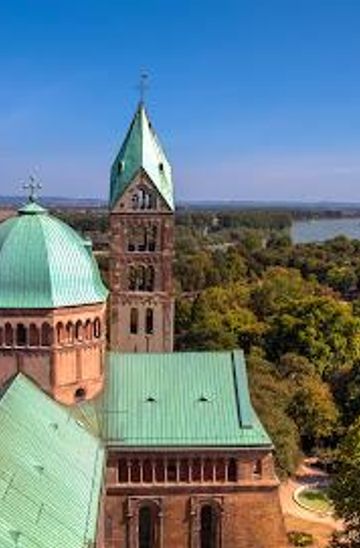
Speyer Cathedral: A Romanesque Masterpiece
Discover Speyer Cathedral, a majestic Romanesque masterpiece and UNESCO World Heritage site, where emperors once reigned and history echoes through its towering arches.
Speyer Cathedral, a UNESCO World Heritage site, stands as a towering example of Romanesque architecture and a powerful symbol of imperial authority. Founded in 1030 by Conrad II, the cathedral served as the burial place for German emperors and kings for nearly 300 years. Its massive red sandstone walls, punctuated by four towers and two domes, dominate the Speyer skyline. Inside, the cathedral impresses with its vast nave, intricate vaulted ceilings, and the awe-inspiring Imperial Crypt, the largest Romanesque columned hall in Europe. Visitors can explore the Emperor's Hall, climb the towers for panoramic views, and admire the blend of architectural styles reflecting centuries of history. The cathedral's historical and artistic significance, combined with its sheer scale, makes it a must-see destination for anyone visiting the Rhineland.
A brief summary to Speyer Cathedral
- Domplatz, Speyer, 67346, DE
- Click to display
- Click to display
- Monday 9 am-5 pm
- Tuesday 9 am-5 pm
- Wednesday 9 am-5 pm
- Thursday 9 am-5 pm
- Friday 9 am-11 am
- Saturday 9 am-5 pm
- Sunday 11:30 am-3 pm

Know before you go
Hi, I'm Eve. Here are a few practical things to know before exploring Speyer Cathedral.
- Visit the Imperial Crypt, the largest Romanesque columned hall in Europe, to see the tombs of German emperors and kings.
- Climb the North Tower for panoramic views of Speyer and the Rhine Valley (open April to October, small fee applies).
- Check the cathedral's website for concert schedules; the acoustics are remarkable.
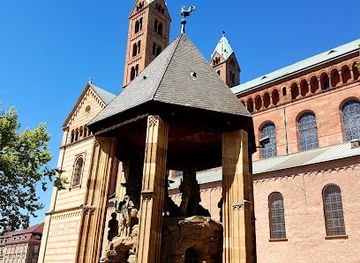
- Explore the Domplatz (Cathedral Square) for local events and the Cathedral Bowl, a historic boundary marker.
- Visit the Historical Museum of the Palatinate, located near the cathedral, to learn more about the region's history.
Do you manage this location?
Take control to get all the benefits, like improved information, better appearance, and stronger visibility across AI-powered discovery. Learn more
Activate your presenceOther nearby places you may find interesting
Getting There
-
Walking
From Speyer's main train station (Speyer Hauptbahnhof), the cathedral is approximately a 15-20 minute walk. Exit the station and head south on Bahnhofstraße. Continue straight until you reach Maximilianstraße, a pedestrian zone. Turn right onto Maximilianstraße and walk towards the east; the cathedral will be directly ahead, dominating the skyline. The walk is mostly flat and well-paved.
-
Public Transport
From Speyer Hauptbahnhof, take bus line 561 or 507 to the 'Dom/Stadthaus' stop. The bus ride is approximately 10 minutes, and the cathedral is a short walk from the bus stop. Single tickets cost around €2-3. The 'Dom/Stadthaus' stop is directly adjacent to the Domplatz and the cathedral entrance.
-
Taxi/Ride-Share
A taxi or ride-share from Speyer Hauptbahnhof to the cathedral takes about 5-10 minutes, depending on traffic. The fare typically ranges from €10-€15. Taxis are usually available at the train station, or you can use a ride-sharing app to request a ride.
-
Driving
If driving, follow signs towards 'Dom/Zentrum'. Several parking garages are available within walking distance of the cathedral, including the 'Cathedral Parking Lot' (Domplatz P3). Parking fees typically range from €1.50-€2.50 per hour. Note that the area around the cathedral is a traffic-calmed zone. Disabled parking spaces are available in the upper cathedral parking lot.
Discover more about Speyer Cathedral
Explore the best of what Speyer Cathedral has to offer













More about Upper Rhine
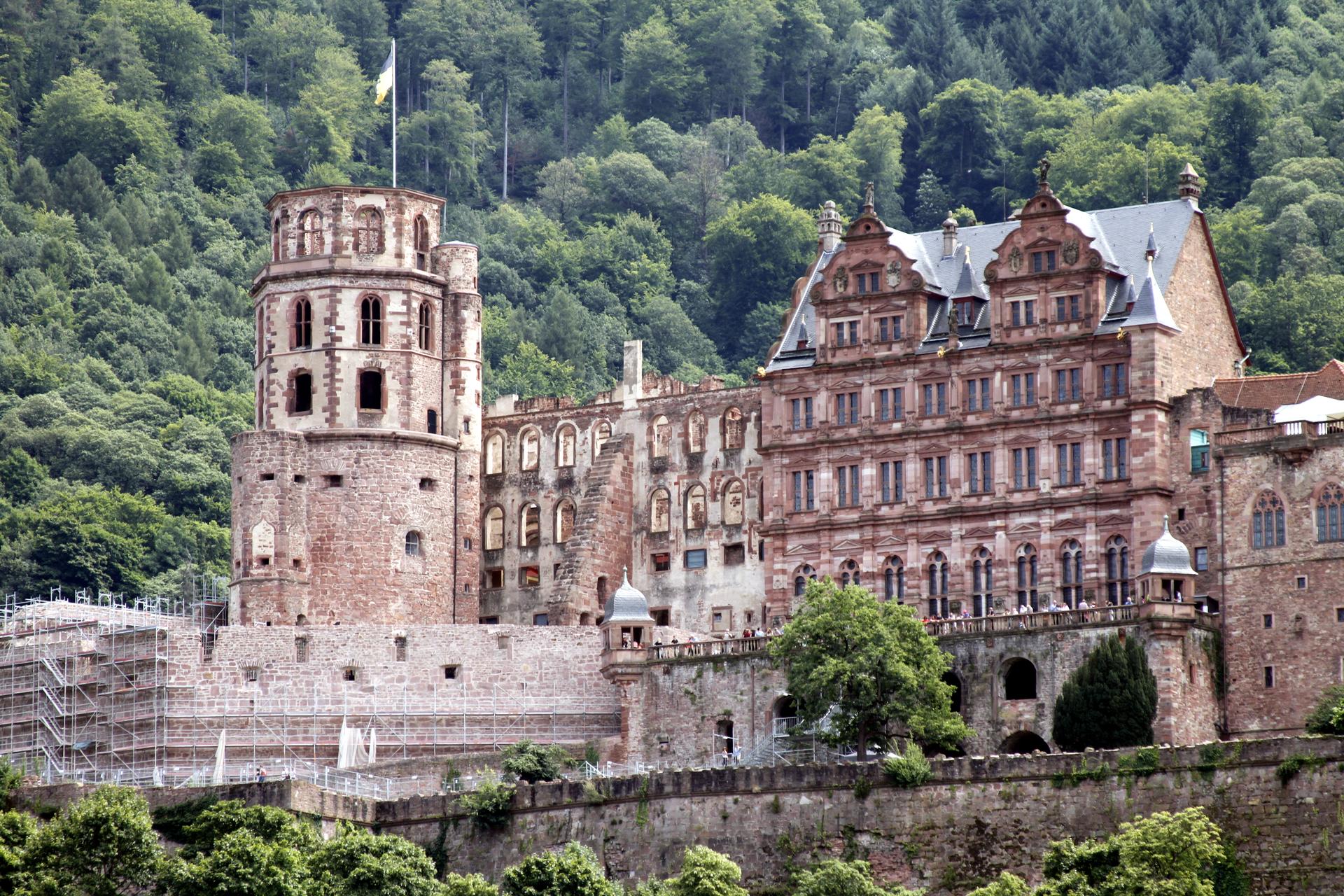
Explore the Upper Rhine in Germany: A region of captivating castles, scenic vineyards, and vibrant towns nestled between the Black Forest and the Vosges Mountains.
Tell me more about Upper Rhine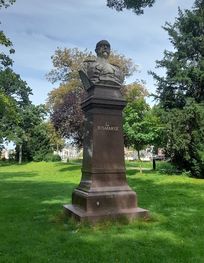
Reflect on German history at the Bismarck-Büste in Heidelberg, a tribute to Chancellor Otto von Bismarck, the architect of German unification, located in the heart of the city.
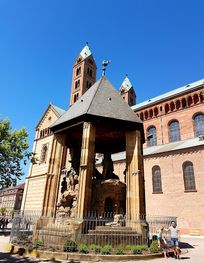
Discover the serene beauty and historical significance of Ölberg in Speyer, a perfect retreat for nature lovers and history enthusiasts alike.