Altes Bach-Denkmal, Leipzig Travel Guide
Free Guide: Visit the Altes Bach-Denkmal in Leipzig, the world's oldest monument to Johann Sebastian Bach, and immerse yourself in the city's rich musical heritage and the legacy of a musical genius.


A brief summary of Altes Bach-Denkmal
Visit the Altes Bach-Denkmal in Leipzig, the world's oldest monument to Johann Sebastian Bach, and immerse yourself in the city's rich musical heritage and the legacy of a musical genius.
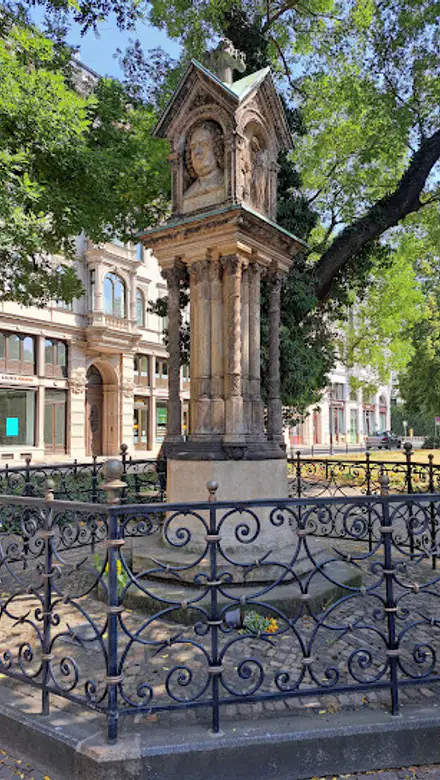
The Altes Bach-Denkmal, or Old Bach Monument, stands proudly in Leipzig as the world's oldest memorial to Johann Sebastian Bach. Initiated by Felix Mendelssohn Bartholdy and unveiled in 1843, this sandstone monument in the Dittrichring park is a testament to Bach's enduring legacy as a composer and musician. Located near the Thomaskirche, where Bach served as cantor for many years, the monument features intricate reliefs depicting scenes from his life and work. A visit offers a moment of reflection on Bach's profound impact on music history and the city of Leipzig's rich musical heritage. The monument is surrounded by greenery, providing a peaceful setting for contemplation and appreciation of Bach's genius. It's a must-see for music lovers and history enthusiasts alike, offering a tangible connection to one of the greatest composers of all time. The Altes Bach-Denkmal serves as a reminder of Leipzig's commitment to preserving and celebrating its musical past, inviting visitors to delve deeper into the world of classical music.
Opening hours
- Every dayOpen 24 hours
Opening hours as listed on the venue’s Google Business Profile. Hours can change for services and special events, so check with the venue before you go.
- Address
- Dittrichring, 04109 Leipzig
- Phone
- Website
Getting there
Walking
Public Transport
Taxi/Ride-Share
Parking
Discover more about Altes Bach-Denkmal
Overview
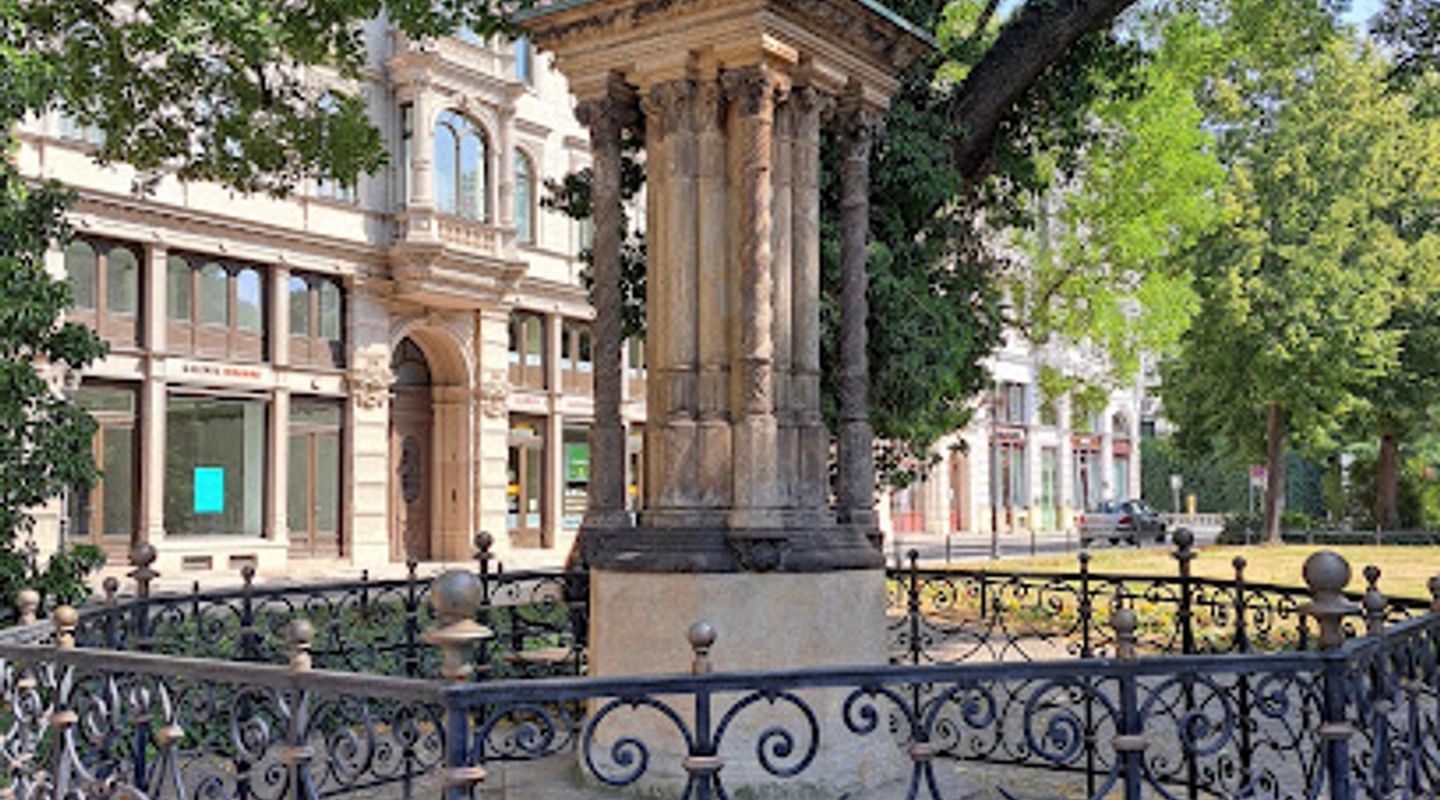
The Altes Bach-Denkmal, nestled in the green embrace of Leipzig's Dittrichring, stands as a poignant tribute to Johann Sebastian Bach, the city's celebrated Thomaskantor. This monument, the world's oldest dedicated to the musical genius, is more than just a statue; it's a symbol of Leipzig's deep-rooted musical heritage and its enduring connection to one of history's greatest composers. The story of the Altes Bach-Denkmal is intertwined with the passionate advocacy of Felix Mendelssohn Bartholdy, himself a renowned composer and conductor. Mendelssohn, deeply moved by Bach's music, recognized the need for a fitting memorial in Leipzig, the city where Bach spent a significant portion of his life and created some of his most iconic works. In 1838, Mendelssohn expressed his desire to erect a monument to Bach near the Thomaskirche, stating, "J. S. Bach is indeed a magnificent old man. We want to erect a small monument to him here in front of the Thomasschule." Mendelssohn's vision gained momentum, and he spearheaded fundraising efforts, organizing three benefit concerts that generated a substantial portion of the required funds. He personally contributed the remaining amount, demonstrating his unwavering commitment to honoring Bach's legacy. The monument's design was a collaborative effort, with Eduard Bendemann, Ernst Rietschel, and Julius Hübner contributing their artistic talents. Hermann Knaur, a Leipzig sculptor, brought the design to life, crafting the monument from sandstone. The Altes Bach-Denkmal was unveiled on April 23, 1843, near the Thomasschule, marking a significant moment in Leipzig's cultural history. The monument features a four-sided relief showcasing different motifs related to Bach's life and work. These reliefs offer glimpses into Bach's world, depicting scenes from his musical compositions and his role as a teacher and church musician. The monument itself consists of an octagonal sandstone base supporting a canopied pillar surrounded by four narrower, spirally twisted columns. These five columns support a square capital, on which rests the actual monument, formed by four Romanesque arches, each topped with an open triangular gable. The gables converge to form a roof, crowned by a stone finial. An octagonal iron fence surrounds the monument, adding to its dignified presence. Over the years, the Altes Bach-Denkmal has undergone several restorations, most recently in 2005, ensuring that it remains a cherished landmark for generations to come. The monument's location in the Dittrichring park provides a tranquil setting for visitors to reflect on Bach's music and his impact on the world. The surrounding greenery and the proximity to the Thomaskirche create a sense of connection to Bach's life and times. Visiting the Altes Bach-Denkmal is a must for music enthusiasts and anyone interested in Leipzig's cultural heritage. It offers a chance to pay homage to a musical giant and to appreciate the city's commitment to preserving its rich musical past. The monument serves as a reminder of the power of music to transcend time and to inspire generations. While the Altes Bach-Denkmal is a significant landmark, it's worth noting that Leipzig also boasts a newer Bach monument, unveiled in 1908, located in the Thomaskirchhof. This bronze statue, created by Carl Seffner, offers a different perspective on Bach, portraying him in a more lifelike and dynamic pose. Together, the two monuments provide a comprehensive tribute to Bach's enduring legacy in Leipzig. Beyond the monuments, Leipzig offers a wealth of opportunities to explore Bach's life and music. The Bach-Archiv Leipzig, located opposite the Thomaskirche, is a treasure trove of information and artifacts related to Bach's life and works. The museum houses a collection of original manuscripts, instruments, and documents, providing insights into Bach's creative process and his impact on music history. The Thomaskirche itself is a central point for Bach enthusiasts. As the church where Bach served as cantor for 27 years, it holds a special significance. Visitors can attend services and concerts featuring Bach's music, experiencing the sounds that once filled the church during his time. The Thomanerchor, the renowned boys' choir that Bach directed, continues to perform regularly, carrying on a musical tradition that dates back centuries. Leipzig's commitment to music extends beyond Bach, with a vibrant contemporary music scene and numerous festivals and events throughout the year. The city's rich musical heritage has earned it the nickname "Music City," attracting musicians and music lovers from around the world. Whether you're a classical music aficionado or simply curious about Leipzig's cultural history, a visit to the Altes Bach-Denkmal and the surrounding area is sure to be a rewarding experience.
Evendo Review Centre
 Google
Guest reviews
Explore Altes Bach-Denkmal on the map
A handpicked selection of must-see spots near Altes Bach-Denkmal, mapped for you.
Get your free copy of our complete guide to Altes Bach-Denkmal, delivered straight to you.
Everything on this page, from opening hours and how to get there to Eve’s tips and the best time to go, in one PDF you can read offline, print or share.
Already have an account? Sign in
Your Altes Bach-Denkmal guide is ready.
We'll send it to · Not you? Sign out

Getting your guide ready…
We are putting together a fresh copy of the Altes Bach-Denkmal guide. This can take up to a minute.
This can take a few moments. If your browser asks, choose Allow so the download can start. You'll find the guide in your Downloads folder.
Nothing happened? Download it again
Sorry, the guide is taking longer than usual. Please try again in a minute, or get it by email instead.
Unlock the best of Altes Bach-Denkmal
Skip-the-line tickets, guided tours with entry, and walking tours of the area, booked in a few clicks.

Other nearby places you may find interesting
The closest places of the same kind, if this one is not quite what you had in mind.
-
-

-
-
-


Swipe for more places
More to explore near Altes Bach-Denkmal

 Best experiences near Altes Bach-Denkmal
 Best hotels near Altes Bach-Denkmal
 Best landmarks near Altes Bach-Denkmal
 Best attractions near Altes Bach-Denkmal
 Best shops near Altes Bach-Denkmal
 Best restaurants near Altes Bach-Denkmal
 Best bars near Altes Bach-Denkmal
Do you manage this location?
Take control to get all the benefits, like improved information, better appearance, and stronger visibility across AI-powered discovery.
Explore more

Explore more of Leipzig
Explore Leipzig, Germany's hidden gem, where history, music, art, and nature come together to create a vibrant and dynamic tourist destination.
Explore Leipzig
Explore more of Germany
Experience Germany: where history meets innovation, and urban energy blends with natural beauty. Discover diverse cultures, delicious cuisine, and stunning landscapes.
Explore Germany