

Trier Saint Peter's Cathedral Travel Guide
Free Guide: Explore Germany's oldest cathedral in Trier, a UNESCO World Heritage site, blending Roman, Romanesque, Gothic, and Baroque architecture with sacred relics and a rich history.


A brief summary of Trier Saint Peter's Cathedral
Explore Germany's oldest cathedral in Trier, a UNESCO World Heritage site, blending Roman, Romanesque, Gothic, and Baroque architecture with sacred relics and a rich history.
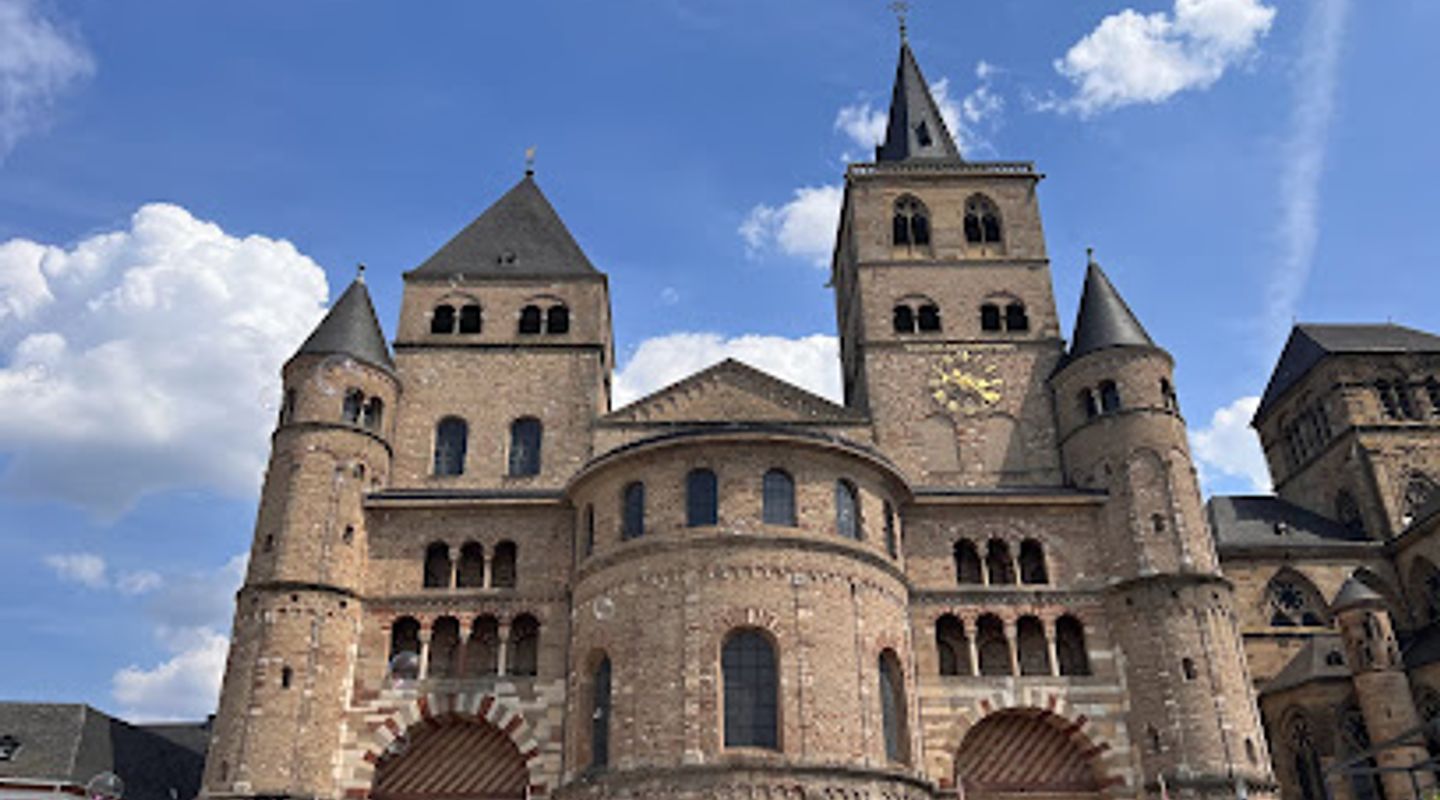
Trier Cathedral, or the High Cathedral of Saint Peter, stands as Germany's oldest church and Trier's largest religious edifice, bearing witness to centuries of history and architectural evolution. Its Roman core, dating back to the 4th century, anchors a structure that has been expanded and embellished through various eras, resulting in a captivating blend of Romanesque, Gothic, and Baroque styles. A UNESCO World Heritage site, the cathedral is renowned for its imposing Romanesque westwork, treasury of Christian art, and the revered Holy Robe, attracting pilgrims and tourists alike. Exploring the cathedral offers a journey through time, revealing layers of artistic and spiritual significance within its ancient walls. Visitors can admire the intricate details of its architecture, discover sacred relics, and experience the enduring legacy of Christianity in the heart of Trier.
Opening hours
- Every day6:30 am–5:30 pm
Opening hours as listed on the venue’s Google Business Profile. Hours can change for services and special events, so check with the venue before you go.
- Address
- Liebfrauenstraße 12, 54290 Trier
- Phone
- Website
Getting there
Walking
Public Transport
Taxi/Ride-Share
Driving
Discover more about Trier Saint Peter's Cathedral
Overview
Trier Cathedral, formally known as the High Cathedral of Saint Peter (Hohe Domkirche St. Peter zu Trier), is more than just a church; it's a living chronicle of German history, faith, and architectural ingenuity. Standing proudly in Trier, Rhineland-Palatinate, it holds the distinction of being the oldest cathedral in Germany, its foundations tracing back to the 4th century. This remarkable longevity has resulted in a breathtaking fusion of styles, from its Roman origins to Romanesque, Gothic, Renaissance, and Baroque additions, creating a visual tapestry that captivates visitors from around the globe. Commissioned initially by Emperor Constantine the Great, the cathedral was erected upon the site of a former palace belonging to his mother, Saint Helena. Bishop Maximin of Trier oversaw the construction of what was then the grandest ensemble of ecclesiastical structures in the West, rivaling even those in Rome. Archaeological excavations have confirmed that the present cathedral, along with its adjacent cloisters and the Church of Our Lady, rests upon the foundations of ancient Roman buildings from Augusta Treverorum, as Trier was then known. The original 4th-century church was a sprawling complex, four times the size of the current cathedral, comprising four basilicas, a baptistery, and various outbuildings. However, this early structure faced numerous challenges, including destruction by the Franks and later by Viking raids in 882. Undeterred, rebuilding efforts commenced under Archbishop Egbert in the 10th century and were completed by Poppo of Babenberg in the 11th century. The imposing west façade, a hallmark of Romanesque architecture, dates back to this period, although its apse wasn't finished until the late 12th century. Throughout the centuries, the cathedral has undergone continuous reconstruction and embellishment, reflecting the prevailing artistic tastes of each era. Gothic vaults, Renaissance sculptures, and Baroque chapels have been seamlessly integrated into the existing structure, yet the overall Romanesque character, with its Roman core, remains dominant. Large sections of Roman brickwork are still visible on the north façade, testaments to the cathedral's ancient origins. The imposing westwork, with its symmetrical sections and four towers, exemplifies Romanesque architecture under the Salian emperors of the 11th century. Inside, the cathedral is a treasure trove of Christian art and artifacts. The Trier Cathedral Treasury houses an extensive collection of religious relics, including the Holy Nail, believed to be from the crucifixion of Jesus. However, the cathedral's most prized possession is the Holy Robe, also known as the Tunic of Christ. According to tradition, Saint Helena brought the seamless robe to Trier. While its authenticity remains a matter of faith, the Holy Robe has been a significant pilgrimage destination for centuries, drawing countless devotees to Trier. The robe is preserved in a wooden shrine from 1891, housed within a climate-controlled glass shrine. The Gothic cloisters, constructed between 1245 and 1270, connect the cathedral to the Liebfrauenkirche (Church of Our Lady), creating a harmonious architectural ensemble. The cloisters feature a chapel where the cathedral's canons were once buried, as well as a bell dating back to 1682. Adjacent to the cloisters are several annex buildings, including the former cathedral school (the "Romanesque Room") and a room used for distributing bread to the poor (the "Gothic Room"). Exploring Trier Cathedral is an immersive experience that engages all the senses. Visitors can marvel at the intricate details of the architecture, from the Roman brickwork to the Gothic vaults and Baroque embellishments. They can discover sacred relics and learn about the cathedral's rich history through guided tours and informational displays. They can also soak in the spiritual atmosphere of this ancient sanctuary, a place of worship and pilgrimage for over 1,700 years. The cathedral's location in the heart of Trier makes it easily accessible to visitors. It is within walking distance of other major attractions, such as the Porta Nigra, the Imperial Baths, and the Church of Our Lady. Public transportation options are also readily available, with bus lines stopping near the cathedral. Paid parking is available in several garages nearby. Trier Cathedral stands as a testament to the enduring power of faith, art, and human ingenuity. Its long and storied history, its architectural grandeur, and its collection of sacred relics make it a must-see destination for anyone visiting Trier. Whether you are a history buff, an art enthusiast, or a spiritual seeker, Trier Cathedral offers a unique and unforgettable experience. Beyond its historical and religious significance, Trier Cathedral also offers a glimpse into the cultural life of Trier. The cathedral hosts regular concerts, services, and events that draw locals and tourists alike. Visitors can attend a traditional German Christmas market held annually in the square outside the cathedral during the Advent season. For those seeking a deeper understanding of the cathedral's history and art, guided tours are available in multiple languages. These tours provide valuable insights into the cathedral's architecture, its sacred relics, and its role in the history of Trier. Visitors can also explore the cathedral museum, located on the plaza just north of the church, to learn more about its rich history and ecclesiastical treasures. Trier Cathedral is not just a building; it is a living, breathing entity that has shaped the history and culture of Trier for centuries. Its enduring legacy continues to inspire and captivate all who visit its hallowed halls. Whether you are drawn to its architectural grandeur, its sacred relics, or its spiritual atmosphere, Trier Cathedral promises an unforgettable experience. It is a place where history comes alive, where art inspires, and where faith endures.
Evendo Review Centre
 Google
Guest reviews
Explore Trier Saint Peter's Cathedral on the map
A handpicked selection of must-see spots near Trier Saint Peter's Cathedral, mapped for you.
Get your free copy of our complete guide to Trier Saint Peter's Cathedral, delivered straight to you.
Everything on this page, from opening hours and how to get there to Eve’s tips and the best time to go, in one PDF you can read offline, print or share.
Already have an account? Sign in
Your Trier Saint Peter's Cathedral guide is ready.
We'll send it to · Not you? Sign out

Getting your guide ready…
We are putting together a fresh copy of the Trier Saint Peter's Cathedral guide. This can take up to a minute.
This can take a few moments. If your browser asks, choose Allow so the download can start. You'll find the guide in your Downloads folder.
Nothing happened? Download it again
Sorry, the guide is taking longer than usual. Please try again in a minute, or get it by email instead.
Unlock the best of Trier Saint Peter's Cathedral
Skip-the-line tickets, guided tours with entry, and walking tours of the area, booked in a few clicks.


Other nearby places you may find interesting
The closest places of the same kind, if this one is not quite what you had in mind.
-
-
-
-
-


Swipe for more places
More to explore near Trier Saint Peter's Cathedral
-
 Best experiences near Trier Saint Peter's Cathedral
-
 Best hotels near Trier Saint Peter's Cathedral
-
 Best landmarks near Trier Saint Peter's Cathedral
-
 Best attractions near Trier Saint Peter's Cathedral
-
 Best shops near Trier Saint Peter's Cathedral
-
 Best restaurants near Trier Saint Peter's Cathedral
-
 Best bars near Trier Saint Peter's Cathedral


Do you manage this location?
Take control to get all the benefits, like improved information, better appearance, and stronger visibility across AI-powered discovery.
Explore more

Explore more of Moselle
Discover the Moselle Valley in Germany: a scenic paradise of vineyards, historic castles, and charming villages nestled along the serene Moselle River.
Explore Moselle
Explore more of Germany
Experience Germany: where history meets innovation, and urban energy blends with natural beauty. Discover diverse cultures, delicious cuisine, and stunning landscapes.
Explore Germany
