

Free Ore Mountains Travel Guide & Mobile App
Explore Ore Mountains with free travel guides. Discover regional history, expert tips, proposed trips, and audio guides on web or mobile app.


Explore Germany’s Ore Mountains for UNESCO mining heritage, forested ridges, craft villages, historic towns and year-round outdoor activities.
Read more about Ore Mountains
When is the best time to visit Ore Mountains?
Best: June–August · 19–22°C| Month | High (°C) | Rainfall (mm) |
|---|---|---|
| January | 0 | 50 |
| February | 1 | 45 |
| March | 6 | 50 |
| April | 10 | 55 |
| May | 16 | 65 |
| June (best) | 19 | 80 |
| July (best) | 22 | 85 |
| August (best) | 21 | 80 |
| September | 17 | 65 |
| October | 12 | 55 |
| November | 5 | 60 |
| December | 2 | 55 |
Getting to and around Ore Mountains
How to get there
Transportation
Top city travel guides in Ore Mountains
The cities of Ore Mountains, and the easiest places to base yourself.

Swipe for more cities
Best attractions in Ore Mountains
The Ore Mountains offer a closely connected but varied group of attractions shaped by elevation and mining history. Freiberg’s historic centre, cathedral and mining collections provide the strongest introduction to the region’s scientific and industrial past, while the former mining towns of Annaberg-Buchholz, Marienberg and Schneeberg reveal different patterns of planned streets, churches and mineral wealth. Underground tours and mining museums explain the demanding work beneath the hills, and parts of the UNESCO World Heritage cultural landscape demonstrate how shafts, water systems, processing sites and settlements operated together. Seiffen adds a different dimension through wood-turning, carving and demonstrations of traditional craft production. In the northern foothills, Augustusburg Castle combines architecture with broad views and museum collections. Higher districts around Oberwiesenthal, Fichtelberg and Altenberg centre on walking, cycling, skiing and snow-based activities, while reservoirs, forest trails and rock formations such as the Greifensteine provide quieter outdoor alternatives. The attraction landscape is therefore less about one headline sight than about moving between towns, valleys, workshops and upland scenery.
-
Technology museum
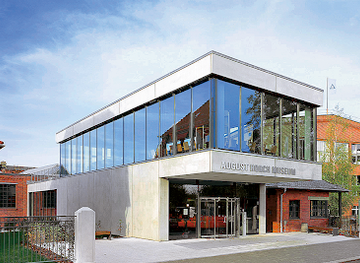
August Horch Museum Zwickau
Discover the roots of automotive excellence at the August Horch Museum in Zwickau, a captivating journey through history and innovation.
-
Castle
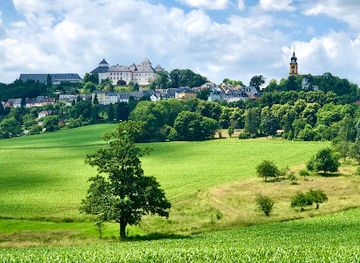
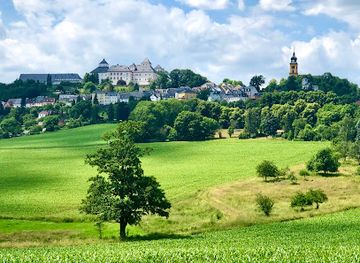
Castle Augustusburg
Explore the elegance of Castle Augustusburg, a breathtaking Baroque castle rich in history, art, and stunning landscapes in the heart of Germany.
-
Open air museum
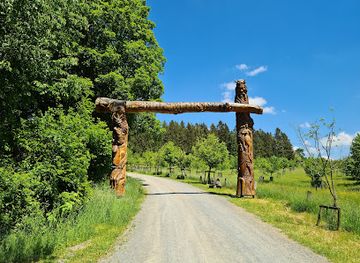
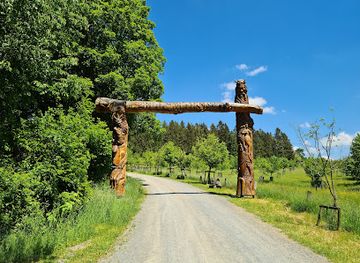
Blockhausen
Explore the enchanting open-air museum of Blockhausen in Dorfchemnitz, showcasing traditional wooden architecture and rural craftsmanship.
-
Castle
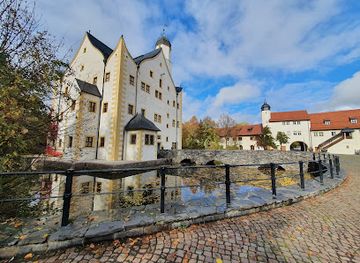
Water castle Klaffenbach
Explore the enchanting Water Castle Klaffenbach in Chemnitz, a historical marvel offering stunning architecture, lush gardens, and vibrant cultural events.
Best landmarks in Ore Mountains
Fichtelberg is the Ore Mountains’ most recognisable natural landmark on the German side, rising above Oberwiesenthal and marking the region’s high, weather-exposed landscape. Its summit and surrounding ridges offer a clear sense of the transition from settled valleys to upland forest and open ground. Freiberg Cathedral, with its important historical connection to Saxon mining wealth, anchors the architectural identity of the region’s principal mining city. In Annaberg-Buchholz, St Anne’s Church is a major late Gothic landmark associated with the town’s silver-mining prosperity, while Marienberg’s unusually regular Renaissance town plan reflects deliberate urban planning during a period of mineral expansion. Augustusburg Castle, positioned on a prominent hill in the northern foothills, is one of the region’s most imposing secular buildings. Seiffen’s church and surrounding village landscape express the close relationship between rural settlement and craft production. Across the region, mine entrances, water-management works, smelting remains and historic market squares are significant not because they form a single monument, but because together they document an evolving industrial landscape.
-
Historical landmark
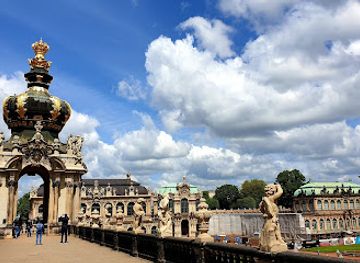
Dresden Zwinger
Discover the architectural brilliance and artistic treasures of Dresden Zwinger, a stunning Baroque masterpiece and cultural hub in Germany.
-
Castle
Castle Augustusburg
Immerse yourself in the rich history and stunning landscapes of Castle Augustusburg, a breathtaking Baroque masterpiece in Germany.
-
Open air museum
Blockhausen
Explore Blockhausen, an open-air museum in Dorfchemnitz, Germany, where history comes alive through engaging exhibits and beautiful landscapes.
-
Mountain cable car
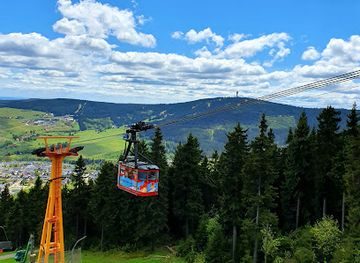
Fichtelberg Cable Car Oberwiesenthal
Discover breathtaking views and outdoor adventures at Fichtelberg Cable Car in Oberwiesenthal, a top destination for nature lovers and hikers.
Explore Ore Mountains on the map
Plan your trip on one map. See where the top cities, national parks and sights are, and book hotels and experiences in a few clicks.
Best hotels in Ore Mountains
Best restaurants in Ore Mountains
Food in the Ore Mountains is grounded in Saxon home cooking and the practical traditions of a rural mining society. Potato dishes, soups, dumplings, rich sauces, seasonal vegetables and game commonly appear on menus, alongside cakes and pastries served in cafés. Regional specialities include potato-based fillings and baked dishes such as Klitscher, while local interpretations of Christmas baking and festive biscuits are especially prominent in winter. Traditional inns and family-run restaurants are often the best settings for hearty regional meals, although Freiberg and the larger towns also offer contemporary German and international dining. In the higher resorts, menus frequently cater to hikers, skiers and cyclists, with warming dishes and substantial portions. Food markets, bakeries and specialist shops provide opportunities to sample Saxon produce, while Seiffen’s craft orientation is often paired with cafés and seasonal stalls rather than a separate fine-dining tradition. Beer and non-alcoholic regional drinks are widely available, and menus may change with local supply and the season.
-
 Restaurant
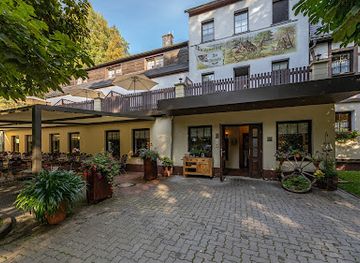
Brauerei Gasthof Zwönitz
Experience authentic German cuisine and local brews at Brauerei Gasthof Zwönitz - where tradition meets hospitality.
-
Hotel
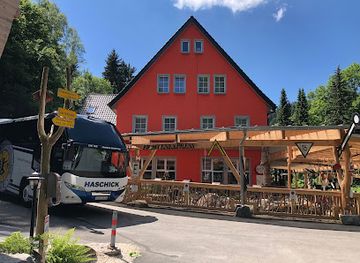
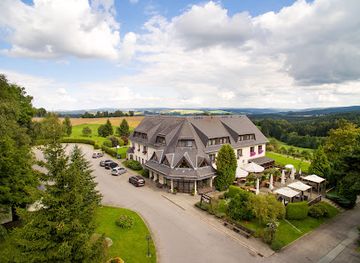
Erlebnishotel & Restaurant Fichtenhäusel
Discover Erlebnishotel & Restaurant Fichtenhäusel: A perfect blend of comfort, dining delights, and nature's beauty in Bärenstein.
-
Hotel
Hotel Waldesruh Lengefeld
Experience genuine German hospitality at Hotel Waldesruh Lengefeld - where comfort meets tradition in beautiful Saxony.
-
Hotel
Waldgasthof & Hotel "Am Sauwald"
Discover comfort and culinary delights at Waldgasthof & Hotel 'Am Sauwald', your perfect getaway in Tannenberg's scenic landscapes.
Best bars in Ore Mountains
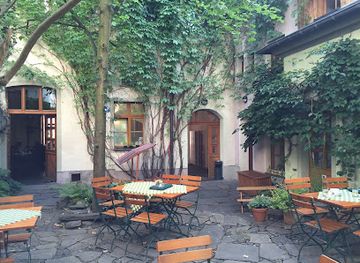
Evening life in the Ore Mountains is generally modest and town-centred rather than club-focused. Freiberg has the broadest choice of pubs, cafés, student-oriented venues and restaurants, reflecting its university population and historic centre. Annaberg-Buchholz, Schwarzenberg, Aue and other larger towns offer traditional pubs, hotel bars and occasional live music, while smaller settlements tend to rely on village inns and restaurant-bars. In Oberwiesenthal and Altenberg, après-ski-style gatherings and informal evening dining become more noticeable during the winter season, but the atmosphere remains more relaxed than that of a major German city. Local breweries and regional beer selections may feature in pubs, and cultural venues sometimes provide concerts or theatre alongside food and drink. Opening patterns vary considerably, particularly in rural villages, so do not assume that a late-night venue will be available outside the main towns or peak holiday periods.
-
Restaurant
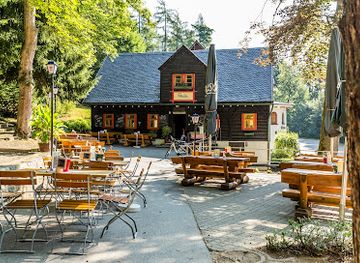
Brauerei Gasthof Zwönitz
Experience authentic German cuisine and local brews at Brauerei Gasthof Zwönitz, a charming restaurant and hotel in Zwönitz.
-
Hotel
Hotel und Restaurant Köhlerhütte-Fürstenbrunn im Erzgebirge
Discover the enchanting Hotel und Restaurant Köhlerhütte in the Erzgebirge, where comfort meets nature and culinary delights await.
-
Bar
The Royal inn Wilder Mann
Discover the enchanting blend of bar, hotel, and restaurant at The Royal Inn Wilder Mann in Annaberg-Buchholz, where local culture meets warm hospitality.
-
Restaurant
Cafe Anna
Discover the cozy charm of Cafe Anna, a delightful cafe and pub in Annaberg-Buchholz offering local flavors and a welcoming atmosphere.
Best nightclubs in Ore Mountains
Evening life in the Ore Mountains is generally modest and town-centred rather than club-focused. Freiberg has the broadest choice of pubs, cafés, student-oriented venues and restaurants, reflecting its university population and historic centre. Annaberg-Buchholz, Schwarzenberg, Aue and other larger towns offer traditional pubs, hotel bars and occasional live music, while smaller settlements tend to rely on village inns and restaurant-bars. In Oberwiesenthal and Altenberg, après-ski-style gatherings and informal evening dining become more noticeable during the winter season, but the atmosphere remains more relaxed than that of a major German city. Local breweries and regional beer selections may feature in pubs, and cultural venues sometimes provide concerts or theatre alongside food and drink. Opening patterns vary considerably, particularly in rural villages, so do not assume that a late-night venue will be available outside the main towns or peak holiday periods.
-
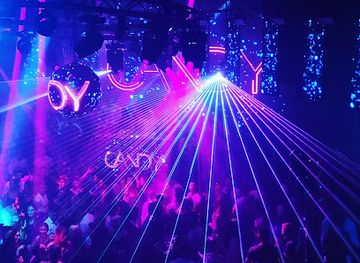
Night club
Maxxim
Experience the heart of Berlin's nightlife at Maxxim, where vibrant music and lively crowds create unforgettable nights.
-
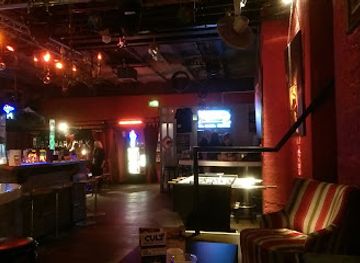
Disco club
The Cult - Nightclub & more / Nürnberg
Discover Nuremberg's nightlife at The Cult, a disco club and bar offering unforgettable dance experiences and vibrant events.
-
Night club
Rudas Studios Club
Discover the pulse of Düsseldorf nightlife at Rudas Studios Club, where electrifying music and vibrant atmosphere create unforgettable moments.
-
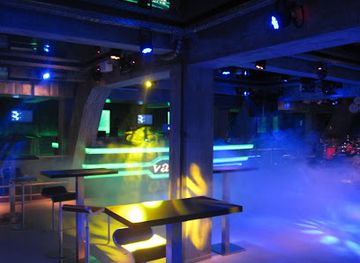
Night club
Vanity Club Cologne - Köln
Discover the electrifying atmosphere of Vanity Club Cologne, where unforgettable nights of music and dance await in the heart of the city.

Best shops in Ore Mountains
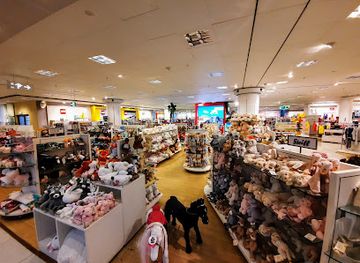
Shopping in the Ore Mountains centres on craft, food and historic town centres rather than large-scale retail. Seiffen is the best-known place for traditional wooden goods, including turned figures, Christmas pyramids, candle arches and nutcrackers; visitors should look for workshops and established specialist retailers rather than treating every seasonal product as handmade locally. Freiberg, Annaberg-Buchholz, Schneeberg and Schwarzenberg combine ordinary high-street shops with independent galleries, bookshops, cafés and stores selling regional food. Market squares host periodic markets whose schedules vary, while bakeries and delicatessens are useful for Saxon cakes, biscuits and other provisions. Museums and craft centres often have carefully selected gift shops related to mining, minerals or woodwork. In rural villages, retail choices are limited and opening hours can be shorter, so obtain essentials in the larger towns. The most appropriate souvenirs are usually modest, useful craft objects, locally produced foods or mineral-related items with clear information about their origin.
-
Department store
GALERIA Chemnitz
Discover the ultimate shopping destination in Chemnitz at GALERIA, where fashion, food, and fun come together seamlessly.
-
Shopping mall
Adam Ries Passage
Explore Adam Ries Passage: A vibrant shopping destination in Annaberg-Buchholz, blending local culture with modern retail experiences.
-
Toy store
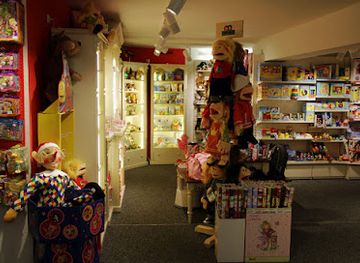
Spielwaren Viehweg
Explore Spielwaren Viehweg in Annaberg-Buchholz, a toy store brimming with delightful toys and games for all ages, ensuring fun for the whole family.
-
Book store
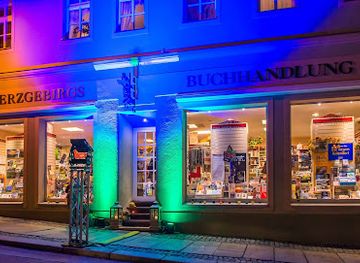
Erzgebirgs-Buchhandlung Knoblauch
Discover literary gems and local culture at Erzgebirgs-Buchhandlung Knoblauch, a cozy bookstore in Annaberg-Buchholz, Germany.
Get your free copy of our complete guide to Ore Mountains, delivered straight to you.
Everything on this page, from attractions and restaurants to essentials and local phrases, in one PDF you can read offline, print or share.
Already have an account? Sign in
Your Ore Mountains guide is ready.
We'll send it to · Not you? Sign out

Getting your guide ready…
We are putting together a fresh copy of the Ore Mountains guide. This can take up to a minute.
This can take a few moments. If your browser asks, choose Allow so the download can start. You'll find the guide in your Downloads folder.
Nothing happened? Download it again
Sorry, the guide is taking longer than usual. Please try again in a minute, or get it by email instead.
Ore Mountains essentials
Currency and Payment
Safety
Emergency Situations
Do's and Don'ts
Local Tips
From Eve
Local phrases worth knowing
You don't need to get them perfect. A few words go a long way, and locals appreciate the effort.
Basics
| English | Local | Say it |
|---|---|---|
| Hello | Hallo | [Hah-loh] |
| Goodbye | Auf Wiedersehen | [Owf Veed-er-zay-en] |
| Yes | Ja | [Yah] |
| No | Nein | [Nine] |
| Please/You're welcome | Bitte | [Bi-teh] |
| Thank you | Danke | [Dahn-keh] |
| Excuse me/Sorry | Entschuldigung | [Ent-shool-dee-goong] |
| How are you? | Wie geht's? | [Vee gates?] |
| Fine. And you? | Gut. Und dir? | [Goot. Oond deer?] |
| Do you speak English? | Sprechen Sie Englisch? | [Shprikh-en Zee Eng-lish?] |
| I don't understand | Ich verstehe nicht | [Ish fer-shtay-eh nikht] |
Eating & Drinking
| English | Local | Say it |
|---|---|---|
| I'd like to see the menu, please | Ich hätte gerne die Speisekarte, bitte | [Ish heh-teh gair-neh dee Shpy-zeh-kar-teh, bi-teh] |
| I don't eat meat | Ich esse kein Fleisch | [Ish ess-eh kine Flysh] |
| Cheers! | Prost! | [Prohst!] |
| I would like to pay, please | Ich möchte zahlen, bitte | [Ish murk-teh tsah-len, bi-teh] |
Emergencies
| English | Local | Say it |
|---|---|---|
| Help! | Hilfe! | [Hil-feh!] |
| Go away! | Geh weg! | [Gay vek!] |
| Call the Police! | Rufen Sie die Polizei! | [Roo-fen Zee dee Poh-lee-tsai!] |
| Call a doctor! | Rufen Sie einen Arzt! | [Roo-fen Zee eye-nen Arts-t!] |
| I'm lost | Ich habe mich verlaufen | [Ish hah-beh mikh fer-lau-fen] |
| I'm ill | Ich bin krank | [Ish bin krank] |
Shopping
| English | Local | Say it |
|---|---|---|
| I'd like to buy... | Ich möchte kaufen... | [Ish murk-teh kow-fen...] |
| I'm just looking | Ich schaue nur | [Ish shau-eh noor] |
| How much is it? | Wie viel kostet es? | [Vee feel kost-et es?] |
| That's too expensive | Das ist zu teuer | [Das ist tsoo toy-er] |
| Can you lower the price? | Könnten Sie den Preis senken? | [Kurn-ten Zee den Price sen-ken?] |
Time & Numbers
| English | Local | Say it |
|---|---|---|
| What time is it? | Wie spät ist es? | [Vee shpaet ist es?] |
| It's one o'clock | Es ist ein Uhr | [Es ist ine Oor] |
| Half past (10) | Halb (10) | [Halb (10)] |
| Morning | Morgen | [Mor-gen] |
| Afternoon | Nachmittag | [Nahk-mit-tag] |
| Evening | Abend | [Ah-bend] |
| Yesterday | Gestern | [Gess-turn] |
| Today | Heute | [Hoy-teh] |
| Tomorrow | Morgen | [Mor-gen] |
| 1 | Eins | [Ayns] |
| 2 | Zwei | [Tsvy] |
| 3 | Drei | [Dry] |
| 4 | Vier | [Fear] |
| 5 | Fünf | [Foonf] |
| 6 | Sechs | [Zex] |
| 7 | Sieben | [Zee-ben] |
| 8 | Acht | [Ahkt] |
| 9 | Neun | [Noyn] |
| 10 | Zehn | [Tsen] |
Transport & Directions
| English | Local | Say it |
|---|---|---|
| Where's a/the...? | Wo ist ein/das...? | [Voh ist ine/das...?] |
| What's the address? | Wie ist die Adresse? | [Vee ist dee Ah-dres-seh?] |
| Can you show me (on the map)? | Könnten Sie mir (auf der Karte) zeigen? | [Kurn-ten Zee meer (owf der Kar-teh) tsai-gen?] |
| When's the next (bus)? | Wann kommt der nächste (Bus)? | [Vahn kommt der nex-teh (Boos)?] |
| A ticket (to ....) | Ein Ticket (nach ....) | [Ine Tick-et (nahkh ....)] |
History of Ore Mountains
Early settlement and medieval colonisation
Before large-scale mining, the Ore Mountains were heavily forested uplands inhabited and used through a mixture of woodland management, farming and local resource gathering. From the twelfth century, German eastward settlement and the development of market towns brought new agricultural communities, religious foundations and administrative structures into the valleys and foothills. Towns such as Freiberg emerged within this expanding settlement landscape. The difficult terrain limited dense urban growth, but the network of villages, roads and later mining settlements established the pattern still visible across the region.
The silver boom of the late Middle Ages
Silver discoveries around Freiberg in the twelfth century transformed the region and helped make the town one of central Europe’s important mining centres. Further discoveries in the fifteenth and sixteenth centuries encouraged the foundation or expansion of towns including Annaberg, Marienberg and Schneeberg. Mining brought merchants, skilled workers, officials and investors, while the proceeds supported churches, civic buildings and the finances of Saxon rulers. Shafts, adits, watercourses and spoil heaps altered the landscape, creating the historic mining environment that remains the defining legacy of the Ore Mountains.
Saxon mining administration and technical innovation
As workings became deeper, mining depended on sophisticated drainage, power and surveying techniques. Water-management systems, including artificial ponds, ditches and channels, helped operate pumps and machinery and remain visible in parts of the upper region. Freiberg developed a particularly important tradition of mining education and technical expertise, later associated with the Bergakademie Freiberg, founded in 1765. The institution contributed to the scientific study of minerals, metallurgy and mining, linking the Ore Mountains to wider European developments in engineering and natural science.
Cobalt, tin and changing industrial fortunes
Silver was not the only mineral to shape the region. Tin mining was important in several upland districts, while cobalt extracted around Schneeberg supported the production of blue pigments used in glass and ceramics. Later centuries brought fluctuating demand, exhausted deposits and more industrial forms of extraction. Mining communities responded through forestry, metalworking, lace-making, manufacturing and small-scale domestic crafts. This economic adaptability explains why many Ore Mountains towns survived periods of mining decline while retaining streets, churches and industrial structures created during earlier booms.
Craft traditions and the Christmas economy
Woodworking developed as an important supplementary livelihood, particularly in villages where agriculture and mining could not support the population throughout the year. Seiffen became renowned for turned and carved wooden goods, while lace-making, straw work, embroidery and other home industries spread across the mountains. Over time, candle arches, nutcrackers, pyramids and other seasonal products became strongly associated with the region’s Christmas culture. These traditions were shaped by local economic history rather than simply invented for tourism, although modern workshops and retailers now present them to visitors throughout the year.
Twentieth-century upheaval and uranium mining
The twentieth century brought war, political division and major changes to the region’s industries. Under East Germany, uranium mining was conducted on a large scale by the Soviet-German company Wismut, especially in parts of Saxony, including areas of the Ore Mountains. The work was strategically important but environmentally and socially demanding. After reunification in 1990, many operations closed, leaving a substantial programme of remediation and landscape restoration. Some former mining sites and museums now explain this more recent chapter alongside the region’s older silver and tin heritage.
The UNESCO mining landscape
In 2019, the Mining Region Erzgebirge/Krušnohoří was inscribed on the UNESCO World Heritage List as a transboundary cultural landscape shared by Germany and the Czech Republic. The designation covers a series of components representing mines, towns, technical systems, mineral-processing sites, water management and associated institutions. On the German side, places such as Freiberg, Annaberg-Buchholz, Marienberg, Schneeberg, Altenberg and Seiffen contribute to this broader story. The recognition emphasises the interconnected landscape and its long history of mining-related innovation rather than a single unified architectural style.
Ore Mountains in Photos
Browse through our photo collection highlighting the charm and character of the destination.
Neighbouring regions of Ore Mountains
The closest regions to Ore Mountains, if you have time for more than one.
-

-

-

-

-


Swipe for more regions
Explore more

Explore more of Germany
Experience Germany: where history meets innovation, and urban energy blends with natural beauty. Discover diverse cultures, delicious cuisine, and stunning landscapes.
Explore Germany