Schloss Sachsenburg Travel Guide
Free Guide: Discover Schloss Sachsenburg, a captivating Saxon castle with a rich history, from medieval origins to a late Gothic masterpiece, currently undergoing restoration near Frankenberg.


A brief summary of Schloss Sachsenburg
Discover Schloss Sachsenburg, a captivating Saxon castle with a rich history, from medieval origins to a late Gothic masterpiece, currently undergoing restoration near Frankenberg.
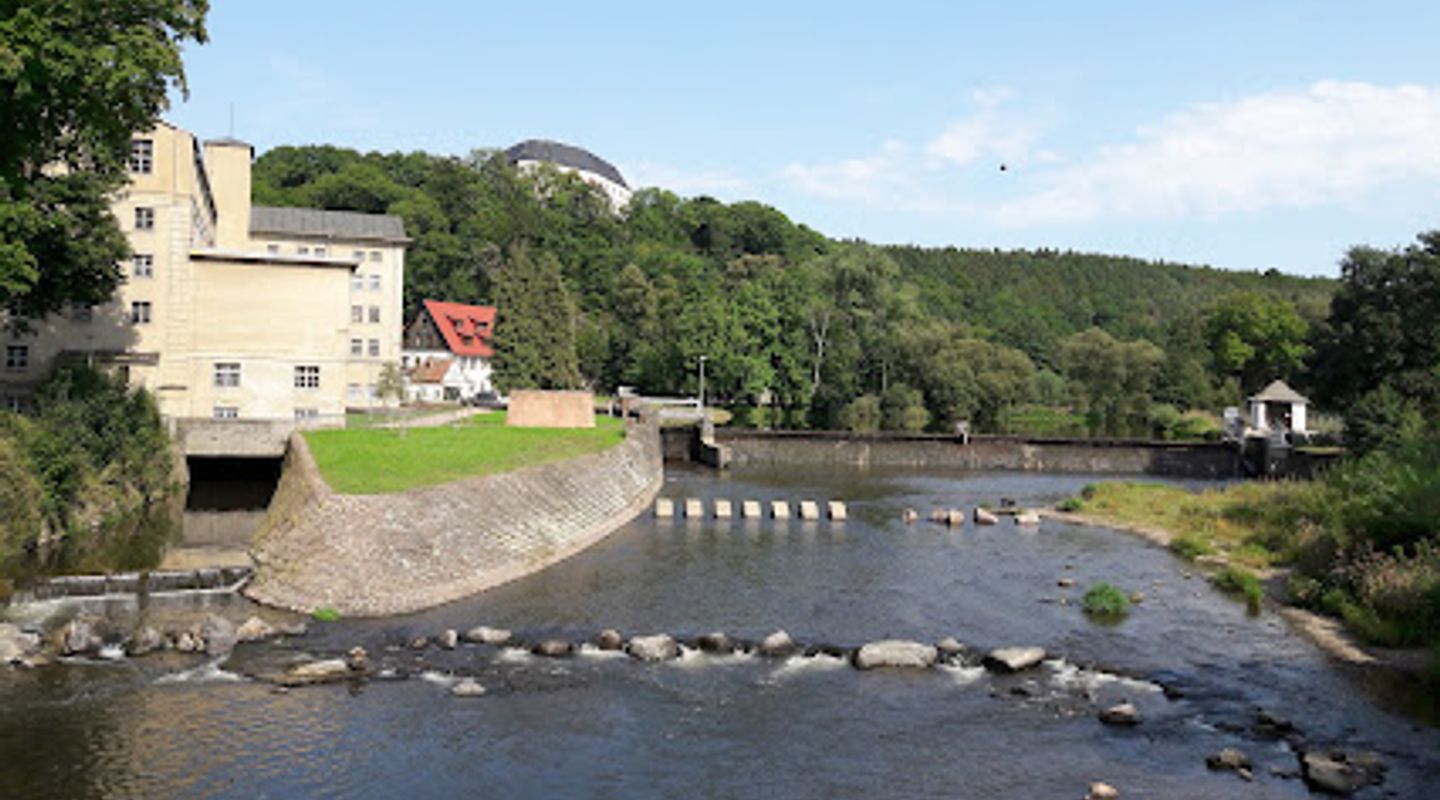
Schloss Sachsenburg, perched on a rock overlooking the Zschopau River near Frankenberg, Saxony, is a captivating blend of medieval origins and late Gothic artistry. Originally built in the 13th century, it was transformed into a residential palace in the 1480s by Hans Reynhart, becoming a prime example of late Gothic architecture in Saxony. While its history includes periods of administrative use, imprisonment, and even a brief stint as an early Nazi concentration camp, today, Schloss Sachsenburg stands as a testament to Saxon history and architectural prowess. Although currently closed for structural reasons, its imposing exterior and scenic setting continue to draw visitors eager to glimpse into Saxony's rich past and envision the castle's future.
Opening hours
- Every dayOpen 24 hours
Opening hours as listed on the venue’s Google Business Profile. Hours can change for services and special events, so check with the venue before you go.
- Address
- Am Schloß 3, 09669 Frankenberg/Sa.
- Website
Getting there
Public Transport
Taxi/Ride-Share
Driving
Discover more about Schloss Sachsenburg
Overview
Schloss Sachsenburg, a striking castle near Frankenberg, Saxony, commands attention with its imposing presence atop a rock overlooking the Zschopau River. Its story is a layered narrative spanning centuries, from its medieval roots to its current state as a monument undergoing restoration. While temporarily closed to the public, the castle's exterior and historical significance continue to draw visitors to Sachsenburg. The castle's origins trace back to at least the early 13th century, with the Lords of Sachsenburg first mentioned in 1197. While the existence of a castle at that time remains uncertain, archaeological evidence confirms its presence around 1210-1230, likely constructed by the Lords of Mildenstein. In 1488, the castle underwent a significant transformation under the guidance of Hans Reynhart, a prominent Saxon master builder. This conversion resulted in a remarkable late Gothic residential palace, considered one of the few completely preserved examples of its kind in Saxony, alongside the Albrechtsburg in Meissen. Throughout its history, Schloss Sachsenburg has served various purposes. From 1610, it functioned as an administrative building for the Electoral Saxon Office of Sachsenburg with Frankenberg. The Thirty Years' War brought destruction, with the outer baileys destroyed and the castle looted. In the 19th century, it was repurposed as a custody for young female prisoners and later as a penal and correctional institution until 1926. During the World War I, it housed prisoners of war, including Russian academics and students. Notably, Schloss Sachsenburg holds a dark chapter in its past as one of the earliest Nazi concentration camps, operating from 1933 to 1937. The SS utilized the castle and a nearby abandoned textile mill as a "protective custody" facility for dissidents, including Jehovah's Witnesses. This early camp served as a precursor to larger, more infamous concentration camps like Buchenwald and Sachsenhausen. Approximately 10,000 prisoners were interned there. Today, Schloss Sachsenburg is undergoing restoration, with efforts focused on preserving its architectural heritage and acknowledging its complex history. Although public access is currently restricted due to structural concerns, the town of Frankenberg is actively working on a concept for the castle's future use. The Kuratorium Schloss Sachsenburg e.V., a dedicated association, has been instrumental in the castle's preservation, offering guided tours and working towards its revitalization. Visitors to Sachsenburg can still appreciate the castle's imposing exterior and picturesque setting. The castle's location on a rock provides stunning views of the surrounding landscape, including the Zschopau River. A walk around the castle grounds offers a glimpse into its past, with remnants of its medieval fortifications and later additions visible. The nearby town of Frankenberg offers additional attractions and amenities for visitors. While the castle itself is currently closed, the town of Frankenberg and the surrounding area offer a variety of activities and attractions. The St. Aegidienkirche, a historic church in Frankenberg, is worth a visit. The town also boasts a sculpture trail, industrial path, and the ZeitWerkStadt museum. For outdoor enthusiasts, there are numerous hiking trails and the Walderlebnispfad (forest adventure trail) nearby. Schloss Sachsenburg stands as a symbol of Saxon history, architecture, and resilience. Its layered past, from medieval stronghold to Renaissance palace to site of wartime atrocities, makes it a compelling destination for those interested in history and culture. As restoration efforts continue, the castle promises to become an even more significant attraction, offering visitors a deeper understanding of Saxony's rich and complex heritage. The castle's story is a reminder of the importance of preserving historical sites and acknowledging the full spectrum of their past, both the triumphs and the tragedies. Imagine standing before the imposing walls of Schloss Sachsenburg, the wind whispering tales of knights and nobles, prisoners and pioneers. Picture the Zschopau River winding its way through the valley below, a silent witness to centuries of history. Envision the castle's grand halls and chambers, once filled with the sounds of courtly life, now awaiting restoration and a new chapter in their story. Schloss Sachsenburg is more than just a castle; it's a portal to the past, a testament to the enduring spirit of Saxony, and a place where history comes alive.
Evendo Review Centre
 Google
Guest reviews
Explore Schloss Sachsenburg on the map
A handpicked selection of must-see spots near Schloss Sachsenburg, mapped for you.
Get your free copy of our complete guide to Schloss Sachsenburg, delivered straight to you.
Everything on this page, from opening hours and how to get there to Eve’s tips and the best time to go, in one PDF you can read offline, print or share.
Already have an account? Sign in
Your Schloss Sachsenburg guide is ready.
We'll send it to · Not you? Sign out

Getting your guide ready…
We are putting together a fresh copy of the Schloss Sachsenburg guide. This can take up to a minute.
This can take a few moments. If your browser asks, choose Allow so the download can start. You'll find the guide in your Downloads folder.
Nothing happened? Download it again
Sorry, the guide is taking longer than usual. Please try again in a minute, or get it by email instead.
Other nearby places you may find interesting
The closest places of the same kind, if this one is not quite what you had in mind.
-
-
-
-
-


Swipe for more places
More to explore near Schloss Sachsenburg

 Best experiences near Schloss Sachsenburg
 Best hotels near Schloss Sachsenburg
 Best landmarks near Schloss Sachsenburg
 Best attractions near Schloss Sachsenburg
 Best shops near Schloss Sachsenburg
 Best restaurants near Schloss Sachsenburg
 Best bars near Schloss Sachsenburg
Do you manage this location?
Take control to get all the benefits, like improved information, better appearance, and stronger visibility across AI-powered discovery.
Explore more

Explore more of Saxony
Discover Saxony: A blend of baroque beauty, musical heritage, and natural splendor in Germany's historic heartland.
Explore Saxony
Explore more of Germany
Experience Germany: where history meets innovation, and urban energy blends with natural beauty. Discover diverse cultures, delicious cuisine, and stunning landscapes.
Explore Germany