

Neptunbrunnen Travel Guide
Free Guide: Discover Augsburg's oldest bronze fountain figure, the Neptune Fountain, a captivating landmark reflecting the city's rich history and artistic heritage on Jakobsplatz.


A brief summary of Neptunbrunnen
Discover Augsburg's oldest bronze fountain figure, the Neptune Fountain, a captivating landmark reflecting the city's rich history and artistic heritage on Jakobsplatz.
The Neptune Fountain (Neptunbrunnen) in Augsburg is a captivating historical landmark and the city's oldest bronze fountain figure. Dating back to the 16th century, this impressive monument depicts the Roman god Neptune and reflects Augsburg's rich history as a prominent trading hub. The fountain has been moved several times throughout its history, finally settling on Jakobsplatz, near the Fuggerei. Its intricate details and historical significance make it a must-see attraction for visitors exploring Augsburg's cultural heritage. The Neptune Fountain offers a glimpse into the city's artistic past and provides a picturesque setting for a leisurely stroll.
Opening hours
- Every dayOpen 24 hours
Opening hours as listed on the venue’s Google Business Profile. Hours can change for services and special events, so check with the venue before you go.
- Address
- 86152 Augsburg
- Website
Getting there
Walking
Public Transport
Discover more about Neptunbrunnen
Overview
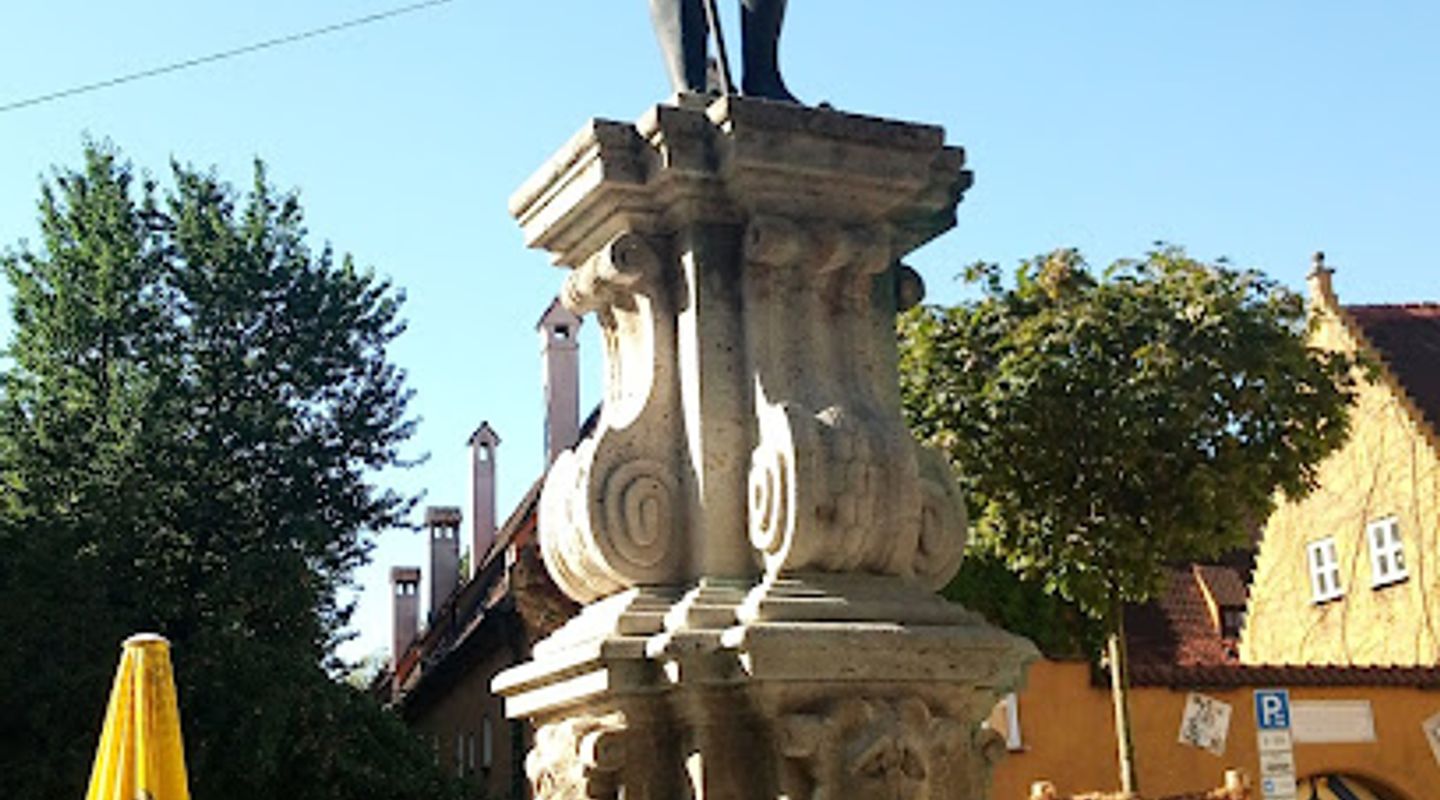
The Neptune Fountain, or Neptunbrunnen, stands as a testament to Augsburg's rich history and artistic heritage. Located on Jakobsplatz, near the Fuggerei, this bronze figure of the Roman god Neptune is the oldest fountain figure in Augsburg, captivating visitors with its intricate details and historical significance. The fountain's history dates back to the 16th century. It is believed the figure was created around 1518, though other sources suggest it was manufactured in 1536/1537. The bronze statue is attributed to the Augsburg sculptor Hans Daucher, though some sources point to Sebastian Löscher. The choice of Neptune, a pagan god, rather than a Christian saint, was a deliberate one by the city council. It was intended to create a neutral symbol during a period of religious tension between Catholics and Protestants, preceding the iconoclasm that swept through Augsburg in 1537. Originally, the fountain stood on the Fischmarkt (fish market), a square between the Perlachturm and the Rathaus (Town Hall), replacing a figure of Saint Ulrich. In 1596, it was moved to the Weissmalergasse (now Karolinenstrasse) before being returned to the Fischmarkt in 1745. In 1888, the fountain was moved again to its current location on Jakobsplatz, due to the construction of a municipal administration building next to the Town Hall. During this relocation, the figure was placed on a cast-iron pillar in a classicist style. The fountain figure stands at 1.75 meters tall (2.39 meters with the trident). Neptune is depicted holding a trident in his right hand and a dolphin in his left. Since 1978, the figure has stood on a natural stone base made of Crailsheim marble, in the center of a stone basin. Water flows into the basin from four lion protomes on the fountain pillar. Over the years, the fountain has undergone several renovations. In 1840, it received an iron basin. In 1921, the iron components were replaced with a new basin, pillar, and steps made of Ettringen marble. In the 1970s, the marble began to show signs of damage from air pollution, leading to a complete renovation of the fountain and redesign of Jakobsplatz in 1978. During this renovation, the basin and base were replaced with more durable Crailsheim marble. Today, the Neptune Fountain serves as a reminder of Augsburg's historical importance as a trading center in Southern Germany. The original bronze figure has been moved to the Maximilianmuseum since 2006 to protect it from the elements and vandalism. The fountain on Jakobsplatz is a replica, allowing visitors to appreciate the artistry and historical significance of the monument in its original setting. Visiting the Neptune Fountain offers a glimpse into Augsburg's rich cultural heritage. The fountain is located near other notable landmarks, including the Fuggerei, the Jakobertor, and St. James's Church, making it an ideal stop on a walking tour of the city. The Jakobsplatz itself provides a peaceful setting to admire the fountain and its surroundings. The Neptune Fountain is more than just a beautiful work of art; it is a symbol of Augsburg's history, resilience, and cultural identity. Its presence on Jakobsplatz continues to captivate visitors and remind them of the city's enduring legacy.
Evendo Review Centre
 Google
Guest reviews
Explore Neptunbrunnen on the map
A handpicked selection of must-see spots near Neptunbrunnen, mapped for you.
Get your free copy of our complete guide to Neptunbrunnen, delivered straight to you.
Everything on this page, from opening hours and how to get there to Eve’s tips and the best time to go, in one PDF you can read offline, print or share.
Already have an account? Sign in
Your Neptunbrunnen guide is ready.
We'll send it to · Not you? Sign out

Getting your guide ready…
We are putting together a fresh copy of the Neptunbrunnen guide. This can take up to a minute.
This can take a few moments. If your browser asks, choose Allow so the download can start. You'll find the guide in your Downloads folder.
Nothing happened? Download it again
Sorry, the guide is taking longer than usual. Please try again in a minute, or get it by email instead.
Other nearby places you may find interesting
The closest places of the same kind, if this one is not quite what you had in mind.
-
-
-
-
-


Swipe for more places
More to explore near Neptunbrunnen

 Best experiences near Neptunbrunnen
 Best hotels near Neptunbrunnen
 Best landmarks near Neptunbrunnen
 Best attractions near Neptunbrunnen
 Best shops near Neptunbrunnen
 Best restaurants near Neptunbrunnen
 Best bars near Neptunbrunnen
Do you manage this location?
Take control to get all the benefits, like improved information, better appearance, and stronger visibility across AI-powered discovery.
Explore more

Explore more of Swabia
Discover Swabia: A picturesque region in southwestern Germany, offering medieval architecture, scenic landscapes, and a rich culinary tradition.
Explore Swabia
Explore more of Germany
Experience Germany: where history meets innovation, and urban energy blends with natural beauty. Discover diverse cultures, delicious cuisine, and stunning landscapes.
Explore Germany
