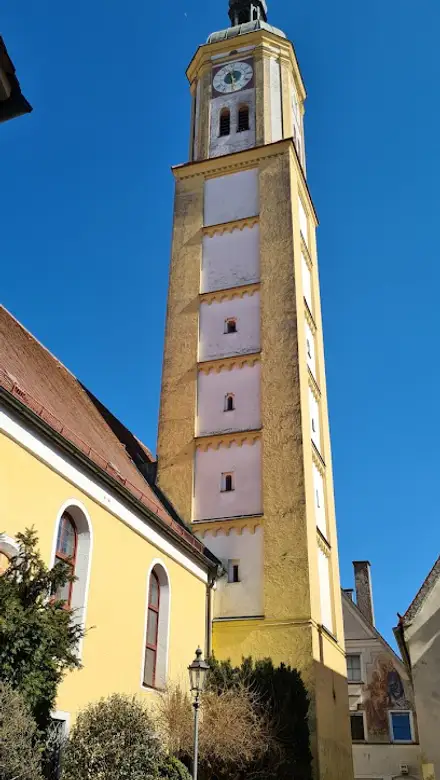
Turmuhrenmuseum, Swabia Travel Guide
Discover the fascinating world of tower clocks at Mindelheim's Schwäbisches Turmuhrenmuseum, home to Germany's oldest and most comprehensive collection of monumental timepieces from the 16th to 20th centuries.
Step into a world where time stands still yet echoes with the rhythmic ticking of centuries-old tower clocks at the Schwäbisches Turmuhrenmuseum in Mindelheim. Housed within the historic Silvester Church and its towering Kappelturm, this unique museum showcases an impressive collection of over 50 tower clocks dating from 1562 to 1978, alongside pocket watches, sundials, and other horological treasures. Founded in 1979, the museum offers a fascinating journey through the evolution of timekeeping, revealing the intricate mechanics and artistic craftsmanship of these monumental timepieces. Ascend the 156 steps of the Kappelturm, where each level unveils a new chapter in the history of tower clocks, culminating in a breathtaking view and an unforgettable experience. Prepare to be captivated by the sheer scale and ingenuity of these mechanical marvels, testaments to human innovation and the enduring quest to measure time.
A brief summary to Turmuhrenmuseum
- Hungerbachgasse 9, Mindelheim, 87719, DE
- Click to display
- Click to display
- Wednesday 2 pm-5 pm

Know before you go
Hi, I'm Eve. Here are a few practical things to know before exploring Turmuhrenmuseum.
- The museum is only open on Wednesdays from 2 PM to 5 PM, so plan your visit accordingly.
- Every visit includes a guided tour, enhancing the experience with detailed explanations of the clocks' history and mechanics.
- Climbing the Kappelturm's 156 steps is essential for experiencing the clocks in their original setting and enjoying panoramic views.
Do you manage this location?
Take control to get all the benefits, like improved information, better appearance, and stronger visibility across AI-powered discovery. Learn more about listing your business on Evendo
Activate your presenceOther nearby places you may find interesting
The closest places of the same kind, if this one is not quite what you had in mind.



Explore Turmuhrenmuseum on the Map
A handpicked selection of must-see spots near Turmuhrenmuseum, mapped for you.
Getting There
-
Walking
The Turmuhrenmuseum is located in the heart of Mindelheim's old town. From the Marienplatz, the central square, walk east along Maximilianstraße. Turn right onto Hungerbachgasse. The museum will be on your left, housed in the former Silvester Church. The walk is approximately 5 minutes and is easily navigable by foot.
-
Public Transport
If arriving by train or bus at Mindelheim Hauptbahnhof (main station), take bus number 2 towards Mindelheim Stadtmitte. Get off at the 'Mindelheim Schrannenplatz' stop. From there, walk south on Maximilianstraße, then turn left onto Hungerbachgasse. The museum will be on your left. A single bus fare is approximately €2-3.
-
Driving
If driving, navigate to Hungerbachgasse 9, 87719 Mindelheim. Limited street parking is available nearby. Parking fees in the vicinity typically range from €1-2 per hour. Consider parking at the Parkplatz Allgäuer Straße, a larger parking area a short walk away, if street parking is unavailable.
Discover more about Turmuhrenmuseum













Your all‑in‑one travel companion app
Explore expert travel guides, compare and book tours, experiences, hotels, and more—all from the palm of your hand. Download now for seamless trip planning wherever your wanderlust takes you.


Explore More of Swabia

Looking beyond Turmuhrenmuseum? Discover Swabia for broader travel guides, local hot-spots, and regional highlights.
Explore Swabia
Discover the enchanting Forstbotanischer Park at Schloss Seyfriedsberg, a serene escape showcasing diverse trees and vibrant rhododendrons near Ziemetshausen, Bavaria, offering a blend of nature and history.

Discover Mindelheim's vibrant heart at Marienplatz, a historic square brimming with architectural beauty, cultural events, and the spirit of Bavaria.