

Free Westerwald Travel Guide & Mobile App
Explore Westerwald with free travel guides. Discover regional history, expert tips, proposed trips, and audio guides on web or mobile app.


Explore Westerwald in Germany for basalt hills, forest trails, ceramic craft, market towns, monasteries and quiet rural landscapes between the Rhine and Sieg.
Read more about Westerwald
When is the best time to visit Westerwald?
Best: June–August · 20–22°C| Month | High (°C) | Rainfall (mm) |
|---|---|---|
| January | 4 | 50 |
| February | 4 | 45 |
| March | 9 | 50 |
| April | 13 | 55 |
| May | 17 | 60 |
| June (best) | 20 | 75 |
| July (best) | 22 | 80 |
| August (best) | 22 | 75 |
| September | 18 | 65 |
| October | 14 | 55 |
| November | 7 | 60 |
| December | 4 | 60 |
Getting to and around Westerwald
How to get there
Transportation
Top city travel guides in Westerwald
The cities of Westerwald, and the easiest places to base yourself.
-

-


Swipe for more cities
Destinations in Westerwald
Resorts, valleys and scenic spots worth a trip of their own.

Swipe for more destinations
Best attractions in Westerwald
Westerwald's attractions are spread through a landscape of forest, high meadows, basalt outcrops and small reservoirs rather than concentrated in one city. Walking is central, with the WesterwaldSteig and numerous shorter routes crossing the uplands, the Nister valley and wooded gorges such as the Holzbachschlucht. The Westerwälder Seenplatte near Steinebach an der Wied offers quiet lakes and wetland habitats, while the Fuchskaute provides a highland setting for walks and broad views. Historic towns including Hachenburg and Montabaur combine compact old centres with castles and local museums. Marienstatt Abbey adds religious and architectural interest in the Nister valley. In the Kannenbäckerland, the Keramikmuseum Westerwald and working ceramic studios explain the region's distinctive stoneware tradition. Stöffel-Park near Enspel interprets former quarrying and industrial activity in a large open-air setting. Wildlife watching, cycling, geology, gardens and family-oriented outdoor facilities round out the visitor offer, with the most rewarding itineraries allowing time to travel between separate communities rather than attempting to cover the entire upland in a single day.
-
Tourist attraction
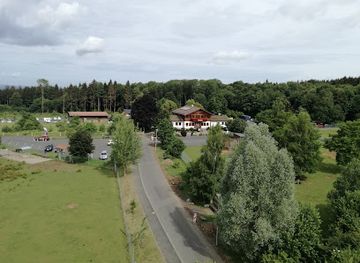
Wildpark Bad Marienberg
Discover Wildpark Bad Marienberg, a wildlife park and hiking paradise in the Westerwald region, perfect for family adventures and nature lovers.
-
Tourist attraction
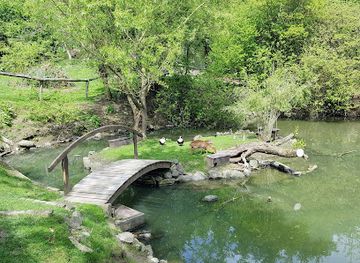
Herborn GmbH Zoo
Explore the enchanting Herborn GmbH Zoo, a delightful animal park in Germany where families can experience wildlife up close in a serene setting.
-
Tourist attraction
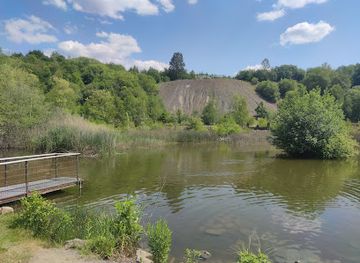
Stöffel Park
Experience the natural wonders and geological heritage of Stöffel Park, a perfect destination for hiking enthusiasts and nature lovers in Enspel, Germany.
-
Tourist attraction
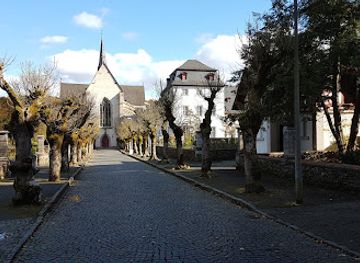
Marienstatt Abbey
Experience the serene beauty and rich history of Marienstatt Abbey, a tranquil escape nestled in the heart of Streithausen, Germany.
Best landmarks in Westerwald
Montabaur Castle is Westerwald's most recognisable architectural landmark, rising above the town in its distinctive yellow Baroque form and reflecting the area's former ecclesiastical and territorial importance. Hachenburg's old market square and surrounding timber-framed streets preserve the appearance of a historic administrative and trading centre, while the town's castle complex adds a powerful visual focus. Marienstatt Abbey occupies a memorable position in the Nister valley and remains an important religious and cultural site. The basalt formation of the Druidenstein near Kirchen expresses the region's volcanic geology in a single striking outcrop, and the Fuchskaute marks the highest ground of the Westerwald. Around Hillscheid, surviving and reconstructed elements associated with the Roman frontier recall the Limes and the upland's place within the empire's defensive system. The large former quarry landscape at Stöffel-Park is a less conventional landmark, showing how modern industrial extraction has become part of the region's heritage. Together these places represent political history, religious life, geology, frontier archaeology and industry rather than a single architectural style.
-
Monument
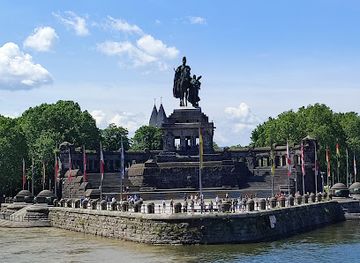
Deutsches Eck
Discover the historic beauty of Deutsches Eck in Koblenz, where the Rhine and Moselle rivers meet amidst stunning landscapes and rich heritage.
-
Fortress
Ehrenbreitstein Fortress
Explore the historic Ehrenbreitstein Fortress, a cultural treasure offering breathtaking views and rich history in Koblenz, Germany.
-
Castle
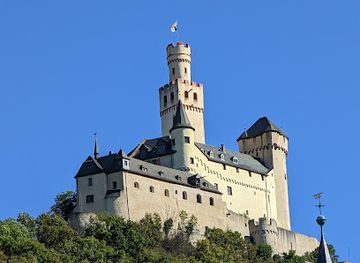
Marksburg
Explore Marksburg Castle, the only Rhine fortress never destroyed, offering an authentic medieval experience with guided tours, armories, and panoramic river views.
-
National reserve
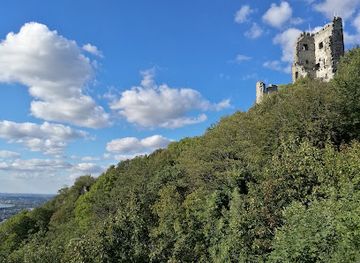
Siebengebirge
Explore the breathtaking Siebengebirge National Reserve, where nature meets adventure in a stunning landscape filled with hiking trails and scenic views.

Explore Westerwald on the map
Plan your trip on one map. See where the top cities, national parks and sights are, and book hotels and experiences in a few clicks.
Best hotels in Westerwald
Best restaurants in Westerwald
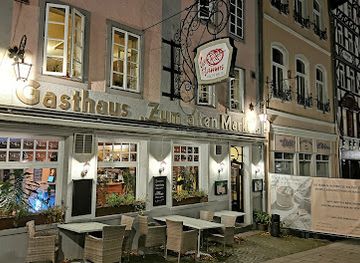
Dining in Westerwald is shaped by rural produce, bakery culture and the traditions of western German inns. Menus commonly draw on potatoes, seasonal vegetables, pork, game and hearty soups, while cakes, tarts and substantial regional breads are important stops during walking or cycling days. In the Kannenbäckerland, village restaurants and cafés sit alongside a strong ceramic identity, and farm shops provide opportunities to buy local foods for self-catering. Traditional Gasthäuser remain particularly useful in smaller communities, offering straightforward meals and regional beers, while larger towns such as Montabaur and Hachenburg have more varied cafés and contemporary restaurants. Around the lakes and walking areas, seasonal refreshment points may be available, but services are less dependable away from population centres. Menus often reflect the wider Rhineland-Palatinate and Hessian culinary sphere rather than a single sharply defined Westerwald cuisine, so visitors should look for local produce, changing seasonal dishes and family-run establishments rather than expect one signature dish everywhere.
-
Chinese
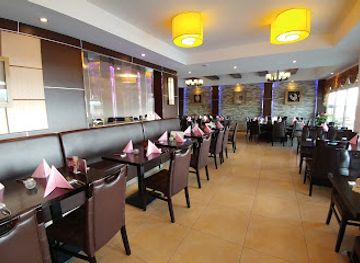
YU HU
Experience the rich flavors of authentic Chinese cuisine at Yu Hu in Hachenburg - a culinary gem waiting to be discovered by tourists.
-
German
Marienstatter Brauhaus
Discover authentic German flavors at Marienstatter Brauhaus - where tradition meets taste in every pint.
-
Restaurant
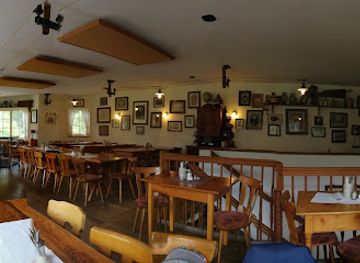
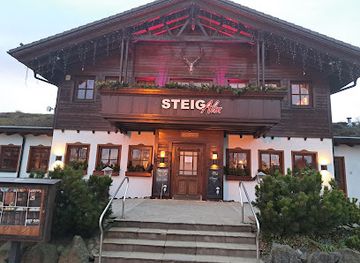
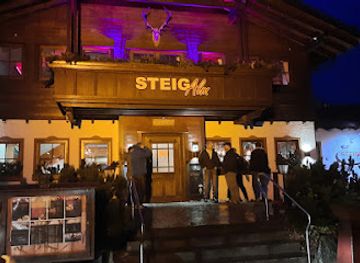
Steig-Alm Resort
Experience exquisite dining and charming hospitality at Steig-Alm Resort in Bad Marienberg - your gateway to relaxation and adventure.
-
Restaurant
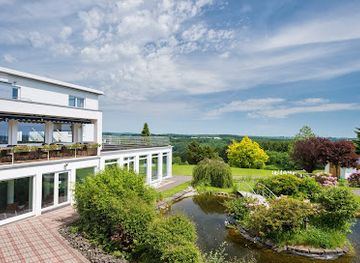
Wildpark Hotel
Discover tranquility at Wildpark Hotel - where stunning views meet exceptional dining in Bad Marienberg.
Best bars in Westerwald
Evening life in Westerwald is generally low-key and centred on traditional pubs, restaurant bars, breweries and occasional live music rather than a large club scene. Hachenburg and Montabaur offer the broadest choice of places to meet in the evening, with cafés and bars around their historic centres, while smaller towns and villages tend to close earlier and rely on village inns or regular community events. The region's rural character makes a leisurely meal, a local beer or a cultural performance more typical than late-night entertainment. In the ceramic towns around Höhr-Grenzhausen, evening plans can sometimes be combined with exhibitions or workshop events, subject to the current programme. Visitors staying in the countryside should arrange transport in advance, as taxis and public transport may be limited at night and walking between villages can involve unlit roads.
-
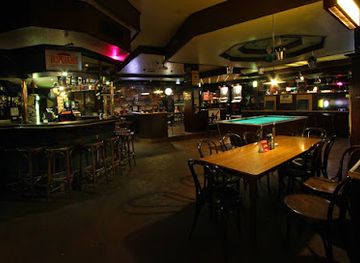
Irish pub
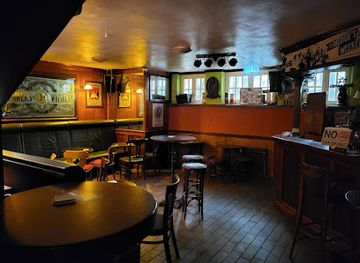
Irish Pub Koblenz
Discover authentic Irish hospitality at Irish Pub Koblenz, where every pint tells a story and every dish is a celebration.
-
Bar
Steig-Alm Resort
Experience the perfect blend of nature and comfort at Steig-Alm Resort - a cozy bar, restaurant, and hotel in the heart of Westerwald.
-
Bar
Spökes
Experience the vibrant nightlife at Spökes, Koblenz's top bar for cocktails, pub vibes, and unforgettable evenings.
-
Restaurant
La Flamme Hachenburg GmbH
Experience the vibrant flavors of local and international cuisine at La Flamme Hachenburg, a culinary treasure in the heart of Hachenburg.
Best nightclubs in Westerwald
Evening life in Westerwald is generally low-key and centred on traditional pubs, restaurant bars, breweries and occasional live music rather than a large club scene. Hachenburg and Montabaur offer the broadest choice of places to meet in the evening, with cafés and bars around their historic centres, while smaller towns and villages tend to close earlier and rely on village inns or regular community events. The region's rural character makes a leisurely meal, a local beer or a cultural performance more typical than late-night entertainment. In the ceramic towns around Höhr-Grenzhausen, evening plans can sometimes be combined with exhibitions or workshop events, subject to the current programme. Visitors staying in the countryside should arrange transport in advance, as taxis and public transport may be limited at night and walking between villages can involve unlit roads.
-
Disco club
Nachtarena Koblenz
Discover the pulsating nightlife of Koblenz at Nachtarena, where electrifying music and vibrant atmosphere await every weekend.
-
Disco club
Agostea Koblenz
Experience the electrifying nightlife of Koblenz at Agostea, where vibrant music and an energetic atmosphere await you.
-
Disco club
Druckluftkammer
Discover the electrifying atmosphere of Druckluftkammer, Koblenz's top disco club and cocktail bar, perfect for an unforgettable night out.
-
Night club
Zenit Club Koblenz
Discover the vibrant nightlife of Koblenz at Zenit Club – a dynamic night club featuring live music, cocktails, and a lively dance atmosphere.


Best shops in Westerwald
Shopping in Westerwald is strongest in its market towns and specialist craft communities rather than in large-scale retail districts. Hachenburg and Montabaur provide everyday high-street shops, cafés, booksellers and independent businesses, while town markets and farm shops are useful for bread, preserves, honey, seasonal produce and other regional foods. Höhr-Grenzhausen and the wider Kannenbäckerland are the main destination for Westerwald stoneware, with ceramic studios and specialist retailers offering tableware, pots and contemporary work alongside traditional forms. Galleries and craft shops in smaller towns may stock ceramics, woodwork, textiles and local artwork, although opening arrangements vary. Visitors looking for practical souvenirs should consider a locally made mug or serving piece, regional food products, or a book about the area's geology and history. Large fashion and specialist retail selections are better found in neighbouring cities outside the rural core, so Westerwald is most rewarding for independent shopping, craft purchases and provisions gathered during a market-town itinerary.
-
Monument
Deutsches Eck
Explore the iconic Deutsches Eck in Koblenz, where the Rhine and Moselle rivers meet, featuring the grand statue of Emperor William I.
-
Shopping mall
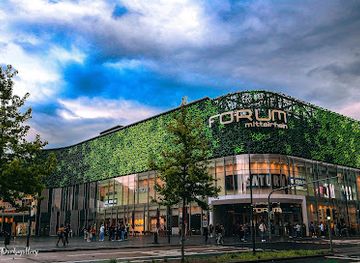
Forum Mittelrhein Koblenz
Discover the bustling Forum Mittelrhein in Koblenz, a shopping paradise with diverse stores, dining options, and vibrant events for every traveler.
-
Outlet mall
Outlet Montabaur
Discover incredible discounts and a unique shopping experience at Outlet Montabaur, the ultimate destination for fashion lovers.
-
Shopping mall
Kunstgässchen Koblenz
Discover the vibrant shopping experience at Kunstgässchen Koblenz, where local culture meets unique retail in a charming atmosphere.
Get your free copy of our complete guide to Westerwald, delivered straight to you.
Everything on this page, from attractions and restaurants to essentials and local phrases, in one PDF you can read offline, print or share.
Already have an account? Sign in
Your Westerwald guide is ready.
We'll send it to · Not you? Sign out

Getting your guide ready…
We are putting together a fresh copy of the Westerwald guide. This can take up to a minute.
This can take a few moments. If your browser asks, choose Allow so the download can start. You'll find the guide in your Downloads folder.
Nothing happened? Download it again
Sorry, the guide is taking longer than usual. Please try again in a minute, or get it by email instead.
Westerwald essentials
Currency and Payment
Safety
Emergency Situations
Do's and Don'ts
Local Tips
From Eve
Local phrases worth knowing
You don't need to get them perfect. A few words go a long way, and locals appreciate the effort.
Basics
| English | Local | Say it |
|---|---|---|
| Hello | Hallo | [HAH-loh] |
| Goodbye | Auf Wiedersehen | [Owf VEE-der-zay-en] |
| Yes | Ja | [Yah] |
| No | Nein | [NINE] |
| Please/You're welcome | Bitte | [BIT-tuh] |
| Thank you | Danke | [DAHN-kuh] |
| Excuse me/Sorry | Entschuldigung | [Ent-SHOOL-dee-goong] |
| How are you? | Wie geht's? | [VEE gates?] |
| Fine. And you? | Gut. Und dir? | [GOOT. Oond deer?] |
| Do you speak English? | Sprechen Sie Englisch? | [SHPRE-chen zee ENG-lish?] |
| I don't understand | Ich verstehe nicht | [Ich fer-SHTAY-uh nikht] |
Eating & Drinking
| English | Local | Say it |
|---|---|---|
| I'd like to see the menu, please | Ich hätte gerne die Speisekarte, bitte | [Ich HET-teh GEAR-neh dee SHPY-zeh-KAR-teh, BIT-tuh] |
| I don't eat meat | Ich esse kein Fleisch | [Ich ESS-eh kighn FLYSH] |
| Cheers! | Prost! | [PROHST!] |
| I would like to pay, please | Ich möchte bezahlen, bitte | [Ich MERK-teh beh-ZAH-len, BIT-tuh] |
Emergencies
| English | Local | Say it |
|---|---|---|
| Help! | Hilfe! | [HIL-fuh] |
| Go away! | Geh weg! | [GEH vek!] |
| Call the Police! | Rufen Sie die Polizei! | [ROO-fen zee dee PO-lee-TSY!] |
| Call a doctor! | Rufen Sie einen Arzt! | [ROO-fen zee EYE-nen ARTST!] |
| I'm lost | Ich habe mich verlaufen | [Ich HAH-beh mikh fer-LAU-fen] |
| I'm ill | Ich bin krank | [Ich bin KRAHNK] |
Shopping
| English | Local | Say it |
|---|---|---|
| I'd like to buy... | Ich möchte ... kaufen | [Ich MERK-teh ... KOW-fen] |
| I'm just looking | Ich schaue nur | [Ich SHOU-eh noor] |
| How much is it? | Wie viel kostet es? | [VEE feel KOS-tet ess?] |
| That's too expensive | Das ist zu teuer | [Dahs ist tsoo TOY-er] |
| Can you lower the price? | Könnten Sie den Preis senken? | [KERN-ten zee den PRICE ZEN-ken?] |
Time & Numbers
| English | Local | Say it |
|---|---|---|
| What time is it? | Wie spät ist es? | [VEE SHPAYT ist ess?] |
| It's one o'clock | Es ist ein Uhr | [Ess ist EINE OOR] |
| Half past (10) | Halb (10) | [HALB (10)] |
| Morning | Morgen | [MOR-gen] |
| Afternoon | Nachmittag | [NAKH-mit-tahg] |
| Evening | Abend | [AH-bent] |
| Yesterday | Gestern | [GES-tairn] |
| Today | Heute | [HOY-tuh] |
| Tomorrow | Morgen | [MOR-gen] |
| 1 | Eins | [EINS] |
| 2 | Zwei | [ZVY] |
| 3 | Drei | [DRY] |
| 4 | Vier | [FEAR] |
| 5 | Fünf | [FYNF] |
| 6 | Sechs | [ZEX] |
| 7 | Sieben | [ZEE-ben] |
| 8 | Acht | [AHKT] |
| 9 | Neun | [NOYN] |
| 10 | Zehn | [TSANE] |
Transport & Directions
| English | Local | Say it |
|---|---|---|
| Where's a/the...? | Wo ist ein/das ...? | [VOH ist EINE/DAS ...?] |
| What's the address? | Was ist die Adresse? | [Vahs ist dee A-DRES-se?] |
| Can you show me (on the map)? | Könnten Sie mir (auf der Karte) zeigen? | [KERN-ten zee meer (owf der KAR-teh) TSY-gen?] |
| When's the next (bus)? | Wann kommt der nächste (Bus)? | [VAN komt der NAY-shte (BOOS)?] |
| A ticket (to ....) | Ein Ticket (nach ....) | [EINE TICKET (nahkh ....)] |
History of Westerwald
Prehistoric Settlement and the Basalt Landscape
People used the Westerwald from prehistoric times, taking advantage of its upland clearings, streams and natural resources. Archaeological evidence from the wider region includes settlements, burial sites and traces of early farming communities, while the volcanic landscape later supplied durable stone for tools, buildings and roads. Basalt formations also influenced where communities developed and how fields and woodland were managed. Although much of the surviving evidence is fragmentary, the combination of wooded hills, open heaths and ancient routeways reflects a long relationship between settlement and the region's difficult but resource-rich terrain.
Roman Frontier and the Limes
The Roman frontier crossed parts of the Westerwald, linking watchtowers, forts and military roads within the Upper Germanic frontier system. The Limes was not simply a wall but a controlled boundary supported by patrol routes and fortified positions. Remains around Hillscheid and other southern Westerwald locations show how the upland related to the Roman military world along the Rhine and Lahn. Roman influence did not turn the area into a densely urbanised province, but it brought new administrative, commercial and military connections that reshaped contact between local communities and the empire.
Medieval Territories, Monasteries and Castles
During the Middle Ages, the Westerwald was divided among ecclesiastical and secular powers, including the Electorate of Trier, the County of Sayn and other lordships. Castles and fortified residences controlled routes through the hills, while monasteries helped organise landholding, farming and religious life. Marienstatt Abbey, founded in the Nister valley in the thirteenth century, became one of the region's most important religious institutions. Towns such as Hachenburg and Montabaur grew as administrative, trading and craft centres, leaving historic street plans and timber-framed buildings that remain visible today.
Clay, Ceramics and the Kannenbäckerland
The Westerwald's clay deposits supported a major pottery tradition, particularly in the Kannenbäckerland around Höhr-Grenzhausen, Hillscheid and nearby communities. From the early modern period onwards, local workshops produced durable stoneware vessels that were traded well beyond the region. The characteristic grey salt-glazed ceramics became an important regional craft and commercial product. Industrial methods later changed production, but studio pottery and specialist manufacturers continue the tradition. Museums, kilns and working workshops provide a direct link between the geology beneath the Westerwald and its cultural identity.
Mining, Ironworking and Rural Industry
Iron ore, basalt, clay and other materials supported a dispersed industrial economy across the Westerwald and neighbouring Siegerland. Small mines, quarries, charcoal burning and ironworking provided income alongside farming, although work was often seasonal and physically demanding. The growth of railways and improved roads in the nineteenth century allowed raw materials and manufactured goods to travel more efficiently. Former quarries and industrial sites, including the area now interpreted at Stöffel-Park, reveal how extraction altered the landscape and helped connect remote communities to wider markets.
Friedrich Wilhelm Raiffeisen and Cooperative Reform
Friedrich Wilhelm Raiffeisen, born in Hamm an der Sieg in 1818, became one of Germany's most influential advocates of rural self-help and cooperative organisation. Working as a mayor in the Westerwald during periods of poverty and harvest difficulty, he promoted cooperative credit and purchasing systems designed to reduce dependence on exploitative lenders and unstable markets. His ideas contributed to the development of the cooperative movement in Germany and beyond. The Raiffeisen Museum in Hamm an der Sieg commemorates this regional connection and the social conditions that shaped his work.
Westerwald in the Modern Era
The twentieth century brought mechanisation, changing agricultural practices, population shifts and the decline of many small mines and traditional rural industries. At the same time, improved roads and rail connections made commuting and tourism increasingly important. After the Second World War, administrative boundaries placed the Westerwald across Rhineland-Palatinate, Hesse and North Rhine-Westphalia, reinforcing its character as a cultural landscape rather than a single political unit. Today, heritage conservation, walking tourism, ceramics, regional food and nature-based recreation complement agriculture and modern manufacturing.
Westerwald in Photos
Browse through our photo collection highlighting the charm and character of the destination.
Neighbouring regions of Westerwald
The closest regions to Westerwald, if you have time for more than one.
-

-

-

-

-


Swipe for more regions
Explore more

Explore more of Germany
Experience Germany: where history meets innovation, and urban energy blends with natural beauty. Discover diverse cultures, delicious cuisine, and stunning landscapes.
Explore Germany