

Morne Rouge Beach Travel Guide - Free Web & App
Your ultimate guide to Morne Rouge Beach. Discover top landmarks, proposed trips, and local tips. Free on the web or via the Evendo companion app.


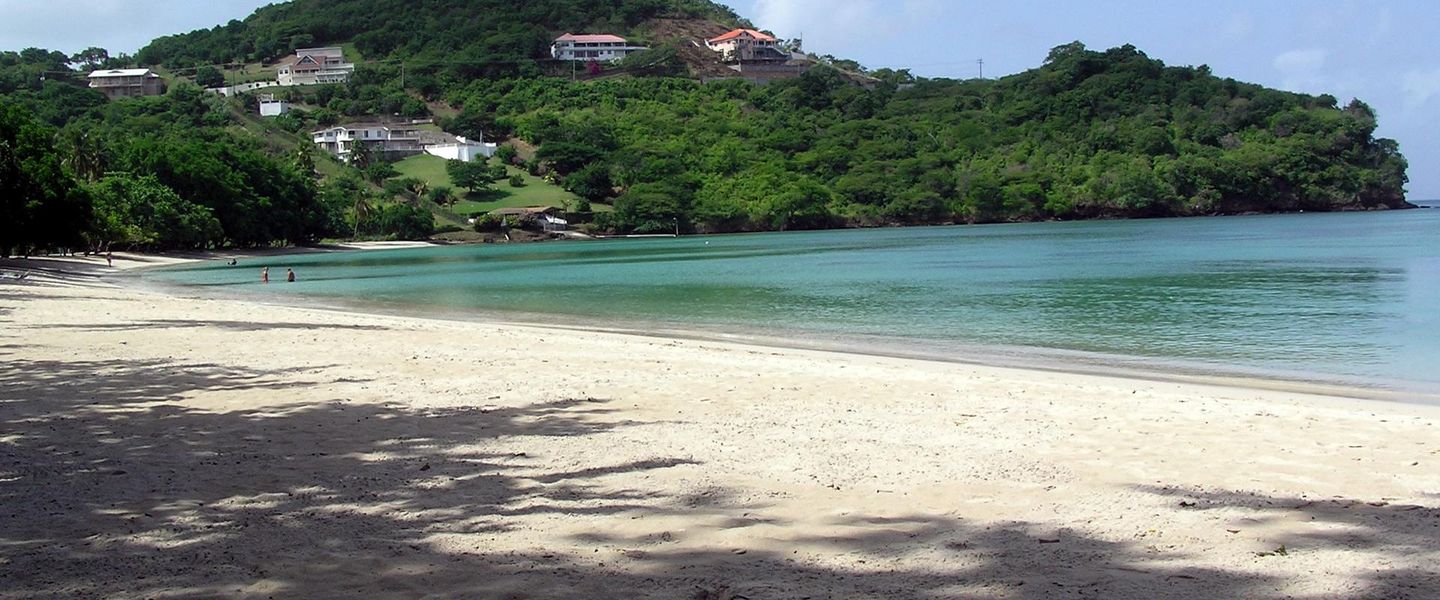


Morne Rouge Beach, Grenada, offers calm Caribbean swimming, golden sand, sunset views and easy access to Grand Anse and historic St George’s.
A Sheltered Caribbean Bay
Morne Rouge Beach occupies a graceful curve on Grenada’s south-western coast, immediately beyond the more expansive Grand Anse Beach and within easy reach of St George’s. Often called BBC Beach, it is known for its pale sand, usually gentler water and relaxed atmosphere. The bay is smaller and more enclosed than Grand Anse, with low hills and headlands helping to give it a sheltered character, although sea conditions can change with wind and weather.Read more about Morne Rouge Beach
Coastal Scenery and Local Character
Exploring the South-West Peninsula
When is the best time to visit Morne Rouge Beach?
Best: June–August · 31°C| Month | High (°C) | Rainfall (mm) |
|---|---|---|
| January | 30 | 150 |
| February | 30 | 120 |
| March | 31 | 110 |
| April | 31 | 100 |
| May | 31 | 90 |
| June (best) | 31 | 80 |
| July (best) | 31 | 80 |
| August (best) | 31 | 80 |
| September | 31 | 90 |
| October | 30 | 100 |
| November | 30 | 110 |
| December | 30 | 130 |
Getting to and around Morne Rouge Beach
How to get there
Transportation
Best landmarks in Morne Rouge Beach
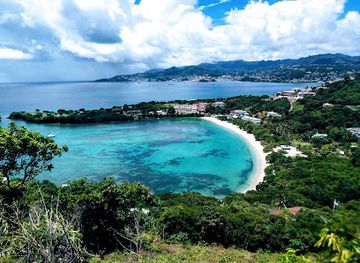
Morne Rouge Beach is itself the defining natural landmark, a compact bay on Grenada’s south-west coast whose curved shoreline and relatively sheltered setting distinguish it from more exposed stretches of the island. Its relationship with neighbouring Grand Anse is central to the area’s identity: together they form the best-known beach landscape near St George’s, although Grand Anse is longer and more developed. The wider south-western area leads towards the capital’s Carenage and Fort George, important coastal and historical landmarks that lie outside Morne Rouge proper. Further south, the peninsula’s headlands, coves and views towards the Caribbean illustrate Grenada’s indented volcanic coastline. The significance of Morne Rouge is therefore primarily scenic and recreational, while the surrounding landmarks connect the beach with the island’s maritime history, capital and modern tourism geography.
-
Scenic spot
BBC Beach
Experience the beauty of BBC Beach in Grenada, where golden sands meet crystal-clear waters for the ultimate tropical escape.
-
Tourist attraction
Morne Rouge
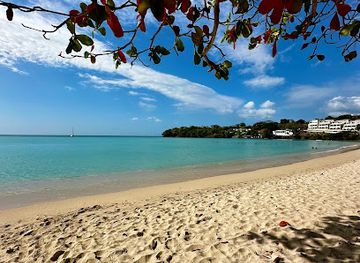
Discover the serene beauty of Morne Rouge (BBC Beach) in Grenada: Calm waters, soft sands, and stunning sunsets await!
Explore Morne Rouge Beach on the map
Plan your trip on one map. See where the top attractions, landmarks, restaurants and hotels are, and book hotels and experiences in a few clicks.
Best hotels in Morne Rouge Beach
Best restaurants in Morne Rouge Beach
Morne Rouge has a modest dining scene, so visitors commonly combine the beach with restaurants, cafés and hotel dining in neighbouring Grand Anse. Food choices around the south-west coast reflect Grenada’s Caribbean setting and agricultural heritage, with seafood, rice-based meals, seasonal produce, spices and the island’s celebrated nutmeg and cocoa traditions appearing in local cooking. Grand Anse and the road towards St George’s provide the broadest concentration of places to eat, while smaller venues near the beach may offer a more limited, informal selection. The capital’s market area is useful for seeing local ingredients and food culture, although market activity and individual vendors vary. Travellers staying in self-catering accommodation can look for fresh produce and locally made provisions in established shops and markets rather than expecting a large retail centre at Morne Rouge itself.
-
 Restaurant
The Fidelis Restaurant
Experience authentic Caribbean cuisine with breathtaking views at The Fidelis Restaurant on Morne Rouge Bay in Grenada.
Best bars in Morne Rouge Beach
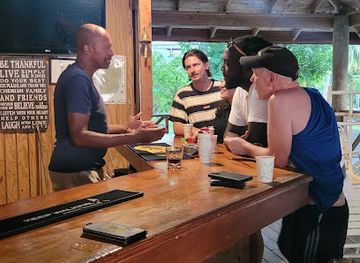
Evenings at Morne Rouge are generally quiet and coastal rather than centred on clubs or a dedicated nightlife district. Visitors can find relaxed drinks and evening meals through nearby accommodation and hospitality businesses, while Grand Anse has the south-west coast’s wider choice of bars and places to spend the evening. St George’s offers additional rum, music and restaurant-led nightlife, but it remains a small Caribbean capital rather than a late-night entertainment hub. Grenada’s evening character is often shaped by conversation, local music, food and occasional cultural events rather than a guaranteed programme of performances. Transport should be arranged in advance when staying at the beach and going out elsewhere, particularly if relying on taxis or local buses after dark.
-
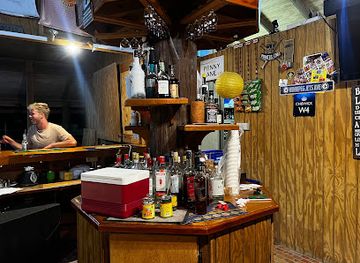
Bar
Rocky's Beach Bar
Experience the vibrant vibes of Rocky's Beach Bar in St. George's, Grenada, where delicious cocktails and stunning sunsets await you.
-
Bar
BEACH X-SCAPE BAR
Discover Beach X-Scape Bar, the ultimate beach bar in Grenada for cocktails and relaxation with breathtaking ocean views.
Best nightclubs in Morne Rouge Beach
Evenings at Morne Rouge are generally quiet and coastal rather than centred on clubs or a dedicated nightlife district. Visitors can find relaxed drinks and evening meals through nearby accommodation and hospitality businesses, while Grand Anse has the south-west coast’s wider choice of bars and places to spend the evening. St George’s offers additional rum, music and restaurant-led nightlife, but it remains a small Caribbean capital rather than a late-night entertainment hub. Grenada’s evening character is often shaped by conversation, local music, food and occasional cultural events rather than a guaranteed programme of performances. Transport should be arranged in advance when staying at the beach and going out elsewhere, particularly if relying on taxis or local buses after dark.
-
Bar
Rocky's Beach Bar
Discover the perfect blend of relaxation and adventure at Rocky's Beach Bar in St. George's, Grenada, where stunning views and vibrant atmosphere await you.
-
Bar
BEACH X-SCAPE BAR
Discover the vibrant Beach X-Scape Bar in Grenada, where relaxation meets lively atmosphere, featuring cocktails, snacks, and stunning ocean views.
-
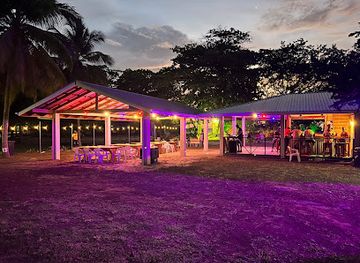
Night club
Club Fantazia
Discover the electrifying nightlife at Club Fantazia in Morne Rouge, Grenada, where vibrant music and a lively atmosphere await every night.

Get your free copy of our complete guide to Morne Rouge Beach, delivered straight to you.
Everything on this page, from attractions and restaurants to essentials and local phrases, in one PDF you can read offline, print or share.
Already have an account? Sign in
Your Morne Rouge Beach guide is ready.
We'll send it to · Not you? Sign out

Getting your guide ready…
We are putting together a fresh copy of the Morne Rouge Beach guide. This can take up to a minute.
This can take a few moments. If your browser asks, choose Allow so the download can start. You'll find the guide in your Downloads folder.
Nothing happened? Download it again
Sorry, the guide is taking longer than usual. Please try again in a minute, or get it by email instead.
Morne Rouge Beach essentials
Currency and Payment
Safety
Emergency Situations
Do's and Don'ts
Local Tips
From Eve
Local phrases worth knowing
You don't need to get them perfect. A few words go a long way, and locals appreciate the effort.
Basics
| English | Local | Say it |
|---|---|---|
| Hello | Wah Gwan | [Wa Gon] |
| Goodbye | Later | [Lay-ta] |
| Yes | Yeah man | [Yeh man] |
| No | Nah man | [Nah man] |
| Please/You're welcome | Pliz/No problem | [Pleez/No problum] |
| Thank you | Tank yuh | [Tank yuh] |
| Excuse me/Sorry | Sarry | [Sar-ree] |
| How are you? | How yuh dey? | [How yuh dey] |
| Fine. And you? | Mi deh yah. An yuh? | [Mi deh yah. An yuh] |
| Do you speak English? | Yuh speak English? | [Yuh speak English] |
| I don't understand | Mi nah understan | [Mi nah understan] |
Eating & Drinking
| English | Local | Say it |
|---|---|---|
| I'd like to see the menu, please | Mi wah see di menu, pliz | [Mi wah see dee menu, pleez] |
| I don't eat meat | Mi nuh eat meat | [Mi noo eat meat] |
| Cheers! | Cheers! | [Cheers!] |
| I would like to pay, please | Mi wah pay, pliz | [Mi wah pay, pleez] |
Emergencies
| English | Local | Say it |
|---|---|---|
| Help! | Help! | [Help!] |
| Go away! | Gwan weh! | [Gwan way] |
| Call the Police! | Call di Police! | [Call dee Police] |
| Call a doctor! | Call a docta! | [Call a docta] |
| I'm lost | Mi loss | [Mi loss] |
| I'm ill | Mi sick | [Mi sick] |
Shopping
| English | Local | Say it |
|---|---|---|
| I'd like to buy... | Mi wah buy... | [Mi wah buy] |
| I'm just looking | Mi jus lookin | [Mi jus lookin] |
| How much is it? | How much dat? | [How much dat] |
| That's too expensive | Dat too dear | [Dat too deer] |
| Can you lower the price? | Yuh cud drop di price? | [Yuh cud drop dee price] |
Time & Numbers
| English | Local | Say it |
|---|---|---|
| What time is it? | Weh time it is? | [Weh time it is] |
| It's one o'clock | A one o'clock | [A one o'clock] |
| Half past (10) | Half ten | [Half ten] |
| Morning | Mornin | [Mornin] |
| Afternoon | Afternoon | [Afternoon] |
| Evening | Evenin | [Evenin] |
| Yesterday | Yestadeh | [Yestadeh] |
| Today | Today | [Today] |
| Tomorrow | Tomorrow | [Tomorrow] |
| 1 | One | [One] |
| 2 | Two | [Two] |
| 3 | Tree | [Tree] |
| 4 | Fo' | [Fo] |
| 5 | Fi' | [Fi] |
| 6 | Six | [Six] |
| 7 | Seven | [Seven] |
| 8 | Eight | [Eight] |
| 9 | Nine | [Nine] |
| 10 | Ten | [Ten] |
Transport & Directions
| English | Local | Say it |
|---|---|---|
| Where's a/the...? | Weh di...deh? | [Weh dee...deh] |
| What's the address? | Weh di address deh? | [Weh dee address deh] |
| Can you show me (on the map)? | Yuh cud show mi (pan di map)? | [Yuh cud show mi (pan dee map)] |
| When's the next (bus)? | When di nex' (bus) deh? | [When dee nex' (bus) deh] |
| A ticket (to ....) | A ticket (to ....) | [A ticket (to ....)] |
History of Morne Rouge Beach
An Island Shaped by Volcanic Forces
Grenada is a volcanic Caribbean island whose mountainous interior and deeply indented southern coastline were formed by long geological processes, creating the sheltered bays and headlands that characterise the area around Morne Rouge. The beach itself is part of the south-western coastal landscape, where low coastal slopes meet the sea and bays provide more protected settings than many exposed shorelines. This physical geography later influenced settlement, agriculture, transport and tourism across the parish of St George.
Indigenous Settlement and European Colonisation
Before European colonisation, Grenada was inhabited by Indigenous communities, including Kalinago people, who used the island’s coastal and inland resources. French colonisation began in the seventeenth century, followed by British control in the eighteenth century. The south-western peninsula formed part of a wider island economy shaped by plantation agriculture and maritime connections, although Morne Rouge’s modern identity is principally associated with its beach and residential surroundings rather than a surviving colonial townscape on the shore.
Plantations, Emancipation and Grenadian Society
Under colonial rule, Grenada’s economy relied heavily on plantations and the forced labour of enslaved Africans, with sugar initially important before nutmeg, cocoa and other crops became central to the island’s agricultural history. Emancipation in 1834 changed the organisation of work and landholding but did not erase the inequalities created by plantation society. The cultural landscape of modern Grenada, including its foodways, music, religious traditions and village life, developed through the interaction of African, European and Caribbean influences.
From Agricultural Island to Beach Tourism
During the twentieth century, Grenada increasingly developed tourism alongside agriculture, with the south-west coast becoming the island’s principal visitor area. Grand Anse emerged as the best-known beach centre, while neighbouring Morne Rouge retained a smaller-scale character and gained the informal name BBC Beach. Road improvements, accommodation growth and the development of nearby transport links made the bay more accessible without turning it into a dense urban district. Today, Morne Rouge forms part of the wider tourism landscape of south-west Grenada, close to St George’s and the island’s principal airport area.
Morne Rouge Beach in Photos
Browse through our photo collection highlighting the charm and character of the destination.
Neighbouring destination travel guides
The closest destinations to Morne Rouge Beach, if you have time for more than one.
-

-

-

-

-


Swipe for more destinations
Explore more

Explore more of Saint George
Explore Saint George, Grenada, from historic St George’s and harbour forts to Grand Anse Beach, waterfalls, diving and Creole cuisine.
Explore Saint George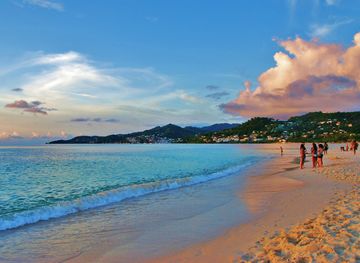
Explore more of Grenada
Discover Grenada, the Spice Isle of the Caribbean, where lush landscapes, pristine beaches, and rich cultural heritage create a tropical paradise for all travelers.
Explore Grenada