

Fonte Plateau Travel Guide - Free Web & App
Your ultimate guide to Fonte Plateau. Discover top landmarks, proposed trips, and local tips. Free on the web or via the Evendo companion app.


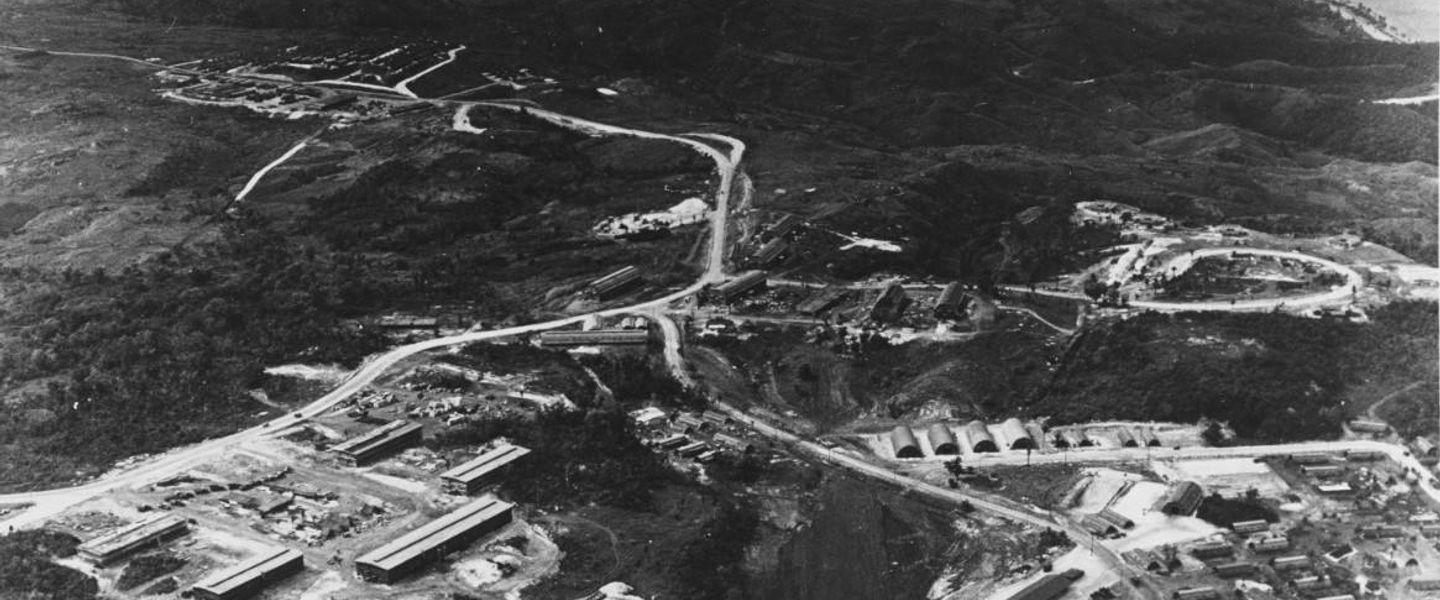


Fonte Plateau, Guam, combines elevated limestone scenery, Chamorro heritage and pivotal Second World War history above Hagåtña, the island’s capital.
A Plateau Above Hagåtña
Fonte Plateau occupies elevated ground above Hagåtña, Guam’s capital, in the island’s central-western uplands. Rather than a conventional resort destination, it is a compact landscape of roads, residential surroundings, tropical vegetation and historically important terrain. Its height gives the area strategic significance and, in suitable clear conditions, broad views towards the capital, the western coastline and parts of Guam’s limestone interior. The plateau is closely associated with the neighbouring communities of Agana Heights and Hagåtña, although visitors should distinguish the plateau itself from the wider urban area below.Read more about Fonte Plateau
War History and Local Landscape
Exploring the Area
When is the best time to visit Fonte Plateau?
Best: January–March · 30°C| Month | High (°C) | Rainfall (mm) |
|---|---|---|
| January (best) | 30 | 75 |
| February (best) | 30 | 76 |
| March (best) | 30 | 77 |
| April | 30 | 78 |
| May | 31 | 79 |
| June | 31 | 80 |
| July | 31 | 81 |
| August | 31 | 82 |
| September | 31 | 83 |
| October | 31 | 84 |
| November | 31 | 85 |
| December | 31 | 86 |
Getting to and around Fonte Plateau
How to get there
Transportation
Best landmarks in Fonte Plateau
Fonte Plateau is itself the defining landmark: an elevated limestone setting above Hagåtña whose strategic position became important during the Battle of Guam in 1944. Its significance is historical and geographical, with views and approach routes helping explain why high ground around the capital mattered to both Japanese defenders and American forces. The plateau should be read alongside Fort Santa Agueda, a Spanish-period fortification in nearby Hagåtña, and the Plaza de España and Dulce Nombre de Maria Cathedral-Basilica on the historic coastal plain below. Latte Stone Park offers a visible expression of ancient CHamoru architectural tradition, although it is not on the plateau. Together, these places show the layered identity of Guam: an island of raised limestone terrain, CHamoru cultural heritage, Spanish colonial history, wartime conflict and modern Pacific life.
-
National park
Fonte Plateau Unit
Explore Guam's Fonte Plateau: Witness WWII history & panoramic views at this War in the Pacific National Historical Park unit.
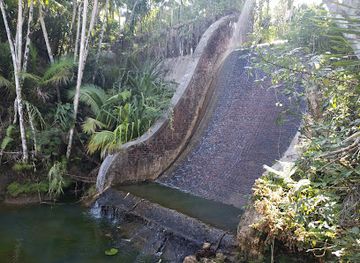
Explore Fonte Plateau on the map
Plan your trip on one map. See where the top attractions, landmarks, restaurants and hotels are, and book hotels and experiences in a few clicks.
Best hotels in Fonte Plateau
Get your free copy of our complete guide to Fonte Plateau, delivered straight to you.
Everything on this page, from attractions and restaurants to essentials and local phrases, in one PDF you can read offline, print or share.
Already have an account? Sign in
Your Fonte Plateau guide is ready.
We'll send it to · Not you? Sign out

Getting your guide ready…
We are putting together a fresh copy of the Fonte Plateau guide. This can take up to a minute.
This can take a few moments. If your browser asks, choose Allow so the download can start. You'll find the guide in your Downloads folder.
Nothing happened? Download it again
Sorry, the guide is taking longer than usual. Please try again in a minute, or get it by email instead.
Fonte Plateau essentials
Currency and Payment
Safety
Emergency Situations
Do's and Don'ts
Local Tips
From Eve
Local phrases worth knowing
You don't need to get them perfect. A few words go a long way, and locals appreciate the effort.
Basics
| English | Local | Say it |
|---|---|---|
| Hello | Håfa Adai | [HA-fa a-DAY] |
| Goodbye | Adios | [ah-DYOS] |
| Yes | Hao | [HA-oh] |
| No | Ti | [TEE] |
| Please/You're welcome | Fanatåsi/Na'sai | [fa-NA-ta-see/na-SAI] |
| Thank you | Si Yu'os Ma'åse | [see yoo-OSS ma-AH-seh] |
| Excuse me/Sorry | Dispensa | [dees-PEHN-sah] |
| How are you? | Ñålang yu'? | [nyah-lang yoo] |
| Fine. And you? | Ma'åse. Yu'us yan iyo? | [ma-AH-seh. yoo-OOS yan EE-yoh] |
| Do you speak English? | Ha na'ån-hu i inågles? | [ha NYAN-hoo ee ee-NAH-glehs] |
| I don't understand | Ti hu fa'åsen | [TEE hoo fah-AH-sehn] |
Eating & Drinking
| English | Local | Say it |
|---|---|---|
| I'd like to see the menu, please | Ha na'ån-hu i menu, un tungo' hu | [ha NYAN-hoo ee MEH-noo, oon TUNG-go hoo] |
| I don't eat meat | Ti kumuentusi karni | [TEE koo-men-TOO-see KAR-nee] |
| Cheers! | Biba! | [BEE-bah] |
| I would like to pay, please | Ha na'ån-hu i pago, un tungo' hu | [ha NYAN-hoo ee PAH-go, oon TUNG-go hoo] |
Emergencies
| English | Local | Say it |
|---|---|---|
| Help! | Ayuda! | [ah-YOO-dah] |
| Go away! | Lågu! | [LAH-goo] |
| Call the Police! | Tågu i polisia! | [TAH-goo ee poh-LEE-see-yah] |
| Call a doctor! | Tågu i duktur! | [TAH-goo ee dook-TOOR] |
| I'm lost | Kao hu guaguai | [KOW hoo GWAH-gwai] |
| I'm ill | Kao hu håna | [KOW hoo HAH-nah] |
Shopping
| English | Local | Say it |
|---|---|---|
| I'd like to buy... | Ha na'ån-hu i mampopble... | [ha NYAN-hoo ee mahm-poh-PUH-leh] |
| I'm just looking | Ångok-hu ti manmatai | [AHNG-ohk-hoo tee mahn-mah-TAI] |
| How much is it? | Hu prisisu? | [hoo pree-SEE-soo] |
| That's too expensive | Må'pos este | [mah-POS eh-STEH] |
| Can you lower the price? | Må'pos hao este? | [mah-POS how eh-STEH] |
Time & Numbers
| English | Local | Say it |
|---|---|---|
| What time is it? | Kuenti tiempo esta? | [KWEHN-tee tee-YEM-po EHS-tah] |
| It's one o'clock | Esta i unu | [EHS-tah ee OO-noo] |
| Half past (10) | Må'pos na (10) | [mah-POS nah (DEE-ehs)] |
| Morning | Gof ma'åse | [gof ma-AH-seh] |
| Afternoon | Agaña | [ah-GAH-nyah] |
| Evening | Agaña | [ah-GAH-nyah] |
| Yesterday | Kåhuguan | [KAH-hoo-gwahn] |
| Today | Kåhuguan | [KAH-hoo-gwahn] |
| Tomorrow | Manaña | [mah-NYAH-nyah] |
| 1 | Uno | [OO-no] |
| 2 | Dos | [dohs] |
| 3 | Tres | [trehs] |
| 4 | Kuåtro | [KWAT-roh] |
| 5 | Singu | [SING-goo] |
| 6 | Sais | [sah-EESS] |
| 7 | Siete | [see-EH-teh] |
| 8 | Ocho | [OH-choh] |
| 9 | Nuebe | [NWEH-beh] |
| 10 | Dies | [dees] |
Transport & Directions
| English | Local | Say it |
|---|---|---|
| Where's a/the...? | Ånna i... | [AHN-nah ee] |
| What's the address? | Kuenti i direksion? | [KWEHN-tee ee dee-rek-SYON] |
| Can you show me (on the map)? | Må'pos hao i un tungo' hu (gi i mapa)? | [mah-POS how oon TUNG-go hoo (gee ee MAH-pah)] |
| When's the next (bus)? | På'go (bus)? | [PAA-go] |
| A ticket (to ....) | Un tiyenda (para ....) | [oon tee-YEN-dah (PAH-rah)] |
History of Fonte Plateau
Limestone Uplands and Chamorro Settlement
Fonte Plateau forms part of Guam’s raised limestone landscape, an island environment created through long geological processes rather than human construction. The surrounding central-western area has been shaped by the long history of the CHamoru people, whose communities, farming practices and movement across Guam predate European rule by many centuries. Although the plateau is now surrounded by roads and modern development, its position above the Hagåtña plain reflects the island’s wider pattern of elevated limestone ridges, coastal lowlands and forested interior terrain.
Spanish Colonial Hagåtña
Hagåtña, below and around the plateau, became the centre of Spanish administration in Guam after Spanish settlement in the seventeenth century. Catholic institutions, government buildings and the colonial town developed on the coastal plain, while elevated ground acquired strategic value as a place from which routes and approaches could be observed. Fonte Plateau should therefore be understood within the historical geography of the capital rather than as an isolated monument. Spanish rule also brought profound religious, demographic and social changes to CHamoru society.
Japanese Defensive Positions
During the Second World War, Japan occupied Guam from December 1941 until the American invasion in July 1944. Elevated ground around Hagåtña, including Fonte Plateau, formed part of the island’s defensive landscape. Japanese forces used ridges and plateaux to command approaches and resist the advancing American forces. The fighting caused extensive destruction in Hagåtña and displaced civilian communities, leaving the capital and surrounding terrain deeply marked by the occupation and battle.
The Battle of Guam
American forces landed on Guam in July 1944 and fought inland against Japanese defenders during a campaign that ended with the island’s recapture. Fonte Plateau was among the strategically important heights contested during the advance towards the island’s central positions. The battle’s consequences extended beyond military objectives: civilians endured displacement, violence and the destruction of homes and public buildings. Wartime remembrance remains an important part of Guam’s heritage, and Fonte Plateau is most meaningful when considered alongside the island’s wider network of memorials, museums and battlefield landscapes.
Post-war Development and Remembrance
After 1944, Guam underwent rapid reconstruction and became increasingly connected to the United States through political, military and economic ties. Hagåtña was rebuilt and the surrounding uplands became part of a modern road and residential landscape, while military land and infrastructure continued to influence the island’s geography. Fonte Plateau’s historical identity is consequently layered: it is a natural elevation, a place within the capital’s wider settlement pattern and a wartime landscape whose traces may be subtle. Preservation and interpretation on Guam often connect such sites with broader efforts to remember the occupation, battle and civilian experience.
Fonte Plateau in Photos
Browse through our photo collection highlighting the charm and character of the destination.
Neighbouring destination travel guides
The closest destinations to Fonte Plateau, if you have time for more than one.
-

-

-

-

-


Swipe for more destinations
Explore more

Explore more of Central Guam
Explore Central Guam: A blend of rich cultural heritage, stunning beaches, and lush landscapes in the heart of the Pacific.
Explore Central Guam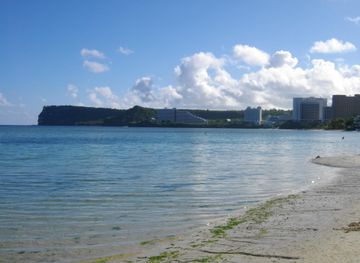
Explore more of Guam
Discover Guam: A tropical paradise offering pristine beaches, rich Chamorro culture, and diverse marine life, perfect for adventure seekers and relaxation enthusiasts alike.
Explore Guam