

Free Central Guam Travel Guide & Mobile App
Explore Central Guam with free travel guides. Discover regional history, expert tips, proposed trips, and audio guides on web or mobile app.


Explore central Guam for Chamorro heritage in Hagåtña, Tumon’s reef-protected beaches, Pacific history, island food and convenient urban travel.
Read more about Central Guam
When is the best time to visit Central Guam?
Best: January–March · 30°C| Month | High (°C) | Rainfall (mm) |
|---|---|---|
| January (best) | 30 | 101 |
| February (best) | 30 | 81 |
| March (best) | 30 | 90 |
| April | 31 | 108 |
| May | 31 | 129 |
| June | 31 | 160 |
| July | 30 | 233 |
| August | 30 | 272 |
| September | 30 | 303 |
| October | 30 | 252 |
| November | 30 | 189 |
| December | 29 | 150 |
Getting to and around Central Guam
How to get there
Transportation
Top city travel guides in Central Guam
The cities of Central Guam, and the easiest places to base yourself.
-

-

-

-

-

-


Swipe for more cities
Destinations in Central Guam
Resorts, valleys and scenic spots worth a trip of their own.
-

-

-

-

-


Swipe for more destinations
Best attractions in Central Guam
Central Guam offers the island’s broadest concentration of historical, cultural, coastal and commercial attractions. In Hagåtña, visitors can explore the Guam Museum, the Plaza de España, Dulce Nombre de Maria Cathedral-Basilica, Latte Stone Park and waterfront memorial landscapes that explain Guam’s Chamorro, Spanish and wartime histories. Chamorro Village provides food stalls, craft sellers and cultural activity in a market setting, with its liveliest atmosphere depending on the current programme. Tamuning and Tumon bring a different emphasis: reef-protected swimming, snorkelling, hotel beaches, aquariums and family-oriented water activities sit alongside major shopping and entertainment complexes. The central villages of Sinajana, Mongmong-Toto-Maite, Chalan Pago-Ordot and Barrigada reveal residential Guam, churches, local eateries and views towards inland hills. Short excursions towards Piti, on the central-western coast, add maritime and Pacific War interests, although visitors should check access arrangements before setting out. Together, these attractions make central Guam the most convenient base for combining cultural interpretation with beach time and urban services.
-
Tourist attraction
Fish Eye Marine Park - Visitor Center
Discover Guam's underwater wonders at Fish Eye Marine Park: the only underwater observatory in Micronesia!
-
Tourist attraction
Plaza de España
Explore Guam's colonial past at Plaza de España in Hagåtña, a historic landmark with Spanish ruins and lush gardens, offering a glimpse into island's heritage.
-
Tourist attraction
Valle Esmeralda De Flores
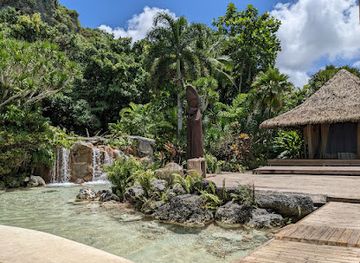
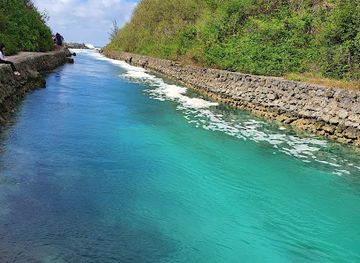
Discover Guam's hidden gem: Explore the vibrant turquoise waters and lush floral landscapes of Valle Esmeralda De Flores in Piti.
-
Park
Paseo de Susana
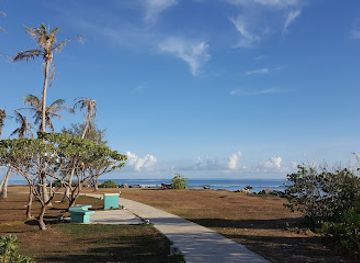
Discover tranquility at Paseo de Susana, a scenic waterfront park in Hagåtña, Guam, offering lush greenery and stunning ocean views.

Best landmarks in Central Guam
Hagåtña’s Plaza de España is central Guam’s defining historic precinct, preserving and reconstructing elements associated with Spanish colonial administration and later political life. The nearby Dulce Nombre de Maria Cathedral-Basilica is an important Catholic and civic landmark, while Latte Stone Park displays large latte stones that evoke the much older Chamorro architectural tradition. Fort Santa Agueda, on elevated ground above Hagåtña, is a surviving Spanish defensive site with broad views across the western coastal plain. Along the waterfront, Paseo de Susana and the surrounding memorial landscapes reflect the capital’s post-war reconstruction and Guam’s strategic role in the Pacific. Tumon Bay is the region’s principal natural landmark: its curved, reef-protected shore explains the concentration of hotels and water activities, while the coral environment remains ecologically sensitive. The central urban corridor itself, with Marine Corps Drive, civic buildings, commercial complexes and village roads rising towards the interior, provides a visible record of Guam’s transformation from colonial capital and military outpost into a modern Pacific territory.
-
Resort hotel
Hilton Guam Resort & Spa
Experience beachfront luxury at Hilton Guam Resort & Spa: stunning views, diverse dining, and endless activities in Tumon Bay.
-
Tourist attraction
Fish Eye Marine Park - Visitor Center
Experience the vibrant marine life and cultural richness of Guam at Fish Eye Marine Park, where adventure meets culinary delight.
-
Hamburger
Mosa's Joint
Dive into deliciousness at Mosa's Joint in Guam, where gourmet burgers meet local flavors in a vibrant and welcoming atmosphere.
-
Historical landmark
Plaza de España
Uncover the rich history and vibrant culture of Guam at Plaza de España, a stunning historical landmark perfect for exploration and relaxation.

Explore Central Guam on the map
Plan your trip on one map. See where the top cities, national parks and sights are, and book hotels and experiences in a few clicks.
Best hotels in Central Guam
Best restaurants in Central Guam
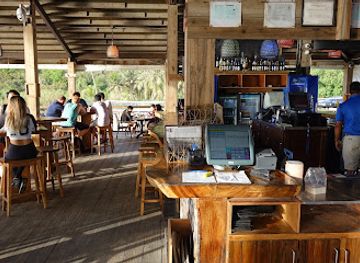
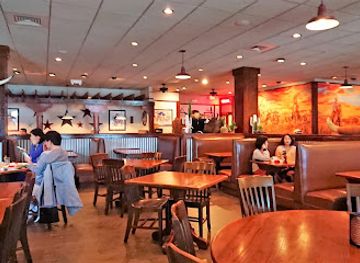
Central Guam has the island’s widest range of places to eat, from food stalls and family-run cafés to hotel dining rooms, international restaurants and informal barbecue counters. Chamorro cooking is represented by kelaguen, usually seasoned meat or seafood with citrus, coconut and chilli; red rice; barbecue; finadene sauce; and dishes built around seafood, pork, chicken and local produce. Market settings such as Chamorro Village are useful for sampling several preparations in one visit, while restaurants in Hagåtña and Tamuning reflect Guam’s Filipino, Japanese, Korean, American and wider Pacific connections. Tumon’s dining scene is geared towards visitors, with breakfast cafés, casual meals, resort restaurants and evening venues, whereas central villages offer a more local rhythm and fewer concentrated choices. Fresh fish and seafood are important, but availability varies with weather and supply. Ask about spice levels and ingredients, particularly if unfamiliar with finadene, and remember that table-service tipping generally follows US practice.
-
Grill
The Beach Restaurant & Bar Guam
Experience tropical flavors and stunning views at The Beach Restaurant & Bar Guam - your go-to spot for grilled delights by the sea.
-
Restaurant
Lone Star Steakhouse
Discover Lone Star Steakhouse in Guam - A must-visit for steak lovers craving authentic American cuisine in a welcoming atmosphere.
-
American
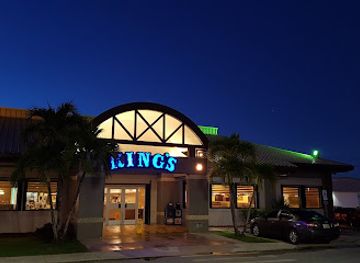
King's Restaurant
Discover the taste of Guam at King's Restaurant - where American comfort food meets local island flavors.
-
Restaurant
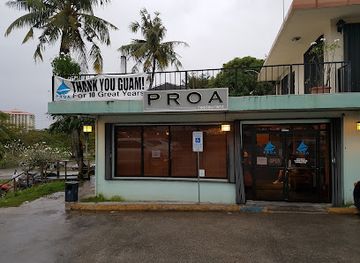
Proa Restaurant
Discover authentic Chamorro cuisine at Proa Restaurant in Tumon, Guam - where every meal is a celebration of local flavors.
Best bars in Central Guam
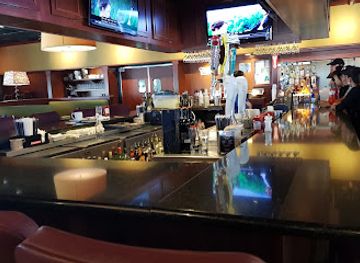
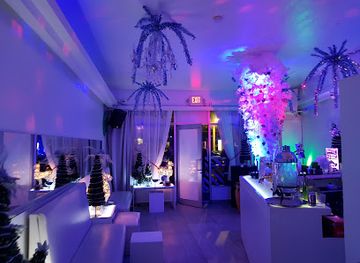
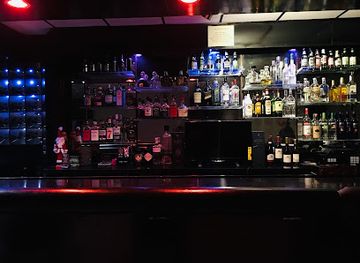
Central Guam has the territory’s most developed evening scene, concentrated in Tumon, Tamuning and Hagåtña rather than spread evenly through the villages. Hotel lounges, beachside bars, casual pubs, karaoke rooms and restaurants provide most of the evening activity, with live music and cultural events appearing at selected venues or during scheduled programmes. Hagåtña’s Chamorro Village can become a social focus when its market and performance events are operating, while Tumon offers later dining, resort entertainment and bars aimed at both residents and visitors. The region has some nightclub-style venues, but its nightlife is less comparable to a large mainland city than to a resort capital where activity varies by season, tourism demand and individual venue schedules. Non-alcoholic drinks, cafés and late meals are also available, and a designated driver or reputable taxi is important because roads connect dispersed hotels and villages.
-
Grill
The Beach Restaurant & Bar Guam
Experience the vibrant flavors and stunning views at The Beach Restaurant & Bar Guam, where every meal is a beachfront celebration.
-
Restaurant
Ruby Tuesday Restaurant
Experience the taste of America at Ruby Tuesday Restaurant in Guam, where great food meets a warm atmosphere for unforgettable dining.
-
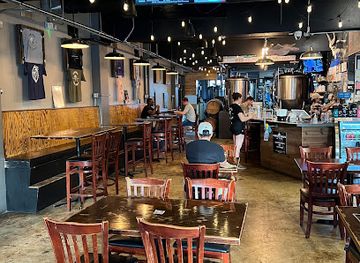
Brewpub
Carabao Brewing
Experience the best of Guam's craft beer and elevated bar food at Carabao Brewing, a vibrant brewpub in Hagåtña.
-
Bar
Jimmy Dee's Paradise Beach Resort & Bar
Discover the vibrant atmosphere of Jimmy Dee's Paradise Beach Resort & Bar, where tropical drinks and stunning ocean views await in Guam.

Best nightclubs in Central Guam
Central Guam has the territory’s most developed evening scene, concentrated in Tumon, Tamuning and Hagåtña rather than spread evenly through the villages. Hotel lounges, beachside bars, casual pubs, karaoke rooms and restaurants provide most of the evening activity, with live music and cultural events appearing at selected venues or during scheduled programmes. Hagåtña’s Chamorro Village can become a social focus when its market and performance events are operating, while Tumon offers later dining, resort entertainment and bars aimed at both residents and visitors. The region has some nightclub-style venues, but its nightlife is less comparable to a large mainland city than to a resort capital where activity varies by season, tourism demand and individual venue schedules. Non-alcoholic drinks, cafés and late meals are also available, and a designated driver or reputable taxi is important because roads connect dispersed hotels and villages.
-
Grill
The Beach Restaurant & Bar Guam
Experience the vibrant flavors and stunning views at The Beach Restaurant & Bar Guam, a top culinary destination in Tumon.
-
Bar
Jimmy Dee's Paradise Beach Resort & Bar
Discover Jimmy Dee's Paradise Beach Resort & Bar – your ultimate tropical escape in Apotgan, Guam, offering breathtaking views and delightful cuisine.
-
Lounge
Drop
Discover the colorful nightlife of Guam at Drop, a lounge that offers delicious cocktails and vibrant entertainment in Tumon.
-
Bar
Bernie's Bar
Discover the lively nightlife at Bernie's Bar in Apotgan, Guam, where great drinks and music create unforgettable memories.
Best shops in Central Guam
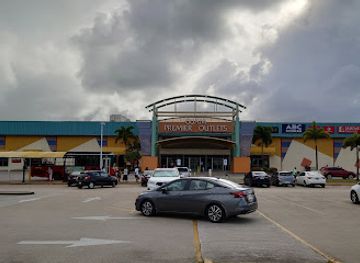
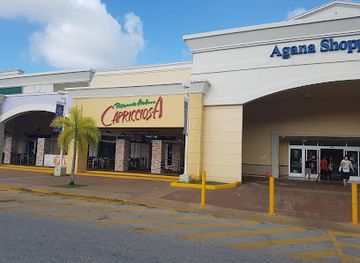
Central Guam is the island’s main shopping area, with the greatest concentration of retail in Tamuning and Tumon. Large commercial centres and hotel-area shops carry fashion, cosmetics, electronics, jewellery and duty-free or tax-related retail familiar to visitors from East Asia and the United States, while Hagåtña and the central villages offer smaller businesses and practical local services. For a more place-specific purchase, look for Chamorro handicrafts, woven items, carvings, artwork, locally themed books and food products, taking care to distinguish genuinely local work from generic imported souvenirs. Chamorro Village and other cultural-market settings can be useful for crafts and packaged foods when operating, but stall availability changes. Supermarkets and specialist food shops are convenient for red rice ingredients, sauces, snacks and Pacific-influenced products. Bargaining is not generally expected in established shops; compare prices, check import restrictions before buying food or plant material, and leave adequate space for fragile crafts in luggage.
-
Outlet mall
Guam Premier Outlets
Discover unbeatable shopping and dining at Guam Premier Outlets, where fashion meets island culture in a vibrant atmosphere.
-
Shopping mall
Agaña Shopping Center
Discover the vibrant Agaña Shopping Center in Guam, where shopping, dining, and local culture come together in a delightful experience.
-
Department store
Kmart
Discover Kmart in Guam, your one-stop destination for affordable shopping, offering clothing, electronics, home goods, and more in a vibrant atmosphere.
-
Shopping mall
JP Superstore
Explore the vibrant JP Superstore in Tumon, Guam – your ultimate shopping destination for local treasures and international brands.

Get your free copy of our complete guide to Central Guam, delivered straight to you.
Everything on this page, from attractions and restaurants to essentials and local phrases, in one PDF you can read offline, print or share.
Already have an account? Sign in
Your Central Guam guide is ready.
We'll send it to · Not you? Sign out

Getting your guide ready…
We are putting together a fresh copy of the Central Guam guide. This can take up to a minute.
This can take a few moments. If your browser asks, choose Allow so the download can start. You'll find the guide in your Downloads folder.
Nothing happened? Download it again
Sorry, the guide is taking longer than usual. Please try again in a minute, or get it by email instead.
Central Guam essentials
Currency and Payment
Safety
Emergency Situations
Do's and Don'ts
Local Tips
From Eve
Local phrases worth knowing
You don't need to get them perfect. A few words go a long way, and locals appreciate the effort.
Basics
| English | Local | Say it |
|---|---|---|
| Hello | Hafa Adai | [Hah-fah Ah-dai] |
| Goodbye | Adios | [Ah-dee-ohs] |
| Yes | Si | [See] |
| No | Ahe | [Ah-heh] |
| Please/You're welcome | Saina | [Sah-ee-nah] |
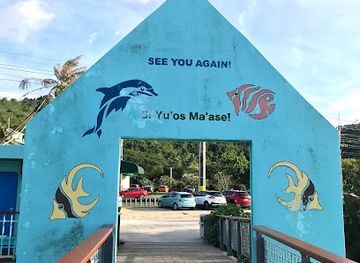
| Thank you | Si Yu'os Ma'åse' | [See Yoo-os Mah-ah-seh] |
| Excuse me/Sorry | Dispensa | [Dees-pen-sah] |
| How are you? | Kumusta? | [Koo-moos-tah] |
| Fine. And you? | Maolek. Hao guaha? | [Mah-oh-lek. How gah-wah?] |
| Do you speak English? | Sao yu' na' Chålek? | [Sow yoo nah Chah-lek?] |
| I don't understand | Ti manok na' u ma'åse' | [Tee mah-nok nah oo mah-ah-seh] |
Eating & Drinking
| English | Local | Say it |
|---|---|---|
| I'd like to see the menu, please | Hu guaiya un na' fan, saina | [Hoo gwah-ee-yah oon nah fan, sah-ee-nah] |
| I don't eat meat | Ti hu fan cho'cho' | [Tee hoo fan cho-cho] |
| Cheers! | Salud! | [Sah-lood] |
| I would like to pay, please | Hu guaiya un na' pidi, saina | [Hoo gwah-ee-yah oon nah pee-dee, sah-ee-nah] |
Emergencies
| English | Local | Say it |
|---|---|---|
| Help! | Tulong! | [Too-long] |
| Go away! | Sa' anai! | [Sah ah-nai] |
| Call the Police! | Tawag i Polis! | [Tah-wahg ee Poh-lees] |
| Call a doctor! | Tawag un doktu! | [Tah-wahg oon dok-too] |
| I'm lost | Hu na' chagi | [Hoo nah chah-gee] |
| I'm ill | Hu na' ma'åso' | [Hoo nah mah-ah-so] |
Shopping
| English | Local | Say it |
|---|---|---|
| I'd like to buy... | Hu guaiya un na' ma'åhlo' | [Hoo gwah-ee-yah oon nah mah-ah-hlo] |
| I'm just looking | Hu na' guaiya | [Hoo nah gwah-ee-yah] |
| How much is it? | Hao muchu? | [How moo-choo?] |
| That's too expensive | Masi' este na' cho'cho' | [Mah-see este nah cho-cho] |
| Can you lower the price? | Sao yu' na' cho'cho' in price? | [Sow yoo nah cho-cho een price?] |
Time & Numbers
| English | Local | Say it |
|---|---|---|
| What time is it? | Hao oras? | [How oh-ras?] |
| It's one o'clock | Uno oras | [Oo-no oh-ras] |
| Half past (10) | Mediu na' (10) | [Meh-dee-yoo nah (10)] |
| Morning | Mañana | [Man-yah-nah] |
| Afternoon | Panget | [Pah-n-get] |
| Evening | Sabi | [Sah-bee] |
| Yesterday | Inagof | [Ee-nah-gohf] |
| Today | Inafa | [Ee-nah-fah] |
| Tomorrow | Bai na' | [Bye nah] |
| 1 | Uno | [Oo-no] |
| 2 | Dos | [Dohs] |
| 3 | Tres | [Trace] |
| 4 | Kuatro | [Kwah-tro] |
| 5 | Singko | [Sing-koh] |
| 6 | Sais | [Sighs] |
| 7 | Siete | [See-eh-teh] |
| 8 | Ocho | [Oh-cho] |
| 9 | Nueve | [Nweh-veh] |
| 10 | Diyes | [Dee-yes] |
Transport & Directions
| English | Local | Say it |
|---|---|---|
| Where's a/the...? | Åhe i...? | [Ah-heh ee...?] |
| What's the address? | Hao i direksion? | [How ee dee-rek-see-on?] |
| Can you show me (on the map)? | Sao yu' na' para i mapa? | [Sow yoo nah pah-rah ee mah-pah?] |
| When's the next (bus)? | Kåo i mas åmigo (bus)? | [Kah-oh ee mahs ah-mee-go (bus)?] |
| A ticket (to ....) | Un tikita (para ....) | [Oon tee-kee-tah (pah-rah ....)] |
History of Central Guam
Ancient Chamorro Settlement and Latte Culture
The Mariana Islands were settled by seafaring Austronesian peoples more than three thousand years ago, and Guam became a major centre of Chamorro society. Archaeological evidence across the island includes pottery, shell artefacts, village sites and latte stones, the paired pillars and capstones associated with important Chamorro houses. Latte Stone Park in Hagåtña preserves a prominent group of these monuments, although the wider archaeological record extends well beyond the capital. Traditions of navigation, fishing, taro cultivation, hierarchy and extended family life continue to shape Chamorro cultural identity in central Guam.
Spanish Colonisation and Hagåtña’s Mission Era
Spanish missionaries and colonial authorities established a lasting presence in Guam from the seventeenth century, following earlier encounters between Chamorro communities and European ships. Hagåtña became the principal colonial settlement and religious centre, with a cathedral, government buildings, defensive works and a planned urban landscape. Spanish rule introduced Catholic institutions, new crops and political structures while bringing severe demographic and social disruption to Chamorro communities through disease, warfare and forced resettlement. The surviving and reconstructed features around the Plaza de España and cathedral area reflect this complex period rather than a simple colonial legacy.
The Spanish-American War and American Administration
Spain ceded Guam to the United States in 1898 after the Spanish-American War. The island was administered by the US Navy for much of the following period, and Hagåtña remained the centre of government while American institutions and infrastructure expanded. Guam’s strategic position in Micronesia gave it importance far beyond its size. The period also brought changes in education, commerce, communications and public administration, alongside continuing debates about land, political rights and the balance between Chamorro traditions and outside influence.
Japanese Occupation and the Pacific War
Japanese forces invaded Guam in December 1941 and occupied the island for nearly three years. Chamorro civilians endured displacement, shortages, forced labour and violence, while some families sheltered American servicemen who remained in hiding. The United States recaptured Guam in 1944 after intense fighting, and the island became a major American military base and operational centre in the Pacific. Wartime remnants, memorials and museum collections around central Guam help visitors understand the conflict’s impact on both military personnel and civilians.
Post-war Reconstruction and Strategic Expansion
The destruction of Hagåtña and other settlements during the 1944 campaign was followed by extensive reconstruction. Roads, ports, housing, schools and military facilities expanded, and many displaced residents were resettled in new or growing villages. The post-war economy became increasingly connected to the United States, while Guam’s strategic installations continued to influence land use and employment. Central Guam’s broad roads, commercial development and rebuilt civic spaces are products of this period, as are continuing discussions about land return, environmental pressures and the island’s political future.
The Guam Organic Act and Modern Political Identity
The Guam Organic Act of 1950 established a civilian government and granted US citizenship to people born on the island, creating the constitutional framework under which Guam is governed today. Hagåtña serves as the seat of the territorial government, while the island retains a distinct Chamorro cultural and historical identity. Central Guam’s public buildings, museums and cultural institutions provide context for this relationship: Guam is integrated into the United States in important legal and economic respects, yet it is not a US state and retains unresolved questions about self-determination and decolonisation.
Tourism, Retail and Contemporary Island Life
From the late twentieth century, tourism became a major pillar of Guam’s economy, particularly in Tumon and Tamuning. Hotels, duty-free and luxury retail, restaurants and water-based activities transformed the central-western coast into the island’s principal visitor district. Japanese, South Korean and other Asian markets have played important roles at different times, while domestic US travel and military activity remain significant. The result is a region where international tourism sits alongside village communities, Chamorro cultural events, American institutions and a landscape still shaped by typhoons, reefs and military land use.
Central Guam in Photos
Browse through our photo collection highlighting the charm and character of the destination.
Neighbouring regions of Central Guam
The closest regions to Central Guam, if you have time for more than one.
-

-

-
-

-


Swipe for more regions
Explore more
Explore more of Guam
Discover Guam: A tropical paradise offering pristine beaches, rich Chamorro culture, and diverse marine life, perfect for adventure seekers and relaxation enthusiasts alike.
Explore Guam