

Free Tumon Bay Travel Guide & Mobile App
Explore Tumon Bay with free travel guides. Discover regional history, expert tips, proposed trips, and audio guides on web or mobile app.


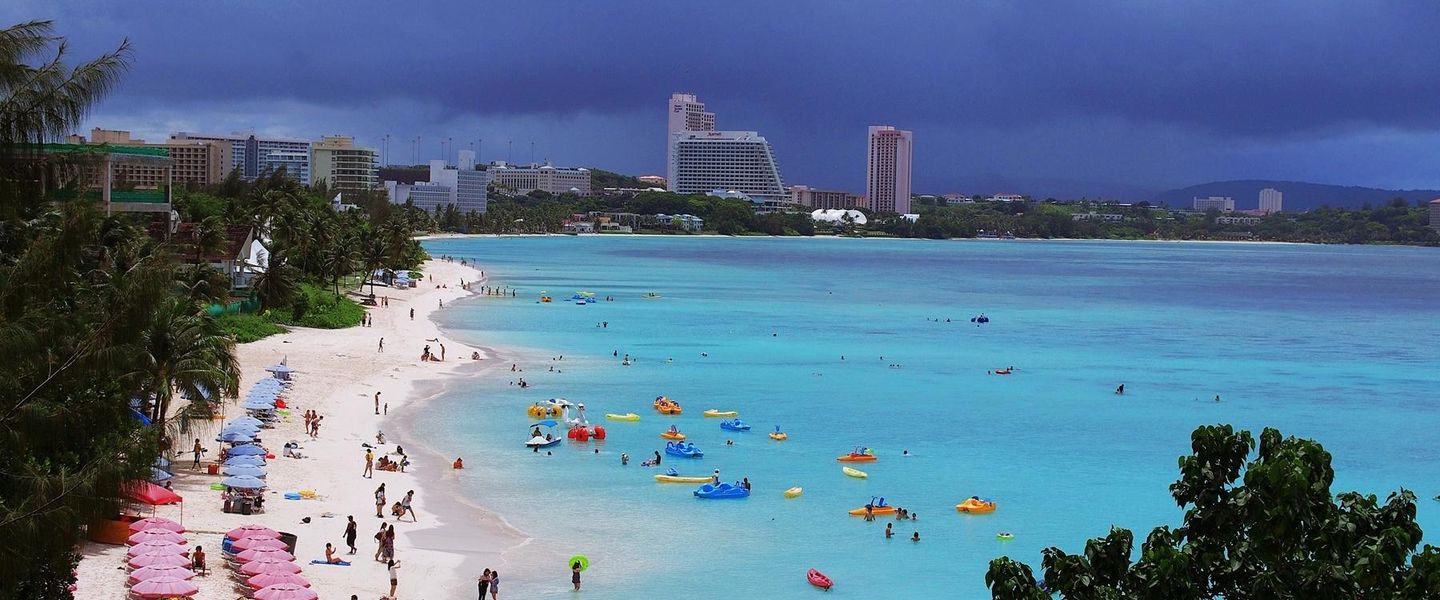


Tumon Bay combines Guam’s coral beaches, marine life, Chamorro culture, resort comforts and sunset views on the island’s western Pacific coast.
Read more about Tumon Bay
When is the best time to visit Tumon Bay?
Best: January–March · 29–30°C| Month | High (°C) | Rainfall (mm) |
|---|---|---|
| January (best) | 29 | 102 |
| February (best) | 29 | 76 |
| March (best) | 30 | 95 |
| April | 30 | 119 |
| May | 31 | 137 |
| June | 31 | 196 |
| July | 31 | 254 |
| August | 31 | 279 |
| September | 31 | 241 |
| October | 30 | 208 |
| November | 30 | 160 |
| December | 30 | 119 |
Getting to and around Tumon Bay
How to get there
Transportation
Top city travel guides in Tumon Bay
The cities of Tumon Bay, and the easiest places to base yourself.

Swipe for more cities
Best attractions in Tumon Bay
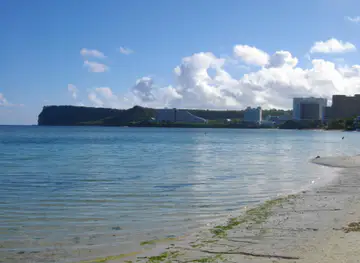
Tumon Bay’s attractions are concentrated around the coast, with the main draw being its sandy beach, sheltered swimming areas and accessible coral reefs. Snorkelling, paddleboarding, kayaking and other water activities are available subject to weather, local operators and marine-preserve rules, while the shoreline lends itself to morning swims and west-facing sunsets. The northern end around Gun Beach has a more open coastal character, and the southern end connects with the lawns and recreational space of Ypao Beach Park. Above the bay, the lookout at Two Lovers Point provides a dramatic view across the Philippine Sea and is tied to a well-known Chamorro legend. Away from the water, Tumon offers resort spas, family entertainment, cultural performances, shopping galleries and indoor attractions suited to very hot or rainy periods. The district is also a practical base for excursions elsewhere on Guam, including wartime heritage, village churches, forested southern landscapes and additional beaches, but those places lie outside Tumon Bay and require separate transport planning.
-
Outlet mall
Guam Premier Outlets
Guam's only outlet mall with designer brands, diverse dining, and entertainment for the entire family. Shop 'til you drop!
-
Park
Ypao Beach
Discover Ypao Beach in Guam: a tropical paradise with clear waters, rich history, and vibrant culture, perfect for relaxation and adventure.
-
Park
Merizo Pier Park
Discover a tranquil coastal escape at Merizo Pier Park in Guam, offering scenic views, cultural experiences, and access to Cocos Island.
-
Beach
Tumon Beach
Experience the beauty of Tumon Beach in Guam: pristine sands, turquoise waters, and endless opportunities for relaxation and adventure.


Best landmarks in Tumon Bay
The most recognisable landmark of Tumon Bay is its broad west-facing shoreline, where the curve of the coast, reef-coloured water and evening light define the district’s visual identity. Two Lovers Point, known in Chamorro as Puntan Dos Amantes, stands at the northern edge of the wider Tumon area as a high coastal lookout associated with a tragic Chamorro love story; its elevated views make it one of Guam’s most familiar scenic symbols. Gun Beach, beneath the northern cliffs, marks a more rugged transition from the hotel frontage to open coastal terrain. At the southern end, Ypao Beach Park’s open waterfront and lawns provide a public recreational counterpoint to the dense resort strip. The bay’s coral reef is also a landmark in ecological terms: the protected marine environment supports the fish and nearshore habitats that make Tumon’s waters attractive. Modern hotels and Pale San Vitores Road are not historic monuments, but together they represent the post-war tourism development that reshaped Guam’s economy and established Tumon as the island’s principal visitor centre.
-
 Resort hotel
Pacific Islands Club Guam
Experience the ultimate tropical getaway at Pacific Islands Club Guam, where relaxation meets adventure in paradise.
-
Tourist attraction
Two Lover’s Point
Explore the breathtaking beauty and captivating legends of Two Lover's Point in Tamuning, Guam, a romantic destination for all travelers.
-
Hotel
Dusit Thani Guam Resort
Experience five-star luxury and gracious Thai hospitality at Dusit Thani Guam Resort, nestled in the heart of Tumon Bay with stunning ocean views.
-
Hotel
Dusit Beach Resort Guam
Discover the ultimate tropical getaway at Dusit Beach Resort Guam, where luxury meets the vibrant culture of the Pacific.


Explore Tumon Bay on the map
Plan your trip on one map. See where the top cities, national parks and sights are, and book hotels and experiences in a few clicks.
Best hotels in Tumon Bay
Best restaurants in Tumon Bay
Dining in Tumon reflects Guam’s position at the meeting point of Chamorro, American and Asian Pacific influences. Visitors can look for local preparations of kelaguen, in which finely chopped meat or seafood is seasoned with citrus and coconut, as well as red rice, barbecue, finadene sauce and other Chamorro dishes. Seafood, pork, chicken and tropical fruit feature widely, while Japanese, Korean, Filipino and American restaurants are especially common along the resort corridor. Hotel restaurants range from casual buffets to more formal dining rooms, and independent cafés provide breakfast, coffee and light meals. Local produce and seafood may appear seasonally rather than on every menu, so asking what is regionally sourced is worthwhile. Tumon is not primarily a single-dish destination; its culinary interest lies in tasting Chamorro food alongside the broader island’s immigrant and Pacific influences. Ypao and nearby residential areas can offer a more locally oriented atmosphere than the largest hotel dining rooms, although availability and individual businesses change.
-
Restaurant
Dusit Thani Guam Resort
Discover unparalleled luxury at Dusit Thani Guam Resort—your gateway to an unforgettable tropical escape filled with relaxation and adventure.
-
Hamburger
Meskla Dos - Upper Tumon
Discover delicious burgers with a local twist at Meskla Dos in Upper Tumon, Guam – where every bite tells a story.
-
Grill
The Beach Restaurant & Bar Guam
Experience exquisite grilled cuisine at The Beach Restaurant & Bar Guam with stunning ocean views in Tumon Bay.
-
Restaurant
Proa Restaurant
Discover authentic Chamorro flavors at Proa Restaurant in Tumon, where every dish tells a story of Guam's rich culinary heritage.



Best bars in Tumon Bay
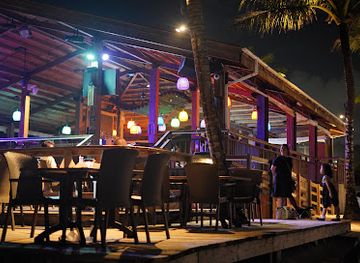
Evening life in Tumon is centred on hotel lounges, casual bars, restaurants, karaoke, live entertainment and a limited selection of late-night venues rather than a large, continuous club district. The main resort strip is the most convenient area for cocktails, beer, music and after-dinner gatherings, with some establishments offering views towards the bay. Japanese and Korean visitor markets have influenced the availability of karaoke and late dining, while American-style sports bars and hotel entertainment remain familiar options. Nightlife can be busier during holiday periods and quieter outside the main tourist seasons, so current opening arrangements should be checked locally. For a calmer evening, sunset walks, cafés and ocean-facing lounges are more characteristic than all-night partying. Drink responsibly, arrange a taxi or designated driver when needed and remember that Guam’s national and US-style alcohol laws apply throughout the district.
-
Grill
The Beach Restaurant & Bar Guam
Experience the best of island dining at The Beach Restaurant & Bar Guam, where delectable flavors meet stunning ocean views for an unforgettable meal.
-
Bar
Porky's
Experience the vibrant nightlife of Tumon at Porky's, a bar where great drinks and lively entertainment await every visitor.
-
Tiki bar
Green Lizzard Tiki Bar
Experience the vibrant nightlife of Guam at Green Lizzard Tiki Bar - a tropical escape with exotic cocktails and live music.
-
Pub
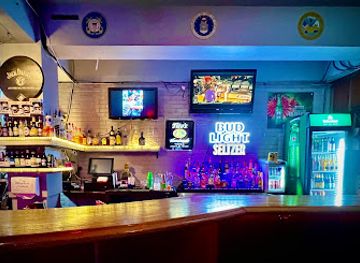
Shamrocks Sports Pub
Discover the lively Shamrocks Sports Pub in Tumon, Guam, where great food, drinks, and entertainment create unforgettable memories.



Best nightclubs in Tumon Bay
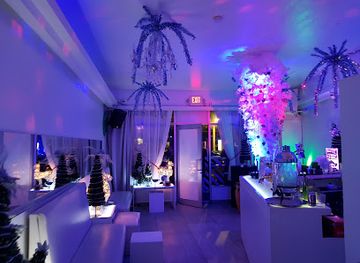
Evening life in Tumon is centred on hotel lounges, casual bars, restaurants, karaoke, live entertainment and a limited selection of late-night venues rather than a large, continuous club district. The main resort strip is the most convenient area for cocktails, beer, music and after-dinner gatherings, with some establishments offering views towards the bay. Japanese and Korean visitor markets have influenced the availability of karaoke and late dining, while American-style sports bars and hotel entertainment remain familiar options. Nightlife can be busier during holiday periods and quieter outside the main tourist seasons, so current opening arrangements should be checked locally. For a calmer evening, sunset walks, cafés and ocean-facing lounges are more characteristic than all-night partying. Drink responsibly, arrange a taxi or designated driver when needed and remember that Guam’s national and US-style alcohol laws apply throughout the district.
-
Bar
Porky's
Experience the lively nightlife at Porky's, Tumon's premier bar for great drinks, music, and unforgettable memories.
-
Lounge
Drop
Discover the chic and vibrant Drop Lounge in Tumon, Guam—your go-to spot for exquisite cocktails and an unforgettable nightlife experience.
-
Karaoke bar
Mins Bar Guam | Music Karaoke Box and Shot Bar | Tumon Guam
Experience the vibrant nightlife of Tumon at Mins Bar Guam, where karaoke meets unforgettable fun in a lively atmosphere.
-
Night club
Abandon Ship Tumon (temporarily closed)
Discover the electrifying nightlife at Abandon Ship Tumon, where vibrant music and dancing await in the heart of Guam.



Best shops in Tumon Bay
Shopping in Tumon is concentrated along Pale San Vitores Road and in hotel-linked galleries and commercial centres, where visitors find resort clothing, cosmetics, jewellery, souvenirs, speciality foods and familiar international brands. The district’s retail character is oriented towards visitors and East Asian tourism, with duty-free-style shopping prominent in larger complexes, although product ranges and store occupancy change over time. Smaller independent outlets are useful for Guam-branded gifts, beach equipment, snacks and locally themed crafts. For a more culturally meaningful purchase, look for Chamorro-inspired artwork, woven items, locally made food products and designs that represent Guam rather than generic Pacific imagery; ask about materials and provenance where appropriate. Tumon is not the island’s primary farmers’ market or craft-tour destination, so visitors seeking produce and community market life should explore beyond the resort district when timing allows. Compare prices before buying imported luxury goods and remember that some purchases may be subject to airline baggage, customs or duty rules when returning home.
-
Outlet mall
Guam Premier Outlets
Discover unbeatable deals and a vibrant shopping atmosphere at Guam Premier Outlets, your go-to destination for retail therapy in paradise.
-
Duty free store
DFS Guam
Discover a world of luxury shopping at DFS Guam, where duty-free treasures await every traveler in the heart of Tumon.
-
Duty free store
T Galleria By DFS, Guam
Explore luxury shopping at T Galleria By DFS in Guam, featuring duty-free goods, high-end brands, and a welcoming atmosphere for all visitors.
-
Shopping mall
The Plaza Shopping Center
Explore The Plaza Shopping Center in Tumon for a vibrant shopping experience, dining delights, and local culture in the heart of Guam.


Get your free copy of our complete guide to Tumon Bay, delivered straight to you.
Everything on this page, from attractions and restaurants to essentials and local phrases, in one PDF you can read offline, print or share.
Already have an account? Sign in
Your Tumon Bay guide is ready.
We'll send it to · Not you? Sign out

Getting your guide ready…
We are putting together a fresh copy of the Tumon Bay guide. This can take up to a minute.
This can take a few moments. If your browser asks, choose Allow so the download can start. You'll find the guide in your Downloads folder.
Nothing happened? Download it again
Sorry, the guide is taking longer than usual. Please try again in a minute, or get it by email instead.
Tumon Bay essentials
Currency and Payment
Safety
Emergency Situations
Do's and Don'ts
Local Tips
From Eve
Local phrases worth knowing
You don't need to get them perfect. A few words go a long way, and locals appreciate the effort.
Basics
| English | Local | Say it |
|---|---|---|
| Hello | Håfa Adai | [Hah-fah Ah-dai] |
| Goodbye | Adios | [Ah-dee-ohs] |
| Yes | Sí | [See] |
| No | Ai | [Eye] |
| Please/You're welcome | Por favor | [Por fah-vor] |
| Thank you | Si Yu'os Ma'ase' | [See Yoo-os Mah-ah-seh] |
| Excuse me/Sorry | Dispensa | [Dees-pen-sah] |
| How are you? | Håfa tatatmanu? | [Hah-fah tah-tah-mah-noo] |
| Fine. And you? | Maliu. Håfa hao? | [Mah-lee-oo. Hah-fah how?] |
| Do you speak English? | Sabe' Ingles? | [Sah-beh Een-gles] |
| I don't understand | Ti un na'ån-ña | [Tea oon nah-ahn-nyah] |
Eating & Drinking
| English | Local | Say it |
|---|---|---|
| I'd like to see the menu, please | Gusta yu' para u fanhasso, por favor | [Goo-stah yoo' pah-rah oo fan-has-so, por fah-vor] |
| I don't eat meat | Ti yu' mas måta' | [Tea yoo' mahs mah-tah] |
| Cheers! | Santé! | [Sahn-tay] |
| I would like to pay, please | Gusta yu' para u na'fan, por favor | [Goo-stah yoo' pah-rah oo nah-fan, por fah-vor] |
Emergencies
| English | Local | Say it |
|---|---|---|
| Help! | Tao! | [Tao] |
| Go away! | Bai hu'! | [Bye hoo'] |
| Call the Police! | Håfa i polis! | [Hah-fah ee poh-lees] |
| Call a doctor! | Håfa i dokto' | [Hah-fah ee dock-toh] |
| I'm lost | Tai yu' na'ån | [Tie yoo' nah-ahn] |
| I'm ill | Tai yu' ma'åse' | [Tie yoo' mah-ah-seh] |
Shopping
| English | Local | Say it |
|---|---|---|
| I'd like to buy... | Gusta yu' para u sangan... | [Goo-stah yoo' pah-rah oo sahn-gahn] |
| I'm just looking | Soli yu' ma'pos | [Soh-lee yoo' mah-pohs] |
| How much is it? | Kao muchu? | [Kow moo-choo] |
| That's too expensive | Sao na'ån siha | [Sah-oh nah-ahn see-hah] |
| Can you lower the price? | Kasi yu' na'pinis i prisi? | [Kah-see yoo' nah-pee-nees ee pree-see] |
Time & Numbers
| English | Local | Say it |
|---|---|---|
| What time is it? | Kao tiempo? | [Kow tee-em-poh] |
| It's one o'clock | Un na'klok | [Oon nah-clock] |
| Half past (10) | Media (10) | [Meh-dee-ah (10)] |
| Morning | Mañana | [Mah-nyah-nah] |
| Afternoon | Panget | [Pahng-et] |
| Evening | Sabei | [Sah-bei] |
| Yesterday | Inagof | [Ee-nah-gof] |
| Today | Kao na'ån | [Kow nah-ahn] |
| Tomorrow | Bai na'ån | [Bye nah-ahn] |
| 1 | Un | [Oon] |
| 2 | Dos | [Dohs] |
| 3 | Tres | [Trace] |
| 4 | Kuatro | [Kwah-troh] |
| 5 | Sinqo | [Seen-koh] |
| 6 | Sais | [Sah-eese] |
| 7 | Siete | [See-eh-teh] |
| 8 | Ocho | [Oh-cho] |
| 9 | Nueve | [Nweh-veh] |
| 10 | Diez | [Dee-ehs] |
Transport & Directions
| English | Local | Say it |
|---|---|---|
| Where's a/the...? | Kao guaha i...? | [Kow goo-ah-hah ee...?] |
| What's the address? | Kao i adres? | [Kow ee ah-dress] |
| Can you show me (on the map)? | Kasi yu' na'fan guini (i mapa)? | [Kah-see yoo' nah-fan goo-nee (ee mah-pah)?] |
| When's the next (bus)? | Kao i sunet (bus)? | [Kow ee soo-net (boos)?] |
| A ticket (to ....) | Un bilet (para ....) | [Oon bee-let (pah-rah ....)] |
History of Tumon Bay
Ancient Chamorro Settlement and Latte Culture
Guam has been inhabited by the Chamorro people for thousands of years, with communities organised around coastal resources, seafaring and strong family networks. The latte stone, a paired pillar-and-capital structure associated with traditional houses, remains one of the most recognisable symbols of ancient Chamorro civilisation. Although Tumon is now heavily developed, the bay belongs to a broader coastal landscape that supported fishing, gathering and movement between settlements long before modern tourism. Archaeological evidence across Guam demonstrates sophisticated maritime knowledge and long-standing connections with other islands of the Mariana Archipelago.
Spanish Colonial Rule, 1668–1898
Spanish missionaries established a permanent colonial presence on Guam in the seventeenth century, beginning a period of political, religious and cultural change that lasted until the Spanish-American War. Catholicism became deeply established, while Spanish administration and trade connected Guam to the wider Pacific and the Manila galleon route. Epidemics and colonial disruption caused severe losses among the Chamorro population, and communities were reorganised under mission and military authority. Tumon’s modern resort landscape contains little colonial architecture, but Spanish influence remains visible in Guam’s Catholic traditions, place names, food and cultural history.
American Naval Administration and Strategic Guam
After Spain ceded Guam to the United States in 1898, the island was administered by the US Navy for much of the first half of the twentieth century. Guam’s position between Asia and the Americas made it strategically important, and military infrastructure increasingly shaped land use, transport and employment. The period also brought closer institutional links with the United States, although political status and local self-government continued to evolve. Tumon’s later development depended in part on the roads, services and international connections created during Guam’s transformation into a strategically significant American Pacific territory.
Japanese Occupation and the Liberation of Guam
Japanese forces captured Guam in December 1941, beginning an occupation that lasted until American forces returned in 1944. Chamorro civilians experienced displacement, forced labour, food shortages and military violence, while the island became a contested wartime landscape. The Battle of Guam, fought in July and August 1944, caused extensive destruction before American control was restored. The war remains central to Guam’s historical memory, and museums, memorials and preserved sites elsewhere on the island help visitors understand an experience that is not always visible amid Tumon’s contemporary hotels and commercial buildings.
Post-war Reconstruction and Tourism
Following the Second World War, Guam underwent rapid reconstruction and expanded its links with the United States. Roads, air connections and commercial services improved, while the island’s warm climate and western Pacific location attracted increasing numbers of visitors, particularly from Japan and later South Korea and other markets. Tumon Bay became the centre of this tourism economy, with hotels, shopping facilities and water-based recreation replacing much of the area’s earlier low-density coastal character. The district’s modern identity is therefore the product of post-war development layered over an older Chamorro landscape.
Marine Conservation and Contemporary Tumon
As tourism and coastal construction intensified, concern grew over the health of Guam’s coral reefs and nearshore ecosystems. The Tumon Bay Marine Preserve was established to protect important marine habitats and maintain the ecological quality that supports swimming, snorkelling and other visitor activities. Contemporary Tumon reflects an ongoing balance between a highly developed resort economy, the protection of coastal resources and the cultural priorities of Guam’s Chamorro community. Conservation measures, responsible recreation and more sustainable tourism are increasingly important to the bay’s future.
Tumon Bay in Photos
Browse through our photo collection highlighting the charm and character of the destination.
Neighbouring regions of Tumon Bay
The closest regions to Tumon Bay, if you have time for more than one.
-

-
-

-

-


Swipe for more regions
Explore more
Explore more of Guam
Discover Guam: A tropical paradise offering pristine beaches, rich Chamorro culture, and diverse marine life, perfect for adventure seekers and relaxation enthusiasts alike.
Explore Guam