

Free Apra Harbor Travel Guide & Mobile App
Explore Apra Harbor with free travel guides. Discover regional history, expert tips, proposed trips, and audio guides on web or mobile app.


Apra Harbor reveals Guam’s maritime history, wartime legacy, working port and reef-fringed coastline beside Piti and Santa Rita.
Read more about Apra Harbor
When is the best time to visit Apra Harbor?
Best: February–April · 29–30°C| Month | High (°C) | Rainfall (mm) |
|---|---|---|
| January | 29 | 100 |
| February (best) | 29 | 70 |
| March (best) | 29 | 70 |
| April (best) | 30 | 80 |
| May | 30 | 110 |
| June | 30 | 170 |
| July | 30 | 220 |
| August | 30 | 260 |
| September | 30 | 260 |
| October | 30 | 220 |
| November | 30 | 170 |
| December | 29 | 130 |
Getting to and around Apra Harbor
How to get there
Transportation
Top city travel guides in Apra Harbor
The cities of Apra Harbor, and the easiest places to base yourself.

Swipe for more cities
Best attractions in Apra Harbor
Apra Harbor’s attractions are shaped by its working maritime landscape rather than by a continuous public waterfront. In Piti, permitted boat trips, diving excursions and marine interpretation provide ways to experience Guam’s reef ecology and the sheltered waters of the harbour’s northern approaches. Fish Eye Marine Park is in nearby Piti Bay, outside Apra Harbor proper, and is a practical option for visitors seeking a structured marine experience. Around the harbour itself, public roads and legal viewpoints offer glimpses of port operations, tropical hills, breakwaters and naval activity, but access is restricted across much of the shoreline. Wartime and military history are important themes, with the harbour area best understood alongside Guam’s broader museums, memorials and historic sites. The natural setting also rewards careful observation: clear water, reef habitats, seabirds and changing light over the western coast contrast with fuel facilities, cargo infrastructure and naval engineering. Visitors should not expect a conventional beach-resort itinerary, and many apparently attractive coves or installations cannot be entered without permission.
-
Visitor center
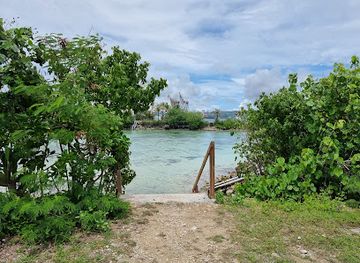
T. Stell Newman Visitor Center
Experience Guam's wonders at the T. Stell Newman Visitor Center, where adventure begins and stories unfold amidst stunning landscapes.
-
Tourist attraction
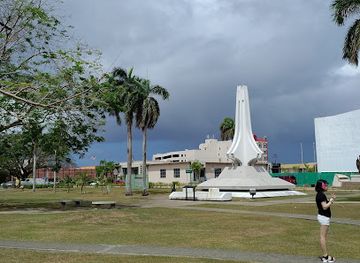
War in the Pacific National Historical Park
Explore Guam's pivotal role in WWII at this historical park, honoring the bravery and sacrifice of those in the Pacific Theater.
-
Tourist attraction
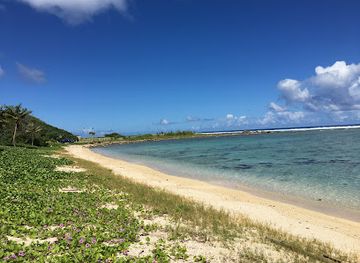
Family Beach
Discover Family Beach in Guam: A perfect family-friendly destination with golden sands, clear waters, and stunning views of Apra Harbor.
-
National park
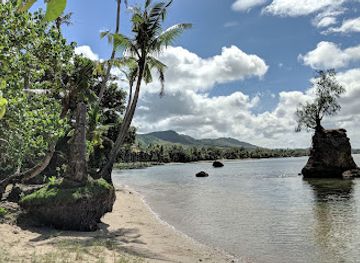
A'påka Point
Discover Guam's coastal beauty and rich history at A'påka Point, offering panoramic views and a tranquil escape in Apra Harbor.
Best landmarks in Apra Harbor
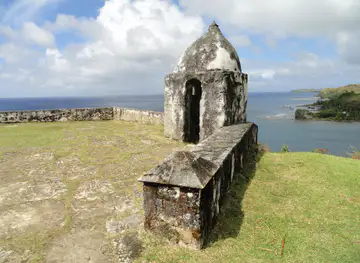
Apra Harbor’s most significant landmarks are maritime, military and geographical rather than monumental. The harbour entrance, shaped by Cabras Island and the Orote Peninsula, is the defining physical feature: together they create a protected anchorage while placing Guam’s western coast directly within a major Pacific shipping and naval corridor. Fort Santa Cruz, a Spanish-era defensive work on a small islet in the harbour, is an important historical reference, although it is not generally an ordinary walk-in visitor site. The commercial port and naval installations are also substantial landmarks of modern Guam, but they are working and controlled places rather than sightseeing facilities. From authorised public viewpoints, the contrast between breakwaters, cargo infrastructure, tropical slopes and open ocean illustrates how the harbour has been engineered and defended over time. Its strongest meaning lies in this combination of natural shelter, colonial history, wartime memory and continuing strategic use.
-
Tourist attraction
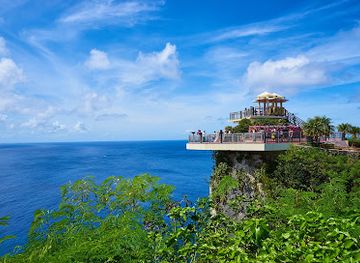
Two Lover’s Point
Discover Guam's legendary Two Lover's Point: panoramic views, a poignant love story, and a cultural landmark on a breathtaking cliffside.
-
Tourist attraction
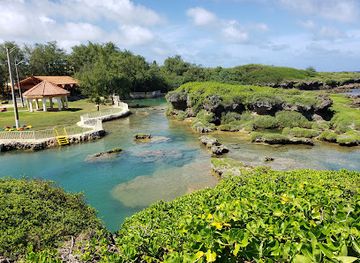
Inarajan Natural Pool
Discover the serene beauty of Inarajan Natural Pool in Guam, a natural wonder offering crystal-clear waters, vibrant marine life, and Chamorro culture.
-
Park
Ypao Beach
Discover Ypao Beach in Guam: Pristine sands, clear waters, vibrant marine life, and a rich cultural history await in this tropical paradise.
-
Historical landmark
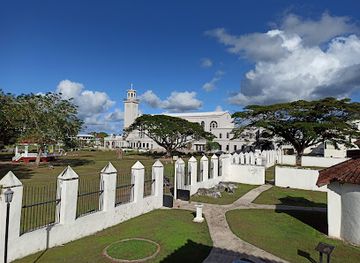
Plaza de España
Explore Guam's colonial past at Plaza de España in Hagåtña, where history and culture converge in a serene and picturesque setting.

Explore Apra Harbor on the map
Plan your trip on one map. See where the top cities, national parks and sights are, and book hotels and experiences in a few clicks.
Best hotels in Apra Harbor
Best restaurants in Apra Harbor
Dining immediately around Apra Harbor is practical and community-oriented, with choices concentrated in Piti, Santa Rita and the roads leading towards Hagåtña rather than along a publicly accessible harbour promenade. Visitors will find Guam’s wider blend of CHamoru, Filipino, broader American and East Asian influences, including rice-based meals, grilled seafood, barbecue, soups and dishes seasoned with local chilli pepper. Red rice, kelaguen and other CHamoru specialities are widely associated with Guam’s food culture, although individual recipes and restaurant interpretations vary. Local bakeries, casual eateries, takeaways and family-run establishments are more characteristic of the harbour area than a dense fine-dining scene. Fresh seafood may appear on menus, but visitors should not assume that every seafood dish is locally caught. For a wider choice of restaurants, evening dining and international cuisines, Hagåtña and the hotel districts beyond the harbour are more dependable, and should be treated as neighbouring dining centres rather than part of Apra Harbor itself.
-
Hamburger
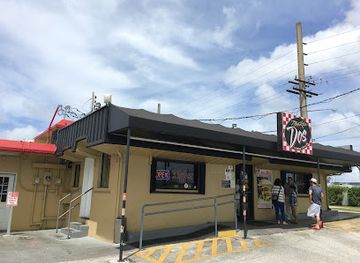
Meskla Dos - Upper Tumon
Discover the vibrant tastes of Meskla Dos in Upper Tumon – where delicious burgers meet local flavors in an inviting atmosphere.
-
Grill
The Beach Restaurant & Bar Guam
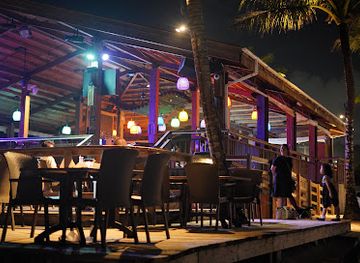
Experience culinary delights with breathtaking ocean views at The Beach Restaurant & Bar Guam - your ultimate tropical escape.
-
Grill
Jeff's Pirates Cove
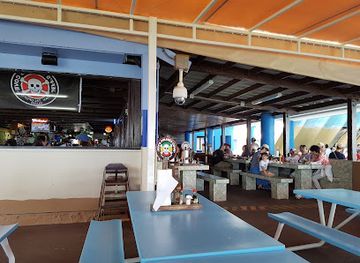
Experience delicious island flavors at Jeff's Pirates Cove - A must-visit grill in Ipan, Guam with stunning views and a vibrant atmosphere.
-
Restaurant
Proa Restaurant
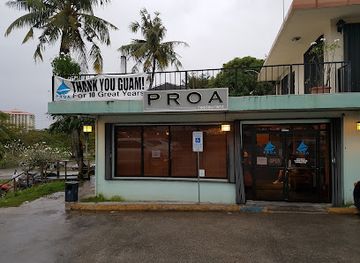
Savor authentic Chamorro cuisine at Proa Restaurant in Tumon - a must-visit dining destination for tourists exploring Guam.
Best bars in Apra Harbor
Apra Harbor is not a major nightlife district. Evening activity is centred on casual restaurants, neighbourhood bars and social venues in Piti, Santa Rita and nearby communities, with the harbour itself generally quiet after working and tourism operations finish. The atmosphere is more suited to an informal meal or drink than to a concentrated club circuit, and military access controls mean that visitors should not expect to explore the waterfront at night. For cocktails, live entertainment and a broader selection of late-opening venues, Hagåtña and Guam’s hotel areas outside the harbour are the principal nearby choices. Visitors staying in or around Naval Base Guam should also follow local access rules and avoid assuming that facilities open to authorised personnel are available to the general public.
-
Grill
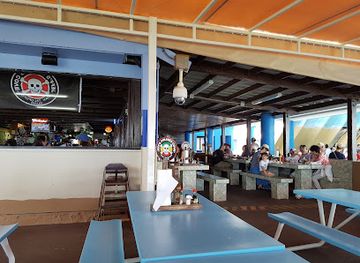
The Beach Restaurant & Bar Guam
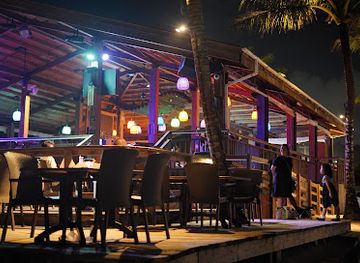
Discover the perfect blend of local flavors and breathtaking ocean views at The Beach Restaurant & Bar Guam, your coastal dining paradise.
-
Grill
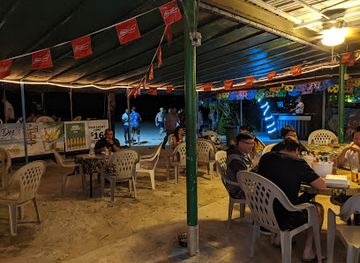
Jeff's Pirates Cove
Experience the vibrant flavors and breathtaking ocean views at Jeff's Pirates Cove, a family-friendly grill in Ipan, Guam that captures the spirit of island dining.
-
Brewpub
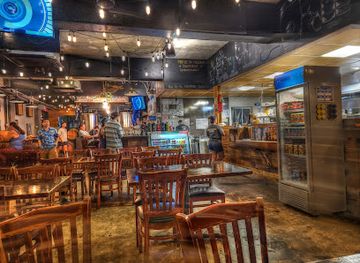
Carabao Brewing
Experience the best of Guam's craft beer and cuisine at Carabao Brewing, a vibrant brewpub in Hagåtña offering unique flavors and a lively atmosphere.
-
Bar
Jimmy Dee's Paradise Beach Resort & Bar
Experience the vibrant atmosphere and delicious island flavors at Jimmy Dee's Paradise Beach Resort & Bar in Guam.
Best nightclubs in Apra Harbor
Apra Harbor is not a major nightlife district. Evening activity is centred on casual restaurants, neighbourhood bars and social venues in Piti, Santa Rita and nearby communities, with the harbour itself generally quiet after working and tourism operations finish. The atmosphere is more suited to an informal meal or drink than to a concentrated club circuit, and military access controls mean that visitors should not expect to explore the waterfront at night. For cocktails, live entertainment and a broader selection of late-opening venues, Hagåtña and Guam’s hotel areas outside the harbour are the principal nearby choices. Visitors staying in or around Naval Base Guam should also follow local access rules and avoid assuming that facilities open to authorised personnel are available to the general public.
-
Lounge
Drop
Experience the chic and vibrant atmosphere of Drop Lounge in Tumon, Guam, offering unique drinks and a lively nightlife scene.
-
Lounge
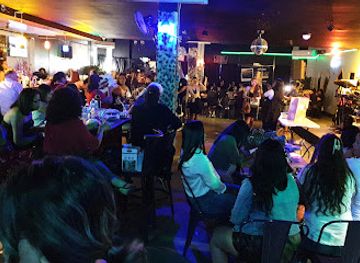
Gudtaym Lounge
Discover the lively Gudtaym Lounge in Guam, a hotspot for karaoke and live music, perfect for an unforgettable night out.
-
Karaoke bar
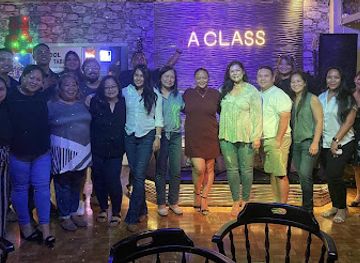
A Class Lounge
Experience the vibrant nightlife at A Class Lounge in Upper Tumon, Guam, where karaoke dreams come true and unforgettable memories are made.
-
Lounge
Regency Club
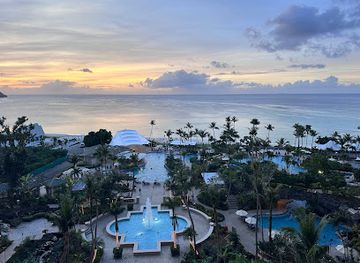
Discover the serene elegance of Regency Club in Tumon, a tropical lounge retreat offering stunning views and refreshing drinks.

Best shops in Apra Harbor
Shopping in the immediate Apra Harbor area is limited and functional, reflecting the presence of port, residential and military communities rather than a purpose-built visitor quarter. Small convenience stores and local businesses serve everyday needs, while a broader range of shops is found in Hagåtña and the commercial districts outside the harbour. Visitors seeking regional products can look for CHamoru food specialities, chilli sauces, packaged snacks, woven goods, artwork and locally themed crafts, but should check provenance when purchasing items described as handmade or locally produced. Guam’s larger retail centres and hotel areas provide more extensive fashion, electronics, souvenirs and duty-free-style shopping, though these are outside Apra Harbor and require a drive. Markets and community events can offer a more direct connection with island produce and food traditions when operating, but schedules vary, so they should be confirmed locally rather than assumed to be permanent.
-
Outlet mall
Guam Premier Outlets
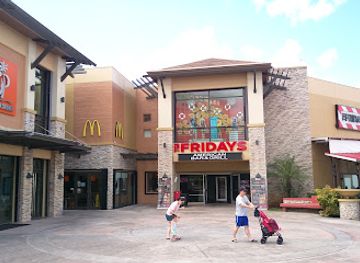
Experience the best of shopping at Guam Premier Outlets with a variety of stores, dining options, and a vibrant atmosphere that embodies island life.
-
Shopping mall
JP Superstore
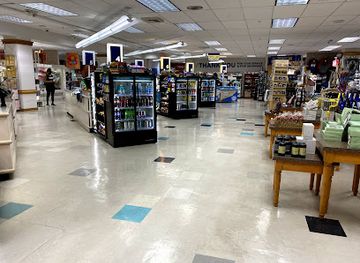
Explore the vibrant JP Superstore in Guam, where diverse shopping options meet local charm, perfect for tourists seeking unique finds.
-
Shopping mall
Navy Exchange Main
Experience the vibrant shopping atmosphere at Navy Exchange Main in Guam, featuring diverse stores, dining options, and a friendly atmosphere perfect for everyone.
-
Shopping mall
Compadres Mall
Experience the lively atmosphere of Compadres Mall in Guam, where shopping, dining, and entertainment come together to create unforgettable moments.

Get your free copy of our complete guide to Apra Harbor, delivered straight to you.
Everything on this page, from attractions and restaurants to essentials and local phrases, in one PDF you can read offline, print or share.
Already have an account? Sign in
Your Apra Harbor guide is ready.
We'll send it to · Not you? Sign out

Getting your guide ready…
We are putting together a fresh copy of the Apra Harbor guide. This can take up to a minute.
This can take a few moments. If your browser asks, choose Allow so the download can start. You'll find the guide in your Downloads folder.
Nothing happened? Download it again
Sorry, the guide is taking longer than usual. Please try again in a minute, or get it by email instead.
Apra Harbor essentials
Currency and Payment
Safety
Emergency Situations
Do's and Don'ts
Local Tips
From Eve
Local phrases worth knowing
You don't need to get them perfect. A few words go a long way, and locals appreciate the effort.
Basics
| English | Local | Say it |
|---|---|---|
| Hello | Hafa Adai | [Hah-fah Ah-dai] |
| Goodbye | Adios | [Ah-dee-ohs] |
| Yes | Sí | [See] |
| No | Ahe | [Ah-heh] |
| Please/You're welcome | Por favor / Hafa Adai | [Por fah-vor / Hah-fah Ah-dai] |
| Thank you | Si Yu'os Ma'ase | [See Yoo-os Mah-ah-seh] |
| Excuse me/Sorry | Dispensa | [Dees-pen-sah] |
| How are you? | Kumusta? | [Koo-moos-tah] |
| Fine. And you? | Maliu. Håfa tatat? | [Mah-lee-oo. Hah-fah tah-tat] |
| Do you speak English? | I taotao siha na un na'ån English? | [Ee tah-oh-tah-oh see-hah nah oon nah-ahn English] |
| I don't understand | Ti un na'ån | [Tee oon nah-ahn] |
Eating & Drinking
| English | Local | Say it |
|---|---|---|
| I'd like to see the menu, please | Gusto yu' un na'ån i menu, por favor | [Goo-sto Yoo oon nah-ahn ee meh-noo, por fah-vor] |
| I don't eat meat | Ti un chumo' i carne | [Tee oon choo-mo' ee kar-neh] |
| Cheers! | Salud! | [Sah-lud] |
| I would like to pay, please | Gusto yu' un pay, por favor | [Goo-sto Yoo oon pie, por fah-vor] |
Emergencies
| English | Local | Say it |
|---|---|---|
| Help! | Tulong! | [Too-long] |
| Go away! | Sige, guma'! | [See-geh, goo-mah] |
| Call the Police! | Tawag i Police! | [Tah-wahg ee Poh-lees] |
| Call a doctor! | Tawag i dokte! | [Tah-wahg ee dok-teh] |
| I'm lost | Ayu' ti ayu | [Ah-yoo tee ah-yoo] |
| I'm ill | Ayu' ti malá | [Ah-yoo tee mah-lah] |
Shopping
| English | Local | Say it |
|---|---|---|
| I'd like to buy... | Gusto yu' un prupuru... | [Goo-sto Yoo oon proo-poo-roo] |
| I'm just looking | Ayu'ta na'ån | [Ah-yoo-tah nah-ahn] |
| How much is it? | Håfa i presyo? | [Hah-fah ee preh-so] |
| That's too expensive | Ita mas mataas | [Ee-tah mahs ma-tah-as] |
| Can you lower the price? | Po'lo yu' i presyo? | [Poh-loh Yoo ee preh-so] |
Time & Numbers
| English | Local | Say it |
|---|---|---|
| What time is it? | Håfa oras? | [Hah-fah oh-ras] |
| It's one o'clock | Ya i uno na orasan | [Yah ee oo-no nah oh-rah-san] |
| Half past (10) | Bente uno na orasan | [Ben-teh oo-no nah oh-rah-san] |
| Morning | Mañana | [Mah-nyah-nah] |
| Afternoon | Tarde | [Tar-deh] |
| Evening | Noche | [Noh-cheh] |
| Yesterday | Akan na minat | [Ah-kahn nah mee-naht] |
| Today | Ita na minat | [Ee-tah nah mee-naht] |
| Tomorrow | Pugua | [Poo-gwah] |
| 1 | Uno | [Oo-no] |
| 2 | Dos | [Dohs] |
| 3 | Tres | [Trehs] |
| 4 | Kåtlo | [Kah-tloh] |
| 5 | Singko | [Sing-koh] |
| 6 | Sais | [Sah-eess] |
| 7 | Siete | [See-eh-teh] |
| 8 | Ocho | [Oh-choh] |
| 9 | Nueve | [Nweh-veh] |
| 10 | Diyes | [Dee-yes] |
Transport & Directions
| English | Local | Say it |
|---|---|---|
| Where's a/the...? | Konde i...? | [Kohn-deh ee...?] |
| What's the address? | Håfa i address? | [Hah-fah ee ah-dress?] |
| Can you show me (on the map)? | Po'lo yu' un show sa mapa? | [Poh-loh Yoo oon show sah mah-pah?] |
| When's the next (bus)? | Kándo i sunan (bus)? | [Kahn-doh ee soo-nahn (bus)?] |
| A ticket (to ....) | Un tiket (para ....) | [Oon tee-ket (pah-rah ....)] |
History of Apra Harbor
Chamorro Maritime Settlement Before European Rule
The coastline around Apra Harbor formed part of the maritime world of the CHamoru people, whose communities occupied Guam for centuries before European contact. Coastal waters supplied fish and shellfish, while villages were linked by canoe travel and exchange. Archaeological evidence across Guam, including latte-stone architecture and settlement remains, demonstrates a long tradition of sophisticated island society rather than an unoccupied tropical landscape. The harbour’s sheltered waters would have been valuable for movement and fishing, although modern port construction and military development have altered much of the original shoreline.
Spanish Administration from the Seventeenth Century
Spain established a permanent mission on Guam in 1668, beginning a period of colonial administration that lasted until 1898. Spanish rule brought Catholic missions, new political structures and connections to the Manila galleon network, while also causing profound disruption to CHamoru communities through disease, conflict, relocation and cultural change. Apra Harbor became part of Guam’s wider network of coastal routes and defensive concerns. Spanish-era influence remains visible across the island in Catholic traditions, place names and surviving historic structures, even though many harbour fortifications have disappeared or are inaccessible.
American Control and the Harbour’s Strategic Importance, 1898–1941
Following the Spanish-American War, Guam was ceded to the United States in 1898. Its position between Asia and the Pacific made the island increasingly important to American naval planning, and Apra Harbor developed as a sheltered anchorage and logistical base. Port facilities, communications infrastructure and military administration expanded gradually during the early twentieth century. This period established the foundations of the harbour’s modern identity: it became not simply a local fishing and transport area but a strategic installation connected to the wider movement of ships and supplies across the Pacific.
Japanese Occupation, 1941–1944
Japanese forces invaded Guam shortly after the attack on Pearl Harbor in December 1941, ending American administration for nearly three years. The occupation brought military rule, forced labour, shortages and severe hardship for Guam’s population. Apra Harbor and its surrounding facilities were absorbed into Japan’s defensive system, while the island’s strategic position made it a target of intense military attention. The occupation remains central to Guam’s modern historical memory, particularly through family testimony, memorial sites and the island-wide remembrance of those who suffered during the war.
Liberation and the Reconstruction of Apra Harbor, 1944
American forces returned to Guam in July 1944, beginning a campaign that led to the island’s liberation after weeks of fighting. Operations around the western coast and harbour caused extensive destruction, while civilians endured displacement and danger. Once secured, Apra Harbor was rebuilt and expanded as an American naval logistics centre. The harbour’s later port facilities, fuel infrastructure and naval operations therefore reflect both wartime reconstruction and the United States’ post-war military presence in the western Pacific.
Naval Expansion and Modern Guam
After the Second World War, Apra Harbor became one of Guam’s most important military and commercial maritime facilities. Naval installations, a commercial port and supporting infrastructure reshaped the shores around Piti and Santa Rita, bringing employment and strategic importance but also limiting public access to large areas. Guam’s political status as an organised, unincorporated territory of the United States adds another layer to the harbour’s identity. Today, Apra Harbor remains a working port and naval centre while its surrounding communities continue to express Guam’s CHamoru, American and Pacific connections.
Apra Harbor in Photos
Browse through our photo collection highlighting the charm and character of the destination.
Neighbouring regions of Apra Harbor
The closest regions to Apra Harbor, if you have time for more than one.
-

-

-

-

-


Swipe for more regions
Explore more
Explore more of Guam
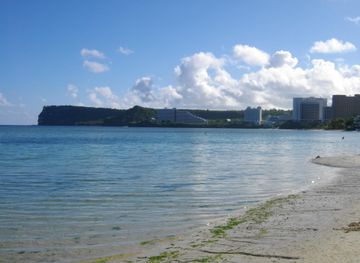
Discover Guam: A tropical paradise offering pristine beaches, rich Chamorro culture, and diverse marine life, perfect for adventure seekers and relaxation enthusiasts alike.
Explore Guam