

Free Cantanhez Forest National Park Travel Guide & Mobile App
Explore Cantanhez Forest National Park with free travel guides. Discover regional history, expert tips, proposed trips, and audio guides on web or mobile app.


Cantanhez Forest National Park offers guided wildlife encounters, community landscapes and remote tropical forests in southern Guinea-Bissau.
Read more about Cantanhez Forest National Park
When is the best time to visit Cantanhez Forest National Park?
Best: December–February · 28–29°C| Month | High (°C) | Rainfall (mm) |
|---|---|---|
| January (best) | 28 | 0 |
| February (best) | 29 | 1 |
| March | 31 | 3 |
| April | 32 | 10 |
| May | 33 | 20 |
| June | 34 | 40 |
| July | 32 | 120 |
| August | 31 | 160 |
| September | 31 | 120 |
| October | 31 | 40 |
| November | 30 | 10 |
| December (best) | 29 | 3 |
Getting to and around Cantanhez Forest National Park
How to get there
Transportation
Top city travel guides in Cantanhez Forest National Park
The cities of Cantanhez Forest National Park, and the easiest places to base yourself.
-

-


Swipe for more cities
Best attractions in Cantanhez Forest National Park
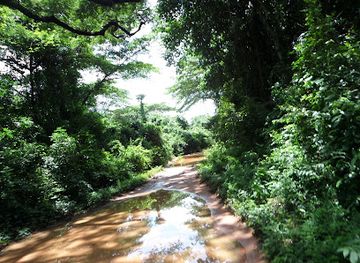
Cantanhez’s attractions are primarily ecological and community-based rather than built for mass tourism. Guided forest walks are the central activity, with opportunities to learn about western chimpanzee habitat, forest plants, birdlife and the relationship between woodland and village agriculture. Sightings of chimpanzees are possible but never guaranteed, and the quality of the experience depends on quiet observation and local interpretation. Different forest blocks offer contrasting scenery, from denser evergreen vegetation to more open woodland, farmland and wetter areas around streams. Community visits can introduce visitors to local cultivation, traditional knowledge and conservation work, provided that introductions and photography are handled respectfully. The park’s wider appeal includes unhurried travel through southern Guinea-Bissau’s rural landscape, where cashew orchards, palm trees, rice plots and forest paths create a mosaic rather than a single wilderness zone. Birdwatching, nature photography and walking are best undertaken with guides who understand seasonal conditions and animal behaviour. There are no large-scale entertainment complexes or extensive museum circuits within the park, so visitors should come for landscape, biodiversity and cultural exchange rather than a packed programme of conventional sights.
Best landmarks in Cantanhez Forest National Park
Cantanhez has few monumental buildings, but its most important landmarks are landscapes and forest places with ecological or cultural significance. The surviving forest blocks are the defining natural markers of the park, standing out against cultivated clearings, cashew orchards and settlement areas. Forest corridors and stream-side vegetation are particularly important because they connect habitats used by chimpanzees and other wildlife. Locally recognised sacred forests provide another form of landmark: their importance is rooted in customary belief and community authority rather than architectural display, so visitors should approach only with permission and appropriate guidance. Village compounds, agricultural clearings and traditional paths also reveal how people have inhabited and managed the area over time. The park’s significance is best read spatially, through the contrast between dense woodland, rice-growing ground, palm-rich areas and roads linking remote communities. In this setting, a landmark may be a forest edge, a recognised grove or a route known to local residents rather than a named monument. Their meaning cannot be separated from the people who protect, use and interpret them.
Explore Cantanhez Forest National Park on the map
Plan your trip on one map. See where the top cities, national parks and sights are, and book hotels and experiences in a few clicks.
Best hotels in Cantanhez Forest National Park
Best restaurants in Cantanhez Forest National Park
Cantanhez does not have a conventional restaurant scene, and meals are normally arranged through community accommodation, local hosts, guides or small roadside establishments in the wider southern region. Cooking commonly reflects Guinea-Bissau’s rice-based food culture, with dishes accompanied by fish, chicken, beans, vegetables, palm oil or locally available produce. Freshness and availability vary with season and road access, while cashew products and tropical fruits may appear in local food arrangements. Visitors should confirm meals when booking rather than expecting to find cafés near forest trails, and should carry snacks and safe drinking water for long journeys. Eating with a host can be an important part of understanding the region, but dietary requirements need to be explained clearly in advance. Bissau offers the country’s broadest choice of restaurants before or after a park visit; within Cantanhez, simple shared meals and locally sourced ingredients are more representative than formal dining.
-
Restaurant
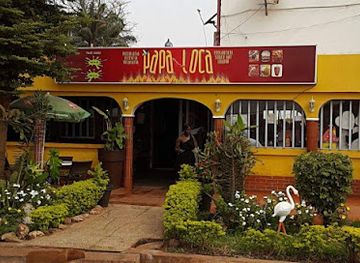
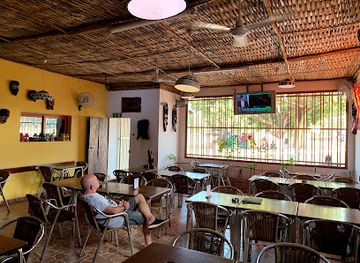
Restaurante Papa Loca
Experience authentic Guinea-Bissauan cuisine at Restaurante Papa Loca - where every meal tells a story.
-
Italian
O Bistro
Discover authentic Italian cuisine at O Bistro in Bissau—where every meal is a celebration of flavor and tradition.
-
Restaurant
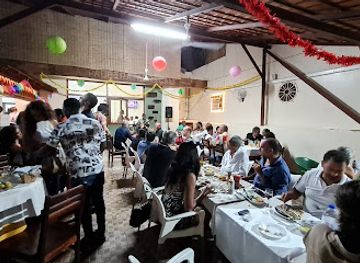
Coqueiros Bissau
Experience authentic Guinea-Bissauan cuisine at Coqueiros Bissau, where local flavors meet warm hospitality in a charming atmosphere.
-
Restaurant
A Padeira Africana
Experience authentic West African flavors at A Padeira Africana in Bissau – where every dish tells a story.

Best bars in Cantanhez Forest National Park
Cantanhez has no established nightclub district and very little organised nightlife for visitors. Evenings generally centre on community life, conversation, a locally prepared meal and the practical routines of rural households, with darkness and limited electricity shaping the pace after sunset. Small bars or informal drinking places may exist in larger settlements, but opening arrangements and facilities are variable and should not be assumed. Visitors should avoid treating villages as entertainment venues, drink moderately and follow local guidance on where it is appropriate to sit or socialise. Those seeking music, bars and a wider evening choice will find it in Bissau, outside the park and far to the north; Cantanhez is better suited to quiet nights, listening to forest sounds and preparing for early guided walks.
-
Restaurant
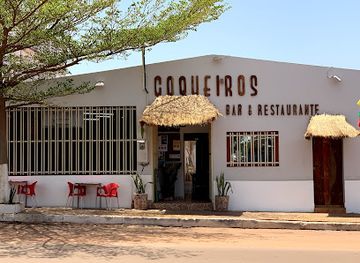
Coqueiros Bissau
Experience authentic Guinean flavors at Coqueiros Bissau, a top dining destination in Bissau known for its warm atmosphere and delicious local cuisine.
-
Tourist attraction
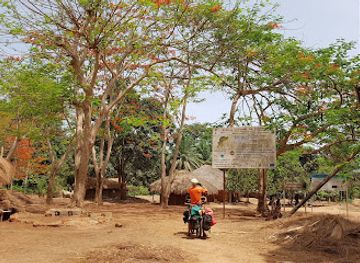
National Park Cantanhez Forests
Discover the breathtaking biodiversity of National Park Cantanhez Forests in Guinea-Bissau - a must-visit for eco-tourists and nature lovers.
-
Night club
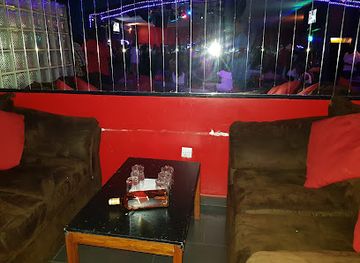
Discoteca TABANKA
Dive into the heart of Bissau's nightlife at Discoteca TABANKA, where vibrant music, cultural celebrations, and unforgettable experiences await.
-
Grill
Bar Tenta Sorte
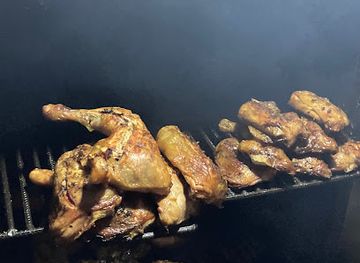
Experience the rich flavors of Guinea-Bissau at Bar Tenta Sorte, a top grill restaurant in Bissau, where every dish tells a story.
Best nightclubs in Cantanhez Forest National Park
Cantanhez has no established nightclub district and very little organised nightlife for visitors. Evenings generally centre on community life, conversation, a locally prepared meal and the practical routines of rural households, with darkness and limited electricity shaping the pace after sunset. Small bars or informal drinking places may exist in larger settlements, but opening arrangements and facilities are variable and should not be assumed. Visitors should avoid treating villages as entertainment venues, drink moderately and follow local guidance on where it is appropriate to sit or socialise. Those seeking music, bars and a wider evening choice will find it in Bissau, outside the park and far to the north; Cantanhez is better suited to quiet nights, listening to forest sounds and preparing for early guided walks.
-
Night club
Discoteca TABANKA
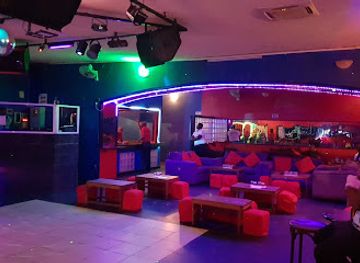
Discover the pulse of Bissau's nightlife at Discoteca TABANKA, where music and culture meet for an unforgettable experience.
-
 Disco club
Matongue club
Discover the vibrant nightlife at Matongue Club, Bissau's premier disco destination, where local culture and electrifying music blend for an unforgettable experience.
Best shops in Cantanhez Forest National Park
Shopping in Cantanhez is limited and practical rather than organised around a visitor retail district. Small village shops and local markets may provide basic food, household goods and drinks, but supplies are irregular and visitors should not depend on them for specialist equipment. The most appropriate purchases are locally made items or food products obtained through a guide, host or community initiative, with fair prices agreed openly. Cashew products, palm-related goods, woven items and simple craftwork may be available, although selection varies between villages and seasons. Do not buy wildlife parts, old artefacts, timber or plants removed from the forest. For a broader choice of handicrafts, textiles, food products and souvenirs, Bissau is the practical place to shop before or after visiting the park. Carrying a reusable bag and avoiding unnecessary packaging is especially useful in a remote area where waste collection is limited.
-
Tourist attraction
National Park Cantanhez Forests
Discover the breathtaking biodiversity and serene beauty of National Park Cantanhez Forests in Guinea-Bissau, a paradise for nature enthusiasts and wildlife lovers.
-
Clothing store
Fashion Canté
Explore Fashion Canté, the premier clothing store in Bissau, where local style meets contemporary fashion in a vibrant shopping experience.

Get your free copy of our complete guide to Cantanhez Forest National Park, delivered straight to you.
Everything on this page, from attractions and restaurants to essentials and local phrases, in one PDF you can read offline, print or share.
Already have an account? Sign in
Your Cantanhez Forest National Park guide is ready.
We'll send it to · Not you? Sign out

Getting your guide ready…
We are putting together a fresh copy of the Cantanhez Forest National Park guide. This can take up to a minute.
This can take a few moments. If your browser asks, choose Allow so the download can start. You'll find the guide in your Downloads folder.
Nothing happened? Download it again
Sorry, the guide is taking longer than usual. Please try again in a minute, or get it by email instead.
Cantanhez Forest National Park essentials
Currency and Payment
Safety
Emergency Situations
Do's and Don'ts
Local Tips
From Eve
Local phrases worth knowing
You don't need to get them perfect. A few words go a long way, and locals appreciate the effort.
Basics
| English | Local | Say it |
|---|---|---|
| Hello | Olá | [oh-lah] |
| Goodbye | Adeus | [ah-deh-oos] |
| Yes | Sim | [seem] |
| No | Não | [now] |
| Please/You're welcome | Por favor | [poor fah-vor] |
| Thank you | Obrigado | [oh-bree-gah-doo] |
| Excuse me/Sorry | Desculpe | [des-kool-peh] |
| How are you? | Como você está? | [koh-moo voh-seh es-tah] |
| Fine. And you? | Estou bem. E você? | [es-toh bem. eh voh-seh] |
| Do you speak English? | Você fala inglês? | [voh-seh fah-lah een-glays] |
| I don't understand | Eu não entendo | [ay-oo now en-ten-doo] |
Eating & Drinking
| English | Local | Say it |
|---|---|---|
| I'd like to see the menu, please | Gostaria de ver o menu, por favor | [goh-stah-ree-ah jeh vehr oo meh-noo, poor fah-vor] |
| I don't eat meat | Eu não como carne | [ay-oo now koh-moo kar-nee] |
| Cheers! | Saúde! | [sah-oo-deh] |
| I would like to pay, please | Gostaria de pagar, por favor | [goh-stah-ree-ah jeh pah-gar, poor fah-vor] |
Emergencies
| English | Local | Say it |
|---|---|---|
| Help! | Ajuda! | [ah-zhoo-dah] |
| Go away! | Vá embora! | [vah em-boh-rah] |
| Call the Police! | Chame a polícia! | [shah-meh ah poh-lee-see-ah] |
| Call a doctor! | Chame um médico! | [shah-meh oom meh-dee-koh] |
| I'm lost | Estou perdido | [es-toh pehr-jee-doo] |
| I'm ill | Estou doente | [es-toh do-ehn-chee] |
Shopping
| English | Local | Say it |
|---|---|---|
| I'd like to buy... | Gostaria de comprar... | [goh-stah-ree-ah jeh kohm-prahr] |
| I'm just looking | Estou apenas olhando | [es-toh ah-peh-nahs oh-yahn-doo] |
| How much is it? | Quanto custa? | [kwahn-toh koos-tah] |
| That's too expensive | Isso é muito caro | [ee-soh eh moyn-too kah-roh] |
| Can you lower the price? | Você pode baixar o preço? | [voh-seh poh-jee bah-ee-shar oo preh-soh] |
Time & Numbers
| English | Local | Say it |
|---|---|---|
| What time is it? | Que horas são? | [keh oh-ras sah-oo] |
| It's one o'clock | É uma hora | [eh oo-mah oh-rah] |
| Half past (10) | Meia hora | [may-ah oh-rah] |
| Morning | Manhã | [mahn-yah] |
| Afternoon | Tarde | [tar-deh] |
| Evening | Noite | [noy-chee] |
| Yesterday | Ontem | [on-tem] |
| Today | Hoje | [oh-zhee] |
| Tomorrow | Amanhã | [ah-mahn-yah] |
| 1 | Um | [oom] |
| 2 | Dois | [doys] |
| 3 | Três | [trays] |
| 4 | Quatro | [kwah-tro] |
| 5 | Cinco | [seen-koh] |
| 6 | Seis | [says] |
| 7 | Sete | [seh-chee] |
| 8 | Oito | [oy-toh] |
| 9 | Nove | [noh-veh] |
| 10 | Dez | [dehz] |
Transport & Directions
| English | Local | Say it |
|---|---|---|
| Where's a/the...? | Onde está um/a...? | [on-deh es-tah oom/ah] |
| What's the address? | Qual é o endereço? | [kwahl eh oo en-deh-reh-soh] |
| Can you show me (on the map)? | Você pode me mostrar (no mapa)? | [voh-seh poh-jee meh mohs-trar (noh mah-pah)] |
| When's the next (bus)? | Quando é o próximo (ônibus)? | [kwahn-doo eh oo proh-see-moo (oh-nee-boos)] |
| A ticket (to ....) | Um bilhete (para ....) | [oom bee-lyeh-chee (pah-rah)] |
History of Cantanhez Forest National Park
Long-established forest societies
Southern Guinea-Bissau has been shaped for centuries by communities that combine cultivation, forest use, fishing and seasonal activities. In the Cantanhez area, Nalu, Balanta and other communities developed customary systems governing farmland, woodland, sacred places and access to natural resources. These traditions did not form a single unchanging culture: practices and settlement patterns vary between villages and language groups. The continuing presence of customary authority is important for visitors because access to forests and community spaces may depend on local permission as well as formal park arrangements.
Portuguese colonial rule and the southern interior
Portuguese influence in Guinea developed unevenly, and the forested south remained less intensively urbanised than coastal and riverine centres. Colonial administration, Christian and Islamic networks, taxation and the expansion of cash-crop production altered local economies without eliminating customary land use. Palm products, rice cultivation and other agricultural activities connected communities to wider trading systems. The limited road infrastructure inherited from this period also helps explain why Cantanhez remains a relatively remote destination today.
The Guinea-Bissau liberation struggle
The armed struggle against Portuguese rule, led politically and militarily by the African Party for the Independence of Guinea and Cape Verde, affected the southern countryside during the 1960s and early 1970s. Forests and rural settlements were strategically important in a war fought across difficult terrain, while communities experienced displacement, military pressure and disruption to agriculture. Guinea-Bissau declared independence in 1973, and Portugal recognised it in 1974. The conflict remains part of the broader historical context of travel through the country’s rural south, although visible memorials are not the principal attraction of Cantanhez.
Post-independence rural change
After independence, southern communities continued to depend on farming, forest resources and local trade while public services and transport infrastructure developed unevenly. Cashew cultivation became especially important in Guinea-Bissau’s rural economy, alongside food crops such as rice and other subsistence production. Population movement, changing markets and pressure on woodland brought new conservation challenges. The history of Cantanhez is therefore not a simple story of untouched forest: it is a working landscape where ecological protection must be balanced with the needs and rights of resident communities.
Community-based conservation
During the late twentieth and early twenty-first centuries, conservation initiatives increasingly focused on linking protected forests with local participation rather than relying only on exclusionary regulation. Research and conservation work drew international attention to the importance of Cantanhez for western chimpanzees and other forest species. Local knowledge, community forests and negotiated management became central to efforts to protect habitat while maintaining farming livelihoods. This approach reflects a wider shift in Guinea-Bissau from viewing forests solely as areas to police towards recognising residents as essential partners in their stewardship.
Creation of Cantanhez Forest National Park
Cantanhez Forest National Park was formally established in 2008 as part of Guinea-Bissau’s expanding protected-area system. The park brought together important forest blocks and rural landscapes in the Tombali region, under a framework associated with the national Institute for Biodiversity and Protected Areas, commonly known by its Portuguese acronym IBAP. Its significance is both biological and social: it protects habitat for threatened wildlife while acknowledging that villages, farms and customary institutions are part of the landscape. Conservation work remains dependent on local cooperation, practical funding and reliable access.
Cantanhez Forest National Park in Photos
Browse through our photo collection highlighting the charm and character of the destination.
Neighbouring regions of Cantanhez Forest National Park
The closest regions to Cantanhez Forest National Park, if you have time for more than one.
-

-

-

-

-


Swipe for more regions

