

Free Beyla Region Travel Guide & Mobile App
Explore Beyla Region with free travel guides. Discover regional history, expert tips, proposed trips, and audio guides on web or mobile app.


Explore Beyla in southeastern Guinea for Simandou mountain landscapes, forest-edge villages, rural markets and a grounded overland journey.
Read more about Beyla Region
When is the best time to visit Beyla Region?
Best: November–January · 27–28°C| Month | High (°C) | Rainfall (mm) |
|---|---|---|
| January (best) | 28 | 5 |
| February | 30 | 7 |
| March | 32 | 10 |
| April | 33 | 20 |
| May | 33 | 30 |
| June | 31 | 60 |
| July | 30 | 100 |
| August | 30 | 100 |
| September | 30 | 80 |
| October | 30 | 60 |
| November (best) | 28 | 20 |
| December (best) | 27 | 10 |
Getting to and around Beyla Region
How to get there
Transportation
Best attractions in Beyla Region
Beyla's attractions are primarily landscapes, local life and opportunities to understand a changing rural region rather than a sequence of formal visitor sites. The Simandou uplands provide the area's defining scenery, with iron-rich ridges, wooded slopes and valleys that are particularly striking when approached by road, although mining zones and infrastructure works may be restricted. Around Beyla town, the market and surrounding settlements offer a window on agricultural exchange, food production and everyday life in southeastern Guinea. Rural excursions can reveal the transition from forest-edge vegetation to more open woodland and cultivated country, but they should be arranged with local guidance and permission. Birdlife, seasonal streams and the region's varied plant communities are best appreciated slowly, on foot or from quiet roads, rather than through an established wildlife-tourism programme. Visitors interested in conservation should distinguish Beyla from better-known protected areas elsewhere in Nzérékoré Region, including sites around Lola and Macenta, which are not automatically part of the Beyla area. The strongest experience here is a carefully planned overland journey combining scenery, conversations, markets and an informed understanding of the environmental and social questions surrounding Simandou.
-
National park
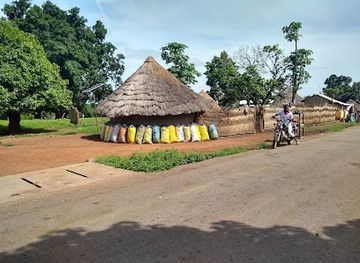
National Park of Upper Niger
Explore the National Park of Upper Niger in Guinea, where stunning landscapes and diverse wildlife create an unforgettable adventure in nature.
-
Market
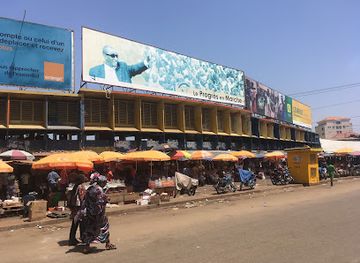
Marche du Niger
Discover the bustling energy and local culture at Marche du Niger, the vibrant market in Conakry, Guinea, where authentic experiences await.
-
Beach pavillion
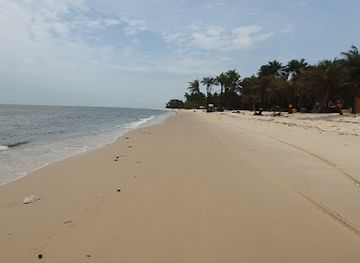
Plage TAYAKI
Experience the tranquil beauty of Plage TAYAKI, Conakry's hidden beach gem known for its pristine sands and vibrant local culture.
-
Hiking area
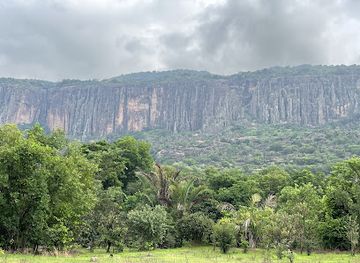
Fouta Trekking
Discover Fouta Trekking: A premier hiking destination in Guinea, offering stunning landscapes, rich ecosystems, and unforgettable adventures.
Best landmarks in Beyla Region
The Simandou range is Beyla's most important natural landmark, a chain of iron-bearing mountains whose ridges and watersheds dominate the area's geography and have made it central to Guinea's mining debate. Its significance is geological, economic and environmental as well as visual. Beyla town itself functions as a human landmark within the surrounding countryside: its market, roads, public buildings and gathering places mark the administrative centre of a large rural prefecture. Beyond the town, the contrast between cultivated valleys, wooded hills and open savanna-like stretches provides a recognisable landscape identity, especially along the long approach roads. Small bridges and seasonal river crossings are practical features of the regional landscape rather than monuments, but they help explain why movement is so dependent on weather and local knowledge. Visitors should not confuse Beyla's landmarks with Mount Nimba or the best-known forest reserves farther south and west in the wider Nzérékoré Region; those places may be relevant to a broader southeastern Guinea itinerary but are not interchangeable with the Beyla area.
-
Mosque
Grande Mosquée de Conakry
Discover the Grande Mosquée de Conakry, a stunning architectural masterpiece and cultural landmark in Guinea, welcoming all who seek its beauty and serenity.
-
Museum
National Museum of Guinea
Discover the cultural treasures of Guinea at the National Museum, a captivating journey through history and art in Conakry.
-
National park
National Park of Upper Niger
Explore the breathtaking National Park of Upper Niger, a haven for wildlife and a treasure trove of natural beauty in Guinea.
-
Castle
Fort São José da Amura
Explore the historical marvel of Fort São José da Amura in Bissau, a castle that tells tales of colonial past and offers stunning coastal views.
Explore Beyla Region on the map
Plan your trip on one map. See where the top cities, national parks and sights are, and book hotels and experiences in a few clicks.
Best hotels in Beyla Region
Best restaurants in Beyla Region
Dining in Beyla is modest and local, centred on small eateries, market stalls, household cooking and simple meals served with rice, cassava, plantain or maize. Sauces may include leafy greens, peanuts, chilli, okra or locally available meat and fish, while grilled foods and fried snacks are common around transport points and markets. The forest-edge climate supports crops such as cassava, rice and bananas, though availability changes with the season and supply routes. Visitors should expect limited choice outside Beyla town and should carry safe drinking water and a few dependable provisions for longer road journeys. In rural settings, a meal may be arranged through a host rather than bought from a conventional restaurant; accepting hospitality courteously while clarifying ingredients and timing is sensible. French is useful when ordering, but a local intermediary can help explain dishes and prices. There is no need to expect an international dining scene: the value lies in fresh, filling food and the connection between cooking, farming and local markets.
-
Restaurant
Avenue
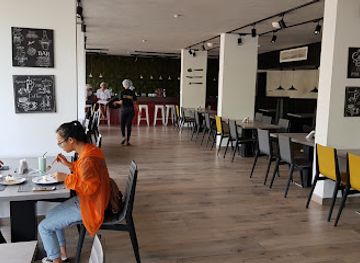
Experience the rich flavors of Guinea at Avenue Restaurant in Conakry - where local meets international cuisine in an inviting atmosphere.
-
Turkish
Istanbul Restaurant & Pâtisserie
Experience authentic Turkish cuisine and delightful pastries at Istanbul Restaurant & Pâtisserie in Conakry.
-
Restaurant
Le Special
Experience the vibrant flavors of Guinea at Le Special – where local charm meets culinary excellence in Conakry.
-
Restaurant
Mim's Burger
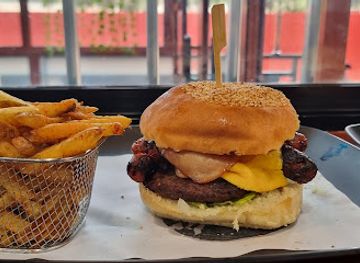
Discover the best burgers in Conakry at Mim's Burger – where local flavors meet delightful dining experiences.

Best bars in Beyla Region
Beyla does not have a substantial nightclub district or a late-night entertainment economy. Evening social life is more likely to centre on modest bars, cafés, open-air seating and restaurants in or near the town, with conversation, football broadcasts and locally available drinks providing the main focus. Music may accompany social gatherings, but events and opening arrangements are informal and can change. In rural settlements, nights are generally quiet and shaped by household, community and religious life rather than tourism. Visitors should drink moderately, keep plans local, avoid isolated roads after dark and follow the advice of hosts or drivers. Larger urban nightlife scenes are found elsewhere in Guinea, not in the Beyla area, so the destination suits travellers interested in communities and landscapes rather than clubbing.
-
Restaurant
Avenue
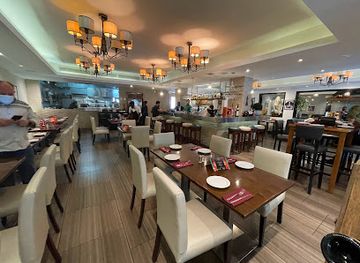
Experience the vibrant flavors of Guinea at Avenue, Conakry's premier destination for exquisite dining and warm hospitality.
-
Turkish
Istanbul Restaurant & Pâtisserie
Savor authentic Turkish dishes and delightful pastries at Istanbul Restaurant & Pâtisserie, a culinary haven in Conakry, Guinea.
-
Restaurant
Le Special
Experience the authentic taste of Guinea at Le Special, a vibrant restaurant in Conakry, where local flavors come to life.
-
Pizza
Italia Box
Experience the authentic taste of Italy at Italia Box, a must-visit pizza and patisserie restaurant in the heart of Conakry, Guinea.

Best nightclubs in Beyla Region
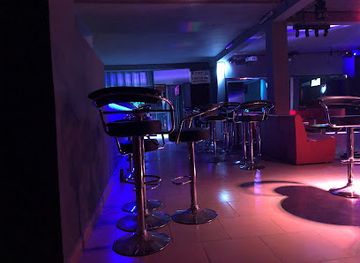
Beyla does not have a substantial nightclub district or a late-night entertainment economy. Evening social life is more likely to centre on modest bars, cafés, open-air seating and restaurants in or near the town, with conversation, football broadcasts and locally available drinks providing the main focus. Music may accompany social gatherings, but events and opening arrangements are informal and can change. In rural settlements, nights are generally quiet and shaped by household, community and religious life rather than tourism. Visitors should drink moderately, keep plans local, avoid isolated roads after dark and follow the advice of hosts or drivers. Larger urban nightlife scenes are found elsewhere in Guinea, not in the Beyla area, so the destination suits travellers interested in communities and landscapes rather than clubbing.
-
Disco club
CONAKRY CLUB
Dive into the energetic nightlife of Conakry at Conakry Club, where vibrant music and unforgettable experiences await.
-
Night club
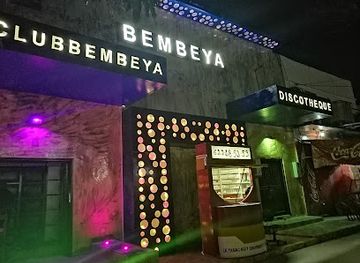
Club BEMBEYA
Discover the heart of Conakry's nightlife at Club BEMBEYA, where music, dance, and local culture come together for an unforgettable experience.
-
Night club
Alize Club International
Discover the vibrant nightlife of Conakry at Alize Club International, where music, dancing, and an electric atmosphere await.
-
Night club
Aviostart
Discover the pulse of Siguiri's nightlife at Aviostart, a vibrant night club where music, dance, and culture collide for an unforgettable experience.


Best shops in Beyla Region
Shopping in Beyla is concentrated around the town's market and small independent stalls rather than formal retail centres. Useful purchases include locally grown rice, cassava products, groundnuts, seasonal fruit, spices and prepared snacks, although availability follows harvests and transport conditions. Everyday household goods, clothing, mobile-phone services and basic travel provisions are more realistic purchases than internationally oriented souvenirs. Visitors may encounter locally made baskets, woven items or other practical crafts, but supply is irregular and quality varies, so buying directly from makers through a trusted local contact is preferable. Carry Guinean francs in small denominations and ask permission before photographing specialist work or market activity. Beyla is not a major centre for luxury shopping or galleries; its retail character reflects a rural trading town serving farms, settlements and long-distance road traffic. For a wider selection of crafts and regional products, larger towns elsewhere in Guinea are more likely to offer established stalls and dependable supply.
-
Hotel
Hôtel Kaloum
Discover the elegance of Hôtel Kaloum in Conakry, where luxury meets local culture for an unforgettable stay.
-
Market
Marche du Niger
Discover the lively Marche du Niger in Conakry, Guinea, where vibrant culture meets local craftsmanship and delicious street food.
-
 Handicraft
Centro Artístico Juvenil
Explore local handicrafts and immerse in the vibrant culture at Centro Artístico Juvenil in the heart of Bissau, Guinea-Bissau.
-
Vaporizer store
Guinéenne de l'e-cigarette
Explore the premier vaporizer store in Conakry, Guinea – Guinéenne de l'e-cigarette, for quality products and expert advice.


Get your free copy of our complete guide to Beyla Region, delivered straight to you.
Everything on this page, from attractions and restaurants to essentials and local phrases, in one PDF you can read offline, print or share.
Already have an account? Sign in
Your Beyla Region guide is ready.
We'll send it to · Not you? Sign out

Getting your guide ready…
We are putting together a fresh copy of the Beyla Region guide. This can take up to a minute.
This can take a few moments. If your browser asks, choose Allow so the download can start. You'll find the guide in your Downloads folder.
Nothing happened? Download it again
Sorry, the guide is taking longer than usual. Please try again in a minute, or get it by email instead.
Beyla Region essentials
Currency and Payment
Safety
Emergency Situations
Do's and Don'ts
Local Tips
From Eve
Local phrases worth knowing
You don't need to get them perfect. A few words go a long way, and locals appreciate the effort.
Basics
| English | Local | Say it |
|---|---|---|
| Hello | N'na | [N'na] |
| Goodbye | N'kuma | [N'kuma] |
| Yes | Aye | [Aye] |
| No | N'koi | [N'koi] |
| Please/You're welcome | N'ka b'a la | [N'ka b'a la] |
| Thank you | N'ka b'a fô | [N'ka b'a fô] |
| Excuse me/Sorry | N'ka fô | [N'ka fô] |
| How are you? | N'ka ya? | [N'ka ya?] |
| Fine. And you? | N'ka fô. N'ka ya? | [N'ka fô. N'ka ya?] |
| Do you speak English? | N'ka sa b'a anglè? | [N'ka sa b'a anglè?] |
| I don't understand | N'ka b'a sa fô | [N'ka b'a sa fô] |
Eating & Drinking
| English | Local | Say it |
|---|---|---|
| I'd like to see the menu, please | N'ka b'a s'a menyo, n'ka b'a la | [N'ka b'a s'a menyo, n'ka b'a la] |
| I don't eat meat | N'ka b'a s'a nyam | [N'ka b'a s'a nyam] |
| Cheers! | N'ka s'a b'a kè | [N'ka s'a b'a kè] |
| I would like to pay, please | N'ka b'a s'a peye, n'ka b'a la | [N'ka b'a s'a peye, n'ka b'a la] |
Emergencies
| English | Local | Say it |
|---|---|---|
| Help! | N'ka b'a s'a fô! | [N'ka b'a s'a fô!] |
| Go away! | N'ka b'a s'a fô! | [N'ka b'a s'a fô!] |
| Call the Police! | N'ka b'a s'a kè pòlisi! | [N'ka b'a s'a kè pòlisi!] |
| Call a doctor! | N'ka b'a s'a kè d'okta! | [N'ka b'a s'a kè d'okta!] |
| I'm lost | N'ka b'a s'a lô | [N'ka b'a s'a lô] |
| I'm ill | N'ka b'a s'a fô | [N'ka b'a s'a fô] |
Shopping
| English | Local | Say it |
|---|---|---|
| I'd like to buy... | N'ka b'a s'a t'â... | [N'ka b'a s'a t'â...] |
| I'm just looking | N'ka s'a b'a lô | [N'ka s'a b'a lô] |
| How much is it? | N'ka s'a b'a kè? | [N'ka s'a b'a kè?] |
| That's too expensive | N'ka b'a s'a kè fô | [N'ka b'a s'a kè fô] |
| Can you lower the price? | N'ka s'a b'a t'â kè fô? | [N'ka s'a b'a t'â kè fô?] |
Time & Numbers
| English | Local | Say it |
|---|---|---|
| What time is it? | N'ka s'a b'a kè? | [N'ka s'a b'a kè?] |
| It's one o'clock | N'ka b'a s'a kè n'kô | [N'ka b'a s'a kè n'kô] |
| Half past (10) | N'ka b'a s'a kè n'kô b'a t'â | [N'ka b'a s'a kè n'kô b'a t'â] |
| Morning | N'ka b'a s'a sô | [N'ka b'a s'a sô] |
| Afternoon | N'ka b'a s'a d'ô | [N'ka b'a s'a d'ô] |
| Evening | N'ka b'a s'a y'ô | [N'ka b'a s'a y'ô] |
| Yesterday | N'ka b'a s'a fô b'â | [N'ka b'a s'a fô b'â] |
| Today | N'ka b'a s'a d'â | [N'ka b'a s'a d'â] |
| Tomorrow | N'ka b'a s'a n'â | [N'ka b'a s'a n'â] |
| 1 | Kô | [Kô] |
| 2 | D'â | [D'â] |
| 3 | T'â | [T'â] |
| 4 | N'kô | [N'kô] |
| 5 | N'ka | [N'ka] |
| 6 | S'â | [S'â] |
| 7 | S'ê | [S'ê] |
| 8 | H'â | [H'â] |
| 9 | N'kô fô | [N'kô fô] |
| 10 | D'â fô | [D'â fô] |
Transport & Directions
| English | Local | Say it |
|---|---|---|
| Where's a/the...? | N'ka s'a b'a...? | [N'ka s'a b'a...?] |
| What's the address? | N'ka s'a b'a kè d'â? | [N'ka s'a b'a kè d'â?] |
| Can you show me (on the map)? | N'ka s'a b'a t'a mappa? | [N'ka s'a b'a t'a mappa?] |
| When's the next (bus)? | N'ka s'a b'a kè n'kô (bô)? | [N'ka s'a b'a kè n'kô (bô)?] |
| A ticket (to ....) | N'ka b'a s'a kè t'â (b'a ...) | [N'ka b'a s'a kè t'â (b'a ...)] |
History of Beyla Region
Older forest and savanna settlement
The Beyla area occupies an ecological transition where forest, woodland and savanna meet. Human settlement developed through farming, hunting, trade and movement along the natural corridors linking Upper Guinea with the forest countries to the south. Archaeological information available to visitors is limited, but the region's present cultural geography reflects long interaction among communities rather than a single isolated tradition. Rice cultivation, cassava, maize and other crops continue to connect contemporary livelihoods with the area's varied soils and rainfall.
Mande expansion and regional trade
Before European colonial rule, the wider southeastern Guinean borderlands were influenced by Mande-speaking states, trading networks and Muslim scholarly traditions moving south from the Upper Niger zone. Beyla stood within a broad contact area rather than a single fixed political unit. Trade in agricultural goods and other commodities linked inland settlements with routes towards present-day Côte d'Ivoire and Liberia. The continued presence of Maninka cultural influence in the area is part of this longer history of movement and exchange.
Samori Touré and the late nineteenth-century wars
The expansion of Samori Touré's Wassoulou empire profoundly affected Upper Guinea and the forest-edge territories during the late nineteenth century. Military campaigns, population movements and the reorganisation of local alliances reached the wider Beyla and southeastern Guinea zone, even though frontiers and political control changed repeatedly. The conflict was tied to resistance against French expansion as well as competition among regional powers. Its legacy survives in regional oral histories and in the wider historical memory of Guinea's resistance period.
French conquest and colonial administration
French authority was imposed across Guinea at the end of the nineteenth century and consolidated through administrative posts, taxation, compulsory labour systems and new transport routes. The Beyla area was governed within the colonial structures of French Guinea, which divided communities according to administrative priorities that did not always follow older cultural or trading connections. Colonial rule also redirected commerce towards government centres and helped establish the road-based administrative geography that still shapes travel between Beyla and neighbouring parts of the country.
Independence and rural transformation
Guinea became independent in 1958 under President Ahmed Sékou Touré, beginning a period of strong state control and socialist economic policy. In rural southeastern Guinea, agriculture, local administration and cross-border trade remained central despite changing national policies and periods of economic difficulty. Later decades brought political liberalisation, population movement and stronger links with neighbouring Côte d'Ivoire and Liberia. Roads, markets and public services continued to develop unevenly, leaving Beyla more lightly serviced than Guinea's coastal and major urban areas.
Simandou and the contemporary resource frontier
The Simandou mountain range contains one of the world's major known iron-ore deposits, and parts of the wider project area lie in or near Beyla Prefecture. Mining proposals, rail and port plans, land access, employment and environmental protection have consequently become defining contemporary issues. The project has brought international investment and infrastructure expectations, but also difficult questions about resettlement, watershed protection and the distribution of benefits. Beyla is therefore both a rural landscape and a significant focus of Guinea's economic future.
Beyla Region in Photos
Browse through our photo collection highlighting the charm and character of the destination.
Neighbouring regions of Beyla Region
The closest regions to Beyla Region, if you have time for more than one.
-

-

-

-

-


Swipe for more regions
Explore more

Explore more of Guinea
Explore Guinea's hidden beauty, from lush rainforests and majestic waterfalls to vibrant markets and rich cultural heritage in West Africa.
Explore Guinea