

Free Forest Guinea Travel Guide & Mobile App
Explore Forest Guinea with free travel guides. Discover regional history, expert tips, proposed trips, and audio guides on web or mobile app.


Forest Guinea combines rainforest reserves, Mount Nimba landscapes, lively market towns and distinctive cultures in Guinea’s south-eastern highlands.
Read more about Forest Guinea
When is the best time to visit Forest Guinea?
Best: December–February · 28°C| Month | High (°C) | Rainfall (mm) |
|---|---|---|
| January (best) | 28 | 20 |
| February (best) | 28 | 30 |
| March | 29 | 50 |
| April | 30 | 70 |
| May | 31 | 90 |
| June | 30 | 110 |
| July | 30 | 130 |
| August | 29 | 120 |
| September | 29 | 110 |
| October | 29 | 90 |
| November | 29 | 70 |
| December (best) | 28 | 50 |
Getting to and around Forest Guinea
How to get there
Transportation
Top city travel guides in Forest Guinea
The cities of Forest Guinea, and the easiest places to base yourself.

Swipe for more cities
Destinations in Forest Guinea
Resorts, valleys and scenic spots worth a trip of their own.

Swipe for more destinations
Best attractions in Forest Guinea
-
National park
National Park of Upper Niger
Discover the enchanting landscapes and rich biodiversity of the National Park of Upper Niger, a hidden gem for nature lovers in Guinea.
-
Mountain peak
Mount Richard-Molard
Explore the breathtaking landscapes and serene beauty of Mount Richard-Molard, a must-visit mountain peak for nature lovers and adventure seekers.
-
National forest
Forêt guinéenne de l'Ouest africain
Discover the breathtaking biodiversity and captivating landscapes of Forêt Guinénne de l'Ouest Africain, a national forest teeming with nature's wonders in Sierra Leone.
-
Tourist attraction
Artisanal Diamond Mine
Discover the rich cultural heritage and diamond mining tradition at the Artisanal Diamond Mine in Old Sefadu, Sierra Leone.


Best landmarks in Forest Guinea
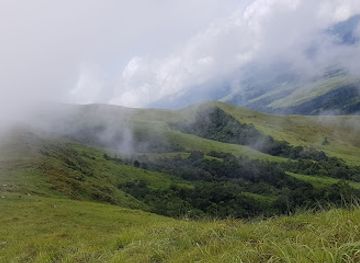
The most significant landmarks of Forest Guinea are natural formations and protected landscapes. Mount Nimba, rising along Guinea’s borders with Liberia and Côte d’Ivoire, is the region’s defining highland landmark and part of the internationally recognised Mount Nimba Strict Nature Reserve. Its ridges, iron-rich geology, forested slopes and high-altitude grasslands create a marked contrast with the surrounding lowland forest, while its ecological importance has made access carefully regulated. The Ziama Massif near Macenta is another major geographical landmark: its extensive rainforest block stands out in a region where farming, roads and settlement have fragmented many natural habitats. Within towns, landmarks are more understated, consisting mainly of market areas, civic buildings, mosques, churches and streets shaped by twentieth-century administration and regional commerce. The landscape itself remains the strongest visual marker, particularly where red laterite roads cross green hills, plantations and river valleys. Visitors should treat protected areas as conservation sites rather than unrestricted scenic viewpoints and confirm where photography, vehicles and walking are permitted.
-
Museum
National Museum of Guinea
Explore the National Museum of Guinea in Conakry for a captivating journey through the nation's rich culture and history.
-
National park
National Park of Upper Niger
Explore the breathtaking landscapes and rich biodiversity of the National Park of Upper Niger, a true gem in Guinea's natural heritage.
-
Historical place museum
Place des martyrs de la Guinée
Immerse yourself in the history of Guinea at the Place des Martyrs, a memorial to the nation's brave fight for independence.
Explore Forest Guinea on the map
Plan your trip on one map. See where the top cities, national parks and sights are, and book hotels and experiences in a few clicks.
Best hotels in Forest Guinea
Best restaurants in Forest Guinea
Dining in Forest Guinea is informal and closely connected to local agriculture. Rice is a staple, commonly served with sauces made from leaves, groundnuts, vegetables or meat, while plantain, cassava, sweet potato and yam are important foods in the humid south-east. Chicken, fish and bushmeat may appear in local food economies, but visitors should avoid protected or illegally sourced wildlife and ask about ingredients when necessary. In towns such as Nzérékoré, Macenta and Guéckédou, small restaurants and street-side kitchens serve filling plates suited to the climate and available produce; French and wider Guinean dishes may also be found. Coffee and cocoa are important regional crops, although preparation and availability vary. Markets are useful for fresh fruit, roasted foods and local ingredients, while accommodation kitchens may provide the most dependable option outside major towns. Carry treated water and choose busy food stalls with good turnover, since refrigeration and sanitation standards differ widely. Eating is generally part of everyday local exchange rather than a formal restaurant experience.
-
Restaurant
Avenue
Experience the best of Guinean cuisine at Avenue Restaurant in Conakry – where flavors meet tradition!
-
Turkish
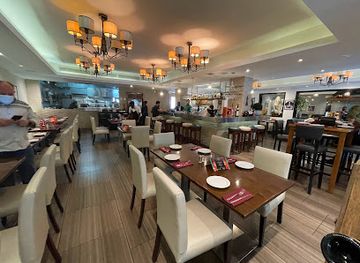
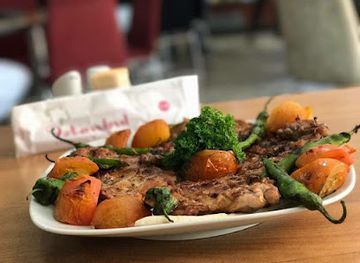
Istanbul Restaurant & Pâtisserie
Experience authentic Turkish cuisine and exquisite pastries at Istanbul Restaurant & Pâtisserie in Conakry.
-
Restaurant
Le Special
Experience authentic Guinean cuisine at Le Special in Conakry - where every dish tells a story.
-
Restaurant
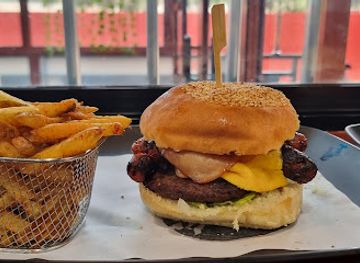
Mim's Burger
Experience Conakry’s culinary delight at Mim's Burger - where gourmet meets local flavor in every bite.
Best bars in Forest Guinea
Evening life in Forest Guinea is concentrated in town centres and is generally more subdued than nightlife in Conakry. Nzérékoré has the broadest selection of casual bars, restaurants and places where music may be played, while Macenta and Guéckédou offer smaller local scenes centred on cafés, drinks, conversation and occasional live or recorded music. In rural areas, evenings are shaped more by family and community life than by commercial entertainment. Bars may serve locally available beer and soft drinks, and mobile-phone connectivity can influence how venues operate. Visitors should avoid drinking before long road journeys, keep valuables secure and respect local expectations around photography and noise. There is no dependable region-wide nightclub circuit, and opening arrangements can change, so ask locally rather than relying on outdated listings.
-
Restaurant
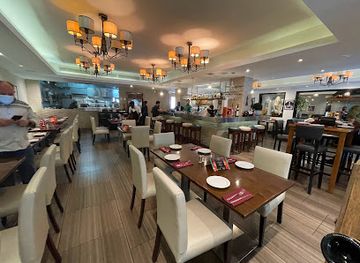
Avenue
Experience authentic Guinean cuisine at Avenue, a top-rated restaurant in the heart of Conakry, where every dish tells a story.
-
Restaurant
Le Special
Discover the authentic taste of Guinea at Le Special, a delightful restaurant in Conakry offering traditional dishes in a welcoming atmosphere.
-
Pizza
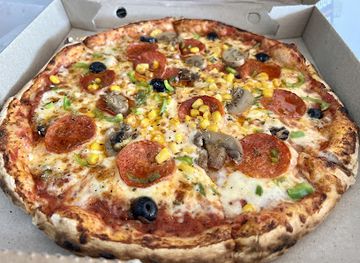
Italia Box
Discover the authentic taste of Italy at Italia Box in Conakry, where delicious pizzas meet delightful pastries in a warm atmosphere.
-
Restaurant
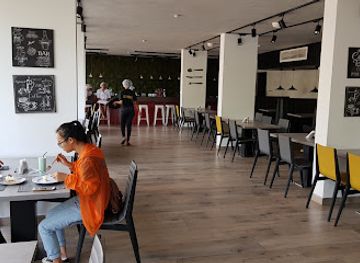
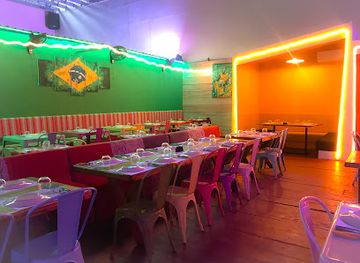
Favela
Experience the vibrant culinary culture of Conakry at Favela, where local flavors meet a lively atmosphere.
Best nightclubs in Forest Guinea
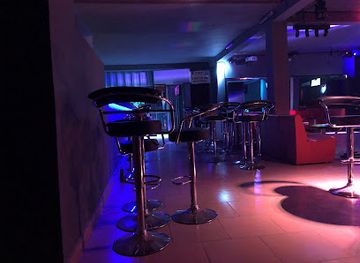
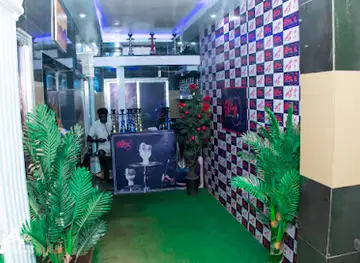
Evening life in Forest Guinea is concentrated in town centres and is generally more subdued than nightlife in Conakry. Nzérékoré has the broadest selection of casual bars, restaurants and places where music may be played, while Macenta and Guéckédou offer smaller local scenes centred on cafés, drinks, conversation and occasional live or recorded music. In rural areas, evenings are shaped more by family and community life than by commercial entertainment. Bars may serve locally available beer and soft drinks, and mobile-phone connectivity can influence how venues operate. Visitors should avoid drinking before long road journeys, keep valuables secure and respect local expectations around photography and noise. There is no dependable region-wide nightclub circuit, and opening arrangements can change, so ask locally rather than relying on outdated listings.
-
Disco club
CONAKRY CLUB
Discover the vibrant nightlife of Conakry at Conakry Club, where music, dance, and culture come together in an unforgettable experience.
-
Night club
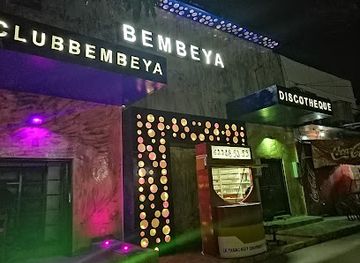
Club BEMBEYA
Discover the energetic nightlife of Conakry at Club BEMBEYA, the ultimate destination for music, dance, and unforgettable experiences.
-
Night club
Alize Club International
Discover the pulsating nightlife of Alize Club International in Conakry, where music, dance, and culture unite for an unforgettable experience.
-
Night club
La ROCCA Night Club
Dance the night away at La ROCCA Night Club in Conakry, a vibrant nightlife hotspot boasting electrifying music and unforgettable experiences.
Best shops in Forest Guinea
Shopping in Forest Guinea is based on markets, small independent stalls and everyday regional trade rather than formal retail districts. Nzérékoré is the principal commercial centre, with a wider range of food, clothing, household goods and transport-linked trading activity; Macenta and Guéckédou serve more localised markets. Visitors can look for seasonal fruit, plantains, rice, coffee, cocoa and other agricultural products, although packaged goods are easier to transport than fresh produce. Woven items, carved objects and locally made household goods may be available, but quality and provenance vary, so buy only when the seller can explain the object and its permitted origin. Ask before photographing market activity and negotiate politely where bargaining is customary. Forest Guinea is not primarily a souvenir-shopping destination, and purchases should not include wildlife products, protected timber or antiquities. Carry cash in small denominations, as card payments are uncommon and market stalls generally do not issue receipts.
-
Museum
W.E.B. DuBois Centre in Accra
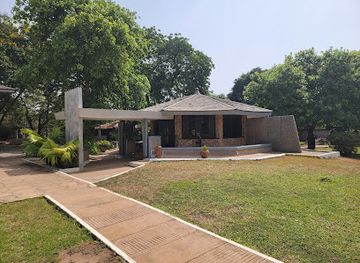
Discover the rich legacy of W.E.B. DuBois at the Centre in Accra, a vital hub of African history and culture.
-
Hotel
Hôtel Kaloum
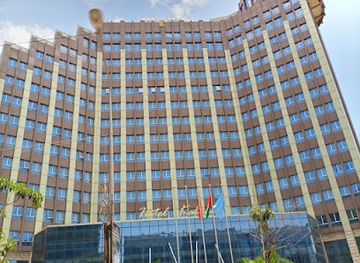
Discover luxury and comfort at Hôtel Kaloum, Conakry's premier hotel with stunning ocean views and exceptional service.
-
Wildlife rescue service
Limbe Wildlife Centre
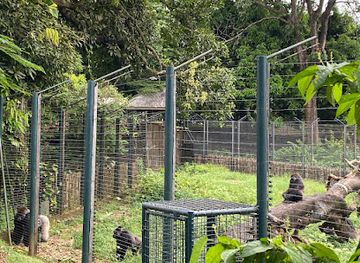
Experience the vibrant wildlife and conservation efforts at Limbe Wildlife Centre in Cameroon, a haven for rescued animals and an educational adventure.
-
Bakery
Pâtisserie Le Damier
Explore the sweet side of Conakry at Pâtisserie Le Damier, where exquisite pastries and local flavors come together in a delightful bakery experience.
Get your free copy of our complete guide to Forest Guinea, delivered straight to you.
Everything on this page, from attractions and restaurants to essentials and local phrases, in one PDF you can read offline, print or share.
Already have an account? Sign in
Your Forest Guinea guide is ready.
We'll send it to · Not you? Sign out

Getting your guide ready…
We are putting together a fresh copy of the Forest Guinea guide. This can take up to a minute.
This can take a few moments. If your browser asks, choose Allow so the download can start. You'll find the guide in your Downloads folder.
Nothing happened? Download it again
Sorry, the guide is taking longer than usual. Please try again in a minute, or get it by email instead.
Forest Guinea essentials
Currency and Payment
Safety
Emergency Situations
Do's and Don'ts
Local Tips
From Eve
Local phrases worth knowing
You don't need to get them perfect. A few words go a long way, and locals appreciate the effort.
Basics
| English | Local | Say it |
|---|---|---|
| Hello | Barka | [Bar-kah] |
| Goodbye | Sannu | [San-noo] |
| Yes | Eh | [Eh] |
| No | A'a | [Ah-ah] |
| Please/You're welcome | Don Allah | [Dawn Al-lah] |
| Thank you | Nagode | [Nah-go-day] |
| Excuse me/Sorry | Yi hakuri | [Yee ha-koor-ee] |
| How are you? | Lafiya lau? | [Lah-fee-yah lau] |
| Fine. And you? | Lafiya. Kai fa? | [Lah-fee-yah. Kai fah?] |
| Do you speak English? | Kana magana da turanci? | [Kah-nah mah-gah-nah dah too-ran-chee?] |
| I don't understand | Ban gane ba | [Bahn gah-nay bah] |
Eating & Drinking
| English | Local | Say it |
|---|---|---|
| I'd like to see the menu, please | Zan so in ga menu, don Allah | [Zahn so in gah meh-new, dawn Al-lah] |
| I don't eat meat | Ban ci nama | [Bahn chee nah-mah] |
| Cheers! | Sai! | [Sigh!] |
| I would like to pay, please | Zan so in biya, don Allah | [Zahn so in bee-yah, dawn Al-lah] |
Emergencies
| English | Local | Say it |
|---|---|---|
| Help! | Taimako! | [Tie-mah-koh!] |
| Go away! | Tafiya! | [Tah-fee-yah!] |
| Call the Police! | Kira 'yan sanda! | [Kee-rah 'yan sahn-dah!] |
| Call a doctor! | Kira likita! | [Kee-rah lee-kee-tah!] |
| I'm lost | Na bata hanya | [Nah bah-tah han-yah] |
| I'm ill | Ina jin ciwo | [Ee-nah jeen chee-wah] |
Shopping
| English | Local | Say it |
|---|---|---|
| I'd like to buy... | Zan so in sayi... | [Zahn so in sigh-ee...] |
| I'm just looking | Ina dubawa | [Ee-nah doo-bah-wah] |
| How much is it? | Nawa ne? | [Nah-wah nay?] |
| That's too expensive | Wannan yana da tsada | [Wahn-nahn yah-nah dah tsah-dah] |
| Can you lower the price? | Za ka iya rage farashi? | [Zah kah ee-yah rah-gay fah-rah-shee?] |
Time & Numbers
| English | Local | Say it |
|---|---|---|
| What time is it? | Wane lokaci ne? | [Wah-neh loh-kah-chee nay?] |
| It's one o'clock | Karfe daya ne | [Kar-feh dah-yah nay] |
| Half past (10) | Rabi (10) | [Rah-bee (10)] |
| Morning | Safe | [Sah-feh] |
| Afternoon | Yamma | [Yah-mah] |
| Evening | Dare | [Dah-reh] |
| Yesterday | Jiya | [Jee-yah] |
| Today | Yau | [Yah-oo] |
| Tomorrow | Gobe | [Goh-beh] |
| 1 | Daya | [Dah-yah] |
| 2 | Biyu | [Bee-yoo] |
| 3 | Uku | [Oo-koo] |
| 4 | Hudu | [Hoo-doo] |
| 5 | Biyar | [Bee-yar] |
| 6 | Shida | [Shee-dah] |
| 7 | Bakwai | [Bah-kwhy] |
| 8 | Takwas | [Tah-kwahs] |
| 9 | Tara | [Tah-rah] |
| 10 | Goma | [Goh-mah] |
Transport & Directions
| English | Local | Say it |
|---|---|---|
| Where's a/the...? | Ina...? | [Ee-nah...?] |
| What's the address? | Menene adireshin? | [Men-eh-neh ah-dee-ray-sheen?] |
| Can you show me (on the map)? | Za ka iya nuna mini (a taswirar)? | [Zah kah ee-yah noo-nah mee-nee (ah tahs-we-rah)?] |
| When's the next (bus)? | Yaushe na gaba (bas)? | [Yah-oo-sheh nah gah-bah (bahs)?] |
| A ticket (to ....) | Tikit (zuwa ...) | [Tee-kit (zoo-wah ...)] |
History of Forest Guinea
Early Forest Communities and Regional Exchange
Forest Guinea has long been inhabited by communities including Kissi, Kpelle, Toma and Maninka peoples, whose histories encompass migration, farming, woodland management and exchange across the Upper Guinea forest zone. Rice cultivation, plantain and other food crops became closely adapted to the humid environment, while ironworking and craft traditions supported local economies. The region was never isolated: paths linked settlements with the savannah to the north and with present-day Sierra Leone, Liberia and Côte d’Ivoire, carrying goods, ideas, languages and religious influences.
Mande Influence and Nineteenth-Century Political Change
During the nineteenth century, Mande-speaking political and commercial networks expanded their influence in parts of the forest margins, while local societies retained their own authorities and cultural systems. Muslim traders and clerics travelled through the region, although religious life remained diverse and was not uniform across communities. Competition over trade, territory and political allegiance intensified as states and military leaders from the wider Upper Guinea region sought influence. These overlapping relationships helped create the ethnic and linguistic complexity that remains characteristic of Forest Guinea.
French Colonial Rule
France incorporated the territory into French West Africa during the late nineteenth and early twentieth centuries, gradually establishing administrative control through posts, roads and taxation. Colonial rule altered local authority structures and redirected production towards the needs of the colonial economy, while Christian missions, schools and commercial networks expanded unevenly. Forest Guinea’s position beside Liberia and Sierra Leone also gave it strategic importance. Many towns retain traces of this period in their administrative layouts, transport routes and the French language used in official life.
Independence and the Forest Economy
Guinea became independent in 1958 under President Ahmed Sékou Touré, and the new state pursued a strongly centralised development model. In Forest Guinea, agriculture remained central while coffee, cocoa, palm products and timber became increasingly important sources of income. Roads and public administration tied the region more closely to Conakry, but distance and difficult terrain continued to limit services. The forest economy created opportunities as well as pressure on woodland, and cross-border trade remained important because communities and markets often extended beyond national frontiers.
Mount Nimba and Environmental Protection
The exceptional biodiversity of the Nimba range and the Ziama forest brought growing scientific and conservation attention during the late twentieth century. The Guinean portion of Mount Nimba was protected as a strict nature reserve, and the site later gained international recognition as part of the Mount Nimba Strict Nature Reserve World Heritage property. Ziama was also designated a biosphere reserve. Conservation has had to balance the protection of endangered habitats with farming, settlement, roads and mineral interests, making local participation and careful management essential.
Guéckédou and the Ebola Epidemic
Forest Guinea was at the centre of the West African Ebola epidemic that began in 2013–14, with Guéckédou among the first places where the outbreak was identified. The crisis caused widespread loss of life and disrupted travel, markets, healthcare and social ceremonies across the region. It also exposed the limited reach of rural medical services and the importance of trusted local communication. Since then, communities and health authorities have strengthened disease surveillance and preparedness, although the episode remains a significant part of the region’s recent history.
Forest Guinea in Photos
Browse through our photo collection highlighting the charm and character of the destination.
Neighbouring regions of Forest Guinea
The closest regions to Forest Guinea, if you have time for more than one.
-

-

-

-

-


Swipe for more regions
Explore more

Explore more of Guinea
Explore Guinea's hidden beauty, from lush rainforests and majestic waterfalls to vibrant markets and rich cultural heritage in West Africa.
Explore Guinea