

Nzérékoré Region, Guinea Travel Guide
Discover the breathtaking beauty and rich cultural heritage of Nzérékoré Region in Guinea, where lush forests and vibrant traditions await every traveler.
Located in the southeastern part of Guinea, the Nzérékoré Region is a lush and vibrant area known for its rich biodiversity and verdant landscapes. The region is a haven for nature lovers, offering dense forests, rolling hills, and an array of wildlife. It is home to some of Guinea’s most captivating natural attractions, including the Mount Nimba Strict Nature Reserve, a UNESCO World Heritage site. Nzérékoré also boasts a rich cultural heritage. The region is inhabited by several ethnic groups, each with its own unique traditions and customs. Visitors can experience local culture through traditional dances, music, and festivals that celebrate the region’s diverse heritage. The vibrant markets in the region’s towns offer a chance to buy local crafts and taste traditional foods. For adventurous travelers, Nzérékoré offers numerous opportunities for outdoor activities. Hiking through the forests, exploring waterfalls, and bird-watching are popular pursuits. The region’s landscapes are not only beautiful but also provide a serene escape from the hustle and bustle of city life. Whether you are looking to immerse yourself in nature or experience local culture, Nzérékoré Region has something to offer to every traveler.

Know before you go
Hi, I'm Eve. Here are a few practical things to know before exploring Nzérékoré Region.
- Check if you need a permit to visit Mount Nimba Strict Nature Reserve.
- Carry insect repellent and wear long sleeves to protect against mosquitoes.
- Visit local markets early in the morning when they are most lively.
- Hire a local guide to better understand the region’s cultural sites and natural attractions.
- Learn a few phrases in the local languages to enhance your interactions with residents.
Destinations in Nzérékoré Region
Resorts, valleys and scenic spots worth a trip of their own.

Explore Nzérékoré Region: Things to Do, Places to Eat, Hotels & More
Handpicked recommendations for top attractions, local dining, accommodations, and more

Top Attractions & Sightseeing in Nzérékoré Region
Top-rated picks
Best Attractions

Gola Rainforest National Park
Explore Gola Rainforest National Park, a breathtaking national park in Sierra Leone known for its rich biodiversity and stunning natural beauty.

Monument de Nzerekore
Discover the Monument de Nzerekore, a beautiful tribute to Guinea's rich cultural heritage in the heart of Nzerekore.

Markets Nzerekore
Discover the vibrant Grand Marche in Nzerekore, Guinea - a lively marketplace brimming with local goods, culture, and unforgettable experiences.

Carrefour Nzerekore
Explore Carrefour Nzerekore, a serene park in Guinea perfect for relaxation, nature walks, and experiencing local culture in a lush green setting.

Best landmarks in Nzérékoré Region
Top-rated picks
Best Landmarks

Totalreservat Berg Nimba
Explore the stunning landscapes and rich biodiversity of Totalreservat Berg Nimba, a UNESCO World Heritage Site in Guinea, perfect for nature lovers and adventurers.
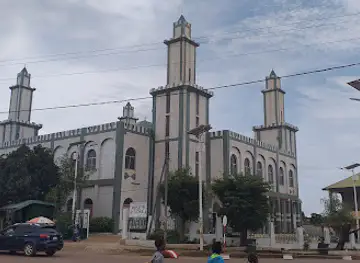
Grande Mosquée de Nzérékoré مسجد
Explore the Grande Mosquée de Nzérékoré, an architectural gem that showcases the spiritual heart of Guinea's vibrant cultural landscape.

N'zerekore Airport
Discover the gateway to Guinea’s enchanting landscapes and cultural richness at N'zerekore Airport, your first step into adventure.

Monument de Nzerekore
Discover the Monument de Nzerekore, a cultural landmark in Guinea, where history and vibrant local life converge in a captivating urban setting.

Best restaurants in Nzérékoré Region
Top-rated picks
Best Restaurants

Restaurant madame barry
Experience authentic Guinean flavors at Restaurant Madame Barry in Nzerekore—where culinary traditions meet modern dining.

RESTAURANT MAYA'S PLACE
Experience authentic Guinean cuisine at Restaurant Maya's Place in Nzerekore, where flavor meets hospitality.

Restaurant Boma
Experience exquisite local and international cuisine at Restaurant Boma in Nzerekore, Guinea - where every meal tells a story.

Restaurant Piscine Hôtel Nimba
Experience authentic Guinean flavors at Restaurant Piscine Hôtel Nimba in Nzérékoré – where culinary delight meets serene ambiance.

Best bars in Nzérékoré Region
Top-rated picks
Best Bars

Hotel Bar restorant Africa
Experience the rich flavors of Guinea at Hotel Bar Restaurant Africa, where local cuisine meets a warm and inviting atmosphere.

Mont blanc Bar
Discover the lively Mont Blanc Bar in Danané, where culture meets nightlife in a cozy ambiance filled with local flavors and vibrant music.

Cafe Le Diplomate
Discover the flavors of Guinea at Cafe Le Diplomate, a cozy restaurant in Nzerekore offering authentic culinary experiences.

Palenke
Experience the vibrant nightlife of Nzerekore at Palenke, a lively bar offering refreshing drinks and a welcoming atmosphere.

Best nightclubs in Nzérékoré Region
Top-rated picks
Best Nightclubs

La Ceylon
Discover the pulsating nightlife at La Ceylon, the premier night club in Nzerekore, Guinea, where music, dance, and culture collide.

Bar Wifi
Discover the vibrant nightlife of Nzerekore at Bar Wifi, a lively night club where music, dance, and local culture come together for an unforgettable experience.

Prestation Sidibe et Freres PSF de Nzerekore
Discover the energetic nightlife of Nzerekore at Prestation Sidibe et Freres PSF, where music and dance come alive in a vibrant atmosphere.

Best shops in Nzérékoré Region
Top-rated picks
Best Shops

Monument de Nzerekore
Explore the Monument de Nzerekore, a cultural landmark celebrating Guinea's heritage and artistry in the heart of Nzerekore.

Boutique BARRY et Frères
Explore the vibrant grocery experience at Boutique BARRY et Frères in Nzerekore, offering a mix of local and international products.

Librairie Le Roseau
Explore rare literary treasures at Librairie Le Roseau in Nzerekore, Guinea, where local culture meets a passion for books.

MDF 2
Discover the vibrant shopping experience at MDF 2 in Nzérékoré, Guinea, where local culture meets modern retail therapy.

Explore Nzérékoré Region on the Map
A handpicked selection of must-see spots in Nzérékoré Region, mapped for you.
Nzérékoré Region Essentials
-
Nzérékoré Region is located in the southeastern part of Guinea. The nearest international airport is Conakry International Airport (CKY) in the capital city, Conakry. From Conakry, you can take a domestic flight to Nzérékoré Airport, which operates limited services. Alternatively, you can travel by road, which is a common means of transport. The journey from Conakry to Nzérékoré by car or bus typically takes around 12-15 hours, depending on road conditions.
-
Within Nzérékoré Region, transportation options include taxis, minibuses, and motorbike taxis (locally known as 'motos'). Taxis are widely available in larger towns, while minibuses serve as a common mode of transport between towns and villages. Renting a car is possible but not common due to the challenging road conditions. For short distances, motos are a popular and inexpensive way to get around, but be sure to negotiate the fare beforehand.
-
The official currency of Guinea is the Guinean Franc (GNF). Credit cards are not widely accepted in the Nzérékoré Region, so it is advisable to carry sufficient cash. ATMs are available in larger towns such as Nzérékoré city, but they may not always be reliable. It is recommended to withdraw cash in Conakry before traveling to more remote areas. Currency exchange services are available at major banks and some hotels in larger towns.
-
Nzérékoré Region is generally safe for tourists, but standard precautions should be taken. Avoid walking alone at night, especially in unfamiliar or poorly lit areas. Petty crime, such as pickpocketing, can occur in crowded places like markets. Specific areas with higher crime rates targeting tourists are not well-documented, but it is always best to stay vigilant and aware of your surroundings. Consider traveling with a local guide for added security and insight into the area.
-
In case of emergency, dial the local emergency number 117 for police and 18 for fire services. The main hospital in Nzérékoré city is the Nzérékoré Regional Hospital, which can attend to most medical emergencies. It is advisable to have comprehensive travel insurance that covers medical emergencies and evacuation. Pharmacies are available in larger towns where you can purchase basic medications. For serious health issues, evacuation to Conakry or another country may be necessary.
-
Fashion: Do dress modestly, particularly when visiting rural areas and religious sites. Avoid wearing revealing clothing. Religion: Do respect local customs and religious practices. Always ask for permission before taking photographs of people or religious ceremonies. Public Transport: Do be patient and respectful when using public transport. Don't expect strict schedules; transport often runs on local time. Greetings: Do greet people with a handshake or a polite nod. It is customary to greet elders first. Eating & Drinking: Do try local dishes and accept food offerings graciously. Don't refuse hospitality, as it is considered impolite.
-
To experience Nzérékoré Region like a local, visit the vibrant local markets where you can buy fresh produce and traditional crafts. Engage with locals who are often friendly and willing to share stories about their culture and traditions. Don't miss a visit to the Mount Nimba Strict Nature Reserve, a UNESCO World Heritage Site, for its unique biodiversity. Participate in local festivals and ceremonies to gain a deeper understanding of the local culture. Hiring a local guide can enhance your experience by providing valuable insights and facilitating interactions with the community.
When is the best time to visit Nzérékoré Region?
Useful Local Phrases for Nzérékoré Region
You don't need to speak the language perfectly. Even learning a few simple words can make conversations warmer—and locals usually appreciate the effort.
— Eve

Here are the phrases I use most often in Nzérékoré Region. Try a few—you'll be surprised how far they go! 😊
❤️
-
- HelloN'na
[Nnah] - GoodbyeN'ye
[N'yeh] - YesEe
[Eh] - NoAla
[Ah-lah] - Please/You're welcomeN'ema
[N'eh-mah] - Thank youM'ankun
[Mahn-koon] - Excuse me/SorryN'kama
[N'kah-mah] - How are you?N'ka la?
[N'kah lah?] - Fine. And you?N'kala. N'ka la?
[N'kah-lah. N'kah lah?] - Do you speak English?N'ka feh English?
[N'kah feh English?] - I don't understandN'ka n'ka ye
[N'kah n'kah yeh]
- HelloN'na
-
- I'd like to see the menu, pleaseN'ka n'ema wa menu
[N'kah n'eh-mah wah menu] - I don't eat meatN'ka n'ye n'ka nyam
[N'kah n'yeh n'kah nyahm] - Cheers!N'koma!
[N'koh-mah!] - I would like to pay, pleaseN'ka n'ema wa pay
[N'kah n'eh-mah wah pay]
- I'd like to see the menu, pleaseN'ka n'ema wa menu
-
- Help!N'ka la!
[N'kah lah!] - Go away!N'ka n'ye!
[N'kah n'yeh!] - Call the Police!N'ka n'ema Police!
[N'kah n'eh-mah Police!] - Call a doctor!N'ka n'ema doctor!
[N'kah n'eh-mah doctor!] - I'm lostN'ka n'ka ye
[N'kah n'kah yeh] - I'm illN'ka n'ka la
[N'kah n'kah lah]
- Help!N'ka la!
-
- I'd like to buy...N'ka n'ema wa bisi...
[N'kah n'eh-mah wah bee-see...] - I'm just lookingN'ka n'ka la
[N'kah n'kah lah] - How much is it?N'ka n'lan la?
[N'kah n'lahn lah?] - That's too expensiveN'ka la n'lan ye
[N'kah lah n'lahn yeh] - Can you lower the price?N'ka n'ema wa la n'lan?
[N'kah n'eh-mah wah lah n'lahn?]
- I'd like to buy...N'ka n'ema wa bisi...
-
- What time is it?N'ka n'lan la?
[N'kah n'lahn lah?] - It's one o'clockN'ka n'lan wa
[N'kah n'lahn wah] - Half past (10)N'lan n'lan (10)
[N'lahn n'lahn (10)] - MorningSakoma
[Sah-koh-mah] - AfternoonN'ka la
[N'kah lah] - EveningN'ka nyen
[N'kah nyen] - YesterdayN'ka n'lan
[N'kah n'lahn] - TodayN'ka n'lan
[N'kah n'lahn] - TomorrowN'ka n'lan
[N'kah n'lahn] - 1Ké
[Kay] - 2Duo
[Doo-oh] - 3Tati
[Tah-tee] - 4Ney
[Nay] - 5N'ni
[N'nee] - 6Se
[Say] - 7Sati
[Sah-tee] - 8Wani
[Wah-nee] - 9Nye
[Nyeh] - 10Sama
[Sah-mah]
- What time is it?N'ka n'lan la?
-
- Where's a/the...?N'ka n'lan wa...?
[N'kah n'lahn wah...?] - What's the address?N'ka n'lan wa adrese?
[N'kah n'lahn wah ah-dreh-seh?] - Can you show me (on the map)?N'ka n'ema wa n'ka la (wa map)?
[N'kah n'eh-mah wah n'kah lah (wah map)?] - When's the next (bus)?N'ka n'lan wa n'ka (bus)?
[N'kah n'lahn wah n'kah (bus)?] - A ticket (to ....)N'ka n'lan wa ticket (to ....)
[N'kah n'lahn wah ticket (to ....)]
- Where's a/the...?N'ka n'lan wa...?
History of Nzérékoré Region
-
The Nzérékoré Region, nestled in the southeastern part of Guinea, has been home to various ethnic groups for centuries. Early settlers included the Kpelle, Mano, and Kissi people, who established thriving communities. These groups were known for their intricate social structures and rich oral traditions, which have been passed down through generations.
-
During the 13th and 14th centuries, the Mali Empire expanded its influence into the Nzérékoré Region. The empire's impact is evident in the region's trade routes, which facilitated the exchange of gold, kola nuts, and other goods. The Mali Empire also introduced Islam to the area, a religion that continues to play a significant role in the region's culture.
-
In the late 19th century, the French colonized Guinea, including the Nzérékoré Region. The French established control through military conquests and treaties, significantly altering the region's political landscape. The colonial period saw the introduction of new infrastructure, such as railways and roads, which connected Nzérékoré to other parts of Guinea and beyond.
-
Guinea gained independence from France in 1958, leading to significant political and social changes in the Nzérékoré Region. The early years of independence were marked by efforts to unify the diverse ethnic groups and promote national development. The region has since seen growth in education and healthcare, although it continues to face challenges such as economic instability and political unrest.
-
Nzérékoré Region is renowned for its vibrant cultural festivals, which celebrate the rich heritage of its diverse ethnic groups. Events such as the Kola Festival highlight traditional music, dance, and crafts, offering a glimpse into the region's unique cultural tapestry. These festivals are not only a source of pride for the local communities but also attract visitors from across Guinea and beyond.
-
Today, Nzérékoré serves as a vital economic and cultural hub in Guinea. Its strategic location near the borders with Liberia and Côte d'Ivoire makes it an important center for cross-border trade. The region's lush landscapes and biodiversity also contribute to its potential for eco-tourism, drawing attention to the need for sustainable development practices.
Neighbouring Regions of Nzérékoré Region
The closest regions to Nzérékoré Region, if you have time for more than one.


Your all‑in‑one travel companion app
Explore expert travel guides, compare and book tours, experiences, hotels, and more—all from the palm of your hand. Download now for seamless trip planning wherever your wanderlust takes you.


Explore More of Guinea

Looking beyond Nzérékoré Region? Discover Guinea for broader travel guides, local hot-spots, and regional highlights.
Explore GuineaNzérékoré Region in Photos
Browse through our photo collection highlighting the charm and character of the destination.



Nzérékoré Region: Guinea’s Lush Green Gem
Located in the southeastern part of Guinea, the Nzérékoré Region is a lush and vibrant area known for its rich biodiversity and verdant landscapes. The region is a haven for nature lovers, offering dense forests, rolling hills, and an array of wildlife. It is home to some of Guinea’s most captivating natural attractions, including the Mount Nimba Strict Nature Reserve, a UNESCO World Heritage site. Nzérékoré also boasts a rich cultural heritage. The region is inhabited by several ethnic groups, each with its own unique traditions and customs. Visitors can experience local culture through traditional dances, music, and festivals that celebrate the region’s diverse heritage. The vibrant markets in the region’s towns offer a chance to buy local crafts and taste traditional foods. For adventurous travelers, Nzérékoré offers numerous opportunities for outdoor activities. Hiking through the forests, exploring waterfalls, and bird-watching are popular pursuits. The region’s landscapes are not only beautiful but also provide a serene escape from the hustle and bustle of city life. Whether you are looking to immerse yourself in nature or experience local culture, Nzérékoré Region has something to offer to every traveler.