

Free Faranah Region Travel Guide & Mobile App
Explore Faranah Region with free travel guides. Discover regional history, expert tips, proposed trips, and audio guides on web or mobile app.


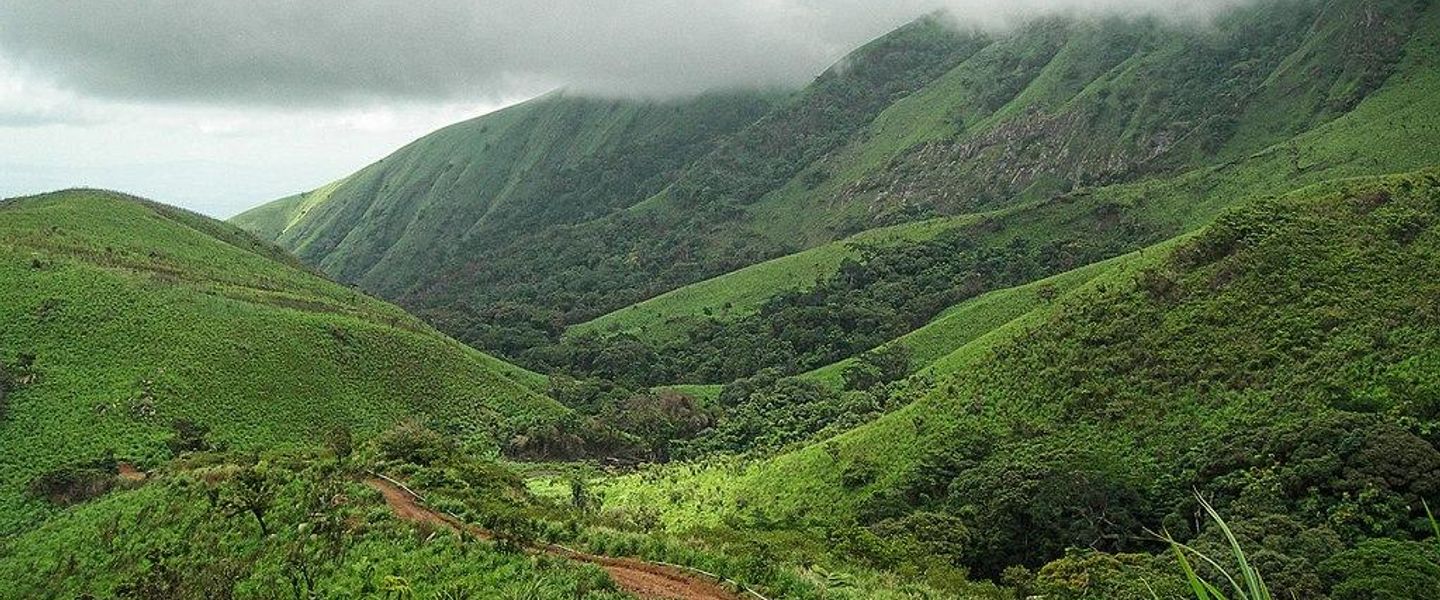


Explore Faranah Region in Guinea for Niger River landscapes, Dinguiraye’s Islamic heritage, rural markets and Upper Guinean cultural history.
Read more about Faranah Region
When is the best time to visit Faranah Region?
Best: November–January · 29–30°C| Month | High (°C) | Rainfall (mm) |
|---|---|---|
| January (best) | 30 | 2 |
| February | 32 | 3 |
| March | 34 | 7 |
| April | 35 | 10 |
| May | 36 | 16 |
| June | 35 | 18 |
| July | 32 | 20 |
| August | 32 | 19 |
| September | 31 | 14 |
| October | 31 | 9 |
| November (best) | 30 | 5 |
| December (best) | 29 | 3 |
Getting to and around Faranah Region
How to get there
Transportation
Top city travel guides in Faranah Region
The cities of Faranah Region, and the easiest places to base yourself.

Swipe for more cities
Best attractions in Faranah Region
Faranah Region’s attractions are primarily cultural, historical and landscape-based rather than built around a large formal tourism industry. Faranah town provides access to the upper Niger landscape, with riverbanks, seasonal vegetation and farming country offering opportunities for guided walks and quiet observation. The town’s connection with Ahmed Sékou Touré gives its commemorative places particular national importance, though visitors should confirm access arrangements locally. Dinguiraye is the region’s principal religious and historical destination, associated with El Hadj Umar Tall and the wider history of Tijaniyya Islam in West Africa. Its mosque, sacred traditions and townscape are best approached with a knowledgeable local guide. Dabola and the roads between the main prefectural centres reveal the region’s agricultural character, from lateritic plains and wooded savanna to villages, fields and market activity. Rural excursions require planning, as shade, food, fuel and vehicle support can be limited. Wildlife encounters should not be promised as the region is not primarily organised around a major safari park; the strongest experience is understanding the relationship between people, rivers, farming and seasonal change.
-
Tourist attraction
Kangari Hills Forest Reserve
Explore the untouched beauty of Kangari Hills Forest Reserve, a national park rich in biodiversity and stunning landscapes in Sierra Leone.
-
Tourist attraction
Rokel river beach
Discover the tranquility of Rokel River Beach in Makeni, Sierra Leone, where stunning views and local culture create a perfect getaway.

Best landmarks in Faranah Region
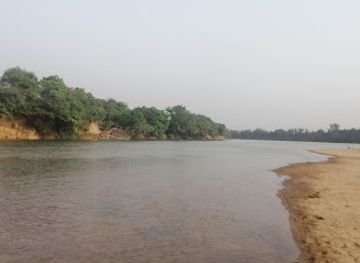
The Niger River is Faranah Region’s defining natural landmark, giving the area a geographical significance that extends beyond the prefecture itself. Its upper-course landscapes change with the seasons, from fuller channels and greener banks during the rains to more exposed river margins in the dry months. Dinguiraye’s mosque and associated religious sites are the region’s most important architectural and commemorative landmarks, reflecting the town’s connection with El Hadj Umar Tall and nineteenth-century Islamic state-building in the western Sudan. They are living sacred places rather than museum pieces, so visitors should follow local guidance on access and photography. Faranah’s public memorial landscape is linked to Ahmed Sékou Touré, who was born in the town, and forms part of Guinea’s national political memory. Beyond these recognised sites, the region’s visual identity is shaped by lateritic roads, wooded savanna, cultivated valleys and market-town streets. These features are not isolated monuments, but they explain the relationship between settlement, farming and the Niger basin that defines the wider region.
-
 International airport
Faranah Airport
Discover the beauty and culture of Guinea through Faranah Airport, your gateway to an unforgettable West African adventure.
-
Mosque
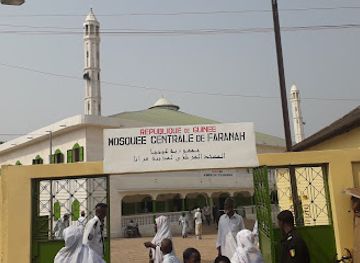
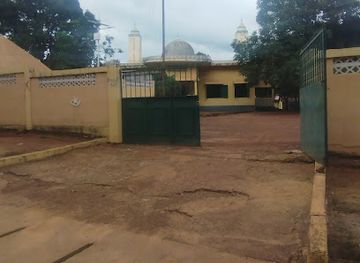
Grande Mosquée de Faranah
Discover the Grande Mosquée de Faranah, a stunning architectural masterpiece and cultural hub in Guinea that embodies the spirit of community and tradition.
-
Mosque
Guinée faranah le Général
Discover the General Mosque in Guinée Faranah, a serene sanctuary showcasing rich Islamic architecture and community spirit.
-
Mosque
grande mosquée (Peul) de Faranah
Explore the Grande Mosquée (Peul) de Faranah, a stunning architectural gem reflecting the spiritual essence and cultural heritage of Guinea.
Explore Faranah Region on the map
Plan your trip on one map. See where the top cities, national parks and sights are, and book hotels and experiences in a few clicks.
Best hotels in Faranah Region
Best restaurants in Faranah Region
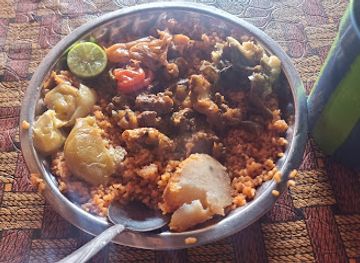
Dining in Faranah Region is straightforward and closely connected to local agriculture. Small restaurants, market stalls and family-run eateries in Faranah, Dabola and Dinguiraye commonly serve rice with sauces, grilled meat or fish, beans, cassava, plantain and seasonal vegetables. Fonio, an important small-grain crop in Upper Guinea, may appear as a staple or accompaniment, while dishes vary according to household and community traditions rather than following a single regional menu. Roadside sellers offer practical meals and drinks, but choice narrows considerably outside the main towns. Visitors may encounter freshwater fish near river communities, although availability and preparation depend on season and local supply. Sweetened tea, coffee and soft drinks are easier to find than a broad selection of international beverages. Accommodation restaurants, where available, usually require advance notice for more substantial meals. Carry snacks and drinking water on long journeys, and eat at busy, well-maintained establishments when possible. Open-air markets are useful for fruit and basic provisions but are not substitutes for a full-service restaurant.
-
Hotel
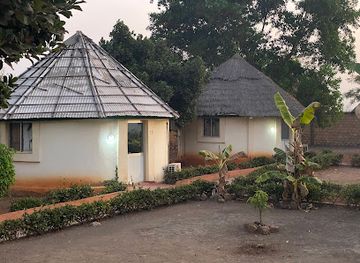
Hotel Del NIGER
Discover tranquility at Hotel Del NIGER in Dandaya – where comfort meets local charm amidst Guinea's beautiful landscapes.
-
Restaurant
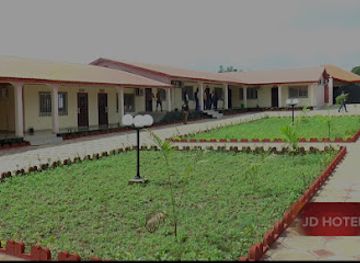
JD Hotel Dabola
Discover authentic Guinean cuisine and comfortable lodging at JD Hotel Dabola - where hospitality meets tradition.
-
Restaurant
Modern Restaurant Senegalese
Experience the vibrant tastes of West Africa at Modern Restaurant Senegalese in Kankan – a must-visit for food enthusiasts.
-
Restaurant
Café vanistel
Discover the authentic flavors of Guinea at Café vanistel in Faranah – where local cuisine meets warm hospitality.
Best bars in Faranah Region
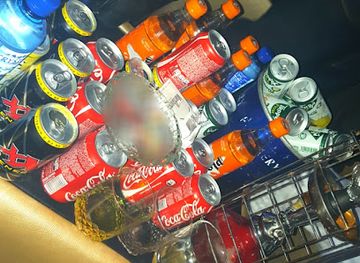
Faranah Region does not have a major organised nightclub scene. Evening life centres on modest cafés, local restaurants, tea stalls, guesthouse courtyards and neighbourhood drinking spots in the larger towns, with music and conversation often more important than formal entertainment venues. Faranah offers the broadest choice, while Dabola and Dinguiraye are quieter and more conservative, particularly around religious areas. Alcohol is available in some secular establishments, but visitors should not assume it is served everywhere or treat drinking as central to local culture. Night-time movement outside town centres is limited by road conditions, lighting and transport availability, so arrange a return journey before going out. During busy market periods or community celebrations, public spaces may become more animated, but events and opening arrangements are variable and should be confirmed locally. Respect local customs, dress and religious sensibilities, especially in Dinguiraye.
-
Bar
Guinee Bar
Discover the lively ambiance and local flavors at Guinee Bar in Kimou, Mali - a perfect retreat for tourists.
-
Restaurant
Café vanistel
Experience the heart of Guinean cuisine at Café vanistel, a cozy and inviting restaurant in Faranah, perfect for tourists seeking local flavors.
-
Bar
Missira Koko
Discover the vibrant nightlife at Missira Koko, a lively bar in Kankan, Guinea, where culture, music, and great drinks come together.
-
Bar
Bar Le Ciel
Experience the vibrant atmosphere of Bar Le Ciel in Faranah, Guinea, where locals and travelers unite over refreshing drinks and friendly conversations.

Best nightclubs in Faranah Region
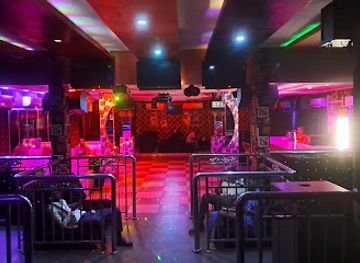
Faranah Region does not have a major organised nightclub scene. Evening life centres on modest cafés, local restaurants, tea stalls, guesthouse courtyards and neighbourhood drinking spots in the larger towns, with music and conversation often more important than formal entertainment venues. Faranah offers the broadest choice, while Dabola and Dinguiraye are quieter and more conservative, particularly around religious areas. Alcohol is available in some secular establishments, but visitors should not assume it is served everywhere or treat drinking as central to local culture. Night-time movement outside town centres is limited by road conditions, lighting and transport availability, so arrange a return journey before going out. During busy market periods or community celebrations, public spaces may become more animated, but events and opening arrangements are variable and should be confirmed locally. Respect local customs, dress and religious sensibilities, especially in Dinguiraye.
-
Night club
Alize Club International
Discover the vibrant nightlife of Conakry at Alize Club International, where music, dance, and culture come together for an unforgettable experience.
-
Night club
Komarala Night Club
Join the vibrant nightlife at Komarala Night Club in Kankan, Guinea, where music, dance, and culture come alive in a pulsating atmosphere.
-
Night club
Aviostart
Discover the vibrant nightlife at Aviostart in Siguiri, a premier night club perfect for dancing, socializing, and enjoying unforgettable moments.
-
Night club
La ROCCA Night Club
Discover the vibrant nightlife of Conakry at La ROCCA Night Club, where music and dance create unforgettable experiences.

Best shops in Faranah Region
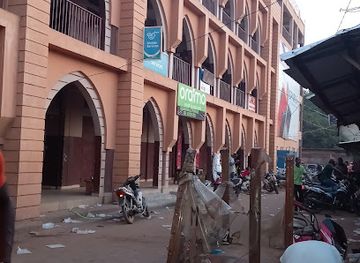
Shopping in Faranah Region is concentrated in market towns and small local stalls rather than formal retail centres. Faranah, Dabola and Dinguiraye markets are useful places to find rice, fonio, fruit, vegetables, smoked or dried foods, household goods and locally traded textiles. The selection changes with the agricultural season and market day, and transactions are generally conducted in cash. Visitors may find simple woven items, clothing, baskets and practical craft goods, but quality and availability vary, so purchases should be made for their local character rather than as guaranteed specialist souvenirs. Packaged food products and handmade items are more likely to be found in the main towns than along rural roads. Bargain politely where bargaining is customary, and ask before photographing market activity or traders. Faranah’s shopping experience is principally about observing regional commerce and buying provisions for a journey, while Dinguiraye may offer religiously associated items and everyday Islamic goods. Do not remove archaeological, natural or sacred objects from sites.
-
Shopping mall
centre Likida
Centre Likida: Kankan's vibrant shopping mall with local crafts, delicious dining, and a taste of Guinean culture all in one place.
-
Duty free store
Djelibougou
Explore Djelibougou for a unique duty-free shopping experience with local charm and diverse products in Nafadji, Guinea.
-
Salvage yard
Station Total
Explore the unique salvage yard of Station Total in Bissikrima, Guinea, where creativity meets sustainability in a vibrant local culture.
-
Gift shop
Arabinènè Marketplace
Explore the vibrant Arabinènè Marketplace in Conakry, Guinea, a hub for unique gifts and local craftsmanship that showcases the essence of Guinean culture.

Get your free copy of our complete guide to Faranah Region, delivered straight to you.
Everything on this page, from attractions and restaurants to essentials and local phrases, in one PDF you can read offline, print or share.
Already have an account? Sign in
Your Faranah Region guide is ready.
We'll send it to · Not you? Sign out

Getting your guide ready…
We are putting together a fresh copy of the Faranah Region guide. This can take up to a minute.
This can take a few moments. If your browser asks, choose Allow so the download can start. You'll find the guide in your Downloads folder.
Nothing happened? Download it again
Sorry, the guide is taking longer than usual. Please try again in a minute, or get it by email instead.
Faranah Region essentials
Currency and Payment
Safety
Emergency Situations
Do's and Don'ts
Local Tips
From Eve
Local phrases worth knowing
You don't need to get them perfect. A few words go a long way, and locals appreciate the effort.
Basics
| English | Local | Say it |
|---|---|---|
| Hello | N'a n'na | [Nah nah] |
| Goodbye | A la prochaine | [Ah lah proh-shen] |
| Yes | Oui | [Wee] |
| No | Non | [Nohn] |
| Please/You're welcome | S'il vous plaît | [Seel voo pleh] |
| Thank you | Merci | [Mehr-see] |
| Excuse me/Sorry | Excusez-moi | [Ex-kew-zay mwah] |
| How are you? | Comment ça va? | [Koh-mahn sah vah] |
| Fine. And you? | Bien. Et vous? | [Byen. Ay voo?] |
| Do you speak English? | Parlez-vous anglais? | [Par-lay voo ahn-glay?] |
| I don't understand | Je ne comprends pas | [Zhuh nuh kom-prahn pah] |
Eating & Drinking
| English | Local | Say it |
|---|---|---|
| I'd like to see the menu, please | Je voudrais voir le menu, s'il vous plaît | [Zhuh voo-dray vwar luh meh-nu, seel voo pleh] |
| I don't eat meat | Je ne mange pas de viande | [Zhuh nuh mahnj pah duh vyahnd] |
| Cheers! | Santé! | [Sahn-tay!] |
| I would like to pay, please | Je voudrais payer, s'il vous plaît | [Zhuh voo-dray pay-ay, seel voo pleh] |
Emergencies
| English | Local | Say it |
|---|---|---|
| Help! | Au secours! | [Oh se-koor!] |
| Go away! | Allez-vous-en! | [Ah-lay voo-zahn!] |
| Call the Police! | Appelez la police! | [Ah-peh-lay lah poh-leese!] |
| Call a doctor! | Appelez un docteur! | [Ah-peh-lay uhn dok-teur!] |
| I'm lost | Je suis perdu | [Zhuh swee pair-doo] |
| I'm ill | Je suis malade | [Zhuh swee mah-lahd] |
Shopping
| English | Local | Say it |
|---|---|---|
| I'd like to buy... | Je voudrais acheter... | [Zhuh voo-dray ah-she-tay...] |
| I'm just looking | Je regarde juste | [Zhuh ruh-gard zhuhst] |
| How much is it? | C'est combien? | [Say kohm-byen?] |
| That's too expensive | C'est trop cher | [Say troh shair] |
| Can you lower the price? | Pouvez-vous baisser le prix? | [Poo-vay voo beh-say luh pree?] |
Time & Numbers
| English | Local | Say it |
|---|---|---|
| What time is it? | Quelle heure est-il? | [Kell uhr eh-teel?] |
| It's one o'clock | Il est une heure | [Eel eh ewn uhr] |
| Half past (10) | Dix heures et demie | [Dees uhr eh duh-mee] |
| Morning | Matin | [Mah-tahn] |
| Afternoon | Après-midi | [Ah-pray mee-dee] |
| Evening | Soir | [Swahr] |
| Yesterday | Hier | [Ee-air] |
| Today | Aujourd'hui | [Oh-zhoor-dwee] |
| Tomorrow | Demain | [Duh-mahn] |
| 1 | Un | [Uhn] |
| 2 | Deux | [Duh] |
| 3 | Trois | [Twah] |
| 4 | Quatre | [Kah-truh] |
| 5 | Cinq | [Sank] |
| 6 | Six | [Seez] |
| 7 | Sept | [Set] |
| 8 | Huit | [Weet] |
| 9 | Neuf | [Nuhf] |
| 10 | Dix | [Dees] |
Transport & Directions
| English | Local | Say it |
|---|---|---|
| Where's a/the...? | Où est un/une...? | [Oo eh uhn/oon...?] |
| What's the address? | Quelle est l'adresse? | [Kell eh lah-dress?] |
| Can you show me (on the map)? | Pouvez-vous me montrer (sur la carte)? | [Poo-vay voo muh mohn-tray (sur lah kart)?] |
| When's the next (bus)? | Quand est le prochain (bus)? | [Kahn eh luh proh-shen (boos)?] |
| A ticket (to ....) | Un billet (pour ....) | [Uhn bee-yay (poor ....)] |
History of Faranah Region
Early Upper Guinean Settlement and Trade
The territory of present-day Faranah Region lies within the wider Upper Guinea cultural zone, shaped over centuries by farming, ironworking, livestock keeping and long-distance trade. Communities speaking Mande and related languages developed networks linking the interior savannas with the forest edge and the markets of the Niger basin. Rivers, seasonal routes and market settlements helped move grain, livestock, kola and manufactured goods. The archaeological record is less familiar to visitors than Guinea’s better-known coastal and forest sites, but the region’s present settlement patterns reflect this long interaction between agriculture, trade and river environments.
Mande States and Islamic Networks
From the medieval period onwards, political and commercial influence from Mande-speaking states reached across Upper Guinea. Islamic teachers, merchants and clerics travelled through the region, while local rulers and communities incorporated Islam in different ways. The process was gradual rather than uniform: older religious practices and social institutions continued alongside Islamic learning. Towns such as Dinguiraye later became especially important within these networks, linking the region to wider religious and commercial movements that crossed the savannas of present-day Guinea, Mali and Senegal.
Dinguiraye and El Hadj Umar Tall
Dinguiraye is strongly associated with El Hadj Umar Tall, the nineteenth-century Toucouleur religious and political leader whose campaigns and Tijaniyya reform movement affected much of the western Sudan. The town became an important base and centre of religious authority during this period, and its mosque and commemorative traditions remain significant to Muslim visitors. The legacy is both regional and transnational, connecting Dinguiraye with the history of Islamic scholarship, state-building and conflict across the inland savannas of West Africa.
French Colonial Conquest and Administration
French expansion into the interior of Guinea accelerated during the late nineteenth century, bringing military campaigns, treaties and new administrative boundaries to Upper Guinea. Colonial authorities reorganised existing political spaces around command posts, roads, taxation and agricultural production. Faranah and neighbouring settlements became part of a system oriented towards French West Africa, even though transport and government control remained uneven away from the main routes. The period altered local authority, labour arrangements and trade while leaving many older linguistic, religious and agricultural patterns in place.
Independence and Ahmed Sékou Touré
Guinea became independent from France in 1958, and Faranah has particular national importance as the birthplace of Ahmed Sékou Touré, the country’s first president. His government pursued a strongly centralised, socialist programme and sought to reduce French influence through state-led economic and political policies. Faranah’s association with Touré is reflected in local commemorative sites and public memory. The period also brought intensified state involvement in agriculture, education and administration, although it was marked by severe political repression and economic difficulties.
Contemporary Rural Transformation
Since the late twentieth century, Faranah Region has continued to change through population growth, expanding roads and markets, agricultural adaptation and movement between rural settlements and larger towns. Farming remains central, with rice, fonio, maize, cassava and other crops shaped by rainfall and access to river valleys. The region also participates in Guinea’s wider efforts to improve inland connectivity and public services. Contemporary Faranah is therefore neither solely a historic landscape nor an untouched rural area, but a lived region balancing inherited traditions with economic and infrastructural change.
Faranah Region in Photos
Browse through our photo collection highlighting the charm and character of the destination.
Neighbouring regions of Faranah Region
The closest regions to Faranah Region, if you have time for more than one.
-

-

-

-

-


Swipe for more regions
Explore more

Explore more of Guinea
Explore Guinea's hidden beauty, from lush rainforests and majestic waterfalls to vibrant markets and rich cultural heritage in West Africa.
Explore Guinea