

Free Guéckédou Region Travel Guide & Mobile App
Explore Guéckédou Region with free travel guides. Discover regional history, expert tips, proposed trips, and audio guides on web or mobile app.


Guéckédou offers a grounded introduction to Guinea’s forest landscapes, cross-border markets, Kissi culture and recent West African history.
Read more about Guéckédou Region
When is the best time to visit Guéckédou Region?
Best: December–February · 30–31°C| Month | High (°C) | Rainfall (mm) |
|---|---|---|
| January (best) | 30 | 5 |
| February (best) | 31 | 10 |
| March | 32 | 25 |
| April | 33 | 75 |
| May | 32 | 150 |
| June | 31 | 200 |
| July | 31 | 250 |
| August | 31 | 250 |
| September | 31 | 200 |
| October | 31 | 150 |
| November | 30 | 50 |
| December (best) | 30 | 10 |
Getting to and around Guéckédou Region
How to get there
Transportation
Best landmarks in Guéckédou Region
Guéckédou’s most recognisable landmarks are tied to its role as a regional town and borderland centre rather than to monumental architecture. The urban market is an important civic and visual reference point, reflecting the movement of agricultural produce and the town’s commercial links with surrounding settlements. Religious buildings, including prominent mosques and churches, form part of the townscape and should be approached respectfully, particularly during worship. The roads and transport yards leading towards neighbouring prefectures and international borders are also significant physical markers of Guéckédou’s geography, although checkpoints and border infrastructure are not appropriate subjects for casual photography. Beyond the town, the humid forest margins, cultivated clearings and streams express the environmental identity of Forest Guinea more clearly than any single monument. The area associated with Meliandou, where the 2014 Ebola outbreak began, has global historical significance, but it should be treated as a sensitive community and public-health context rather than a conventional memorial attraction. Guéckédou’s landmarks are consequently best read as places where trade, faith, landscape and recent history intersect.
-
National park
National Park of Upper Niger
Discover the breathtaking landscapes and rich biodiversity of the National Park of Upper Niger, an essential destination for nature and adventure lovers.
-
 General hospital
Hospital Prefectural De Guéckédou
Discover the vital role of Hospital Prefectural De Guéckédou in providing healthcare services in Guinea, reflecting the region's commitment to community health.
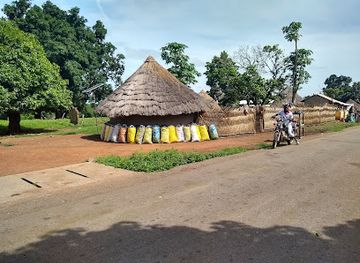
Explore Guéckédou Region on the map
Plan your trip on one map. See where the top cities, national parks and sights are, and book hotels and experiences in a few clicks.
Best hotels in Guéckédou Region
Best restaurants in Guéckédou Region
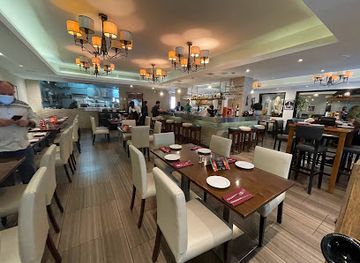
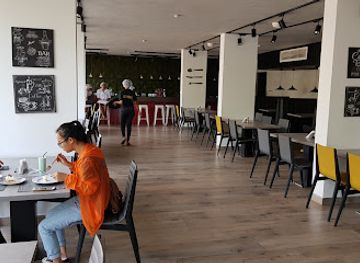
Eating in Guéckédou is centred on informal restaurants, market stalls, small cafés and meals prepared in homes or guesthouses rather than a developed fine-dining scene. Rice is a central staple and may be served with sauces, vegetables, fish, chicken or meat, while cassava, plantain and other locally grown produce are also common. Palm oil and other forest products contribute to the flavour of regional cooking, and seasonal fruit appears in markets when available. Roadside vendors and local eateries can provide filling meals, but hygiene standards and refrigeration vary, so choose busy establishments where food is cooked thoroughly and served hot. Bottled or treated water is advisable. Coffee and sweet drinks may be available, although the range of imported products is limited compared with Conakry. Visitors should ask about ingredients and spice levels, eat modestly at first if unaccustomed to local food, and allow hosts to explain regional dishes rather than assuming that cuisine is identical across Guinea.
-
Restaurant
Avenue
Experience authentic Guinean cuisine at Avenue in Conakry – where tradition meets taste in every bite.
-
Restaurant
Le Special
Discover authentic Guinean cuisine at Le Special in Conakry – where every dish tells a story.
-
Restaurant
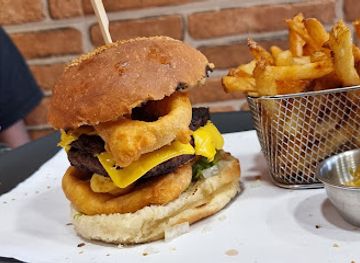
Mim's Burger
Discover the flavors of Guinea at Mim's Burger - where every bite is an unforgettable experience.
-
Pizza
Italia Box
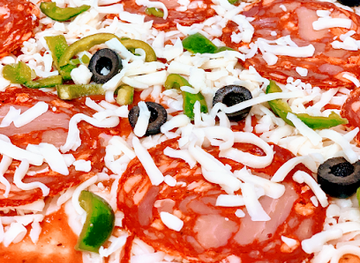
Discover the authentic taste of Italy at Italia Box in Conakry—where delicious pizzas and delightful pastries await!
Best bars in Guéckédou Region
Guéckédou does not have a large, formal nightclub district or a nightlife economy aimed at international visitors. Evening social life is more likely to centre on modest bars, cafés, food stalls, guesthouse compounds and occasional music in larger local establishments. Beer, soft drinks and locally available refreshments may accompany conversation, but opening arrangements and atmosphere can change with security conditions, religious observance and local events. In rural areas, evenings are quieter and organised around family or community life rather than tourism. Visitors should return to their accommodation before roads become dark and difficult, avoid displaying valuables and follow the advice of trusted local contacts. Live music, dancing and celebrations may occur at weddings or community occasions, but these should be attended only by invitation or with an appropriate local introduction. Nightlife is therefore a limited part of the Guéckédou experience, secondary to markets, landscape and daytime cultural encounters.
-
Bar
Bar Piah Bèngou
Discover the charm of Bar Piah Bèngou in Kissidougou, a perfect blend of local culture and delightful cuisine.
Best nightclubs in Guéckédou Region
Guéckédou does not have a large, formal nightclub district or a nightlife economy aimed at international visitors. Evening social life is more likely to centre on modest bars, cafés, food stalls, guesthouse compounds and occasional music in larger local establishments. Beer, soft drinks and locally available refreshments may accompany conversation, but opening arrangements and atmosphere can change with security conditions, religious observance and local events. In rural areas, evenings are quieter and organised around family or community life rather than tourism. Visitors should return to their accommodation before roads become dark and difficult, avoid displaying valuables and follow the advice of trusted local contacts. Live music, dancing and celebrations may occur at weddings or community occasions, but these should be attended only by invitation or with an appropriate local introduction. Nightlife is therefore a limited part of the Guéckédou experience, secondary to markets, landscape and daytime cultural encounters.
-
Disco club
CONAKRY CLUB
Dive into the vibrant nightlife of Conakry at Conakry Club, where music and dance create unforgettable moments.
-
Night club
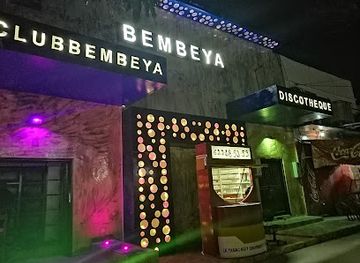
Club BEMBEYA
Discover the vibrant nightlife of Conakry at Club BEMBEYA, where music, dance, and culture come together for an unforgettable experience.
-
Night club
CLIMAX NIGHT CLUB
Unleash your spirit at Climax Night Club, the ultimate nightlife experience in Conakry, Guinea, where music and fun never end.
-
Night club
Geneva Night Club Conakry
Dive into the vibrant nightlife of Conakry at Geneva Night Club, where great music and an electric atmosphere await you every night.



Best shops in Guéckédou Region
Shopping in Guéckédou is primarily practical and market-based. The town’s markets and roadside stalls serve local households and traders with rice, cassava, palm products, fruit, vegetables, cooking ingredients, clothing, household goods and mobile-phone services. Visitors may find locally produced food items or small craft objects, but the selection is less predictable and less tourism-oriented than in Guinea’s larger cities. Purchases of agricultural products should be modest and made with awareness of transport and customs restrictions, especially near international borders. Bargaining may occur in informal markets, but it should remain courteous and realistic. French is useful for transactions, while a local intermediary can help with unfamiliar products and prices. Shopping is best approached as an insight into the regional economy rather than as a hunt for standardised souvenirs. Carry cash in smaller notes, check produce carefully and avoid photographing vendors or stalls without permission.
-
Vaporizer store
Guinéenne de l'e-cigarette
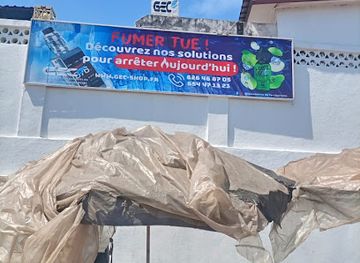
Discover the ultimate destination for vapor enthusiasts at Guinéenne de l'e-cigarette in Conakry, Guinea, featuring top-quality products in a vibrant atmosphere.
-
Boutique
The luxury Shop
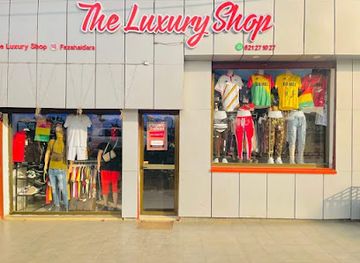
Discover the elegance of Conakry's premier boutique, offering a blend of luxury fashion and local artistry.
-
Clothing store
Fatoumata Diariou Sow Shop
Explore the vibrant world of Guinean fashion at Fatoumata Diariou Sow Shop, where unique styles and local craftsmanship meet.
-
Gift wrap store
Soguep224
Discover Soguep224 in Conakry, Guinea, where exquisite gift wrap supplies meet exceptional service, making every gift a memorable experience.

Get your free copy of our complete guide to Guéckédou Region, delivered straight to you.
Everything on this page, from attractions and restaurants to essentials and local phrases, in one PDF you can read offline, print or share.
Already have an account? Sign in
Your Guéckédou Region guide is ready.
We'll send it to · Not you? Sign out

Getting your guide ready…
We are putting together a fresh copy of the Guéckédou Region guide. This can take up to a minute.
This can take a few moments. If your browser asks, choose Allow so the download can start. You'll find the guide in your Downloads folder.
Nothing happened? Download it again
Sorry, the guide is taking longer than usual. Please try again in a minute, or get it by email instead.
Guéckédou Region essentials
Currency and Payment
Safety
Emergency Situations
Do's and Don'ts
Local Tips
From Eve
Local phrases worth knowing
You don't need to get them perfect. A few words go a long way, and locals appreciate the effort.
Basics
| English | Local | Say it |
|---|---|---|
| Hello | N'na | [Nah-nah] |
| Goodbye | N'ka | [Nah-kah] |
| Yes | Aah | [Ah] |
| No | Nya | [Nyah] |
| Please/You're welcome | Taa | [Tah] |
| Thank you | Mbama | [Mbah-mah] |
| Excuse me/Sorry | M'koma | [M'koh-mah] |
| How are you? | N'ka t'a fɛ? | [Nah-kah tah feh?] |
| Fine. And you? | N'ka t'a fɛ, n'na? | [Nah-kah tah feh, nah-nah?] |
| Do you speak English? | N'na bɛɛ mɔɔrɔ? | [Nah-nah beh-eh mo-roh?] |
| I don't understand | N'na t'a bɛɛ | [Nah-nah tah beh-eh] |
Eating & Drinking
| English | Local | Say it |
|---|---|---|
| I'd like to see the menu, please | N'na bɛɛ n'di kɛla, taa | [Nah-nah beh-eh n-dee keh-lah, tah] |
| I don't eat meat | N'na t'a bɛɛ n'kɛlɛn | [Nah-nah tah beh-eh n-kay-len] |
| Cheers! | N'na fɛ | [Nah-nah feh] |
| I would like to pay, please | N'na bɛɛ n'ka soro, taa | [Nah-nah beh-eh n-kah soh-roh, tah] |
Emergencies
| English | Local | Say it |
|---|---|---|
| Help! | N'na bɛɛ fɔlɔ! | [Nah-nah beh-eh foh-loh!] |
| Go away! | N'ka fɔ | [Nah-kah foh] |
| Call the Police! | N'na bɛɛ n'ka gɔɔrɔ! | [Nah-nah beh-eh n-kah go-roh!] |
| Call a doctor! | N'na bɛɛ n'ka dɔkita! | [Nah-nah beh-eh n-kah doh-kee-tah!] |
| I'm lost | N'na t'a bɛɛ n'kɛlɛn | [Nah-nah tah beh-eh n-kay-len] |
| I'm ill | N'na bɛɛ dɔ | [Nah-nah beh-eh doh] |
Shopping
| English | Local | Say it |
|---|---|---|
| I'd like to buy... | N'na bɛɛ n'ko ... | [Nah-nah beh-eh n-koh ...] |
| I'm just looking | N'na t'aw n'ka | [Nah-nah tah-w nah-kah] |
| How much is it? | N'ka la kɛnɛ? | [Nah-kah lah keh-neh?] |
| That's too expensive | I ni nyɔɔ bɛɛ | [Ee nee nyoh beh-eh] |
| Can you lower the price? | N'ka bɛɛ n'ka fɔlɔ kɛla? | [Nah-kah beh-eh n-kah foh-loh keh-lah?] |
Time & Numbers
| English | Local | Say it |
|---|---|---|
| What time is it? | N'ka la kɛɛ? | [Nah-kah lah keh?] |
| It's one o'clock | I ni kɛɛ | [Ee nee keh] |
| Half past (10) | Dɔɔrɔ kɛlɛ (10) | [Doh-roh keh-leh (10)] |
| Morning | Sokolo | [Soh-koh-loh] |
| Afternoon | Kɛlɛ | [Keh-leh] |
| Evening | Fɔlɔ | [Foh-loh] |
| Yesterday | N'ka t'aw | [Nah-kah tah-w] |
| Today | N'ka | [Nah-kah] |
| Tomorrow | N'ka t'aw la | [Nah-kah tah-w lah] |
| 1 | Kɛ | [Keh] |
| 2 | Nyi | [Nyee] |
| 3 | Tati | [Tah-tee] |
| 4 | Nɛ | [Neh] |
| 5 | Nya | [Nyah] |
| 6 | Sɛ | [Seh] |
| 7 | Sɛtɛ | [Seh-teh] |
| 8 | Sande | [Sahn-deh] |
| 9 | Sɔ | [Soh] |
| 10 | Tɛ | [Teh] |
Transport & Directions
| English | Local | Say it |
|---|---|---|
| Where's a/the...? | N'ka la ...? | [Nah-kah lah ...?] |
| What's the address? | N'ka la kɛlɛ? | [Nah-kah lah keh-leh?] |
| Can you show me (on the map)? | N'ka bɛɛ n'ka kɛlɛ (n'ka mɔkɔ)? | [Nah-kah beh-eh n-kah keh-leh (nah-kah moh-koh)?] |
| When's the next (bus)? | N'ka la kɛlɛ n'ka fɔlɔ? | [Nah-kah lah keh-leh n-kah foh-loh?] |
| A ticket (to ....) | N'ka bɛɛ n'ka bɔlɔ (n'ka ...) | [Nah-kah beh-eh n-kah boh-loh (nah-kah ...)] |
History of Guéckédou Region
Kissi settlement and Forest Guinea societies
Long before colonial rule, the Guéckédou area formed part of the cultural landscape of Forest Guinea, where Kissi communities developed agricultural settlements and extensive links across the modern borders of Guinea, Sierra Leone and Liberia. Rice cultivation, forest products, local exchange and social institutions shaped life in an environment of high rainfall and dense vegetation. The present international frontiers do not reflect the older movement of families, languages and trading relationships, which is why the region continues to share cultural characteristics with neighbouring borderlands.
Precolonial trade and regional exchange
Guéckédou grew in importance through its position between inland farming communities and routes leading towards the Mano River borderlands. Markets exchanged rice, palm products, livestock, kola and other forest goods, while regional traders connected settlements that are now divided between three countries. Political authority was distributed among local communities and wider regional powers rather than organised according to today’s administrative map. This commercial and geographic role remains central to the town’s identity.
French colonial administration
During the late nineteenth and early twentieth centuries, France extended colonial control over the territory that became French Guinea, incorporating Forest Guinea into a system of military administration, taxation and commercial regulation. Colonial boundaries separated communities with older cross-border ties, while roads and administrative posts redirected trade towards French-controlled centres. Cash-crop production and the extraction of forest resources expanded under colonial rule, though local agriculture and customary forms of social organisation continued to shape everyday life.
Independence and the Republic of Guinea
Guinea became independent from France in 1958 under President Ahmed Sékou Touré. The new state inherited colonial borders that placed Guéckédou within the national territory despite the area’s close cultural and economic relationships with Sierra Leone and Liberia. The early republic pursued a strongly centralised political and economic model, and state policy affected markets, agricultural production and mobility throughout the country. Guéckédou remained primarily a regional agricultural and trading centre rather than an industrial city.
Regional conflict and refugee movements
The civil wars in Liberia and Sierra Leone during the 1990s and early 2000s had major consequences for Guinea’s southern borderlands. Guéckédou and surrounding areas received refugees and humanitarian organisations, while insecurity and population movements placed pressure on roads, markets, farmland and public services. The conflicts also demonstrated how closely the three countries were linked by geography. Their effects remain part of local memory and help explain the continuing importance of cross-border monitoring and cooperation.
The 2014 Ebola epidemic
The first recognised cases of the West African Ebola epidemic were identified in the Guéckédou area after the outbreak began in Meliandou, a village in Guéckédou Prefecture, in late 2013. The disease spread through Guinea and neighbouring Liberia and Sierra Leone, causing extensive loss of life and disrupting travel, trade, education and family life. The response brought international assistance, treatment and surveillance systems to the region. Ebola also left a lasting public-health legacy, including greater emphasis on safe burials, community communication and disease reporting.
Contemporary agricultural and cross-border economy
Today Guéckédou’s economy remains closely tied to smallholder agriculture, regional commerce and transport. Rice, cassava, oil palm, coffee, cocoa and other crops contribute to household livelihoods, while markets connect producers with consumers and traders across Forest Guinea and the Mano River region. Roads and border conditions strongly influence prosperity, and seasonal rain can affect the movement of goods. The area’s future is therefore linked to better transport, resilient health services, sustainable farming and stable cross-border relations.
Guéckédou Region in Photos
Browse through our photo collection highlighting the charm and character of the destination.
Neighbouring regions of Guéckédou Region
The closest regions to Guéckédou Region, if you have time for more than one.
-

-

-

-

-


Swipe for more regions
Explore more

Explore more of Guinea
Explore Guinea's hidden beauty, from lush rainforests and majestic waterfalls to vibrant markets and rich cultural heritage in West Africa.
Explore Guinea