

Free Eger Travel Guide & Mobile App
Plan your Eger trip with Evendo. Get free guides to top attractions, restaurants, hotels, and bars. Web access or download the mobile app.


Eger, Hungary, pairs a celebrated castle, Baroque streets, thermal baths and the Valley of the Beautiful Woman with memorable wine and cuisine.
A Historic Town in Northern Hungary
Eger lies in northern Hungary, between the Bükk Mountains and the Mátra foothills, where vineyards, thermal springs and a compact historic centre shape the experience of the town. Its most recognisable landmark is Eger Castle, whose 1552 defence against the Ottoman army became one of the defining episodes in Hungarian history. Within the castle precinct, museums and ramparts introduce the town's military past, while views extend across red-roofed streets and the surrounding hills.Read more about Eger
Baroque Architecture and Civic Life
Wine, Water and the Surrounding Hills
When is the best time to visit Eger?
Best: May–June, September · 23–27°C| Month | High (°C) | Rainfall (mm) |
|---|---|---|
| January | 3 | 25 |
| February | 4 | 25 |
| March | 9 | 30 |
| April | 16 | 35 |
| May (best) | 23 | 45 |
| June (best) | 27 | 65 |
| July | 29 | 60 |
| August | 29 | 50 |
| September (best) | 24 | 40 |
| October | 18 | 35 |
| November | 11 | 30 |
| December | 5 | 25 |
Getting to and around Eger
How to get there
Transportation
Best attractions in Eger
Eger Castle is the town's principal attraction, combining ramparts, underground passages, exhibitions and views over the historic centre with the story of the 1552 siege. In the Baroque core, the Basilica, Lyceum and Archbishop's Palace reveal the town's ecclesiastical and educational importance, while the Camera Obscura at the Lyceum projects a living panorama of Eger onto a viewing table. The Ottoman minaret offers a striking reminder of the town's later history, and Dobó István tér provides a natural starting point for exploring surrounding streets and cafés. Eger Thermal Bath adds a more leisurely dimension, with warm-water pools and bathing facilities in a green setting. The Valley of the Beautiful Woman, just beyond the central sights, is known for its rows of wine cellars and tastings. Together these places give Eger a compact sightseeing circuit linking military history, Baroque culture, Ottoman heritage, bathing and wine.
-
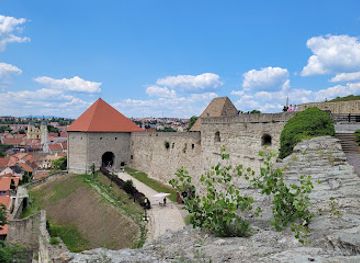
Castle
Castle of Eger
Explore the Castle of Eger, a historic fortress rich in culture, breathtaking views, and captivating stories from Hungary's past.
7 min walk · 0.5 km from city centre
-
Park
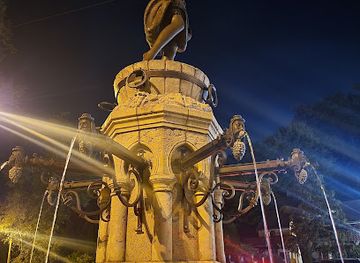
Valley of the Beautiful Woman
Explore the Valley of the Beautiful Woman in Eger, a captivating wine haven offering scenic views, rich history, and delightful local wines.
5 min drive · 1.7 km from city centre
-
Tourist attraction
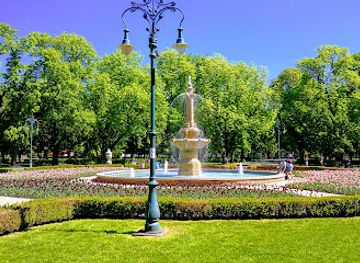
Szmrecsányi Lajos Kert
Discover tranquility at Szmrecsányi Lajos Kert in Eger, where lush gardens, a charming river, and peaceful picnic spots await every traveler.
11 min walk · 0.9 km from city centre
-
Tourist attraction
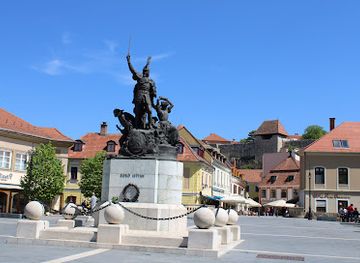
Dobó István Square
Explore the enchanting Dobó István Square in Eger, a hub of history, culture, and delightful local cuisine in Hungary.
3 min walk · 0.3 km from city centre


Best landmarks in Eger
Eger Castle is both a military monument and a symbol of resistance, with surviving walls and bastions marking the hilltop stronghold associated with the 1552 siege. The Basilica, one of Hungary's largest church buildings, gives the southern edge of the centre a monumental Neoclassical presence, while the Lyceum represents the eighteenth-century ambition of Eger's bishops to create a major centre of learning. The Church of St Anthony of Padua, commonly known as the Minorite Church, anchors Dobó István tér with its richly ornamented Baroque façade. Nearby, the Ottoman minaret is an unusual surviving trace of Ottoman rule and a distinctive vertical marker in the townscape. The Archbishop's Palace and other ecclesiastical buildings complete a historic architectural landscape in which military, religious and educational power remain visibly connected.
-
Castle
Castle of Eger
Explore the Castle of Eger: A historical landmark in Hungary showcasing medieval architecture and captivating tales of bravery amidst stunning views.
7 min walk · 0.5 km from city centre
-
Park
Valley of the Beautiful Woman
Experience the breathtaking landscapes and rich wine culture in the enchanting Valley of the Beautiful Woman in Eger, Hungary.
5 min drive · 1.7 km from city centre
-
Park
Szmrecsányi Lajos Kert
Explore the serene Szmrecsányi Lajos Kert in Eger—an idyllic park perfect for relaxation, family fun, and cultural events amidst nature's beauty.
11 min walk · 0.9 km from city centre
-
Tourist attraction
Dobó István Square
Explore the vibrant Dobó István Square in Eger, Hungary - a cultural hub filled with stunning architecture and lively events.
3 min walk · 0.3 km from city centre
Explore Eger on the map
Plan your Eger trip on one map. See where the top attractions, landmarks, restaurants, bars and hotels are, find what's near where you're staying, and book hotels and experiences in a few clicks.
Best hotels in Eger
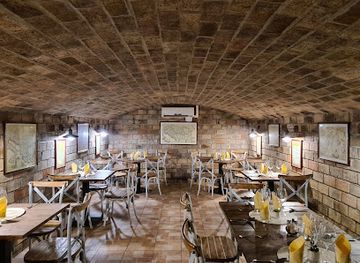
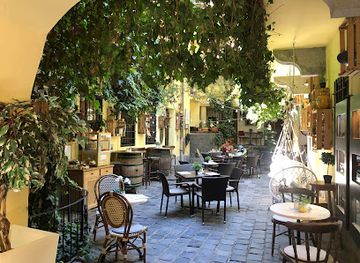
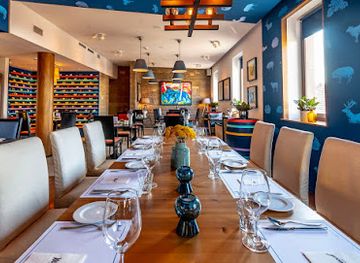
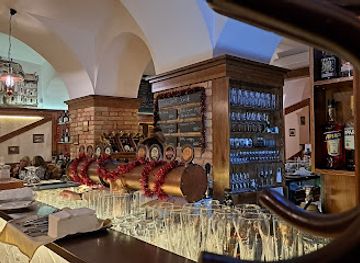
Best restaurants in Eger
Eger's dining identity is shaped by northern Hungarian cooking, local wine and the town's long relationship with the surrounding vineyards. Menus commonly draw on paprika, pork, poultry, freshwater fish, seasonal vegetables and hearty soups, while regional dishes such as goulash, stuffed cabbage and lángos appear alongside more contemporary interpretations. The centre around Dobó István tér and the adjoining streets contains traditional restaurants, cafés, bakeries and modern bistros, while the Valley of the Beautiful Woman focuses on cellar-based wine tasting with food designed to accompany Egri Bikavér and Egri Csillag. Local pastries and cakes are useful companions to coffee near the Baroque squares, and market shopping can reveal regional produce and preserves. Dining tends to move between substantial Hungarian comfort food, lighter seasonal plates and wine-led tasting occasions rather than a single defined cuisine.
-
Restaurant
Piroska Étterem
Experience authentic Hungarian cuisine at Piroska Étterem in Egerszalók – where every dish tells a story.
16 min drive · 5.3 km from city centre
-
Pancake
Palacsintavár Étterem
Discover the delightful world of pancakes at Palacsintavár Étterem in Eger - where every bite is a taste of tradition.
6 min walk · 0.5 km from city centre
-
Restaurant
Macok Bistro
Experience exquisite Hungarian cuisine at Macok Bistro in Eger - where tradition meets modern culinary art.
7 min walk · 0.6 km from city centre
-
Restaurant
HBH Sörház és Étterem
Experience the rich flavors of Hungary at HBH Sörház és Étterem – where tradition meets modern culinary art in Eger.
3 min walk · 0.3 km from city centre
Best bars in Eger
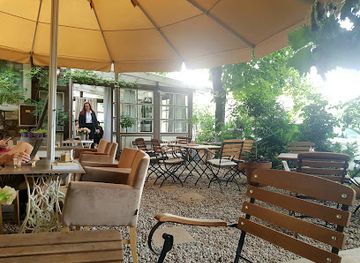
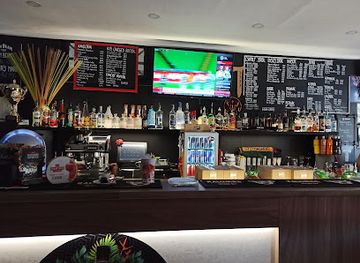
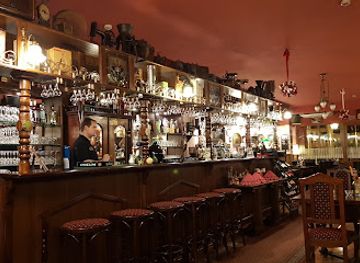
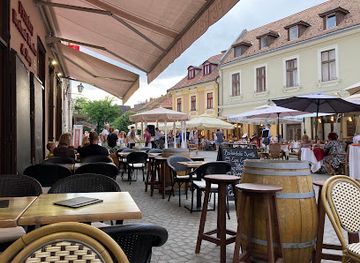
Eger's evenings are generally sociable and unhurried rather than dominated by large nightclubs. Wine bars and cellar venues provide the most characteristic night-time setting, especially in and around the Valley of the Beautiful Woman, where groups gather over local reds and whites. The central streets near Dobó István tér and the pedestrian core have cafés, pubs and bars suited to a quieter drink or late conversation, with a younger atmosphere encouraged by the town's student population. Cultural evenings may include concerts, theatre and seasonal events at local arts venues, while thermal bathing can extend the day beyond conventional nightlife. The historic centre becomes calmer away from the squares, and visitors should check current local listings for performances or temporary events instead of expecting a fixed club circuit.
-
Espresso bar
Kis sziget cafe and bar
Kis Sziget Cafe and Bar offers a delightful blend of coffee, brunch, and vibrant bar experiences in the heart of Eger, Hungary.
16 min walk · 1.3 km from city centre
-
Bar
Békafütty Söröző
Discover the lively Békafütty Söröző, a must-visit bar in Eger, where local charm meets vibrant nightlife for an unforgettable experience.
9 min walk · 0.7 km from city centre
-
Restaurant
Old Jack's Pub Étterem & Söröző
Experience authentic Hungarian cuisine and a cozy atmosphere at Old Jack's Pub in Eger, a must-visit destination for food lovers.
17 min walk · 1.3 km from city centre
-
Wine bar
Petrény Wine Bank
Explore the rich flavors of Hungary at Petrény Wine Bank in Eger, where wine enthusiasts gather for tastings and unforgettable experiences.
4 min walk · 0.3 km from city centre
Best nightclubs in Eger
Eger's evenings are generally sociable and unhurried rather than dominated by large nightclubs. Wine bars and cellar venues provide the most characteristic night-time setting, especially in and around the Valley of the Beautiful Woman, where groups gather over local reds and whites. The central streets near Dobó István tér and the pedestrian core have cafés, pubs and bars suited to a quieter drink or late conversation, with a younger atmosphere encouraged by the town's student population. Cultural evenings may include concerts, theatre and seasonal events at local arts venues, while thermal bathing can extend the day beyond conventional nightlife. The historic centre becomes calmer away from the squares, and visitors should check current local listings for performances or temporary events instead of expecting a fixed club circuit.
-
Night club
Bíboros
Dive into Eger's vibrant nightlife at Bíboros, where great music and a lively atmosphere create unforgettable nights.
4 min walk · 0.3 km from city centre
-
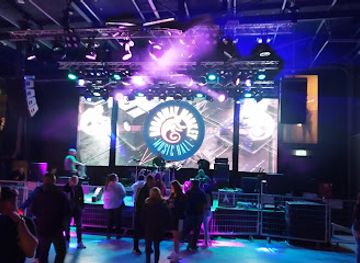
Night club
Broadway Monkey Music Hall
Discover the vibrant nightlife of Eger at Broadway Monkey Music Hall, where pulsating beats and live performances create unforgettable memories.
11 min drive · 3.6 km from city centre
-
Night club
Eger Exit
Experience the vibrant nightlife at Eger Exit, the ultimate night club in Eger, Hungary, where music and dance come alive.
9 min walk · 0.7 km from city centre
-
 Night club
Tamás pajtárs
Discover the vibrant nightlife at Tamás pajtárs, Eger's top night club, where music and energy collide for an unforgettable experience.
5 min drive · 1.8 km from city centre

Best shops in Eger
Shopping in Eger centres on the historic core, where pedestrian streets and squares contain small shops, cafés, delicatessens and practical local retailers rather than a vast metropolitan shopping scene. Wine is the most characteristic purchase, with bottles of Egri Bikavér, Egri Csillag and other wines from the Eger wine region available through cellar venues and specialist sellers; visitors should consider how bottles will be transported before buying. Markets and food shops offer paprika, honey, preserves, sausages and other Hungarian produce, while craft outlets may stock ceramics, embroidery and locally made gifts. The Valley of the Beautiful Woman combines wine buying with cellar architecture, whereas the centre is better suited to browsing independent businesses, confectionery and everyday Hungarian specialities. Larger retail needs are served by modern commercial areas outside the oldest streets.
-
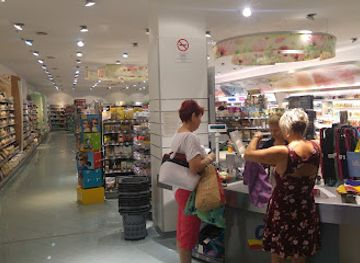
Shopping mall
Agria Park Shopping Center
Explore the diverse offerings of Agria Park Shopping Center, Eger's premier destination for shopping, dining, and entertainment.
6 min walk · 0.5 km from city centre
-
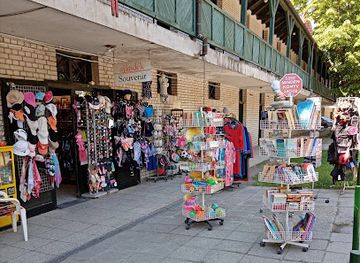
Gift shop
Eger Thermal Souvenir
Discover unique gifts and beachwear at Eger Thermal Souvenir, your go-to shop next to the famous thermal baths for lasting memories.
9 min walk · 0.8 km from city centre
-
Hobby store
Kreatív Hobby Sarok - Eger
Discover your creative side at Kreatív Hobby Sarok in Eger, Hungary, a paradise for arts and crafts enthusiasts with diverse supplies and workshops.
2 min walk · 0.2 km from city centre
-
Gift shop
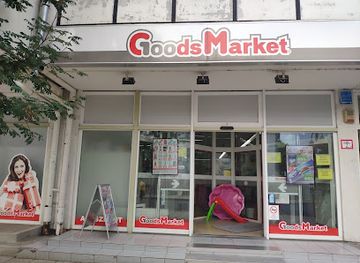
Goods Market
Explore Goods Market in Eger for unique Hungarian gifts and local crafts that capture the essence of the region's rich culture.
1 min walk · 0.1 km from city centre
Get your free copy of our complete guide to Eger, delivered straight to you.
Everything on this page, from attractions and restaurants to essentials and local phrases, in one PDF you can read offline, print or share.
Already have an account? Sign in
Your Eger guide is ready.
We'll send it to · Not you? Sign out

Getting your guide ready…
We are putting together a fresh copy of the Eger guide. This can take up to a minute.
This can take a few moments. If your browser asks, choose Allow so the download can start. You'll find the guide in your Downloads folder.
Nothing happened? Download it again
Sorry, the guide is taking longer than usual. Please try again in a minute, or get it by email instead.
Eger essentials
Currency and Payment
Safety
Emergency Situations
Do's and Don'ts
Local Tips
From Eve
Local phrases worth knowing
You don't need to get them perfect. A few words go a long way, and locals appreciate the effort.
Basics
| English | Local | Say it |
|---|---|---|
| Hello | Szia | [see-ah] |
| Goodbye | Viszontlátásra | [vee-sont-la-tash-ra] |
| Yes | Igen | [ee-gen] |
| No | Nem | [nem] |
| Please/You're welcome | Kérem | [key-rem] |
| Thank you | Köszönöm | [kerr-sir-nurm] |
| Excuse me/Sorry | Elnézést | [ell-nay-zay-sht] |
| How are you? | Hogy vagy? | [hoj vadj] |
| Fine. And you? | Jól vagyok. És te? | [yole vadj-ock. ays teh] |
| Do you speak English? | Beszélsz angolul? | [bes-ayl-s ang-oh-lool] |
| I don't understand | Nem értem | [nem air-tem] |
Eating & Drinking
| English | Local | Say it |
|---|---|---|
| I'd like to see the menu, please | Szeretnék látni az étlapot, kérem | [ser-ett-neck laht-nee oz ate-law-pot, key-rem] |
| I don't eat meat | Nem eszem húst | [nem es-em hoost] |
| Cheers! | Egészségedre! | [egg-ay-shay-ged-reh] |
| I would like to pay, please | Fizetnék, kérem | [fee-zeht-neck, key-rem] |
Emergencies
| English | Local | Say it |
|---|---|---|
| Help! | Segítség! | [she-geet-shayg] |
| Go away! | Menj el! | [meyn yell] |
| Call the Police! | Hívja a rendőrséget! | [hee-vyah ah ren-dur-say-get] |
| Call a doctor! | Hívjon orvost! | [hee-vyon or-vosht] |
| I'm lost | Elvesztem | [el-vess-tem] |
| I'm ill | Beteg vagyok | [beh-teg vadj-ock] |
Shopping
| English | Local | Say it |
|---|---|---|
| I'd like to buy... | Szeretnék vásárolni... | [ser-ett-neck vah-shah-rohl-nee] |
| I'm just looking | Csak nézelődöm | [chack nay-zeh-loh-dome] |
| How much is it? | Mennyibe kerül? | [men-nyee-beh keh-rool] |
| That's too expensive | Túl drága | [tool dra-gah] |
| Can you lower the price? | Le tudnád engedni az árat? | [leh tud-nahd eng-ed-nee oz ah-rat] |
Time & Numbers
| English | Local | Say it |
|---|---|---|
| What time is it? | Mennyi az idő? | [men-nyee oz ee-deh] |
| It's one o'clock | Egy óra van | [edge o-ra von] |
| Half past (10) | Fél (tíz)kor | [fale (tease)kor] |
| Morning | Reggel | [rehg-gel] |
| Afternoon | Délután | [day-loo-tahn] |
| Evening | Este | [esh-teh] |
| Yesterday | Tegnap | [teg-nap] |
| Today | Ma | [mah] |
| Tomorrow | Holnap | [hol-nap] |
| 1 | Egy | [edge] |
| 2 | Kettő | [ket-to] |
| 3 | Három | [ha-rom] |
| 4 | Négy | [nayg] |
| 5 | Öt | [ut] |
| 6 | Hat | [hot] |
| 7 | Hét | [hayt] |
| 8 | Nyolc | [nyolts] |
| 9 | Kilenc | [ke-lents] |
| 10 | Tíz | [tease] |
Transport & Directions
| English | Local | Say it |
|---|---|---|
| Where's a/the...? | Hol van a... | [hol von ah] |
| What's the address? | Mi a cím? | [mee ah cheem] |
| Can you show me (on the map)? | Megmutatnád (a térképen)? | [meg-moot-at-nahd ah tare-kapehn] |
| When's the next (bus)? | Mikor jön a következő (busz)? | [mee-kor yern ah keh-vet-keh-zoh (boos)] |
| A ticket (to ....) | Egy jegyet kérek (....-ra) | [edge yedge-yet key-rek (ra)] |
History of Eger
Medieval Foundations and Episcopal Power
Eger developed around an episcopal settlement established after the Christianisation of the Hungarian kingdom. A cathedral and bishop's centre grew on the hill that later became the site of Eger Castle, while the town benefited from its position on routes linking the Hungarian plain with northern uplands. Medieval Eger became an important religious and administrative centre, and its bishop supported construction, education and commerce. The early settlement was damaged during the Mongol invasion of 1241, after which King Béla IV encouraged fortified towns and stone castles. The rebuilding of Eger's defensive centre helped establish the hilltop stronghold whose walls still dominate the town's historical identity.
Castle, Bishopric and Renaissance Eger
During the later Middle Ages and Renaissance, Eger prospered as a bishopric and regional market town. The castle was expanded and strengthened, while bishops sponsored religious buildings, civic improvements and artistic projects. Eger's position became increasingly important as the Ottoman Empire advanced towards central Hungary in the sixteenth century. The town's ecclesiastical institutions and surrounding estates supported a substantial population, but military pressures transformed the castle from a religious and administrative centre into a frontier fortress. Although much of the medieval and Renaissance town was later altered, the castle complex preserves evidence of the successive defensive and ecclesiastical roles that shaped Eger before the Ottoman conquest.
The Siege of 1552
Eger is most closely associated with the siege of 1552, when defenders led by Captain István Dobó resisted a substantially larger Ottoman force. The defence became a celebrated episode in Hungarian memory, later popularised by Géza Gárdonyi's historical novel Eclipse of the Crescent Moon. The garrison's resistance prevented the castle from falling that year and gave the story enduring symbolic importance in Hungary. The fortifications visible today are not unchanged relics of the siege, but the ramparts, bastions and museums allow visitors to understand the strategic position of the stronghold and the demands placed on a frontier community during the Ottoman wars.
Ottoman Rule and the Minaret
Eger eventually fell to the Ottoman army in 1596 and remained under Ottoman administration for almost a century. The town became the centre of an Ottoman district, and a mosque, bathhouses and other institutions were established alongside the existing urban fabric. The minaret in the present centre is the most conspicuous surviving structure from this period and one of the northernmost Ottoman monuments in Europe. Ottoman rule ended in 1687, after a Habsburg siege and the withdrawal of Ottoman forces from the region. The period left a layered legacy in Eger's architecture, urban history and historical imagination.
Baroque Reconstruction and Education
After the Ottoman period, Eger was rebuilt under Habsburg rule and regained prominence as a Catholic episcopal centre. Eighteenth-century bishops commissioned churches, palaces and public buildings in the Baroque style, giving the centre much of its present architectural character. The Basilica, the former Episcopal Palace and the Lyceum belong to this era of reconstruction and institutional ambition. The Lyceum, founded as an educational project by Bishop Károly Eszterházy, reflected Eger's aspirations to become a major centre of learning, although its planned university status was not realised. The resulting schools, collections and observatory nevertheless strengthened the town's intellectual life.
Modern Town and Wine Identity
In the nineteenth and twentieth centuries Eger developed as a regional administrative, cultural and commercial centre while retaining its episcopal heritage. Vineyards and underground cellars around the town became increasingly important to local livelihoods and identity, with Egri Bikavér eventually becoming the best-known name associated with the area. The town also expanded its bathing tradition as thermal water was developed for recreation and health. Modern Eger combines restored historic buildings, educational institutions, wine tourism and public services with a population and economy rooted in the wider northern Hungarian region. Its contemporary identity remains closely tied to the castle, Baroque townscape, wine and thermal water.
Eger in Photos
Browse through our photo collection highlighting the charm and character of the destination.
Cities near Eger
The closest cities to Eger, if you have time for more than one stop.
-

-

-

-

-


Swipe for more cities
Explore more

Explore more of Hungary
Discover Hungary: A land of historic cities, scenic landscapes, thermal baths, and rich culinary traditions in the heart of Europe.
Explore Hungary