

Free Mecsek Travel Guide & Mobile App
Explore Mecsek with free travel guides. Discover regional history, expert tips, proposed trips, and audio guides on web or mobile app.


Mecsek combines forested hills, limestone caves, village trails and Pécs’s historic culture in a compact southern Hungarian escape.
Read more about Mecsek
When is the best time to visit Mecsek?
Best: June–August · 24–26°C| Month | High (°C) | Rainfall (mm) |
|---|---|---|
| January | 3 | 30 |
| February | 6 | 25 |
| March | 11 | 35 |
| April | 16 | 45 |
| May | 20 | 55 |
| June (best) | 24 | 60 |
| July (best) | 26 | 55 |
| August (best) | 26 | 50 |
| September | 21 | 45 |
| October | 16 | 40 |
| November | 9 | 35 |
| December | 5 | 30 |
Getting to and around Mecsek
How to get there
Transportation
Top city travel guides in Mecsek
The cities of Mecsek, and the easiest places to base yourself.

Swipe for more cities
Destinations in Mecsek
Resorts, valleys and scenic spots worth a trip of their own.

Swipe for more destinations
Best attractions in Mecsek
Mecsek attractions centre on the contrast between accessible woodland near Pécs and quieter valleys farther east and west. Above the city, the Misina and Tubes area offers marked walks, viewpoints and the Pécs television tower, while family-oriented outdoor facilities and the Pécs Zoo provide a more structured introduction to the hills. In the western Mecsek, Abaliget combines a cave, a small lake and walking opportunities in a karst landscape. The eastern hills are suited to longer excursions through Óbánya, Kisújbánya and Püspökszentlászló, with forests, streams, craft traditions and historic buildings along the way. Near Magyaregregy, Máré Castle adds a medieval architectural focus to the wooded landscape. The Kelet-Mecsek Landscape Protection Area is important for walking, geology and wildlife rather than for large-scale infrastructure. Pécs, at the southern edge of the region, contributes museums, galleries and Roman and early Christian heritage, but should be treated as the urban gateway to the Mecsek rather than a substitute for exploring its villages and woodland.
-
Tourist attraction
Zsolnay Cultural Quarter
Immerse yourself in the artistic spirit of Pécs at the Zsolnay Cultural Quarter, where heritage meets creativity in a stunning setting.
-
Tourist attraction
Pécs TV Tower
Discover the breathtaking views of Pécs from the iconic Pécs TV Tower, Hungary's tallest building and a must-visit attraction for all travelers.
-
Tourist attraction
Pécs Zoo
Experience the vibrant wildlife and educational exhibits at Pécs Zoo, a top family-friendly destination in Hungary's cultural hub.
-
Tourist attraction
Széchenyi square
Experience the rich culture and vibrant atmosphere of Széchenyi Square in Pécs, Hungary's historic and artistic heart.


Best landmarks in Mecsek
The Mecsek’s most recognisable landmark is the television tower on Misina, whose elevated position above Pécs makes it a visual reference point across southern Baranya. Zengő, the highest summit at 682 metres, is a geographical landmark of the eastern hills and a destination for walkers rather than a built monument. In the west, Abaliget Cave represents the region’s limestone geology and the underground action of water. Óbánya’s narrow wooded valley and traditional settlement form one of the Mecsek’s most distinctive rural scenes, while Máré Castle near Magyaregregy provides a fortified historical presence among the eastern forests. Püspökszentlászló is marked by its former episcopal estate and arboretum setting, linking religious history with cultivated landscape. At the southern foot of the hills, Pécs’s early Christian burial chambers and medieval cathedral complex express the urban history that developed alongside the Mecsek. They are city landmarks rather than mountain sites, but their position makes the relationship between the historic settlement and the surrounding hills especially clear.
-
Tourist attraction
Pécs TV Tower
Discover Pécs TV Tower, the tallest building in Hungary, for breathtaking views and a glimpse into the city's rich history and natural beauty.
-
Zoo
Pécs Zoo
Explore the diverse wildlife at Pécs Zoo, a delightful family-friendly attraction in the heart of Hungary, offering education and fun for all ages.
-
Tourist attraction
Széchenyi square
Explore the vibrant Széchenyi Square in Pécs, where history, culture, and local charm come together in a stunning setting.
-
Tourist attraction
Abaligeti Barlang
Explore the stunning Abaligeti Barlang, a natural cave system in Hungary, showcasing breathtaking geological formations and rich history.


Explore Mecsek on the map
Plan your trip on one map. See where the top cities, national parks and sights are, and book hotels and experiences in a few clicks.
Best hotels in Mecsek
Best restaurants in Mecsek
Dining in the Mecsek reflects the food culture of southern Transdanubia and the nearby city of Pécs. Urban restaurants and cafés in Pécs provide the broadest range, from contemporary Hungarian cooking to international food, while village inns and rural guesthouses tend to offer more traditional dishes, soups, stews, grilled meats and seasonal vegetables. Forested Baranya has associations with game, mushrooms and foraged flavours, although availability depends on season and local sourcing. Expect familiar Hungarian specialities such as goulash, paprikás and fried or baked pastries alongside regional home cooking rather than a single dish identified exclusively with the Mecsek. Markets and bakeries are useful for picnic supplies before a walk, particularly when visiting smaller settlements with limited services. Local wines and fruit-based drinks are widely encountered in the broader Pécs and Baranya area, while Villány’s famous wine region lies outside the Mecsek and should not be presented as part of the hills themselves.
-
Restaurant
Csülök Bár étterem
Discover the flavors of Hungary at Csülök Bár Restaurant in Pécs – where tradition meets taste in every bite.
-
Restaurant
Bagolyvár
Discover the exquisite flavors of Hungary at Bagolyvár in Pécs - where fine dining meets warm hospitality.
-
Restaurant
Tettye Vendéglő étterem
Experience the heart of Hungarian gastronomy at Tettye Vendéglő in Pécs - where tradition meets flavor.
-
Gastropub
Bohemia Sörkonyha
Experience the best burgers and Czech cuisine at Bohemia Sörkonyha in Pécs - where tradition meets flavor in every bite.


Best bars in Mecsek
Nightlife is concentrated in Pécs at the southern edge of the Mecsek, where a large student population supports cafés, wine bars, traditional pubs, live-music venues and later-opening entertainment. The historic centre and university area offer the greatest choice, though venues and opening arrangements change regularly. In the hill villages, evenings are quieter and generally revolve around a rural inn, guesthouse, community event or a meal rather than a club scene. Some establishments in and around Pécs showcase wines from southern Hungary and locally produced beers, while smaller settlements may close early outside the main season. Visitors staying in the eastern or western Mecsek should arrange transport in advance rather than assume that a late bus or taxi will be available after dinner. The region is better suited to combining a day outdoors with an unhurried meal than to a dedicated nightlife itinerary.
-
Restaurant
Csülök Bár étterem
Discover the best of Hungarian cuisine at Csülök Bár, a delightful restaurant in Pécs offering traditional dishes and a cozy atmosphere.
-
Gastropub
Bohemia Sörkonyha
Discover the vibrant flavor of Czech cuisine at Bohemia Sörkonyha, Pécs' favorite gastropub blending tradition with culinary creativity.
-
Restaurant
Korhely Étterem
Discover the rich flavors of Hungary at Korhely Étterem, a vibrant pub-restaurant in Pécs offering an authentic dining experience.
-
Pub
Csinos Presszó
Discover the lively ambiance and local culture at Csinos Presszó in Pécs, where great drinks and friendly vibes await.


Best nightclubs in Mecsek
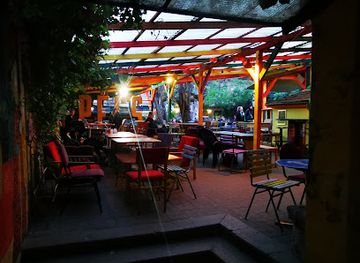
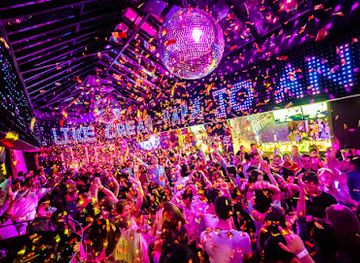
Nightlife is concentrated in Pécs at the southern edge of the Mecsek, where a large student population supports cafés, wine bars, traditional pubs, live-music venues and later-opening entertainment. The historic centre and university area offer the greatest choice, though venues and opening arrangements change regularly. In the hill villages, evenings are quieter and generally revolve around a rural inn, guesthouse, community event or a meal rather than a club scene. Some establishments in and around Pécs showcase wines from southern Hungary and locally produced beers, while smaller settlements may close early outside the main season. Visitors staying in the eastern or western Mecsek should arrange transport in advance rather than assume that a late bus or taxi will be available after dinner. The region is better suited to combining a day outdoors with an unhurried meal than to a dedicated nightlife itinerary.
-
Night club
Club Heaven Budapest
Dive into the exhilarating nightlife of Budapest at Club Heaven, where electrifying music and vibrant energy create unforgettable memories.
-
Night club
Peaches And Cream Club
Experience Budapest's nightlife at Peaches And Cream Club, where vibrant energy and electrifying music create unforgettable nights.
-
Night club
Freeport Cultural Center
Experience the vibrant nightlife and cultural richness at Freeport Cultural Center, Pécs' premier destination for entertainment and community events.
-
Night club
Sörház
Discover the vibrant nightlife of Pécs at Sörház, where unforgettable music and great drinks create the perfect party atmosphere.



Best shops in Mecsek
Shopping in the Mecsek is primarily local and practical, with the widest choice in Pécs. The city offers food shops, bakeries, bookshops, galleries, craft retailers and markets where visitors can find Hungarian pantry goods, ceramics, textiles and small-scale art. In the hill villages, shopping is limited but may include locally made preserves, honey, herbal products, woodwork and craft items associated with rural households or visitor centres. Óbánya has a particular association with pottery and craft traditions, although individual workshops and sales points should be checked before travelling. Farmers’ markets and seasonal stalls are useful for fruit, vegetables, baked goods and regional products, but their days and locations can vary. For a practical walking trip, buy provisions in Pécs or a larger town before reaching the more remote valleys. Souvenirs labelled as Mecsek products are best chosen from established local makers rather than assumed to represent the whole region.
-
Shopping mall
Árkád
Discover Árkád in Pécs: Your ultimate shopping destination with a blend of fashion, dining, and entertainment.
-
Furniture store
JYSK Makay, Pécs
Explore JYSK Makay in Pécs for stylish furniture, cozy bedding, and outdoor essentials that elevate your home experience.
-
Auto parts store
Convoy Truck Shop - Pécs
Explore Convoy Truck Shop in Pécs for quality truck accessories and expert advice, making it the ultimate destination for trucking enthusiasts.
-
Department store
Unker ABC store
Explore local flavors and essentials at Unker ABC Store in Orfű, the perfect stop for all your shopping needs.


Get your free copy of our complete guide to Mecsek, delivered straight to you.
Everything on this page, from attractions and restaurants to essentials and local phrases, in one PDF you can read offline, print or share.
Already have an account? Sign in
Your Mecsek guide is ready.
We'll send it to · Not you? Sign out

Getting your guide ready…
We are putting together a fresh copy of the Mecsek guide. This can take up to a minute.
This can take a few moments. If your browser asks, choose Allow so the download can start. You'll find the guide in your Downloads folder.
Nothing happened? Download it again
Sorry, the guide is taking longer than usual. Please try again in a minute, or get it by email instead.
Mecsek essentials
Currency and Payment
Safety
Emergency Situations
Do's and Don'ts
Local Tips
From Eve
Local phrases worth knowing
You don't need to get them perfect. A few words go a long way, and locals appreciate the effort.
Basics
| English | Local | Say it |
|---|---|---|
| Hello | Hello | [Heh-loh] |
| Goodbye | Goodbye | [Good-bye] |
| Yes | Yes | [Yes] |
| No | No | [No] |
| Please/You're welcome | Please/You're welcome | [Pleez/Yoor wel-kum] |
| Thank you | Thank you | [Thangk yoo] |
| Excuse me/Sorry | Excuse me/Sorry | [Ex-kyoos mee/Sor-ree] |
| How are you? | How are you? | [How ar yoo] |
| Fine. And you? | Fine. And you? | [Fine. And yoo?] |
| Do you speak English? | Do you speak English? | [Doo yoo speak In-glish?] |
| I don't understand | I don't understand | [I dont un-der-stand] |
Eating & Drinking
| English | Local | Say it |
|---|---|---|
| I'd like to see the menu, please | I'd like to see the menu, please | [I'd laik to see the men-yoo, pleez] |
| I don't eat meat | I don't eat meat | [I dont eet meet] |
| Cheers! | Cheers! | [Cheerz!] |
| I would like to pay, please | I would like to pay, please | [I wood laik to pay, pleez] |
Emergencies
| English | Local | Say it |
|---|---|---|
| Help! | Help! | [Help!] |
| Go away! | Go away! | [Go a-way!] |
| Call the Police! | Call the Police! | [Call the Po-lees!] |
| Call a doctor! | Call a doctor! | [Call a doc-tor!] |
| I'm lost | I'm lost | [I'm lost] |
| I'm ill | I'm ill | [I'm il] |
Shopping
| English | Local | Say it |
|---|---|---|
| I'd like to buy... | I'd like to buy... | [I'd laik to buy...] |
| I'm just looking | I'm just looking | [I'm just look-ing] |
| How much is it? | How much is it? | [How much iz it?] |
| That's too expensive | That's too expensive | [Thats too ex-pens-iv] |
| Can you lower the price? | Can you lower the price? | [Can yoo low-er the prys?] |
Time & Numbers
| English | Local | Say it |
|---|---|---|
| What time is it? | What time is it? | [What tym iz it?] |
| It's one o'clock | It's one o'clock | [Its wun o-clock] |
| Half past (10) | Half past (10) | [Half past ten] |
| Morning | Morning | [Morn-ing] |
| Afternoon | Afternoon | [Af-ter-noon] |
| Evening | Evening | [Eve-ning] |
| Yesterday | Yesterday | [Yes-ter-day] |
| Today | Today | [To-day] |
| Tomorrow | Tomorrow | [To-mor-row] |
| 1 | 1 | [One] |
| 2 | 2 | [Two] |
| 3 | 3 | [Three] |
| 4 | 4 | [Four] |
| 5 | 5 | [Five] |
| 6 | 6 | [Six] |
| 7 | 7 | [Seven] |
| 8 | 8 | [Eight] |
| 9 | 9 | [Nine] |
| 10 | 10 | [Ten] |
Transport & Directions
| English | Local | Say it |
|---|---|---|
| Where's a/the...? | Where's a/the...? | [Whehrs a/the...?] |
| What's the address? | What's the address? | [Whats the ad-dress?] |
| Can you show me (on the map)? | Can you show me (on the map)? | [Can yoo sho mee (on the map)?] |
| When's the next (bus)? | When's the next (bus)? | [Whehnz the nekst (bus)?] |
| A ticket (to ....) | A ticket (to ....) | [A ti-ket (to....)] |
History of Mecsek
Prehistoric settlement and the Mecsek landscape
The Mecsek’s caves, springs and defensible ridges attracted human activity long before written history. Archaeological traces across the wider Baranya uplands record prehistoric settlement, changing farming practices and the use of natural shelters and elevated sites. The hills supplied timber, stone, water and hunting grounds, while their valleys created practical routes between the southern plain and the interior of Transdanubia. Although many surviving traces are fragmentary, the archaeological record establishes that the Mecsek was not an untouched wilderness but a long-inhabited landscape shaped by repeated movement between woodland, pasture and cultivated land.
Roman Sopianae at the foot of the hills
Roman Sopianae developed at the southern foot of the Mecsek, on the site of modern Pécs, as an important settlement and regional centre in the province of Pannonia. Roads connected it with other parts of Roman Transdanubia, while the surrounding hills provided stone, timber and water. The most visible surviving legacy is in Pécs, where richly decorated fourth-century burial chambers preserve evidence of the city’s Christian community. These monuments are outside the forested core of the Mecsek but are essential to understanding how the hills related to the urban settlement below them.
Medieval estates, churches and villages
After the Roman period, the region became part of the medieval Kingdom of Hungary. Pécs grew as an episcopal centre, while settlements and estates developed along the valleys and routes crossing the Mecsek. Churches, manor sites, castles and agricultural communities tied the wooded uplands to the city and to the surrounding county. Medieval landholding shaped the pattern of villages that visitors still encounter, even though later rebuilding and population changes altered their appearance. The hills supplied fuel, timber and game, while valleys supported cultivation and small-scale rural production.
Ottoman rule and the transformation of Pécs
The Ottoman conquest of Pécs in 1543 brought the area into a frontier zone that remained under Ottoman administration until the late seventeenth century. Pécs acquired mosques, baths and other structures associated with Ottoman urban life, while warfare and political uncertainty affected settlements around the Mecsek. The hills themselves were strategically useful as elevated terrain and as a source of timber and water. After the Habsburg reconquest, the population and organisation of the surrounding countryside changed again, leaving a layered cultural history most clearly visible in Pécs and in the region’s religious and civic architecture.
Forestry, mining and industrial development
From the eighteenth and nineteenth centuries, the Mecsek became increasingly connected to organised forestry, quarrying and industrial exploitation. Coal mining expanded north of Pécs and in parts of the Mecsek, supporting urban growth, rail connections and working communities. In the twentieth century, uranium mining also became significant near Pécs, although much of that industry later closed. Former shafts, altered hillsides and mining settlements remain reminders of the region’s industrial era. At the same time, forestry and scientific interest in the hills encouraged more systematic management of woodland and geological resources.
Nature protection and the modern recreational Mecsek
As heavy industry declined, conservation and recreation became increasingly important to the region’s identity. The Mecsek Landscape Protection Area protects substantial areas of woodland, karst terrain, valleys and wildlife habitat, while marked routes, lookout points and visitor facilities support walking and educational tourism. Pécs’s proximity gives the hills an unusual relationship with a sizeable cultural city: forest paths begin close to urban neighbourhoods, yet eastern and western valleys quickly become rural. Today the Mecsek is valued both as a protected natural environment and as a living landscape of villages, forestry and outdoor recreation.
Mecsek in Photos
Browse through our photo collection highlighting the charm and character of the destination.
Neighbouring regions of Mecsek
The closest regions to Mecsek, if you have time for more than one.
-

-

-

-

-


Swipe for more regions
Explore more

Explore more of Hungary
Discover Hungary: A land of historic cities, scenic landscapes, thermal baths, and rich culinary traditions in the heart of Europe.
Explore Hungary