

Southern Transdanubia, Hungary Travel Guide
Discover Southern Transdanubia: A blend of history, culture, and nature in Hungary's picturesque heartland.
Southern Transdanubia, nestled in the heart of Hungary, offers a unique blend of natural beauty, rich history, and vibrant culture. The region is renowned for its picturesque landscapes, from rolling vineyards to tranquil lakes, making it a haven for nature lovers and adventure seekers alike. The area's storied past is reflected in its charming villages and historic castles, providing a glimpse into Hungary's fascinating heritage. The city of Pécs, a UNESCO World Heritage site, is a must-visit destination within Southern Transdanubia. Known for its stunning architecture and cultural landmarks, Pécs boasts attractions such as the early Christian necropolis, the Pécs Cathedral, and the Zsolnay Cultural Quarter. Visitors can wander through its cobbled streets, explore its vibrant markets, and savor the local cuisine in its quaint cafes and restaurants. For those seeking outdoor activities, Lake Balaton, the largest freshwater lake in Central Europe, offers a plethora of water sports, hiking trails, and scenic spots for relaxation. The region's thermal spas provide a perfect retreat for wellness enthusiasts looking to unwind. Whether you're interested in history, culture, or outdoor adventures, Southern Transdanubia promises an unforgettable experience for every traveler.

Know before you go
Hi, I'm Eve. Here are a few practical things to know before exploring Southern Transdanubia.
- Visit the Pécs Cathedral early in the morning to avoid crowds and enjoy a serene experience.
- Try the local wines at Villány, one of Hungary's top wine regions, for a taste of the region's best vintages.
- Pack comfortable walking shoes as many attractions are best explored on foot.
- Check the schedule for cultural events in Pécs, as the city hosts numerous festivals and performances throughout the year.
- Bring swimwear and a towel to enjoy the thermal spas scattered throughout the region.
Top City Travel Guides in Southern Transdanubia
The cities of Southern Transdanubia, and the easiest places to base yourself.


Destinations in Southern Transdanubia
Resorts, valleys and scenic spots worth a trip of their own.


Explore Southern Transdanubia: Things to Do, Places to Eat, Hotels & More
Handpicked recommendations for top attractions, local dining, accommodations, and more

Top Attractions & Sightseeing in Southern Transdanubia
Top-rated picks
Best Attractions

Siklós castle
Explore the rich history and stunning architecture of Siklós Castle, a must-visit fortress and historical landmark in Hungary.

Zsolnay Cultural Quarter
Explore the Zsolnay Cultural Quarter in Pécs, a vibrant cultural center filled with art galleries, concerts, and rich history.

Pécs TV Tower
Discover the breathtaking views from Pécs TV Tower, a towering icon of Hungary, offering panoramic sights of the enchanting city of Pécs.

Pécs Zoo
Experience the enchanting world of wildlife at Pécs Zoo, a family-friendly attraction in Hungary showcasing diverse species and conservation efforts.

Best landmarks in Southern Transdanubia
Top-rated picks
Best Landmarks

Siklós castle
Discover the enchanting Siklós Castle, a historical fortress showcasing Hungary's architectural beauty and rich heritage amidst stunning landscapes.

Duna-Dráva National Park
Explore the breathtaking landscapes and diverse wildlife of Duna-Dráva National Park, Hungary's serene natural sanctuary.

Best restaurants in Southern Transdanubia
Top-rated picks
Best Restaurants
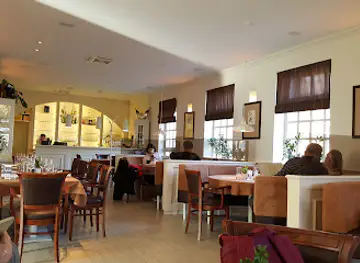
Kistücsök Food&Room
Experience authentic Hungarian flavors at Kistücsök Food&Room in Balatonszemes – where culinary excellence meets warm hospitality.

Platán Étterem
Experience authentic Hungarian flavors at Platán Étterem in Balatonföldvár – where tradition meets taste by Lake Balaton.

Kedvesem Bisztró
Experience authentic Hungarian flavors at Kedvesem Bisztró by Lake Balaton—where culinary tradition meets stunning lakeside views.

Vitorlás Étterem
Experience authentic Hungarian cuisine at Vitorlás Étterem with stunning views of Lake Balaton in Balatonlelle.

Best bars in Southern Transdanubia
Top-rated picks
Best Bars

Hansdonner Beer House
Discover the inviting atmosphere and local brews at Hansdonner Beer House in Kaposvár, a must-visit pub for tourists seeking authentic experiences.

Schmidt Györgyné - Adler Söröző
Discover the vibrant atmosphere and local flavors at Schmidt Györgyné - Adler Söröző, a hidden gem in Dombóvár's bar scene.

Frank söröző
Discover the vibrant atmosphere of Frank söröző, a cozy bar in Tamási, Hungary, perfect for drinks, relaxation, and local culture.

Gomba presszós
Discover the lively ambiance of Gomba Presszós, a must-visit pub in Mernye for an authentic taste of Hungarian social life.

Best nightclubs in Southern Transdanubia
Top-rated picks
Best Nightclubs

Plázs Siófok
Experience the vibrant nightlife and relaxing outdoor bathing at Plázs Siófok, a premier destination on Lake Balaton.

Renegade PUB and Restaurant
Experience the vibrant nightlife of Siófok at Renegade PUB and Restaurant, a perfect blend of dining and dancing.

Hungarian Sea Disco
Discover the electrifying nightlife at the Hungarian Sea Disco, where unforgettable dance sessions meet the scenic charm of Lake Balaton.

Club Helka
Experience the vibrant nightlife at Club Helka, Balatonfüred's premier night club with electrifying music and a lively atmosphere.

Best shops in Southern Transdanubia
Top-rated picks
Best Shops

Marázplast Kft.
Explore Marázplast Kft. in Kaposvár for unique gifts, home goods, and delicious candies, capturing the essence of Hungarian craftsmanship.

SüssVelem Webáruház
Explore SüssVelem Webáruház - Your Ultimate Destination for Quality Kitchen Supplies in Hungary.

Tombor ABC
Explore Tombor ABC, a charming variety store in Baté, Hungary, offering a unique shopping experience filled with local treasures.

Military Shop Vadászruha és Munkaruha
Discover top-quality outdoor gear and clothing at Military Shop Vadászruha és Munkaruha in Dombóvár, Hungary.

Explore Southern Transdanubia on the Map
A handpicked selection of must-see spots in Southern Transdanubia, mapped for you.
Southern Transdanubia Essentials
-
Southern Transdanubia can be accessed via several routes. The nearest international airport is Budapest Ferenc Liszt International Airport (BUD), located in the capital city of Budapest. From Budapest, you can take a train, bus, or rent a car to reach Southern Transdanubia. The train journey to Pécs, the largest city in the region, takes around 2.5 hours. Buses are also available and offer a budget-friendly option, taking approximately 3 hours. If you prefer driving, the M6 motorway provides a direct route from Budapest to Pécs.
-
Southern Transdanubia is well-connected by public transport. Trains and buses operate between major cities and towns within the region. For local travel, taxis and car rentals are readily available. Pécs has a reliable public bus system that can take you to various attractions within the city. Biking is also a popular option, especially for exploring the countryside and smaller villages. Consider renting a car for more flexibility and to explore off-the-beaten-path destinations.
-
The currency in Hungary is the Hungarian Forint (HUF). Credit and debit cards are widely accepted in hotels, restaurants, and larger stores. However, it's advisable to carry some cash for use in smaller establishments, rural areas, and local markets. ATMs are available in all cities and towns. Currency exchange offices are also common, particularly in tourist areas.
-
Southern Transdanubia is generally a safe region for tourists. However, exercise standard safety precautions such as not leaving belongings unattended and avoiding poorly lit areas at night. Pécs and other major cities are safe, but be cautious in crowded places to avoid pickpocketing. There are no specific high-crime areas targeting tourists, but staying aware of your surroundings is always recommended.
-
In case of emergency, dial 112, the general emergency number in Hungary, for police, fire, or medical assistance. Major hospitals are located in Pécs, Kaposvár, and Szekszárd. Pharmacies are widely available for minor health issues. It is advisable to have travel insurance that covers medical emergencies. Keep emergency contact numbers and your insurance details handy during your trip.
-
Fashion: Do dress modestly, especially when visiting religious sites. Avoid wearing overly revealing clothing. Religion: Do respect local customs and traditions. Remove your hat and remain quiet when inside churches. Public Transport: Do validate your ticket before boarding trains and buses. Don't eat or drink on public transport. Greetings: Do greet people with a handshake. A simple 'Jó napot' (Good day) is polite and appreciated. Eating & Drinking: Do try local dishes like goulash and fish soup. Don't leave tips in coins; rounding up the bill is customary.
-
To experience Southern Transdanubia like a local, visit the region's many thermal baths, such as the ones in Harkány. Participate in local festivals and events, like the Busójárás carnival in Mohács. Explore the wine regions of Villány and Szekszárd, where you can sample some of Hungary's best wines. Engage with locals in markets and small eateries to learn more about their culture and traditions. Don't miss the opportunity to hike in the Mecsek Mountains or take a boat ride on Lake Balaton for stunning natural scenery.
When is the best time to visit Southern Transdanubia?
Useful Local Phrases for Southern Transdanubia
You don't need to speak the language perfectly. Even learning a few simple words can make conversations warmer—and locals usually appreciate the effort.
— Eve

Here are the phrases I use most often in Southern Transdanubia. Try a few—you'll be surprised how far they go! 😊
❤️
-
- HelloSzia
[See-yah] - GoodbyeViszlát
[Veese-laht] - YesIgen
[Ee-gen] - NoNem
[Nem] - Please/You’re welcomeKérem
[Kay-rem] - Thank youKöszönöm
[Kuh-suh-nuhm] - Excuse me/SorryElnézést
[El-nay-zest] - How are you?Hogy vagy?
[Hohg vahd?] - Fine. And you?Jól. És te?
[Yohl. Aysh teh?] - Do you speak English?Beszélsz angolul?
[Beh-sayls ahn-goh-lool?] - I don't understandNem értem
[Nem air-tem]
- HelloSzia
-
- I’d like to see the menu, pleaseSzeretném megnézni az étlapot, kérem
[Seh-reht-nehm mehg-nayzni ahz ayt-lah-pohd, kay-rem] - I don’t eat meatNem eszem húst
[Nem eh-sem hoosht] - Cheers!Egészségedre!
[Eh-gay-shay-ged-reh!] - I would like to pay, pleaseSzeretnék fizetni, kérem
[Seh-reht-nehk fee-zet-nee, kay-rem]
- I’d like to see the menu, pleaseSzeretném megnézni az étlapot, kérem
-
- Help!Segíts!
[Sheh-geets!] - Go away!Menj el!
[Men-yel!] - Call the Police!Hívd a rendőrséget!
[Heevd ah ren-dohr-say-get!] - Call a doctor!Hívd az orvost!
[Heevd ahz or-vosh-t!] - I’m lostElvesztem
[El-ves-tem] - I’m illBeteg vagyok
[Beh-teg vah-yok]
- Help!Segíts!
-
- I’d like to buy...Szeretnék venni...
[Seh-reht-nehk veh-nee...] - I’m just lookingCsak nézelődöm
[Chak nay-zay-loh-dohm] - How much is it?Mennyibe kerül?
[Men-nee-beh keh-rool?] - That’s too expensiveAz túl drága
[Ahz tool drah-gah] - Can you lower the price?Tudnád csökkenteni az árat?
[Tood-nahd chuhk-ken-tay-nee ahz ah-raht?]
- I’d like to buy...Szeretnék venni...
-
- What time is it?Hány óra van?
[Hahn-ee oh-rah vahn?] - It’s one o'clockEgy óra van
[Edj oh-rah vahn] - Half past (10)Fél (10)
[Fehl (10)] - MorningReggel
[Reg-gel] - AfternoonDélután
[Day-loo-tahn] - EveningEste
[Es-teh] - YesterdayTegnap
[Teh-nahp] - TodayMa
[Mah] - TomorrowHolnap
[Hol-nahp] - 11
[Egy] - 22
[Kettő] - 33
[Három] - 44
[Négy] - 55
[Öt] - 66
[Hat] - 77
[Hét] - 88
[Nyolc] - 99
[Kilenc] - 1010
[Tíz]
- What time is it?Hány óra van?
-
- Where's a/the...?Hol van a...?
[Hol vahn ah...?] - What's the address?Mi a cím?
[Mee ah tseem?] - Can you show me (on the map)?Meg tudnád mutatni (a térképen)?
[Mehg tood-nahd moo-taht-nee (ah tayr-kay-pen)?] - When's the next (bus)?Mikor jön a következő (busz)?
[Mee-kor yohn ah keh-vet-keh-zoh (booz)?] - A ticket (to ....)Egy jegy (....-ra)
[Edj yeh-gee (....-rah)]
- Where's a/the...?Hol van a...?
History of Southern Transdanubia
-
Pécs, the largest city in Southern Transdanubia, was known as Sopianae during the Roman era. Founded in the 2nd century AD, it became an important center of early Christianity. The Early Christian Necropolis of Pécs, a UNESCO World Heritage Site, features underground burial chambers adorned with frescoes depicting biblical scenes. The remnants of Roman architecture, including the amphitheater and city walls, offer a glimpse into the region's ancient past.
-
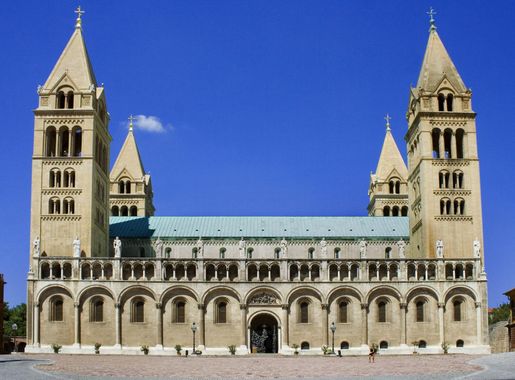
The Pécs Cathedral, originally built in the 11th century, stands as a testament to the region's medieval heritage. Over the centuries, the cathedral underwent various modifications, reflecting Gothic, Romanesque, and Baroque influences. The intricate stone carvings and towering spires of the cathedral narrate the architectural evolution and religious significance of Southern Transdanubia during the Middle Ages.
-
Southern Transdanubia fell under Ottoman rule in the 16th century, bringing about significant cultural and architectural changes. Mosques, baths, and minarets were constructed, many of which still stand today, such as the Gazi Kasim Pasha Mosque in Pécs, now functioning as a Catholic church. This period of occupation led to a unique blend of Eastern and Western influences that continues to shape the region's cultural landscape.
-
The Battle of Mohács in 1526 was a pivotal event in Hungarian history, marking the decline of the medieval Kingdom of Hungary. The battle saw the forces of King Louis II of Hungary defeated by the Ottoman Empire, leading to the subsequent partition of Hungary. The battlefield near Mohács is a site of historical reflection, with memorials commemorating the fallen soldiers and the profound impact of the battle on Hungary's history.
-
The Zsolnay family has left an indelible mark on Southern Transdanubia through their contributions to ceramics and porcelain manufacturing. The Zsolnay Porcelain Factory, established in Pécs in the 19th century, became renowned for its innovative techniques and artistic designs. The Zsolnay Cultural Quarter in Pécs now serves as a hub for arts and culture, showcasing the enduring legacy of the Zsolnay family's craftsmanship.
-
Villány, a town in Southern Transdanubia, is celebrated for its rich winemaking traditions. The region's favorable climate and fertile soil have fostered viticulture for centuries. Wine cellars and vineyards dot the landscape, producing some of Hungary's finest red wines. The annual Villány Wine Festival attracts connoisseurs and tourists alike, offering a taste of the region's oenological heritage.
-
The Baranya Rebellion of 1920 was a significant political and social upheaval in Southern Transdanubia. Following World War I and the Treaty of Trianon, which greatly reduced Hungary's territory, local populations in Baranya County resisted the new borders and governance. The rebellion was ultimately suppressed, but it highlighted the region's complex interethnic relations and the impact of geopolitical changes on Southern Transdanubia.
Neighbouring Regions of Southern Transdanubia
The closest regions to Southern Transdanubia, if you have time for more than one.


Your all‑in‑one travel companion app
Explore expert travel guides, compare and book tours, experiences, hotels, and more—all from the palm of your hand. Download now for seamless trip planning wherever your wanderlust takes you.


Explore More of Hungary

Looking beyond Southern Transdanubia? Discover Hungary for broader travel guides, local hot-spots, and regional highlights.
Explore HungarySouthern Transdanubia in Photos
Browse through our photo collection highlighting the charm and character of the destination.






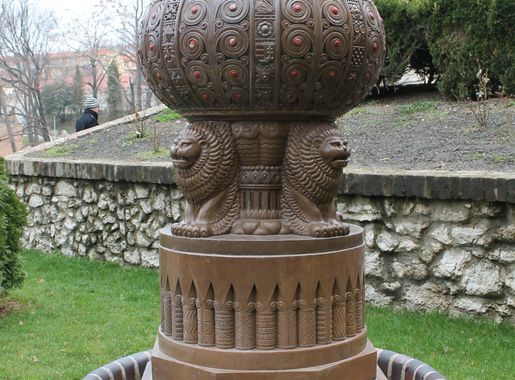
Southern Transdanubia: Hungary's Hidden Gem
Southern Transdanubia, nestled in the heart of Hungary, offers a unique blend of natural beauty, rich history, and vibrant culture. The region is renowned for its picturesque landscapes, from rolling vineyards to tranquil lakes, making it a haven for nature lovers and adventure seekers alike. The area's storied past is reflected in its charming villages and historic castles, providing a glimpse into Hungary's fascinating heritage. The city of Pécs, a UNESCO World Heritage site, is a must-visit destination within Southern Transdanubia. Known for its stunning architecture and cultural landmarks, Pécs boasts attractions such as the early Christian necropolis, the Pécs Cathedral, and the Zsolnay Cultural Quarter. Visitors can wander through its cobbled streets, explore its vibrant markets, and savor the local cuisine in its quaint cafes and restaurants. For those seeking outdoor activities, Lake Balaton, the largest freshwater lake in Central Europe, offers a plethora of water sports, hiking trails, and scenic spots for relaxation. The region's thermal spas provide a perfect retreat for wellness enthusiasts looking to unwind. Whether you're interested in history, culture, or outdoor adventures, Southern Transdanubia promises an unforgettable experience for every traveler.