
Jambi, Indonesia Travel Guide
Discover Jambi, the hidden gem of Sumatra, with its lush rainforests, ancient temples, and vibrant local culture. A perfect blend of nature, history, and tradition awaits.
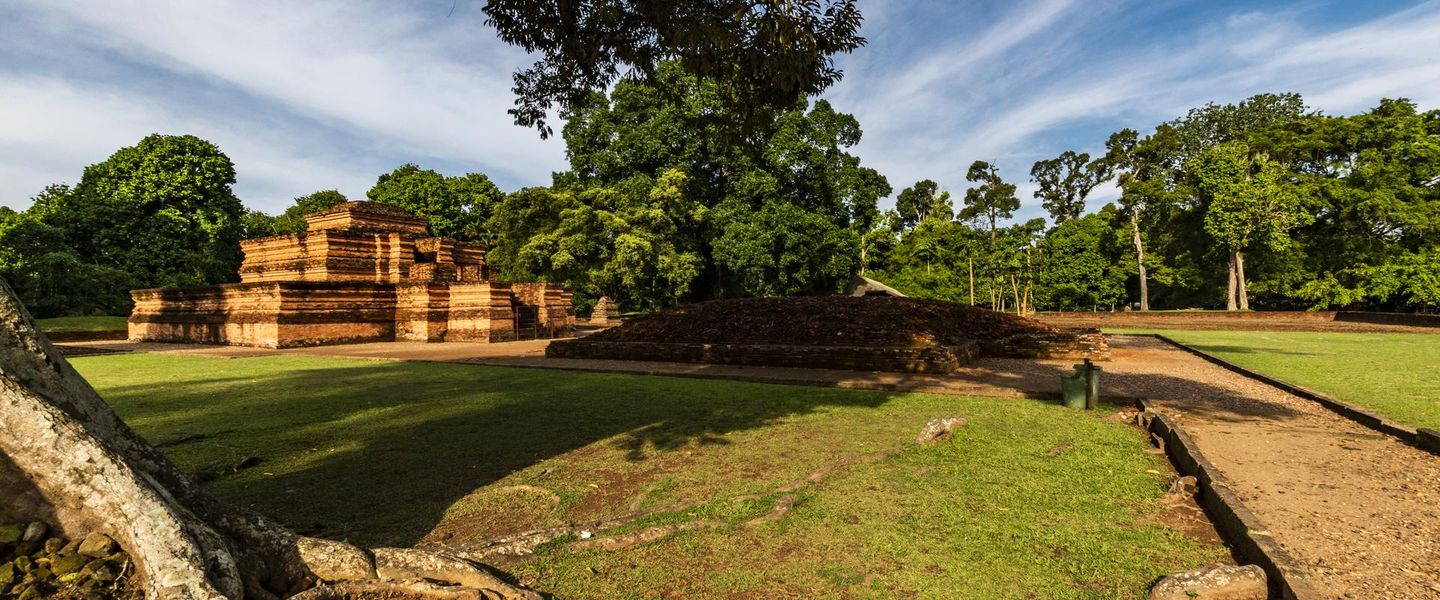
Jambi, located on the island of Sumatra in Indonesia, is a destination brimming with natural beauty, rich history, and cultural vibrance. As you explore Jambi, you will be captivated by its lush rainforests, majestic mountains, and the serene Batang Hari River. The area is home to Kerinci Seblat National Park, which is a UNESCO World Heritage site, making it a paradise for nature lovers and adventure seekers alike. Here, you can trek through dense jungles, witness exotic wildlife, and even catch a glimpse of the elusive Sumatran tiger. Jambi is also a land steeped in history. The ancient Muaro Jambi Temple complex, one of the largest in Southeast Asia, offers a fascinating insight into the region's past. These well-preserved Buddhist temples date back to the 7th century and provide a glimpse into the ancient Srivijaya Kingdom. Walking through the temple grounds, you can almost feel the echoes of history resonating through the air. The local culture in Jambi is another highlight for visitors. The indigenous Malay and Kerinci communities are known for their warm hospitality and vibrant traditions. You can experience traditional dances, music, and crafts, and even participate in local festivals. The local cuisine is a culinary delight, featuring dishes rich in spices and flavors unique to the region.

Know before you go
Hi, I'm Eve. Here are a few practical things to know before exploring Jambi.
- Visit Kerinci Seblat National Park early in the morning for the best chance to see wildlife, including the rare Sumatran tiger.
- Wear comfortable walking shoes when exploring the Muaro Jambi Temple complex as the area is vast and requires a lot of walking.
- Try the local dishes such as Gulai Ikan Patin (catfish curry) and Tempoyak (fermented durian), which are unique to Jambi.
- Respect local customs and dress modestly, especially when visiting religious sites.
- Hire a local guide to enhance your experience and gain deeper insights into the history and culture of Jambi.
Explore Jambi: Things to Do, Places to Eat, Hotels & More
Handpicked recommendations for top attractions, local dining, accommodations, and more

Top Attractions & Sightseeing in Jambi
Top-rated picks
Best Attractions

Monument of Keris Siginjai Jambi
Discover the rich cultural heritage of Jambi at the Monument of Keris Siginjai, a stunning tribute to local traditions and history.

Jembatan Gentala Arasy
Experience the charm of Jembatan Gentala Arasy, a stunning bridge in Jambi City blending modern architecture with cultural significance.

Tugu Juang Jambi
Discover Tugu Juang Jambi, a stunning monument celebrating Indonesia's history and resilience, surrounded by lush gardens and vibrant local culture.

Taman Jomblo | Kota Jambi
Discover the natural beauty and tranquility of Taman Jomblo, a serene garden oasis in the heart of Kota Jambi, perfect for relaxation and exploration.

Best landmarks in Jambi
Top-rated picks
Best Landmarks

Monument of Keris Siginjai Jambi
Explore the cultural heart of Jambi at the iconic Keris Siginjai Monument, a stunning tribute to local heritage and craftsmanship.

Jembatan Gentala Arasy
Discover the beauty of Jembatan Gentala Arasy, Jambi's iconic bridge offering stunning views and cultural experiences.

Tugu Juang Jambi
Explore Tugu Juang Jambi, a monument that celebrates the spirit of Indonesia's independence and the rich history of Jambi City.

Taman Jomblo | Kota Jambi
Explore the serene beauty of Taman Jomblo, a picturesque garden in Kota Jambi, perfect for relaxation, family outings, and cultural connection.

Best restaurants in Jambi
Top-rated picks
Best Restaurants

Dine and Chat
Experience the flavors of Indonesia at Dine and Chat in Jambi City – where culinary delights meet a warm atmosphere.

IGGO
Discover IGGO in Jambi - A Seafood Restaurant Offering Fresh Flavors & Vibrant Atmosphere Perfect for Every Seafood Lover.

Casa De Alicia
Discover the rich flavors of Indonesia at Casa De Alicia, Jambi's premier dining destination offering a delightful blend of local and international cuisine.

Pondok Kelapo
Discover fresh seafood delights at Pondok Kelapo - where culinary excellence meets local flavors in Jambi City.

Best bars in Jambi
Top-rated picks
Best Bars

De'Tones by Afgan Family Karaoke Jambi
Experience the joy of singing at De'Tones by Afgan Family Karaoke in Jambi, where every night is a celebration of music and fun.

MasterPiece Family KTV WTC Batang Hari
Enjoy a fun-filled karaoke experience at MasterPiece Family KTV WTC Batang Hari, where music and laughter come together in Jambi City.
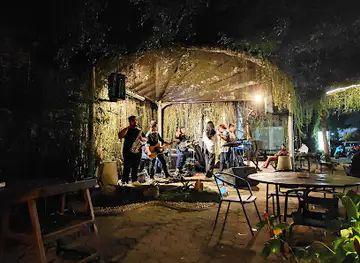
“ Park ” Food & Bar
Experience the vibrant flavors of Western cuisine in the heart of Jambi at “Park” Food & Bar, your ultimate dining destination.

Inul Vizta KTV WTC Batanghari Jambi
Discover the vibrant karaoke scene at Inul Vizta KTV WTC Batanghari Jambi, where singing and laughter unite for an unforgettable night.

Best nightclubs in Jambi
Top-rated picks
Best Nightclubs

De'Tones by Afgan Family Karaoke Jambi
Experience the joy of singing at De'Tones by Afgan Family Karaoke in Jambi, where music and fun come together in a vibrant atmosphere.

Omnia Executive Lounge Pub & Karaoke
Discover the vibrant nightlife of Jambi at Omnia Executive Lounge Pub & Karaoke, where music, drinks, and great company collide.

V.S.O.P PUB BAR & KTV
Experience the vibrant nightlife of Jambi City at V.S.O.P PUB BAR & KTV, where karaoke meets pub culture for unforgettable evenings.

Saphire Lounge @Sultan Thaha Airport
Experience comfort and tranquility at Saphire Lounge, your oasis at Sultan Thaha Airport, perfect for relaxation before your journey.

Best shops in Jambi
Top-rated picks
Best Shops

Mall JAMTOS Jambi Town Square
Discover the ultimate shopping experience at Mall JAMTOS in Jambi, where shopping, dining, and entertainment come together for an unforgettable day.

RAMAYANA WTC Jambi
Explore RAMAYANA WTC Jambi for a vibrant shopping experience featuring local and international brands in the heart of Jambi City.

Mall WTC Batanghari
Discover an exciting shopping experience at Mall WTC Batanghari, Jambi's premier destination for retail, dining, and family fun.

Hypermart WTC Jambi
Explore Hypermart WTC Jambi, a vibrant shopping mall offering diverse products, local cuisine, and a welcoming atmosphere for all visitors.

Explore Jambi on the Map
A handpicked selection of must-see spots in Jambi, mapped for you.
Jambi Essentials
-
Jambi is located on the island of Sumatra in Indonesia. The nearest international airport is Sultan Thaha Airport (DJB), which has domestic flights from major cities like Jakarta and Medan. From Jakarta, it takes approximately 1.5 hours by flight. Taxis and ride-hailing services are available from the airport to the city center.
-
Jambi has various transportation options including taxis, ride-hailing services like Gojek and Grab, and public buses. For shorter distances, becak (cycle rickshaws) and ojek (motorcycle taxis) are also available. Renting a car is another option for exploring the surrounding areas, but be mindful of local driving conditions.
-
The official currency in Jambi is the Indonesian Rupiah (IDR). Credit cards are accepted in some hotels, larger restaurants, and shopping centers, but it's advisable to carry cash for smaller establishments and local markets. ATMs are widely available, but ensure to have enough cash when traveling to rural areas.
-
Jambi is generally safe for tourists, but standard precautions should be taken. Avoid walking alone at night in poorly lit areas and always keep an eye on your belongings in crowded places. Be cautious in unfamiliar neighborhoods and avoid high-crime areas such as certain parts of Pasar Jambi and Legok.
-
In case of an emergency, dial 112 for immediate assistance. Hospitals and medical facilities are available in Jambi, with RSUD Raden Mattaher being one of the main hospitals. It is recommended to have travel insurance that covers medical emergencies. Pharmacies are available for minor health issues.
-
Fashion: Do dress modestly, especially when visiting religious sites. Avoid wearing revealing clothing. Religion: Do respect local customs and traditions. Remove your shoes when entering mosques and temples. Public Transport: Do be patient and polite. Don't eat or drink on public transport. Greetings: Do greet people with a smile and a slight bow. A handshake is also common. Eating & Drinking: Do try local delicacies and accept food offerings graciously. Don't refuse hospitality, as it is considered impolite.
-
To experience Jambi like a local, visit the Pasar Angso Duo market for fresh produce and traditional goods. Engage with locals, as they are often friendly and willing to share stories about the city's history and culture. Don't miss visiting the Muaro Jambi Temple Complex, one of the largest ancient temple complexes in Southeast Asia. For a unique experience, take a boat ride along the Batanghari River.
When is the best time to visit Jambi?
Useful Local Phrases for Jambi
You don't need to speak the language perfectly. Even learning a few simple words can make conversations warmer—and locals usually appreciate the effort.
— Eve

Here are the phrases I use most often in Jambi. Try a few—you'll be surprised how far they go! 😊
❤️
-
- HelloHalo
[Hah-loh] - GoodbyeSelamat tinggal
[Seh-lah-mat ting-gahl] - YesIya
[Ee-yah] - NoTidak
[Tee-dahk] - Please/You're welcomeSilakan
[See-lah-kahn] - Thank youTerima kasih
[Teh-ree-mah kah-see] - Excuse me/SorryPermisi
[Per-mee-see] - How are you?Apa kabar?
[Ah-pah kah-bar] - Fine. And you?Baik. Dan kamu?
[Bah-eek. Dan kah-moo] - Do you speak English?Apakah kamu bisa berbahasa Inggris?
[Ah-pah-kah kah-moo bee-sah ber-bah-sah Ing-gris] - I don't understandSaya tidak mengerti
[Sah-yah tee-dahk meng-er-tee]
- HelloHalo
-
- I'd like to see the menu, pleaseSaya ingin melihat menu, silakan
[Sah-yah een-gin meh-lih-hat meh-noo, see-lah-kahn] - I don't eat meatSaya tidak makan daging
[Sah-yah tee-dahk mah-kahn dah-ging] - Cheers!Selamat makan!
[Seh-lah-mat mah-kahn] - I would like to pay, pleaseSaya ingin membayar, silakan
[Sah-yah een-gin mem-bah-yar, see-lah-kahn]
- I'd like to see the menu, pleaseSaya ingin melihat menu, silakan
-
- Help!Tolong!
[Toh-long] - Go away!Pergi pergi!
[Per-gee per-gee] - Call the Police!Panggil Polisi!
[Pang-gil Poh-lee-see] - Call a doctor!Panggil dokter!
[Pang-gil dok-ter] - I'm lostSaya tersesat
[Sah-yah ter-seh-saht] - I'm illSaya sakit
[Sah-yah sah-kit]
- Help!Tolong!
-
- I'd like to buy...Saya ingin membeli...
[Sah-yah een-gin mem-beh-lee] - I'm just lookingSaya hanya melihat
[Sah-yah han-yah meh-lih-hat] - How much is it?Berapa harganya?
[Beh-rah-pah har-gah-nya] - That's too expensiveItu terlalu mahal
[Ee-too ter-lah-loo mah-hahl] - Can you lower the price?Bisakah kamu menurunkan harga?
[Bee-sah-kah kah-moo meh-noo-run-kahn har-gah]
- I'd like to buy...Saya ingin membeli...
-
- What time is it?Jam berapa?
[Jahm beh-rah-pah] - It's one o'clockJam satu
[Jahm sah-too] - Half past (10)Setengah (10)
[Seh-teng-ah (sepuluh)] - MorningPagi
[Pah-gee] - AfternoonSore
[Soh-reh] - EveningMalam
[Mah-lahm] - YesterdayKemarin
[Keh-mah-rin] - TodayHari ini
[Hah-ree ee-nee] - TomorrowBesok
[Beh-sok] - 1Satu
[Sah-too] - 2Dua
[Doo-ah] - 3Tiga
[Tee-gah] - 4Empat
[Em-pat] - 5Lima
[Lee-mah] - 6Enam
[Eh-nahm] - 7Tujuh
[Too-joo] - 8Delapan
[Deh-lah-pahn] - 9Sembilan
[Shem-bee-lahn] - 10Sepuluh
[Seh-poo-looh]
- What time is it?Jam berapa?
-
- Where's a/the...?Di mana ...?
[Dee mah-nah] - What's the address?Apa alamatnya?
[Ah-pah ah-lah-maht-nya] - Can you show me (on the map)?Bisakah kamu tunjukkan (di peta)?
[Bee-sah-kah kah-moo toon-jook-kahn (dee peh-tah)] - When's the next (bus)?Kapan bus selanjutnya?
[Kah-pahn boos seh-lah-nya] - A ticket (to ....)Sebuah tiket (ke ...)
[Seh-boo-ah tik-et (keh ...)]
- Where's a/the...?Di mana ...?
History of Jambi
-
The Melayu Kingdom, which flourished between the 7th and 13th centuries, was one of the earliest significant entities in Jambi’s history. It became a crucial center for trade, culture, and Buddhism in the region. The kingdom's capital, Muaro Jambi, was an important port city, and its strategic location along the Batang Hari River facilitated intense maritime trade with China, India, and other parts of Southeast Asia.
-
During the 7th to 13th centuries, Jambi was part of the Srivijaya Empire, a powerful maritime kingdom that controlled the trade routes in Southeast Asia. Srivijaya was known for its wealth, derived from its control over the Malacca Strait and its ability to tax passing merchant ships. Jambi, with its rich natural resources and strategic river access, played a significant role in the empire’s prosperity and cultural exchanges.
-
In the 14th century, Jambi came under the influence of the Majapahit Empire, which was based in Java. The Majapahit era brought about a fusion of cultures, as Hindu-Buddhist influences became more pronounced in the region. The period was marked by increased political stability and the flourishing of arts, literature, and architecture, with many temples and inscriptions from this era still visible today.
-
By the late 15th century, Islam began to spread in Jambi, leading to the establishment of the Jambi Sultanate. The sultanate thrived as a political and economic center, leveraging its strategic position for trade in pepper, gold, and other commodities. The Jambi Sultanate maintained a degree of independence while engaging in diplomatic relations and trade with neighboring sultanates and European powers.
-
In the 17th century, the Dutch East India Company (VOC) began to establish a foothold in Jambi, seeking to control the lucrative spice trade. The colonial period saw a series of conflicts and treaties as the Dutch sought to exert their influence over the region. By the 19th century, Jambi was formally incorporated into the Dutch East Indies, leading to significant changes in its administrative and social structures.
-
During World War II, Jambi, like much of Indonesia, was occupied by Japanese forces. The occupation, which lasted from 1942 to 1945, was a period of hardship and upheaval for the local population. The Japanese imposed strict control over resources and labor, leading to resistance movements and contributing to the rise of nationalist sentiments that would later fuel the Indonesian independence movement.
-
Following Indonesia's declaration of independence in 1945 and subsequent recognition in 1949, Jambi underwent significant transformations. The region became a province in 1957, and efforts were made to develop its infrastructure, economy, and education system. The discovery of oil and gas reserves further spurred economic growth, making Jambi an important contributor to Indonesia’s energy sector.
-
Today, Jambi is known for its rich cultural heritage, which includes traditional music, dance, and crafts. The Muaro Jambi Temple Complex, one of the largest archaeological sites in Southeast Asia, continues to attract historians and tourists alike. Modern Jambi is a blend of its historical legacy and contemporary development, offering a unique glimpse into Indonesia’s diverse cultural tapestry.
Neighbouring Regions of Jambi
The closest regions to Jambi, if you have time for more than one.




Your all‑in‑one travel companion app
Explore expert travel guides, compare and book tours, experiences, hotels, and more—all from the palm of your hand. Download now for seamless trip planning wherever your wanderlust takes you.


Explore More of Indonesia

Looking beyond Jambi? Discover Indonesia for broader travel guides, local hot-spots, and regional highlights.
Explore IndonesiaJambi in Photos
Browse through our photo collection highlighting the charm and character of the destination.


Jambi: The Hidden Gem of Sumatra
Jambi, located on the island of Sumatra in Indonesia, is a destination brimming with natural beauty, rich history, and cultural vibrance. As you explore Jambi, you will be captivated by its lush rainforests, majestic mountains, and the serene Batang Hari River. The area is home to Kerinci Seblat National Park, which is a UNESCO World Heritage site, making it a paradise for nature lovers and adventure seekers alike. Here, you can trek through dense jungles, witness exotic wildlife, and even catch a glimpse of the elusive Sumatran tiger. Jambi is also a land steeped in history. The ancient Muaro Jambi Temple complex, one of the largest in Southeast Asia, offers a fascinating insight into the region's past. These well-preserved Buddhist temples date back to the 7th century and provide a glimpse into the ancient Srivijaya Kingdom. Walking through the temple grounds, you can almost feel the echoes of history resonating through the air. The local culture in Jambi is another highlight for visitors. The indigenous Malay and Kerinci communities are known for their warm hospitality and vibrant traditions. You can experience traditional dances, music, and crafts, and even participate in local festivals. The local cuisine is a culinary delight, featuring dishes rich in spices and flavors unique to the region.