

Free West Sumatra Travel Guide & Mobile App
Explore West Sumatra with free travel guides. Discover regional history, expert tips, proposed trips, and audio guides on web or mobile app.


Explore West Sumatra for Minangkabau heritage, volcanic lakes, dramatic highlands, acclaimed cuisine and the forested Mentawai Islands.
Read more about West Sumatra
When is the best time to visit West Sumatra?
Best: January–February, August · 30°C| Month | High (°C) | Rainfall (mm) |
|---|---|---|
| January (best) | 30 | 300 |
| February (best) | 30 | 280 |
| March | 30 | 320 |
| April | 30 | 340 |
| May | 30 | 360 |
| June | 30 | 340 |
| July | 30 | 330 |
| August (best) | 30 | 320 |
| September | 30 | 330 |
| October | 30 | 350 |
| November | 30 | 370 |
| December | 29 | 380 |
Getting to and around West Sumatra
How to get there
Transportation
Best attractions in West Sumatra
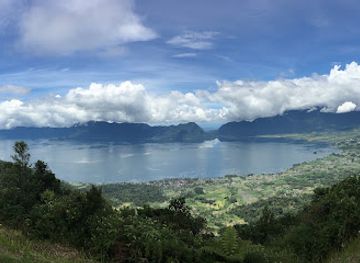
West Sumatra’s attractions range from urban heritage and food markets to volcanic landscapes and remote island journeys. In Padang, visitors can explore the old harbour area, traditional markets, shoreline districts and surviving historic buildings, while Bukittinggi provides access to the Ngarai Sianok gorge, the Lobang Jepang tunnels and the highland countryside. The reconstructed Istano Basa Pagaruyung presents Minangkabau royal architecture, and villages across Tanah Datar and Agam offer further opportunities to see rumah gadang and customary landscapes. Lake Maninjau, Lake Singkarak and the Harau Valley provide different settings for viewing, walking and photography, with the latter known for limestone cliffs and waterfalls. The Mandeh area in Pesisir Selatan is a coastal landscape of bays and wooded islands, while Pariaman offers beaches and maritime traditions. Offshore, the Mentawai Islands appeal to surfers, divers and travellers interested in forest and community-based experiences; Siberut National Park protects important rainforest habitat. Conditions and access vary considerably, so natural attractions are best approached with local advice rather than treated as a tightly connected circuit.
-
Monument
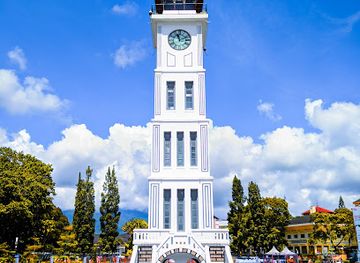
Jam Gadang Bukittinggi
Discover the majestic Jam Gadang, Bukittinggi's iconic clock tower, a symbol of West Sumatra's rich culture and history.
-
Mosque
Masjid Raya Syekh Ahmad Khatib Al-Minangkabawi Sumatera Barat
Discover the stunning Masjid Raya Syekh Ahmad Khatib Al-Minangkabawi in Padang, a cultural and spiritual landmark showcasing unique Minangkabau architecture.
-
Beach
Padang Beach
Experience the beauty of Padang Beach in West Sumatra—a stunning destination for relaxation, sunsets, and cultural exploration.
-
Tourist attraction
Puncak Lawang
Explore the stunning vistas and thrilling paragliding experiences at Puncak Lawang, the ultimate adventure destination in West Sumatra.


Best landmarks in West Sumatra
The Istano Basa Pagaruyung near Batusangkar is West Sumatra’s most recognisable symbol of Minangkabau royal heritage. Its multi-tiered rumah gadang form, ornate woodwork and setting in the Tanah Datar highlands express the architectural language associated with the former Pagaruyung court, although the present building is a reconstruction. In Bukittinggi, the Jam Gadang clock tower is the city’s central civic landmark, while the Ngarai Sianok forms a dramatic natural counterpoint below the town’s plateau. The Lobang Jepang tunnels, excavated during the Japanese occupation, provide a stark reminder of wartime military infrastructure. Sawahlunto’s mining offices, workshops, railway facilities and other industrial structures represent the region’s coal era and form part of the Ombilin heritage landscape recognised by UNESCO. Further afield, Lake Maninjau’s immense volcanic basin, the curved roads descending towards it and the forested islands of Mandeh are geographical landmarks rather than single monuments. Together these places show how West Sumatra’s identity has been shaped by customary architecture, colonial industry, volcanic geology and the sea.
-
Monument
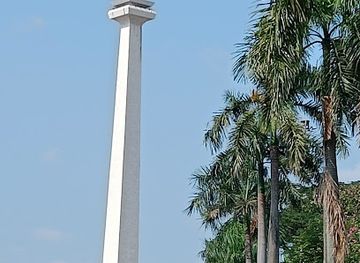
Monas
Explore Monas, Jakarta's iconic National Monument, a testament to Indonesia's independence with stunning views and rich historical insights.
-
Buddhist temple
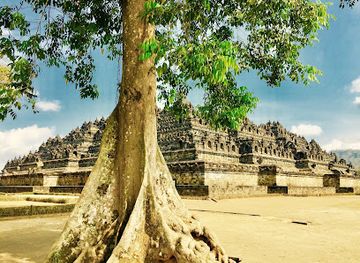
Borobudur Temple
Explore Borobudur Temple, the largest Buddhist monument in the world, where ancient history meets breathtaking beauty amidst Central Java’s lush landscapes.
-
Scenic spot
Tanah Lot
Discover the breathtaking beauty and cultural richness of Tanah Lot, Bali's iconic seaside temple, perfect for sunset views and spiritual experiences.
-
Park
Garuda Wisnu Kencana Cultural Park
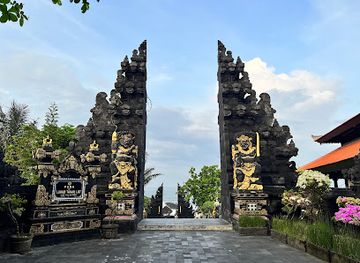
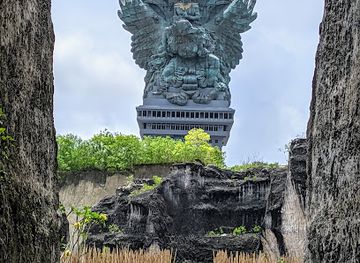
Explore Garuda Wisnu Kencana Cultural Park, Bali's cultural hub with stunning statues, traditional performances, and breathtaking landscapes.
Explore West Sumatra on the map
Plan your trip on one map. See where the top cities, national parks and sights are, and book hotels and experiences in a few clicks.
Best hotels in West Sumatra
Best restaurants in West Sumatra
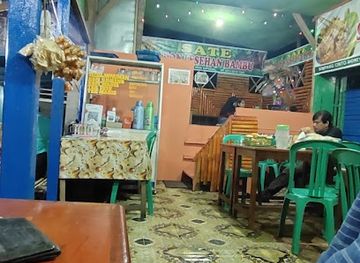
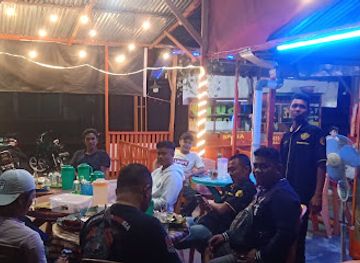
West Sumatran food is among Indonesia’s most influential regional cuisines, built around chilli, coconut milk, turmeric, galangal, ginger and aromatic leaves. Rendang is the best-known example, but visitors should also look for nasi kapau, usually served from bamboo baskets and accompanied by a wide choice of vegetables and spiced dishes, as well as sate Padang with its rich, thick sauce. Dendeng balado, gulai, ayam pop and fresh sambal are common across local eateries, with recipes differing between Padang, Bukittinggi, highland villages and the coast. Traditional rumah makan Padang restaurants offer quick, informal meals, while markets and roadside stalls provide breakfast dishes, snacks and sweet drinks. In coastal areas, fish and seafood feature more prominently. Look for local desserts and rice-based specialities such as lamang tapai, and sample coffee from the highlands where available. Dining is generally affordable, though menus may be less familiar in rural districts; ask about chilli levels if heat is a concern.
-
Restaurant
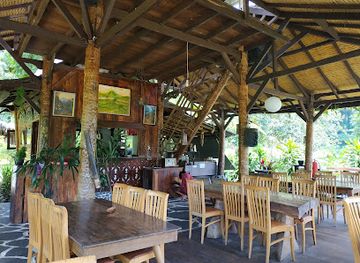
TARUKO Coffee & Resto
Experience authentic Indonesian cuisine amidst stunning landscapes at TARUKO Coffee & Resto in West Sumatra.
-
Padang restaurant
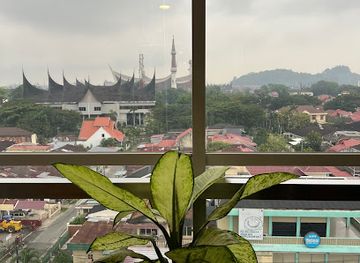
Skyline Restaurant Padang
Experience exquisite Indonesian flavors at Skyline Restaurant Padang with breathtaking views over the vibrant cityscape.
-
Satay restaurant
Sate Si Don Pondok Bambu
Experience authentic Indonesian flavors at Sate Si Don Pondok Bambu in Sawahlunto - a must-visit satay restaurant for every traveler.
-
Satay restaurant
SATE BERKAH
Experience authentic Indonesian flavors at Sate Berkah - a must-visit satay restaurant in West Sumatra offering delicious grilled delights.
Best bars in West Sumatra
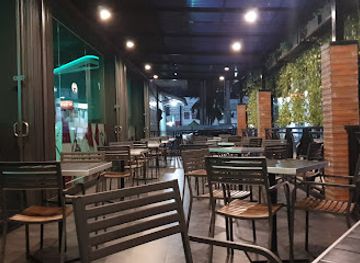
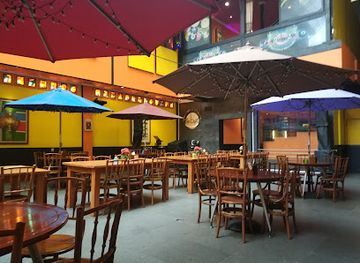
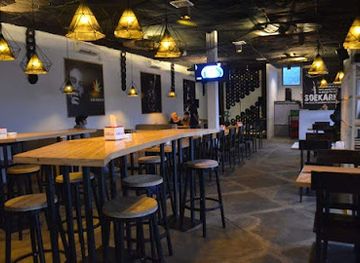
West Sumatra is not primarily a late-night clubbing destination, and public evening life is shaped more by food, family gatherings, cafés and traditional social spaces than by alcohol-focused venues. Padang has the broadest selection of modern cafés, restaurants with evening service and occasional live entertainment, while Bukittinggi offers relaxed cafés and hotel-based venues around its central streets. In smaller highland towns, evenings usually centre on rumah makan, coffee stalls, modest cafés and food markets, with activity winding down earlier. Alcohol is less prominent than in many Indonesian tourist areas, reflecting the province’s predominantly Muslim character, and visitors should respect local regulations and community expectations. The Mentawai Islands have a different atmosphere in surf-oriented areas, where guesthouses and small venues may provide informal evening gatherings, but facilities and hours are seasonal and limited. Check arrangements locally rather than assuming a permanent nightlife circuit.
-
Karaoke bar
Happy Puppy Thamrin
Experience the vibrant nightlife of Padang at Happy Puppy Thamrin, the ultimate karaoke bar where you can sing your favorite songs and enjoy great company.
-
Karaoke bar
Teebox Padang
Discover the vibrant karaoke scene at Teebox Padang, where every night transforms into a musical celebration of fun and friendship.
-
Malaysian
Hot Station
Experience the vibrant fusion of Malaysian flavors and live music at Hot Station in Padang City, an unforgettable culinary adventure.
-
Hotel
Bat & Arrow
Discover the stylish comfort of Bat & Arrow Hotel in Padang, a perfect base for exploring the beauty of West Sumatra.
Best nightclubs in West Sumatra
West Sumatra is not primarily a late-night clubbing destination, and public evening life is shaped more by food, family gatherings, cafés and traditional social spaces than by alcohol-focused venues. Padang has the broadest selection of modern cafés, restaurants with evening service and occasional live entertainment, while Bukittinggi offers relaxed cafés and hotel-based venues around its central streets. In smaller highland towns, evenings usually centre on rumah makan, coffee stalls, modest cafés and food markets, with activity winding down earlier. Alcohol is less prominent than in many Indonesian tourist areas, reflecting the province’s predominantly Muslim character, and visitors should respect local regulations and community expectations. The Mentawai Islands have a different atmosphere in surf-oriented areas, where guesthouses and small venues may provide informal evening gatherings, but facilities and hours are seasonal and limited. Check arrangements locally rather than assuming a permanent nightlife circuit.
-
Cocktail bar
VEGAS CLUB PADANG
Unleash your nightlife spirit at Vegas Club Padang, where cocktails, karaoke, and entertainment blend for an unforgettable experience.
-
Night club
candra bar
Discover the vibrant nightlife at Candra Bar in Padang, where electrifying music and delicious drinks create unforgettable moments.
-
Night club
Klub Malam Kotlintas
Discover the exciting nightlife at Klub Malam Kotlintas, a vibrant night club in Koto Padang, West Sumatra, perfect for dancing and socializing.
-
Night club
Rumah den
Discover the electrifying nightlife at Rumah Den, where music and culture unite in an unforgettable experience in Tanah Datar, West Sumatra.

Best shops in West Sumatra
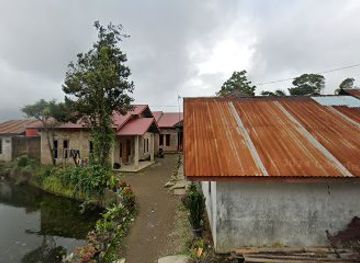
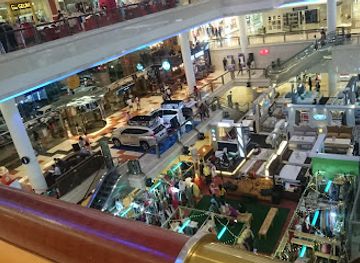
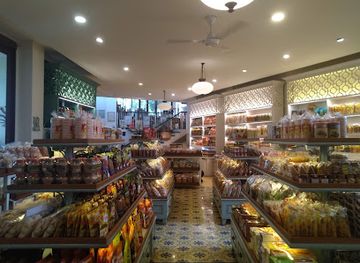
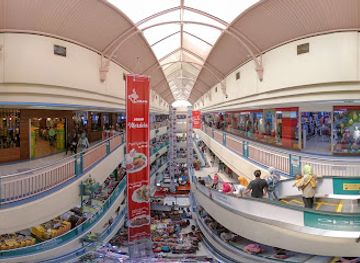
Shopping in West Sumatra combines practical markets, local food products and Minangkabau craft traditions rather than extensive luxury retail. Bukittinggi’s Pasar Atas and the streets around Jam Gadang are known for textiles, clothing, embroidery, bags, souvenirs and packaged regional foods, while its market culture makes comparison and polite bargaining part of the experience. Padang has larger modern shops and traditional markets where visitors can buy spices, snacks, coffee and ingredients associated with the province’s cuisine. Look for songket and other woven textiles, although quality and provenance vary, and ask sellers about care requirements before purchasing. Decorative items inspired by rumah gadang forms and Minangkabau motifs are widely available, as are small woodcarvings and locally produced foods. In highland towns, market stalls may offer fruit, vegetables, cinnamon, coffee and other agricultural products from surrounding districts. Bring reusable bags and protect food or textiles from humidity when travelling between the coast, mountains and islands.
-
Shopping mall
Sun Plaza
Explore Sun Plaza: Medan's ultimate shopping and dining experience, blending local charm with modern retail delights.
-
Outlet store
Rumah Mode Factory Outlet
Explore the ultimate shopping destination in Bandung, Rumah Mode Factory Outlet, where fashion meets affordability in a vibrant setting.
-
Shopping mall
Medan Mall
Discover shopping and dining at Medan Mall, a lively hub in Medan City, North Sumatra, offering a unique blend of local culture and modern retail.
-
Shopping mall
Basko Grand Mall
Explore Basko Grand Mall, Padang's vibrant shopping hub offering brands, dining, and entertainment in a modern setting.

Get your free copy of our complete guide to West Sumatra, delivered straight to you.
Everything on this page, from attractions and restaurants to essentials and local phrases, in one PDF you can read offline, print or share.
Already have an account? Sign in
Your West Sumatra guide is ready.
We'll send it to · Not you? Sign out

Getting your guide ready…
We are putting together a fresh copy of the West Sumatra guide. This can take up to a minute.
This can take a few moments. If your browser asks, choose Allow so the download can start. You'll find the guide in your Downloads folder.
Nothing happened? Download it again
Sorry, the guide is taking longer than usual. Please try again in a minute, or get it by email instead.
West Sumatra essentials
Currency and Payment
Safety
Emergency Situations
Do's and Don'ts
Local Tips
From Eve
Local phrases worth knowing
You don't need to get them perfect. A few words go a long way, and locals appreciate the effort.
Basics
| English | Local | Say it |
|---|---|---|
| Hello | Halo | [ha-lo] |
| Goodbye | Selamat tinggal | [suh-lah-maht ting-gahl] |
| Yes | Iya | [ee-yah] |
| No | Tidak | [tee-dahk] |
| Please/You're welcome | Silakan/Sama-sama | [see-lah-kan/sah-mah sah-mah] |
| Thank you | Terima kasih | [teh-ree-mah kah-see] |
| Excuse me/Sorry | Maaf | [mah-ahf] |
| How are you? | Apa kabar? | [ah-pah kah-bar] |
| Fine. And you? | Baik. Bagaimana denganmu? | [bye-k. bah-gai-mah-nah deh-ngan-moo] |
| Do you speak English? | Apakah kamu bisa berbahasa Inggris? | [ah-pah-kah kah-moo bee-sah ber-bah-sah ing-gris] |
| I don't understand | Saya tidak mengerti | [sah-yah tee-dahk men-ger-tee] |
Eating & Drinking
| English | Local | Say it |
|---|---|---|
| I'd like to see the menu, please | Saya ingin melihat menu, silakan | [sah-yah ee-ngin meh-lihat meh-nu, see-lah-kan] |
| I don't eat meat | Saya tidak makan daging | [sah-yah tee-dahk mah-kahn dah-ging] |
| Cheers! | Selamat minum! | [suh-lah-maht mee-noom] |
| I would like to pay, please | Saya ingin membayar, silakan | [sah-yah ee-ngin mem-bah-yar, see-lah-kan] |
Emergencies
| English | Local | Say it |
|---|---|---|
| Help! | Tolong! | [toh-long] |
| Go away! | Pergi dari sini! | [per-gee dah-ree see-nee] |
| Call the Police! | Panggil Polisi! | [pahn-gil poh-lee-see] |
| Call a doctor! | Panggil dokter! | [pahn-gil dok-ter] |
| I'm lost | Saya tersesat | [sah-yah ter-seh-saht] |
| I'm ill | Saya sakit | [sah-yah sah-kit] |
Shopping
| English | Local | Say it |
|---|---|---|
| I'd like to buy... | Saya ingin membeli... | [sah-yah ee-ngin mem-beh-li...] |
| I'm just looking | Saya hanya melihat | [sah-yah han-yah meh-lihat] |
| How much is it? | Berapa harganya? | [beh-rah-pah har-gah-nya] |
| That's too expensive | Itu terlalu mahal | [ee-too ter-lah-loo mah-hahl] |
| Can you lower the price? | Bisakah kamu menurunkan harga? | [bee-sah-kah kah-moo meh-noo-rung-kan har-gah] |
Time & Numbers
| English | Local | Say it |
|---|---|---|
| What time is it? | Jam berapa sekarang? | [jahm beh-rah-pah seh-kah-rang] |
| It's one o'clock | Jam satu | [jahm sah-too] |
| Half past (10) | Setengah (10) | [seh-teng-ah (10)] |
| Morning | Pagi | [pah-gee] |
| Afternoon | Sore | [so-reh] |
| Evening | Malam | [mah-lahm] |
| Yesterday | Kemarin | [keh-mah-rin] |
| Today | Hari ini | [hah-ree ee-nee] |
| Tomorrow | Besok | [beh-sok] |
| 1 | Satu | [sah-too] |
| 2 | Dua | [doo-ah] |
| 3 | Tiga | [tee-gah] |
| 4 | Empat | [em-pah-t] |
| 5 | Lima | [lee-mah] |
| 6 | Enam | [eh-nahm] |
| 7 | Tujuh | [too-joo] |
| 8 | Delapan | [deh-lah-pahn] |
| 9 | Sembilan | [sem-bee-lahn] |
| 10 | Sepuluh | [seh-poo-loo] |
Transport & Directions
| English | Local | Say it |
|---|---|---|
| Where's a/the...? | Di mana ...? | [dee mah-nah ...?] |
| What's the address? | Apa alamatnya? | [ah-pah ah-lah-maht-nya] |
| Can you show me (on the map)? | Bisakah kamu tunjukkan (di peta)? | [bee-sah-kah kah-moo toon-joo-kahn (dee peh-tah)?] |
| When's the next (bus)? | Kapan bus selanjutnya? | [kah-pahn boos seh-lanjut-nya?] |
| A ticket (to ....) | Tiket (ke ....) | [tee-ket (keh ....)] |
History of West Sumatra
Early settlement and the Minangkabau world
Archaeological evidence and oral traditions point to long-established settlement across the fertile valleys and uplands of West Sumatra. The Minangkabau cultural world developed around rice cultivation, forest resources, village alliances and customary law known as adat. Its social organisation became notably matrilineal, tracing descent and inheritance through the female line, while political authority was distributed among local communities rather than concentrated in a single modern-style state. These traditions remain important to identity and are reflected in ceremonies, kinship practices and the form of the rumah gadang.
Adityawarman and the Pagaruyung kingdom
In the fourteenth century, the ruler Adityawarman established a powerful court in the Minangkabau highlands, generally associated with the area around present-day Tanah Datar. His kingdom drew on earlier Sumatran and Javanese political traditions and left inscriptions that illuminate the region’s place in wider networks of power and religion. Pagaruyung later became the principal historical symbol of Minangkabau kingship. The modern Istano Basa Pagaruyung is a reconstruction rather than the surviving original palace, but it presents the architecture and royal memory that remain central to West Sumatran heritage.
Islam and the Padri conflict
Islam spread through West Sumatra over several centuries, carried by scholars, merchants and connections with ports around the Indian Ocean. In the early nineteenth century, reformist religious leaders known as the Padri challenged established practices and local authority, producing a prolonged civil and political conflict. Dutch intervention eventually turned the struggle into a colonial war, ending with the fall of Bonjol in 1837 after resistance associated with Tuanku Imam Bonjol. The period reshaped political power, religious life and relations between village adat and Islamic institutions.
Dutch colonial rule and the Padang highlands
The Dutch expanded control over West Sumatra during the nineteenth century, using Padang as a major administrative and commercial centre and building roads, government offices and military infrastructure into the highlands. Coffee, cinnamon and other commodities linked interior farming districts to ports and overseas markets. Colonial authority remained contested, and local rulers and communities retained significant social influence even as taxation and administration changed. Padang’s older civic buildings and the region’s road corridors preserve traces of this period, although earthquakes and later redevelopment have altered much of the historic fabric.
Coal, railways and Sawahlunto
The discovery and development of coal at Ombilin transformed the upland town of Sawahlunto from a relatively remote settlement into an industrial centre. Under Dutch rule, mines, railways, workshops, storage facilities and the harbour connection at Emmahaven, now Teluk Bayur in Padang, formed an integrated system. The industry depended heavily on coerced and contract labour, including workers transported from elsewhere. Mining declined in the twentieth century, but Sawahlunto’s surviving industrial buildings, tunnels and railway heritage convey the scale of colonial resource extraction. The Ombilin coal-mining heritage is recognised by UNESCO.
Revolution, provincial identity and modern Indonesia
West Sumatra played an important role during Indonesia’s struggle for independence and in the political debates that followed the creation of the republic. Padang and the highlands experienced revolutionary mobilisation, while the region later became associated with the Pemerintahan Revolusioner Republik Indonesia, or PRRI, an armed challenge to the central government in the late 1950s. The conflict left political and social effects but was eventually suppressed. Since then, West Sumatra has developed as an Indonesian province whose cities, migration networks, education traditions, tourism and food culture connect it closely to the wider nation.
Earthquakes, rebuilding and contemporary change
West Sumatra lies near the active boundary between the Indo-Australian and Eurasian tectonic plates and has experienced destructive earthquakes, including the major Padang earthquake of 2009. These events affected homes, public buildings, cultural sites and infrastructure, prompting continuing work on disaster preparedness and reconstruction. Contemporary West Sumatra combines expanding urban areas, highland agriculture, coastal development and growing island tourism. The region’s cultural inheritance remains visible, but it is continually adapted by migration, education, digital commerce and changing patterns of work.
West Sumatra in Photos
Browse through our photo collection highlighting the charm and character of the destination.
Neighbouring regions of West Sumatra
The closest regions to West Sumatra, if you have time for more than one.
-

-

-

-

-


Swipe for more regions
Explore more

Explore more of Indonesia
Explore Indonesia: An archipelago of diverse cultures, stunning landscapes, and endless adventures from bustling cities to serene beaches.
Explore Indonesia