

Highlands Papua, Indonesia Travel Guide
Explore the Highlands of Papua, Indonesia: A land of breathtaking landscapes, rich tribal cultures, and unparalleled natural beauty.
Nestled in the easternmost part of Indonesia, the Highlands of Papua offer a unique and unspoiled travel experience. This region is known for its rugged mountains, lush valleys, and traditional tribal cultures that have remained largely untouched by modernity. The cool climate and breathtaking landscapes make it a perfect getaway for nature lovers and adventure seekers alike. The Highlands are home to the Dani, Yali, and Lani tribes, each with their own distinct customs and way of life. Visitors can witness traditional ceremonies, intricate crafts, and vibrant festivals that provide a glimpse into the rich cultural tapestry of the region. The Baliem Valley, often referred to as the 'Shangri-La of Papua,' offers stunning views and opportunities for trekking through pristine rainforests and across picturesque rivers. For those with a passion for wildlife, the Highlands of Papua do not disappoint. The area is a biodiversity hotspot, boasting unique flora and fauna that cannot be found anywhere else in the world. Birdwatchers will be thrilled with the chance to spot the rare and beautiful birds of paradise, while hikers can explore the challenging trails of the Jayawijaya Mountains, which include the famous Puncak Jaya, the highest peak in Oceania.

Know before you go
Hi, I'm Eve. Here are a few practical things to know before exploring Highlands Papua.
- Travel during the dry season (May to October) for the best weather conditions.
- Hire a local guide to navigate the area and gain deeper insights into the tribal cultures.
- Be prepared for basic accommodations; luxury amenities are scarce.
- Respect local customs and traditions, always ask for permission before taking photos.
- Bring cash, as ATMs and card payment options are limited.
Explore Highlands Papua: Things to Do, Places to Eat, Hotels & More
Handpicked recommendations for top attractions, local dining, accommodations, and more

Top Attractions & Sightseeing in Highlands Papua
Top-rated picks
Best Attractions
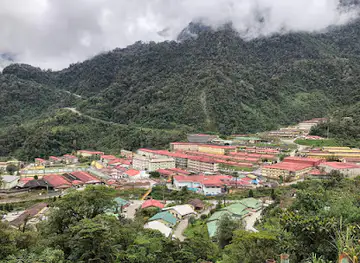
Puncak Jaya
Explore the breathtaking heights of Puncak Jaya, Indonesia’s tallest mountain peak, where adventure awaits amid stunning landscapes and rich culture.

Celebes Canyon
Explore Celebes Canyon, a stunning national reserve in South Sulawesi, where dramatic landscapes and rich biodiversity await your discovery.

Kayan Mentarang National Park
Explore the pristine wilderness of Kayan Mentarang National Park, a hidden gem in North Kalimantan, teeming with wildlife and breathtaking landscapes.

Papua Paradise Eco Resort
Discover the natural beauty and eco-luxury of Papua Paradise Eco Resort in Raja Ampat, a true paradise for nature lovers and adventure seekers.

Best landmarks in Highlands Papua
Top-rated picks
Best Landmarks
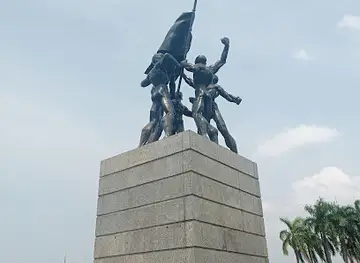
Monas
Discover the majestic Monas, the National Monument of Indonesia, a symbol of independence and cultural richness in the heart of Jakarta.

Borobudur Temple
Explore the grandeur of Borobudur Temple, a historical landmark and spiritual haven in Central Java, Indonesia, rich in culture and architectural brilliance.

Prambanan Temple
Explore the breathtaking beauty and rich history of Prambanan Temple, Indonesia's largest Hindu temple complex and a UNESCO World Heritage Site.

Tanah Lot
Discover the enchanting Tanah Lot, Bali's iconic sea temple known for its stunning views, rich culture, and breathtaking sunsets.

Best restaurants in Highlands Papua
Top-rated picks
Best Restaurants

Swiss-Belinn Timika
Discover unparalleled comfort at Swiss-Belinn Timika - your gateway to exploring the natural beauty of Papua.

Yougwa Danau Sentani
Discover authentic Papua cuisine at Yougwa Danau Sentani in Jakarta, where tradition meets flavor in an unforgettable dining experience.

Pit's Corner ( Papua Specialty Coffee )
Explore the authentic taste of Papua at Pit's Corner Coffee Shop - where every cup tells a story.

Mandala Sentani
Discover authentic Papuan cuisine at Mandala Sentani, where every bowl of porridge tells a story.

Best bars in Highlands Papua
Top-rated picks
Best Bars

Cerita Kita Cafe and Eatery
Discover the delightful flavors of Indonesia and beyond at Cerita Kita Cafe and Eatery, nestled in the scenic beauty of Central Java.

Swiss-Belhotel Jayapura, Papua
Discover the beauty of Papua while enjoying the luxurious amenities at Swiss-Belhotel Jayapura, your perfect getaway in Jayapura City.

Aston Jayapura Hotel & Convention Center
Experience luxury and local charm at Aston Jayapura Hotel & Convention Center, your perfect base for exploring the beauty of Papua.
Swiss-Belhotel Merauke
Experience the perfect blend of modern luxury and traditional Indonesian hospitality at Swiss-Belhotel Merauke, your gateway to Papua's stunning attractions.

Best nightclubs in Highlands Papua
Top-rated picks
Best Nightclubs

BLUE ANGELS CLUB
Immerse yourself in the vibrant nightlife of Jayapura at Blue Angels Club, where music, dance, and unforgettable memories await.

Boulevard 2 Bar & Karaoke
Experience the vibrant nightlife of Jayapura at Boulevard 2 Bar & Karaoke—where singing and fun unite in a lively atmosphere.

STARLIGHT EXECUTIVE CLUB
Immerse yourself in the electrifying nightlife of Sorong City at Starlight Executive Club, where music and fun come alive.

CLOUD9 CLUB JAYAPURA
Discover the electrifying nightlife of Cloud9 Club Jayapura, where music, dancing, and vibrant energy create unforgettable experiences.

Best shops in Highlands Papua
Top-rated picks
Best Shops

Vision City Mega Mall
Experience shopping, dining, and entertainment at Vision City Mega Mall, the premier shopping destination in Port Moresby, Papua New Guinea.

Mount Hagen Market
Explore the vibrant Mount Hagen Market for fresh produce and a taste of Papua New Guinea's rich cultural heritage.

Tininga Dobel Supermarket
Discover local flavors and culture at Tininga Dobel Supermarket in Papua New Guinea's Western Highlands, a vibrant hub for tourists and locals alike.

Tininga Best Buy
Explore local flavors at Tininga Best Buy, a vibrant supermarket in Mount Hagen, offering fresh produce and unique snacks from Papua New Guinea.

Explore Highlands Papua on the Map
A handpicked selection of must-see spots in Highlands Papua, mapped for you.
Highlands Papua Essentials
-
Highlands Papua is located in the central part of Papua province in Indonesia. The main gateway to this region is through Wamena, which can be reached by air from Jayapura, the provincial capital. Several airlines operate daily flights from Jayapura's Sentani Airport to Wamena Airport. Alternatively, you can reach Highlands Papua by taking a flight from Jakarta or Bali to Jayapura first and then proceeding to Wamena.
-
Within Highlands Papua, transportation options include local minibuses, known as 'angkots,' and taxis. For more remote areas, ojek (motorcycle taxis) are commonly used. Renting a vehicle with a driver is also a popular choice for tourists wanting to explore the region more comfortably. Keep in mind that road conditions can be challenging, particularly during the rainy season.
-
The official currency in Indonesia is the Indonesian Rupiah (IDR). In Highlands Papua, cash is the predominant form of payment, especially in smaller towns and rural areas. ATMs are available in larger towns like Wamena, but it is advisable to carry sufficient cash when traveling to more remote areas. Credit cards are accepted in some hotels and larger establishments but are not widely used.
-
Highlands Papua is generally safe for tourists, but it is essential to exercise caution. Some areas may have higher crime rates, and it is advisable to avoid walking alone at night or in isolated areas. Always keep an eye on your belongings and be aware of your surroundings. It is recommended to stay updated on local news and follow advice from local authorities or your travel guide.
-
In case of emergency, you can dial 112 for immediate assistance. The local police station and medical facilities are available in Wamena and other larger towns. It is highly recommended to have travel insurance that covers medical emergencies and evacuation. For minor health issues, there are pharmacies where you can purchase over-the-counter medications. Always keep a list of emergency contacts with you.
-
Fashion: Do dress modestly, especially in rural areas and when visiting religious sites. Avoid wearing revealing clothing. Religion: Do respect local customs and traditions. Always ask for permission before taking photos of people or entering sacred sites. Public Transport: Do be courteous and respectful to fellow passengers. Don't be loud or disruptive. Greetings: Do greet people with a warm smile and a nod. A handshake is also common. Eating & Drinking: Do try local dishes and accept food offerings graciously. Don't waste food, as it is considered disrespectful.
-
To experience Highlands Papua like a local, visit traditional markets where you can buy fresh produce, handmade crafts, and local delicacies. Engage with the local communities and learn about their unique cultural practices and way of life. Don't miss the opportunity to witness traditional dances and ceremonies, which are an integral part of the local culture. For a unique experience, consider staying in a traditional 'honai' house to get a deeper understanding of the local lifestyle.
When is the best time to visit Highlands Papua?
Useful Local Phrases for Highlands Papua
You don't need to speak the language perfectly. Even learning a few simple words can make conversations warmer—and locals usually appreciate the effort.
— Eve

Here are the phrases I use most often in Highlands Papua. Try a few—you'll be surprised how far they go! 😊
❤️
-
- HelloHalo
[Ha-lo] - GoodbyeSampai jumpa
[Sam-pai jum-pa] - YesIya
[Ee-ya] - NoTidak
[Ti-dak] - Please/You're welcomeSilakan
[Si-la-kan] - Thank youTerima kasih
[Te-ri-ma ka-sih] - Excuse me/SorryMaaf
[Ma-af] - How are you?Apa kabar?
[A-pa ka-bar] - Fine. And you?Baik. Dan kamu?
[Ba-ik. Dan ka-mu] - Do you speak English?Apakah kamu bisa berbahasa Inggris?
[A-pa-kah ka-mu bi-sa ber-ba-ha-sa Ing-gris] - I don't understandSaya tidak mengerti
[Sa-ya ti-dak men-ger-ti]
- HelloHalo
-
- I'd like to see the menu, pleaseSaya ingin melihat menu, silakan
[Sa-ya in-gin me-li-hat me-nu, si-la-kan] - I don't eat meatSaya tidak makan daging
[Sa-ya ti-dak ma-kan da-ging] - Cheers!Selamat makan!
[Se-la-mat ma-kan] - I would like to pay, pleaseSaya ingin membayar, silakan
[Sa-ya in-gin mem-ba-yar, si-la-kan]
- I'd like to see the menu, pleaseSaya ingin melihat menu, silakan
-
- Help!Tolong!
[To-long] - Go away!Pergi sana!
[Per-gi sa-na] - Call the Police!Panggil polisi!
[Pan-gil po-li-si] - Call a doctor!Panggil dokter!
[Pan-gil dok-ter] - I'm lostSaya tersesat
[Sa-ya ter-se-sat] - I'm illSaya sakit
[Sa-ya sa-kit]
- Help!Tolong!
-
- I'd like to buy...Saya ingin membeli...
[Sa-ya in-gin mem-be-li] - I'm just lookingSaya hanya melihat
[Sa-ya han-ya me-li-hat] - How much is it?Berapa harganya?
[Be-ra-pa har-ga-nya] - That's too expensiveItu terlalu mahal
[I-tu ter-la-lu ma-hal] - Can you lower the price?Bisakah kamu menurunkan harga?
[Bi-sa-kah ka-mu me-nu-run-kan har-ga]
- I'd like to buy...Saya ingin membeli...
-
- What time is it?Jam berapa?
[Jam be-ra-pa] - It's one o'clockJam satu
[Jam sa-tu] - Half past (10)Setengah (10)
[Se-ten-gah] - MorningPagi
[Pa-gi] - AfternoonSore
[So-re] - EveningMalam
[Ma-lam] - YesterdayKemarin
[Ke-ma-rin] - TodayHari ini
[Ha-ri i-ni] - TomorrowBesok
[Be-sok] - 1Satu
[Sa-tu] - 2Dua
[Dua] - 3Tiga
[Ti-ga] - 4Empat
[Em-pat] - 5Lima
[Li-ma] - 6Enam
[E-nam] - 7Tujuh
[Tu-juh] - 8Delapan
[De-la-pan] - 9Sembilan
[Sem-bi-lan] - 10Sepuluh
[Se-pu-luh]
- What time is it?Jam berapa?
-
- Where's a/the...?Di mana ...?
[Di ma-na] - What's the address?Apa alamatnya?
[A-pa a-la-mat-nya] - Can you show me (on the map)?Bisakah kamu tunjukkan (di peta)?
[Bi-sa-kah ka-mu tun-juk-kan (di pe-ta)] - When's the next (bus)?Kapan bus selanjutnya?
[Ka-pan bus se-lan-jut-nya] - A ticket (to ....)Sebuah tiket (ke ...)
[Se-buah ti-ket (ke ...)]
- Where's a/the...?Di mana ...?
History of Highlands Papua
-
Highlands Papua, home to diverse indigenous tribes such as the Dani, Yali, and Lani, has a rich pre-colonial history. These tribes developed complex social systems and agricultural practices, including the cultivation of sweet potatoes and taro. The highlanders built impressive stone walls and irrigation systems for their terraced fields, showcasing advanced engineering skills.
-
The first recorded European contact with Highlands Papua was by Dutch explorers in the early 20th century. In 1938, American explorer Richard Archbold conducted an aerial survey and discovered the Baliem Valley, which led to increased Western interest and exploration. The discovery of the valley was pivotal in bringing global attention to the region.
-
During the Dutch colonial period, Highlands Papua experienced limited direct control due to its remote and rugged terrain. However, the Dutch established missionary posts and schools, which began to influence the local cultures and traditions. The period also saw the introduction of Christianity, which slowly started to blend with indigenous beliefs.
-
The region became part of Indonesia in 1963 following the end of Dutch colonial rule and the subsequent 'Act of Free Choice' in 1969. This period was marked by significant political and social upheaval, as many highlanders resisted integration into Indonesia. The Indonesian government initiated various development projects aimed at integrating the region with the rest of the country.
-
Highlands Papua is renowned for its rich cultural heritage. Traditional ceremonies such as the 'Wamena Pig Feast,' an essential social event, continue to be practiced. The Dani people are known for their elaborate body art, including penis gourds and intricate face painting. These cultural expressions serve as a form of identity and social cohesion within the tribes.
-
In recent decades, Highlands Papua has faced numerous challenges, including deforestation, mining, and social conflicts. The Indonesian government has invested in infrastructure projects like the Trans-Papua Highway to improve connectivity. However, these developments have had mixed impacts on the local communities, leading to ongoing debates about sustainability and cultural preservation.
-
Tourism in Highlands Papua has grown steadily, offering opportunities for economic development but also posing risks to the local culture and environment. Treks to the Baliem Valley and visits to traditional villages provide immersive experiences for visitors. Efforts are being made to promote sustainable tourism that respects local traditions and minimizes environmental footprints.
Neighbouring Regions of Highlands Papua
The closest regions to Highlands Papua, if you have time for more than one.




Your all‑in‑one travel companion app
Explore expert travel guides, compare and book tours, experiences, hotels, and more—all from the palm of your hand. Download now for seamless trip planning wherever your wanderlust takes you.


Explore More of Indonesia

Looking beyond Highlands Papua? Discover Indonesia for broader travel guides, local hot-spots, and regional highlights.
Explore IndonesiaHighlands Papua in Photos
Browse through our photo collection highlighting the charm and character of the destination.


Discover the Untamed Beauty of Highlands Papua
Nestled in the easternmost part of Indonesia, the Highlands of Papua offer a unique and unspoiled travel experience. This region is known for its rugged mountains, lush valleys, and traditional tribal cultures that have remained largely untouched by modernity. The cool climate and breathtaking landscapes make it a perfect getaway for nature lovers and adventure seekers alike. The Highlands are home to the Dani, Yali, and Lani tribes, each with their own distinct customs and way of life. Visitors can witness traditional ceremonies, intricate crafts, and vibrant festivals that provide a glimpse into the rich cultural tapestry of the region. The Baliem Valley, often referred to as the 'Shangri-La of Papua,' offers stunning views and opportunities for trekking through pristine rainforests and across picturesque rivers. For those with a passion for wildlife, the Highlands of Papua do not disappoint. The area is a biodiversity hotspot, boasting unique flora and fauna that cannot be found anywhere else in the world. Birdwatchers will be thrilled with the chance to spot the rare and beautiful birds of paradise, while hikers can explore the challenging trails of the Jayawijaya Mountains, which include the famous Puncak Jaya, the highest peak in Oceania.