
Amana Colonies, Iowa Travel Guide
Discover the timeless charm of the Amana Colonies in Iowa, where history, culture, and nature blend seamlessly in a captivating experience.
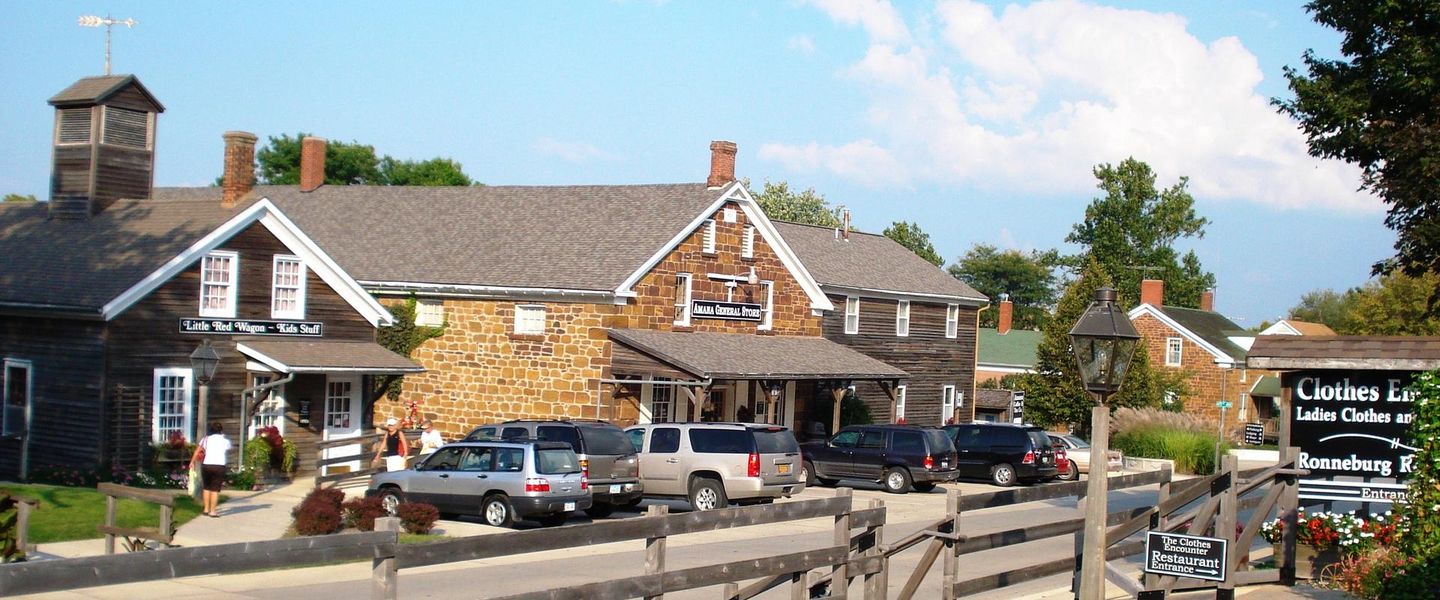
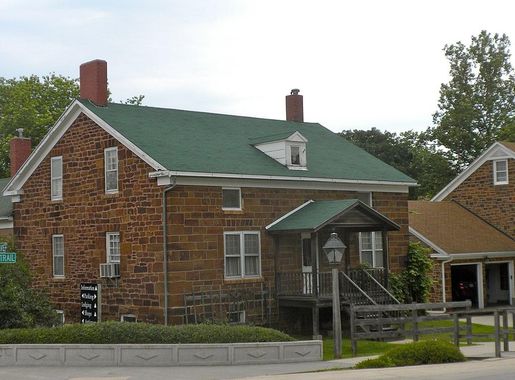
The Amana Colonies in Iowa are a collection of seven villages that offer a unique glimpse into the past. Established in the mid-19th century by German Pietists, these colonies have preserved their rich cultural heritage and traditional way of life. Visitors to the Amana Colonies can explore beautifully maintained historic buildings, gardens, and museums that tell the story of this close-knit community's history and craftsmanship. Strolling through the cobblestone streets, you'll find a variety of quaint shops and artisanal boutiques selling handcrafted goods, from furniture and quilts to homemade jams and wines. The Amana Woolen Mill, the oldest continuously operating woolen mill in the United States, is a must-see. It offers fascinating insights into the traditional methods of weaving and textile production. Food lovers will delight in the authentic German cuisine available in the colonies' family-style restaurants. Enjoy hearty dishes like schnitzel, bratwurst, and sauerkraut, all made from recipes passed down through generations. Don't miss the chance to sample locally brewed beers and wines from the Amana wineries and breweries, known for their exceptional quality. Throughout the year, the Amana Colonies host numerous festivals and events that celebrate their heritage, including Maifest, Oktoberfest, and the Christmas market. Each event offers a unique opportunity to experience the local culture, with music, dance, and traditional crafts on display. The scenic landscapes surrounding the villages provide ample opportunities for outdoor activities like hiking, biking, and bird-watching, making the Amana Colonies a perfect destination for both history enthusiasts and nature lovers.

Know before you go
Hi, I'm Eve. Here are a few practical things to know before exploring Amana Colonies.
- Visit during one of the annual festivals for a more immersive cultural experience.
- Take a guided tour to learn more about the history and significance of each village.
- Try the local wines and beers, which are unique to the region.
- Wear comfortable walking shoes as the best way to explore is on foot.
- Check the weather forecast and dress in layers, as Iowa weather can be unpredictable.

Best landmarks in Amana Colonies
Top-rated picks
Best Landmarks

Herbert Hoover National Historic Site
Discover the birthplace of President Herbert Hoover at this historic site filled with rich American history and beautiful landscapes in West Branch, Iowa.

Hotel Millwright In Amana
Discover the historic charm and modern comfort of Hotel Millwright in Amana, a perfect retreat for travelers seeking local culture and tranquility.

Old Capitol Museum
Discover Iowa's history at the Old Capitol Museum, an iconic landmark showcasing rich heritage and captivating exhibits in Iowa City.

Cedar Rock State Park - Lowell and Agnes Walter Estate
Explore Cedar Rock State Park, a historical landmark featuring Frank Lloyd Wright's architectural masterpiece amidst serene Iowa landscapes.

Best restaurants in Amana Colonies
Top-rated picks
Best Restaurants

Ox Yoke Inn
Discover delightful American and German cuisine at Ox Yoke Inn in Amana Colonies - perfect for family gatherings or special occasions.

Tin Roost
Experience the best of American cuisine at Tin Roost in North Liberty – where comfort food meets creativity in a welcoming atmosphere.

Ronneburg Restaurant
Experience authentic German cuisine at Ronneburg Restaurant in Amana - where tradition meets taste in every bite.

Millstream Brau Haus
Discover authentic German cuisine and craft beers at Millstream Brau Haus in Amana Colonies – where tradition meets taste.

Best bars in Amana Colonies
Top-rated picks
Best Bars
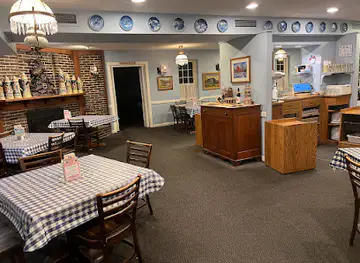
Ox Yoke Inn
Experience family-friendly dining at Ox Yoke Inn, where American and German flavors come together in a charming setting in the Amana Colonies.

Ronneburg Restaurant
Experience authentic German cuisine at Ronneburg Restaurant in Amana, where tradition meets culinary excellence in a cozy setting.
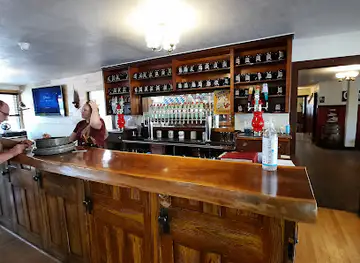
Millstream Brau Haus
Experience authentic German cuisine and craft beers at Millstream Brau Haus, a historic brewpub in Amana, Iowa, perfect for food enthusiasts and travelers.

Wild Hogs Saloon & Eatery
Experience the lively atmosphere of Wild Hogs Saloon & Eatery, where delicious food meets vibrant nightlife in the heart of Walford, Iowa.

Best nightclubs in Amana Colonies
Top-rated picks
Best Nightclubs

Electric Thread Social Club
Discover the lively Electric Thread Social Club in Amana, Iowa, where great food, drinks, and a vibrant social scene await you.

Bierstube Bar in the Ox Yoke Inn
Discover the cozy Bierstube Bar at Ox Yoke Inn, where local flavors and a welcoming atmosphere come together in the heart of the Amana Colonies.

Best shops in Amana Colonies
Top-rated picks
Best Shops

Amana Meat Shop & Smokehouse
Experience the rich flavors of artisan meats at Amana Meat Shop & Smokehouse, a culinary highlight in the historic Amana Colonies.

Amana Furniture & Clock Shop
Explore exquisite handcrafted furniture and clocks at Amana Furniture & Clock Shop in the historic Amana Colonies, Iowa.

The Chocolate Haus - Amana
Explore the enchanting world of chocolates at The Chocolate Haus in Amana, Iowa, where sweet dreams become delicious realities.

Fern Hill Gifts and Quilts
Explore unique gifts, handmade quilts, and antique treasures at Fern Hill Gifts and Quilts in South Amana, Iowa, a must-visit for every traveler.

Explore Amana Colonies on the Map
A handpicked selection of must-see spots in Amana Colonies, mapped for you.
Amana Colonies Essentials
-
The Amana Colonies are located in eastern Iowa, near the town of Amana. The nearest major airport is the Eastern Iowa Airport (CID) in Cedar Rapids, approximately 30 miles away. From the airport, you can rent a car or take a taxi to reach Amana Colonies. If you are driving, the Colonies are conveniently accessible via Interstate 80 and U.S. Highway 151. Public transportation options are limited, so renting a car is recommended for the most convenient travel.
-
Within the Amana Colonies, most attractions are within walking distance of each other in the various villages. For those looking to explore the area more extensively, renting a bike is a popular option. There are also local taxi services available for longer trips. It is important to note that public transportation options, such as buses or trains, are not available within the Colonies, so a personal vehicle or rental is the most practical means of getting around.
-
The official currency in the United States is the U.S. Dollar (USD). Most businesses in the Amana Colonies accept major credit cards, including Visa, MasterCard, and American Express. However, it is advisable to carry some cash, especially when visiting smaller shops or markets. ATMs are available in the area for your convenience.
-
The Amana Colonies are generally very safe for tourists. The crime rate is low, and there are no specific areas with high crime rates targeting tourists. Nonetheless, it is always wise to stay vigilant, keep an eye on personal belongings, and avoid leaving valuables in plain sight inside your vehicle. Standard travel precautions should suffice to ensure a safe and enjoyable visit.
-
In case of an emergency, dial 911 for immediate assistance from local police, fire, and medical services. The nearest hospital is Mercy Medical Center in Cedar Rapids, about 30 miles away. For minor health issues, there are pharmacies in nearby towns where you can purchase over-the-counter medications. It is also advisable to carry travel insurance that covers medical emergencies.
-
Fashion: Do dress comfortably and casually, but avoid overly revealing clothing as the community values modesty. Religion: Do respect the local customs and traditions, particularly when visiting churches or historical sites. Public Transport: Do note that public transport is limited, so plan to use a rental car or bike. Greetings: Do greet people with a friendly smile and a handshake. Residents are known for their hospitality. Eating & Drinking: Do try local foods and drink offerings. Don't refuse hospitality, as it is considered impolite.
-
To experience the Amana Colonies like a local, visit during one of their many festivals, such as Maifest or Oktoberfest. These events offer a deep dive into the local culture, food, and traditions. Engage with local artisans and craftsmen, many of whom are happy to share the history and techniques behind their work. Don't miss the Amana Meat Shop and Smokehouse for some of the best local meats and cheeses. Additionally, take a scenic drive through the countryside to fully appreciate the area's natural beauty.
When is the best time to visit Amana Colonies?
Useful Local Phrases for Amana Colonies
You don't need to speak the language perfectly. Even learning a few simple words can make conversations warmer—and locals usually appreciate the effort.
— Eve

Here are the phrases I use most often in Amana Colonies. Try a few—you'll be surprised how far they go! 😊
❤️
-
- HelloHallo
[hahl-loh] - GoodbyeAuf Wiedersehen
[owf vee-der-zay-en] - YesJa
[yah] - NoNein
[nine] - Please/You're welcomeBitte
[bi-teh] - Thank youDanke
[dahn-keh] - Excuse me/SorryEntschuldigung
[ent-shool-di-goong] - How are you?Wie geht's?
[vee gates] - Fine. And you?Gut. Und dir?
[goot. oond deer] - Do you speak English?Sprechen Sie Englisch?
[shpre-chen zee eng-lish] - I don't understandIch verstehe nicht
[ikh fer-shtay-eh nikht]
- HelloHallo
-
- I'd like to see the menu, pleaseIch möchte die Speisekarte sehen, bitte
[ikh merkh-teh dee spy-ze-kar-teh zay-en, bi-teh] - I don't eat meatIch esse kein Fleisch
[ikh es-seh kine flysh] - Cheers!Prost!
[prohst] - I would like to pay, pleaseIch möchte bezahlen, bitte
[ikh merkh-teh beh-tsah-len, bi-teh]
- I'd like to see the menu, pleaseIch möchte die Speisekarte sehen, bitte
-
- Help!Hilfe!
[hil-feh] - Go away!Geh weg!
[geh veg] - Call the Police!Rufen Sie die Polizei!
[roo-fen zee dee poh-li-tsai] - Call a doctor!Rufen Sie einen Arzt!
[roo-fen zee eye-nen arts-t] - I'm lostIch bin verloren
[ikh bin fer-lo-ren] - I'm illIch bin krank
[ikh bin krank]
- Help!Hilfe!
-
- I'd like to buy...Ich möchte ... kaufen
[ikh merkh-teh ... kow-fen] - I'm just lookingIch schaue nur
[ikh shau-eh noor] - How much is it?Wie viel kostet es?
[vee feel cost-et es] - That's too expensiveDas ist zu teuer
[dahs ist tsoo toy-er] - Can you lower the price?Können Sie den Preis senken?
[kuh-nen zee den price sen-ken]
- I'd like to buy...Ich möchte ... kaufen
-
- What time is it?Wie spät ist es?
[vee shpayt ist es] - It's one o'clockEs ist ein Uhr
[es ist ine ooh-r] - Half past (10)Halb (10)
[halp (10)] - MorningMorgen
[mor-gen] - AfternoonNachmittag
[nahkh-mit-tahg] - EveningAbend
[ah-bend] - YesterdayGestern
[ges-tern] - TodayHeute
[hoy-teh] - TomorrowMorgen
[mor-gen] - 1Eins
[ines] - 2Zwei
[tsvai] - 3Drei
[dry] - 4Vier
[feer] - 5Fünf
[fünf] - 6Sechs
[zex] - 7Sieben
[zee-ben] - 8Acht
[ahkt] - 9Neun
[noyn] - 10Zehn
[tsane]
- What time is it?Wie spät ist es?
-
- Where's a/the...?Wo ist ein/e...?
[voh ist ine/e...?] - What's the address?Was ist die Adresse?
[vahs ist dee ah-dres-seh] - Can you show me (on the map)?Können Sie mir (auf der Karte) zeigen?
[kuh-nen zee meer (owf der kar-teh) tsai-gen] - When's the next (bus)?Wann kommt der nächste (Bus)?
[vahn komt der nay-sh-teh (boos)?] - A ticket (to ....)Ein Ticket (nach ...)
[ine ti-ket (nahkh ...)]
- Where's a/the...?Wo ist ein/e...?
History of Amana Colonies
-
The Amana Colonies were established in 1855 by German Pietists seeking religious freedom. Led by Christian Metz, this group, known as the Community of True Inspiration, bought 18,000 acres in Iowa to create a communal society. The settlers named their new home 'Amana,' derived from the Song of Solomon, meaning 'to remain true.'
-
The roots of the Amana Colonies trace back to the 18th-century Pietist movement in Germany. The Community of True Inspiration was founded in 1714 by Eberhard Ludwig Gruber and Johann Friedrich Rock, who advocated for a return to simple, devout Christianity. Persecution and economic hardship in Germany prompted the group to seek a new home in America.
-
The year 1932 marked a significant transformation for the Amana Colonies with the 'Great Change.' The communal way of life, which had been the foundation of Amana for nearly 80 years, was dissolved. The community transitioned to a more capitalistic structure, forming the Amana Society, Inc. to manage communal property and businesses, while the Amana Church Society continued to oversee religious affairs.
-
In 1934, the Amana Society diversified its economic activities by acquiring the rights to manufacture an innovative beverage cooler. This venture eventually led to the development of the Amana Refrigerator, which became a household name in the United States. The success of this enterprise played a crucial role in the economic stability of the Amana Colonies post-Great Change.
-
Founded in 1968, the Amana Heritage Society aims to preserve and share the unique history and culture of the Amana Colonies. It operates museums, historical sites, and archives that offer visitors a glimpse into the communal life, craftsmanship, and traditions of the Inspirationists. The society's efforts have helped maintain the distinctive character of the colonies in a rapidly changing world.
-
The Amana Colonies have long been renowned for their high-quality craftsmanship and industry, particularly in textiles, furniture, and food production. The woolen mill, established in 1857, and the furniture shop, founded in 1859, are notable examples. These industries not only provided economic stability but also allowed the Inspirationists to maintain their self-sufficient, communal lifestyle.
-
Religion has always been a cornerstone of life in the Amana Colonies. The Amana Church Society continues to uphold the spiritual practices and communal worship initiated by the Community of True Inspiration. Church services, held in German until the mid-20th century, remain a vital part of community life, reflecting the enduring faith and traditions of the Inspirationists.
Neighbouring Regions of Amana Colonies
The closest regions to Amana Colonies, if you have time for more than one.


Your all‑in‑one travel companion app
Explore expert travel guides, compare and book tours, experiences, hotels, and more—all from the palm of your hand. Download now for seamless trip planning wherever your wanderlust takes you.


Explore More of Iowa

Looking beyond Amana Colonies? Discover Iowa for broader travel guides, local hot-spots, and regional highlights.
Explore IowaAmana Colonies in Photos
Browse through our photo collection highlighting the charm and character of the destination.
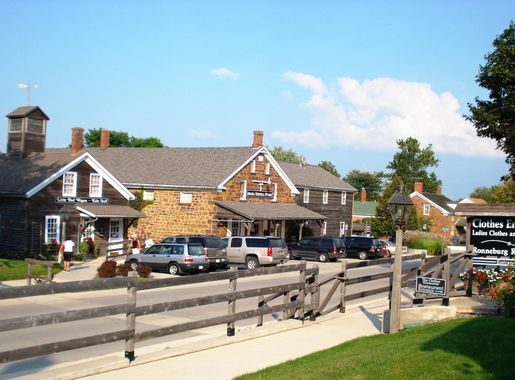


The Charming Amana Colonies: A Step Back in Time
The Amana Colonies in Iowa are a collection of seven villages that offer a unique glimpse into the past. Established in the mid-19th century by German Pietists, these colonies have preserved their rich cultural heritage and traditional way of life. Visitors to the Amana Colonies can explore beautifully maintained historic buildings, gardens, and museums that tell the story of this close-knit community's history and craftsmanship. Strolling through the cobblestone streets, you'll find a variety of quaint shops and artisanal boutiques selling handcrafted goods, from furniture and quilts to homemade jams and wines. The Amana Woolen Mill, the oldest continuously operating woolen mill in the United States, is a must-see. It offers fascinating insights into the traditional methods of weaving and textile production. Food lovers will delight in the authentic German cuisine available in the colonies' family-style restaurants. Enjoy hearty dishes like schnitzel, bratwurst, and sauerkraut, all made from recipes passed down through generations. Don't miss the chance to sample locally brewed beers and wines from the Amana wineries and breweries, known for their exceptional quality. Throughout the year, the Amana Colonies host numerous festivals and events that celebrate their heritage, including Maifest, Oktoberfest, and the Christmas market. Each event offers a unique opportunity to experience the local culture, with music, dance, and traditional crafts on display. The scenic landscapes surrounding the villages provide ample opportunities for outdoor activities like hiking, biking, and bird-watching, making the Amana Colonies a perfect destination for both history enthusiasts and nature lovers.