

Free County Waterford Travel Guide & Mobile App
Explore County Waterford with free travel guides. Discover regional history, expert tips, proposed trips, and audio guides on web or mobile app.


Explore County Waterford for Viking history, the Copper Coast, coastal villages, mountain scenery, cycling routes and contemporary food culture.
Read more about County Waterford
When is the best time to visit County Waterford?
Best: June–August · 18–20°C| Month | High (°C) | Rainfall (mm) |
|---|---|---|
| January | 8 | 100 |
| February | 9 | 80 |
| March | 11 | 80 |
| April | 13 | 70 |
| May | 16 | 70 |
| June (best) | 18 | 70 |
| July (best) | 20 | 80 |
| August (best) | 20 | 90 |
| September | 18 | 80 |
| October | 14 | 100 |
| November | 11 | 90 |
| December | 9 | 100 |
Getting to and around County Waterford
How to get there
Transportation
Top city travel guides in County Waterford
The cities of County Waterford, and the easiest places to base yourself.

Swipe for more cities
Best attractions in County Waterford
County Waterford’s attractions range from urban heritage to open coastal and mountain landscapes. In Waterford city, the Viking Triangle brings together museums, medieval remains and the city’s most concentrated historic interpretation. The Waterford Greenway offers a car-free route for cycling and walking along a former railway corridor between Waterford and Dungarvan, passing through rural scenery and engineering remains. Along the coast, the Copper Coast UNESCO Global Geopark combines coves, cliffs, unusual rock formations and evidence of nineteenth-century mining, while Ardmore adds an early Christian settlement and a coastal cliff walk. Tramore provides a broad sandy beach and seafront recreation, and Dunmore East has harbour scenery and access to coastal paths. Inland, the Comeragh Mountains offer hillwalking around Mahon Falls and surrounding valleys. The gardens at Mount Congreve and the historic setting of Lismore provide a different experience, centred on horticulture, architecture and the wooded Blackwater valley. Smaller museums, galleries, churches and heritage sites add depth to an itinerary that is less about a single headline attraction than about moving between contrasting landscapes and settlements.
-
Historical place
Hook Lighthouse
Explore the historic Hook Lighthouse in County Wexford, a stunning maritime landmark with breathtaking coastal views and rich heritage.
-
Tourist attraction
House of Waterford
Explore the House of Waterford, a must-visit attraction showcasing the artistry and history behind Waterford Crystal in the heart of Ireland.
-
Tourist attraction
Mahon Falls
Experience the breathtaking beauty of Mahon Falls in County Waterford, a perfect escape for nature lovers and adventure seekers alike.
-
Tourist attraction
Waterford Suir Valley Railway
Explore the scenic beauty and rich history of County Waterford aboard the charming Waterford Suir Valley Railway, a must-visit tourist attraction.


Best landmarks in County Waterford
Waterford city’s most recognisable landmark is Reginald’s Tower, a substantial medieval defensive building that reflects the city’s Viking foundation and later strategic importance. Nearby Christ Church Cathedral marks the medieval and post-medieval religious centre of the city, while fragments of the walls and historic street pattern indicate the extent of old Waterford. At Ardmore, the tall round tower and ruined cathedral form one of County Waterford’s most distinctive early Christian ensembles, dramatically positioned above the coast. Dungarvan Castle stands beside the town’s harbour and records its role as a medieval stronghold and administrative centre. Lismore Castle dominates the Blackwater valley from its elevated position above the town, its appearance shaped by centuries of rebuilding and aristocratic residence. On the coast, the cliffs and rock platforms of the Copper Coast are landmarks in their own right, revealing geological layers and the remains of mining activity. Inland, the steep-sided Comeragh landscapes around Mahon Falls provide a natural counterpart to the county’s maritime monuments, while the historic towers at Ballysaggartmore form a striking, if more isolated, reminder of nineteenth-century estate architecture.
-
 Historical place
Hook Lighthouse
Explore Hook Lighthouse, a historic gem on Ireland's scenic coast, where maritime history meets breathtaking views and cultural heritage.
-
Historical landmark
Clock Tower
Discover the enchanting Clock Tower in Waterford, a historical landmark that showcases the city's rich heritage and stunning architectural beauty.
-
Museum
Reginald's Tower
Explore Reginald's Tower in Waterford, Ireland's oldest urban structure, and step back into a fascinating Viking history that shaped the city.
-
Tourist attraction
Copper Coast UNESCO Global Geopark
Explore the breathtaking Copper Coast UNESCO Global Geopark, a stunning coastal gem rich in geological wonders, history, and vibrant Irish culture.


Explore County Waterford on the map
Plan your trip on one map. See where the top cities, national parks and sights are, and book hotels and experiences in a few clicks.
Best hotels in County Waterford
Best restaurants in County Waterford
Waterford’s food scene combines Irish staples with strong use of coastal and agricultural produce. Waterford city and Dungarvan have the county’s broadest range of restaurants, cafés, bakeries and contemporary dining rooms, while villages and rural districts are more likely to centre on pubs, cafés and seasonal restaurants. Seafood is a natural feature of the coast, with fish and shellfish appearing alongside locally sourced meat, vegetables and dairy products. Dungarvan and the western county are particularly associated with a modern food culture shaped by nearby farms, artisan producers and the town’s market-town role. Farm shops, food markets and independent bakeries are useful places to find regional cheeses, breads, preserves and other produce, although opening patterns vary. Traditional dishes associated with Ireland sit alongside newer menus rather than forming a separate Waterford cuisine, and visitors should treat specific restaurant availability as seasonal, especially in smaller coastal communities. Local beer, cider and non-alcoholic drinks are commonly available, while cafés provide an important daytime meeting place in the county’s towns.
-
Restaurant
The Reg
Experience vibrant dining and nightlife at The Reg in Waterford - where delicious seafood meets lively entertainment!
-
Italian
Emiliano's
Experience authentic Italian flavors at Emiliano's in Waterford - where every dish tells a story of Italy.
-
Restaurant
Momo Restaurant
Discover Momo Restaurant in Waterford - where traditional Irish flavors meet modern culinary creativity in an inviting atmosphere.
-
Grill
Uluru Bar
Experience culinary delights at Uluru Bar in Waterford—where great food meets vibrant atmosphere.


Best bars in County Waterford
Evening life in County Waterford is centred on traditional pubs, restaurants, live music and sociable town-centre venues rather than a large nightclub circuit. Waterford city offers the widest choice, with pubs and bars around the historic centre, student areas and contemporary cultural venues, while Dungarvan has a compact evening scene suited to dinner, conversation and occasional live performances. Tramore’s seafront and holiday population can give it a more seasonal late-evening atmosphere, particularly during the warmer months. In smaller places such as Lismore, Ardmore and Dunmore East, evenings generally revolve around pubs, inns and restaurants, with activity varying considerably by season and day of the week. Some venues serve local craft drinks or host traditional and contemporary music, but events and opening arrangements change, so current local information is useful. Rural nightlife is best approached as a relaxed social culture rather than a destination for late-night clubbing.
-
Bar
Geoff's Cafe Bar
Discover the heart of Waterford at Geoff's Cafe Bar, where delightful cuisine meets a vibrant atmosphere, perfect for all travelers.
-
Pub
Jack Meade's Bar & Beer Garden
Experience the charm of Jack Meade's Bar & Beer Garden in Cheekpoint, Co. Waterford - a perfect blend of local culture, delicious food, and stunning views.
-
Restaurant
The Reg
Experience the vibrant blend of dining, nightlife, and entertainment at The Reg in Waterford, where every visit promises unforgettable moments.
-
Pub
The Gingerman
Discover The Gingerman, a quintessential Irish pub in Waterford, offering local cuisine, live music, and a welcoming atmosphere for all visitors.


Best nightclubs in County Waterford
Evening life in County Waterford is centred on traditional pubs, restaurants, live music and sociable town-centre venues rather than a large nightclub circuit. Waterford city offers the widest choice, with pubs and bars around the historic centre, student areas and contemporary cultural venues, while Dungarvan has a compact evening scene suited to dinner, conversation and occasional live performances. Tramore’s seafront and holiday population can give it a more seasonal late-evening atmosphere, particularly during the warmer months. In smaller places such as Lismore, Ardmore and Dunmore East, evenings generally revolve around pubs, inns and restaurants, with activity varying considerably by season and day of the week. Some venues serve local craft drinks or host traditional and contemporary music, but events and opening arrangements change, so current local information is useful. Rural nightlife is best approached as a relaxed social culture rather than a destination for late-night clubbing.
-
Night club
Sinnotts
Experience the vibrant nightlife of Waterford at Sinnotts, a top bar and night club offering lively music, great drinks, and unforgettable moments.
-
Live Music
Factory
Experience the vibrant nightlife at Factory, Waterford's premier live music venue, where local talent meets an electric atmosphere every weekend.
-
Sports bar
Masons
Experience the thrill of live sports and the warmth of Irish hospitality at Masons, Waterford's premier sports bar.
-
Bar
Shush Waterford
Discover Shush Waterford - a stylish bar offering innovative cocktails and a vibrant atmosphere in the heart of Waterford, perfect for socializing.


Best shops in County Waterford
Shopping in County Waterford is concentrated in Waterford city, Dungarvan and the county’s market and tourist towns. Waterford city offers the broadest range of national retailers, independent shops, cafés, galleries and specialist stores, with the historic centre providing a more characterful setting than a purely commercial district. Dungarvan is useful for everyday shopping as well as independent food, craft and lifestyle businesses, while Lismore, Ardmore and other smaller centres have a limited but appealing selection of galleries, bookshops, cafés and locally made goods. Farmers’ markets and food shops are good places to look for cheeses, breads, preserves, confectionery and other Irish produce, subject to the day and season. Waterford Crystal remains the county’s best-known commercial heritage product, although visitors should distinguish official or established retail from generic souvenirs. Crafts, ceramics, textiles, artwork and locally produced food make more meaningful purchases than mass-produced items, and rural shops may keep shorter or less predictable hours than those in the larger towns.
-
Tourist attraction
House of Waterford
Explore the House of Waterford for a captivating journey into Ireland's crystal craftsmanship, where tradition and artistry shine in every piece.
-
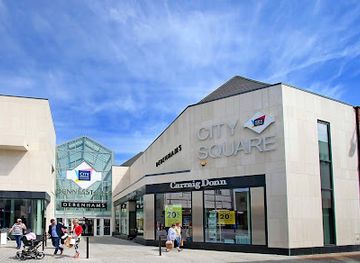
Shopping mall
City Square Shopping Centre
Discover a vibrant shopping and dining experience at City Square Shopping Centre in the heart of Waterford, Ireland's premier retail destination.
-
Home goods store
The Range, Waterford
Explore The Range in Waterford for an incredible selection of home goods, furniture, and unique finds that cater to all your shopping needs.
-
Discount store
MrPRICE Waterford
Uncover unbeatable bargains and diverse selections at MrPRICE Waterford, the ultimate discount store for savvy shoppers in Ireland.



Get your free copy of our complete guide to County Waterford, delivered straight to you.
Everything on this page, from attractions and restaurants to essentials and local phrases, in one PDF you can read offline, print or share.
Already have an account? Sign in
Your County Waterford guide is ready.
We'll send it to · Not you? Sign out

Getting your guide ready…
We are putting together a fresh copy of the County Waterford guide. This can take up to a minute.
This can take a few moments. If your browser asks, choose Allow so the download can start. You'll find the guide in your Downloads folder.
Nothing happened? Download it again
Sorry, the guide is taking longer than usual. Please try again in a minute, or get it by email instead.
County Waterford essentials
Currency and Payment
Safety
Emergency Situations
Do's and Don'ts
Local Tips
From Eve
Local phrases worth knowing
You don't need to get them perfect. A few words go a long way, and locals appreciate the effort.
Basics
| English | Local | Say it |
|---|---|---|
| Hello | Hiya | [hih-yah] |
| Goodbye | See ya | [see yah] |
| Yes | Yup | [yuhp] |
| No | Nah | [nah] |
| Please/You're welcome | No bother | [noh baw-ter] |
| Thank you | Thanks a million | [thanks a mil-lyun] |
| Excuse me/Sorry | Sorry 'bout that | [saw-ree 'bout that] |
| How are you? | How's it goin'? | [how's it goin'?] |
| Fine. And you? | Grand. And yerself? | [grand. and yer-sel-f?] |
| Do you speak English? | Do ya speak English? | [do yah speak English?] |
| I don't understand | I don't get it | [I don't get it] |
Eating & Drinking
| English | Local | Say it |
|---|---|---|
| I'd like to see the menu, please | Could I see the menu, please? | [could I see the men-u, please?] |
| I don't eat meat | I'm not a meat eater | [I'm not a meet ee-ter] |
| Cheers! | Sláinte! | [slawn-che] |
| I would like to pay, please | I'd like to settle up, please | [I'd like to set-tle up, please] |
Emergencies
| English | Local | Say it |
|---|---|---|
| Help! | Help! | [help!] |
| Go away! | Leave me be! | [leave me bee!] |
| Call the Police! | Ring the cops! | [ring the cops!] |
| Call a doctor! | Get a doctor! | [get a doc-tor!] |
| I'm lost | I'm a bit lost | [I'm a bit lost] |
| I'm ill | I'm not feelin' well | [I'm not feelin' well] |
Shopping
| English | Local | Say it |
|---|---|---|
| I'd like to buy... | I want to buy... | [I want to buy...] |
| I'm just looking | I'm just browsing | [I'm just brow-sing] |
| How much is it? | What’s the damage? | [what's the dam-age?] |
| That's too expensive | That's a bit pricey | [that's a bit pry-cey] |
| Can you lower the price? | Can ya knock a bit off? | [can yah knock a bit off?] |
Time & Numbers
| English | Local | Say it |
|---|---|---|
| What time is it? | What time is it? | [what time is it?] |
| It's one o'clock | It's one o'clock | [it's one o'clock] |
| Half past (10) | Half ten | [half ten] |
| Morning | Mornin' | [morn-in] |
| Afternoon | Afternoon | [af-ter-noon] |
| Evening | Evenin' | [even-in] |
| Yesterday | Yesterday | [yes-ter-day] |
| Today | Today | [to-day] |
| Tomorrow | Tomorrow | [to-mor-row] |
| 1 | One | [one] |
| 2 | Two | [two] |
| 3 | Three | [three] |
| 4 | Four | [four] |
| 5 | Five | [five] |
| 6 | Six | [six] |
| 7 | Seven | [seven] |
| 8 | Eight | [eight] |
| 9 | Nine | [nine] |
| 10 | Ten | [ten] |
Transport & Directions
| English | Local | Say it |
|---|---|---|
| Where's a/the...? | Where's the...? | [where's the...?] |
| What's the address? | What’s the address? | [what's the ad-dress?] |
| Can you show me (on the map)? | Can ya show me on the map? | [can yah show me on the map?] |
| When's the next (bus)? | When’s the next bus? | [when's the next bus?] |
| A ticket (to ....) | A ticket to... | [a tick-et to...] |
History of County Waterford
Early Settlement and Christian Waterford
County Waterford preserves evidence of prehistoric settlement, early farming and later Christian communities. Ardmore became an important ecclesiastical centre associated with St Declan, and its round tower, cathedral ruins and stone carvings remain among the county’s most significant early medieval monuments. Lismore also developed as a major religious centre, founded around the monastery associated with St Mochuda. These communities helped establish enduring settlement patterns and linked the region to wider networks of learning, pilgrimage and ecclesiastical power in Ireland.
Viking Waterford, Founded in 914
Waterford city began as a Viking settlement at the confluence of the Rivers Suir and Barrow in 914. Its river position made it an important centre for trade, shipping and political power, connecting south-eastern Ireland with the Irish Sea world. The urban form and surviving archaeological evidence reflect this Norse foundation, although the city was later reshaped by Anglo-Norman rule and subsequent medieval development. Waterford’s Viking origins remain central to its historical identity and are interpreted in the museums of the Viking Triangle.
Anglo-Norman Expansion and Medieval Towns
The Anglo-Norman invasion transformed Waterford during the late twelfth century. Strongholds, boroughs and religious foundations were developed or reorganised, and Waterford became one of the most important ports in medieval Ireland. Dungarvan Castle and Reginald’s Tower illustrate the county’s strategic significance, while Lismore Castle occupies the site of the earlier ecclesiastical settlement. Medieval walls, churches and street patterns survive in fragments across the county, showing how military authority, trade and religious institutions shaped its towns.
The Blackwater Valley and Lismore Castle
Lismore and the Blackwater valley became closely associated with the powerful Boyle family, later Earls of Cork and Burlington, whose influence extended across Munster. Lismore Castle was remodelled over several centuries, particularly from the seventeenth century onwards, and the town developed beneath its presence on the valley’s northern side. The castle remains a private residence, but its gardens and cultural associations have made Lismore an important heritage destination. The wider valley retains an architectural landscape of estates, bridges, woods and agricultural communities.
Copper Mining on the Atlantic Coast
Copper mining shaped parts of the Waterford coast from the early nineteenth century, especially around Bunmahon and neighbouring settlements on what is now known as the Copper Coast. Shafts, engine-house ruins, spoil heaps and altered coastal ground record an industry that employed local communities and connected the area to wider industrial markets. Mining declined later in the century, leaving a landscape in which geological strata and industrial remains appear together. The Copper Coast’s geological importance is now recognised through its UNESCO Global Geopark designation.
Railways, Ports and Industrial Change
Nineteenth-century railways and expanding port activity altered the movement of people and goods across County Waterford. Lines linked Waterford with inland towns, Dungarvan and the coast, supporting agriculture, commerce and tourism. Several routes later closed, but the former railway between Waterford and Dungarvan was adapted as the Waterford Greenway, giving industrial and transport history a new recreational life. Waterford city also became associated with manufacturing, shipbuilding and glass production, reinforcing its role as the county’s principal commercial centre.
Waterford Crystal and the Modern City
Glassmaking became one of Waterford’s best-known industrial traditions after the establishment of the Waterford Glass House in 1783. Although the business experienced changing ownership and periods of closure, the Waterford Crystal name became internationally recognised for cut glass and remained an important part of the city’s industrial and cultural story. Modern Waterford combines this manufacturing legacy with higher education, museums, technology, retail and tourism, while smaller county communities continue to reflect agricultural, maritime and rural traditions.
County Waterford in Photos
Browse through our photo collection highlighting the charm and character of the destination.
Neighbouring regions of County Waterford
The closest regions to County Waterford, if you have time for more than one.
-
-

-

-

-


Swipe for more regions
Explore more
Explore more of Ireland
Discover Ireland: A land of enchanting landscapes, rich history, and vibrant culture, where every corner tells a story and every visit feels like coming home.
Explore Ireland