

Free County Tipperary Travel Guide & Mobile App
Explore County Tipperary with free travel guides. Discover regional history, expert tips, proposed trips, and audio guides on web or mobile app.


County Tipperary combines Ireland's medieval heritage with the Golden Vale, mountain walks, river towns, Lough Derg and excellent farmhouse produce.
Read more about County Tipperary
When is the best time to visit County Tipperary?
Best: June–August · 18–20°C| Month | High (°C) | Rainfall (mm) |
|---|---|---|
| January | 8 | 70 |
| February | 9 | 60 |
| March | 11 | 60 |
| April | 13 | 50 |
| May | 16 | 60 |
| June (best) | 18 | 60 |
| July (best) | 20 | 60 |
| August (best) | 19 | 70 |
| September | 17 | 70 |
| October | 14 | 70 |
| November | 10 | 70 |
| December | 8 | 70 |
Getting to and around County Tipperary
How to get there
Transportation
Top city travel guides in County Tipperary
The cities of County Tipperary, and the easiest places to base yourself.
-

-

-


Swipe for more cities
Best attractions in County Tipperary
County Tipperary's attractions combine major medieval monuments with landscapes suited to walking, boating and slow touring. The Rock of Cashel is the county's defining heritage site, while Cahir Castle, Holycross Abbey, Roscrea Castle and Ormond Castle at Carrick-on-Suir reveal different aspects of ecclesiastical, military and aristocratic history. The Swiss Cottage near Cahir adds a refined early nineteenth-century country-house setting. In the north, Nenagh and the Tipperary shore of Lough Derg provide access to lake scenery, angling and water-based recreation. The Glen of Aherlow is a strong base for woodland and mountain walks beneath the Galtees, while the Devil's Bit and Silvermine Hills offer more exposed upland routes. The county's market towns contain museums, heritage centres, galleries and cultural venues, and Thurles has particular importance in the history of Gaelic games. Farms, gardens, riverside paths and historic demesnes broaden the experience beyond formal monuments, although opening arrangements and transport options vary considerably between sites. A varied itinerary is therefore best planned by area rather than as a series of isolated day trips.
-
Historical landmark
Rock of Cashel
Explore the Rock of Cashel, a stunning historical landmark in Ireland, rich in history and breathtaking views of the Tipperary countryside.
-
Castle
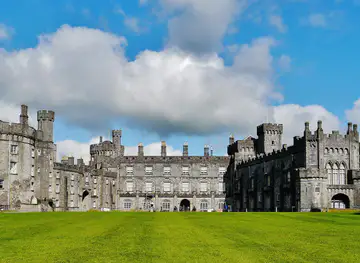
Cahir Castle
Discover the enchanting Cahir Castle, a historical gem in County Tipperary, showcasing medieval architecture and captivating landscapes.
-
Hotel
Adare Manor
Experience the luxurious charm of Adare Manor, where history meets modern elegance in the heart of Ireland's stunning countryside.
-
Bar
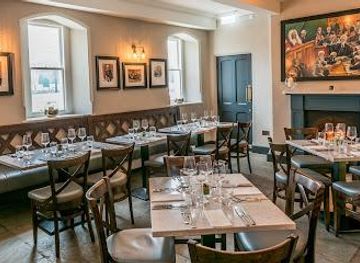
Aunty Lena's Bar Adare
Experience authentic Irish hospitality at Aunty Lena's Bar, a charming gastropub in Adare with live music and delicious local cuisine.


Best landmarks in County Tipperary
The Rock of Cashel is County Tipperary's most powerful visual landmark, rising above the surrounding plain with a medieval round tower, Romanesque chapel and cathedral ruins that express the site's political and religious importance. Cahir Castle occupies a rocky island in the River Suir and remains one of Ireland's most substantial surviving medieval fortifications, while the nearby Swiss Cottage represents the picturesque ideals of an aristocratic estate. Holycross Abbey is distinguished by its Gothic and Romanesque fabric and its setting beside the River Suir. At Carrick-on-Suir, Ormond Castle preserves a rare Tudor-style great hall within a later fortified complex. Natural landmarks provide a different scale: the Galtee Mountains dominate views around the south-west, the Glen of Aherlow forms a wooded valley beneath them, and the Devil's Bit is a conspicuous crest in the north-western uplands. Together these places show how Tipperary's identity is shaped by both built history and agricultural, riverine and mountain landscapes.
-
Historical landmark
Rock of Cashel
Discover the Rock of Cashel, an iconic historical landmark in County Tipperary, rich in Irish heritage and stunning architecture, perfect for every traveler.
-
Castle
Cahir Castle
Discover the enchanting Cahir Castle in County Tipperary, a historical fortress that showcases Ireland's rich heritage and breathtaking scenery.
-
Historical landmark
Mitchelstown Cave
Discover the enchanting Mitchelstown Cave in Tipperary, a historical landmark showcasing stunning limestone formations and captivating geological history.
-
Tourist attraction
The Vee Pass
Experience breathtaking views and serene landscapes at The Vee Pass, a scenic gem in County Tipperary, perfect for nature lovers and adventurers alike.


Explore County Tipperary on the map
Plan your trip on one map. See where the top cities, national parks and sights are, and book hotels and experiences in a few clicks.
Best hotels in County Tipperary
Best restaurants in County Tipperary
Tipperary's food culture reflects the productivity of the Golden Vale and the county's long association with farming, dairying and livestock. Farmhouse cheeses are a notable local speciality, with Cashel Blue among the best-known products made in the county. Dairy produce, beef, lamb, breads, preserves and seasonal vegetables appear in cafés, country inns, gastropubs and contemporary restaurants, while town markets and specialist food shops can be useful for picnic supplies. Traditional pubs often serve substantial Irish dishes alongside more modern menus, and lakeside or riverside dining is available in selected communities around Lough Derg and the Suir valley. Cashel, Clonmel, Thurles, Nenagh and Cahir offer the broadest range of cafés and restaurants, whereas smaller villages tend to have fewer choices and more limited evening service. Visitors interested in local produce should look for farmhouse cheese, regional baking and seasonal market goods, while remembering that not every food associated with Ireland is specifically Tipperary in origin.
-
Restaurant
Mother Hubbards
Experience authentic Irish cuisine at Mother Hubbards - a family-friendly diner offering delicious meals in Cashel's welcoming atmosphere.
-
Gastropub
Matt the Thresher Inn
Experience delightful cuisine at Matt the Thresher Inn in Birdhill; where traditional Irish flavors meet modern culinary excellence.
-
Restaurant
Larkins
Discover Larkins in Tipperary: Where Traditional Irish Cuisine Meets Live Music and Scenic Views.
-
Bar
The Thatched Cottage Bar & Restaurant
Experience authentic Irish cuisine and warm hospitality at The Thatched Cottage Bar & Restaurant in beautiful Tipperary.


Best bars in County Tipperary
Evening life in County Tipperary is centred more on traditional pubs, restaurants, live music and community events than on a large-scale nightclub scene. Cashel, Clonmel, Thurles and Nenagh have the widest choice of bars and later-opening venues, while smaller towns and villages generally offer sociable pubs where conversation, televised sport and occasional traditional music are more important than elaborate nightlife districts. Some venues serve locally produced drinks and contemporary cocktails, but the county's evening character remains closely tied to established public houses and seasonal cultural programmes. Rural visitors should arrange transport in advance, particularly where accommodation lies outside a town, and should never drink and drive. Local arts, theatre and music events can provide a more representative evening than simply seeking a nightclub, with calendars varying throughout the year.
-
Gastropub
Matt the Thresher Inn
Experience the essence of Irish cuisine at Matt the Thresher Inn, a must-visit gastropub in Birdhill, Co. Tipperary, offering local flavors and a welcoming atmosphere.
-
Bar
Larkins
Discover Larkins in Tipperary - a perfect blend of authentic Irish cuisine, refreshing beverages, and vibrant live music in a charming setting.
-
Irish pub
The Whiskey Still
Experience the charm of Irish hospitality at The Whiskey Still, a cozy pub in Dromineer offering a vast selection of whiskeys and traditional dishes.
-
Pub
Paddy's Bar
Experience authentic Irish hospitality at Paddy's Bar in Terryglass, where great food, local brews, and a lively atmosphere await.


Best nightclubs in County Tipperary
Evening life in County Tipperary is centred more on traditional pubs, restaurants, live music and community events than on a large-scale nightclub scene. Cashel, Clonmel, Thurles and Nenagh have the widest choice of bars and later-opening venues, while smaller towns and villages generally offer sociable pubs where conversation, televised sport and occasional traditional music are more important than elaborate nightlife districts. Some venues serve locally produced drinks and contemporary cocktails, but the county's evening character remains closely tied to established public houses and seasonal cultural programmes. Rural visitors should arrange transport in advance, particularly where accommodation lies outside a town, and should never drink and drive. Local arts, theatre and music events can provide a more representative evening than simply seeking a nightclub, with calendars varying throughout the year.
-
Grill
The Brian Boru Bar & Restaurant
Immerse yourself in the lively atmosphere of The Brian Boru Bar & Restaurant, where delicious food meets vibrant nightlife and live music in Cashel.
-
Bar
Shamrock Lounge
Discover the vibrant atmosphere of Shamrock Lounge, a quintessential Irish bar in the heart of Cahir, Co. Tipperary.
-
Pub
Quinlans Lounge
Experience the charm of Tipperary at Quinlans Lounge, where great drinks and warm hospitality await in a cozy pub atmosphere.
-
Country club
Fitzpatricks Country Club
Discover the charm of Fitzpatricks Country Club in Tipperary – a perfect blend of relaxation, recreation, and delightful dining.


Best shops in County Tipperary
Shopping in County Tipperary is primarily town-based, with the independent high streets of Cashel, Cahir, Clonmel, Thurles and Nenagh providing everyday goods, cafés, books, clothing and specialist food shops. Market towns are useful places to buy regional produce, farmhouse cheese, breads, preserves and gifts connected with the county's agricultural identity. Farmers' markets and seasonal stalls vary by location and date, so visitors should check locally rather than rely on a fixed schedule. Craft galleries and small shops may offer ceramics, textiles, paintings, jewellery and locally made food products, while heritage towns often have bookshops and gift outlets near their principal monuments. The county is not a major luxury-shopping destination; its appeal lies in independent retail, practical town centres and products with a clear connection to farming, craft and local landscape. Larger retail selections are concentrated in the main towns, whereas rural villages generally provide only a small number of shops and services.
-
Shopping mall
Tipperary Town Plaza
Explore Tipperary Town Plaza, a vibrant shopping mall with diverse dining options, perfect for families and tourists looking to enjoy local culture.
-
Department store
TK Maxx
Explore incredible discounts on fashion and homeware at TK Maxx Clonmel, where every visit reveals new treasures.
-
Discount store
MrPRICE Tipperary Town
Explore MrPRICE Tipperary Town for budget-friendly shopping, offering a wide selection of quality products at unbeatable prices.
-
Sportswear store
O' Rahelly Sports
Discover quality sportswear and accessories at O' Rahelly Sports, your go-to shop for fitness and style in Tipperary.


Get your free copy of our complete guide to County Tipperary, delivered straight to you.
Everything on this page, from attractions and restaurants to essentials and local phrases, in one PDF you can read offline, print or share.
Already have an account? Sign in
Your County Tipperary guide is ready.
We'll send it to · Not you? Sign out

Getting your guide ready…
We are putting together a fresh copy of the County Tipperary guide. This can take up to a minute.
This can take a few moments. If your browser asks, choose Allow so the download can start. You'll find the guide in your Downloads folder.
Nothing happened? Download it again
Sorry, the guide is taking longer than usual. Please try again in a minute, or get it by email instead.
County Tipperary essentials
Currency and Payment
Safety
Emergency Situations
Do's and Don'ts
Local Tips
From Eve
Local phrases worth knowing
You don't need to get them perfect. A few words go a long way, and locals appreciate the effort.
Basics
| English | Local | Say it |
|---|---|---|
| Hello | Dia dhuit | [dee-uh gwitch] |
| Goodbye | Slán | [slawn] |
| Yes | Tá | [taw] |
| No | Níl | [neel] |
| Please/You're welcome | Le do thoil | [leh duh hull] |
| Thank you | Go raibh maith agat | [guh rev mah agat] |
| Excuse me/Sorry | Gabh mo leithscéal | [guh mo leesch-kayl] |
| How are you? | Conas atá tú? | [kun-us uh-taw too] |
| Fine. And you? | Tá maith. Agus tusa? | [taw mah. agus tussa?] |
| Do you speak English? | An labhraíonn tú Béarla? | [un law-ree-awn too bayr-la?] |
| I don't understand | Ní thuigim | [nee hig-im] |
Eating & Drinking
| English | Local | Say it |
|---|---|---|
| I'd like to see the menu, please | Ba mhaith liom an mias a fheiceáil, le do thoil | [ba wah lum an me-as a yeh-kil, leh duh hull] |
| I don't eat meat | Ní ithim feoil | [nee ee-him fayl] |
| Cheers! | Sláinte! | [slawn-chuh] |
| I would like to pay, please | Ba mhaith liom íoc, le do thoil | [ba wah lum eek, leh duh hull] |
Emergencies
| English | Local | Say it |
|---|---|---|
| Help! | Cabhair! | [caw-ir] |
| Go away! | Imigh uaim! | [im-ee oo-im] |
| Call the Police! | Glaoigh ar na póilíní! | [glwee ar na poh-leen-ee] |
| Call a doctor! | Glaoigh ar dochtúir! | [glwee ar dock-toor] |
| I'm lost | Táim caillte | [taw-im ky-lta] |
| I'm ill | Táim tinn | [taw-im tin] |
Shopping
| English | Local | Say it |
|---|---|---|
| I'd like to buy... | Ba mhaith liom a cheannach... | [ba wah lum a khyan-ukh] |
| I'm just looking | Tá mé ag breathnú | [taw may egg brat-nu] |
| How much is it? | Cén t-airgead atá air? | [kayn t-air-gad uh-taw air?] |
| That's too expensive | Tá sé ró-chostasach | [taw shay roh-khos-tuhk] |
| Can you lower the price? | An féidir leat an praghas a laghdú? | [un fey-dur lat an prah-gas a lah-doo?] |
Time & Numbers
| English | Local | Say it |
|---|---|---|
| What time is it? | Cén t-am é? | [kayn t-am ay?] |
| It's one o'clock | Tá sé a haon a chlog | [taw shay a hayn a khlog] |
| Half past (10) | Leath tar éis (10) | [lah tar aysh (10)] |
| Morning | Maidin | [maw-din] |
| Afternoon | Tráthnóna | [traw-no-na] |
| Evening | Tráthnóna | [traw-no-na] |
| Yesterday | Inné | [in-ye] |
| Today | Inniu | [in-nyu] |
| Tomorrow | Amárach | [aw-mah-rah] |
| 1 | 1 | [1] |
| 2 | 2 | [2] |
| 3 | 3 | [3] |
| 4 | 4 | [4] |
| 5 | 5 | [5] |
| 6 | 6 | [6] |
| 7 | 7 | [7] |
| 8 | 8 | [8] |
| 9 | 9 | [9] |
| 10 | 10 | [10] |
Transport & Directions
| English | Local | Say it |
|---|---|---|
| Where's a/the...? | Cá bhfuil a/the...? | [kaw wil a/the...?] |
| What's the address? | Cad é an seoladh? | [kad ay an shol-adh?] |
| Can you show me (on the map)? | An féidir leat dom a thaispeáint (ar an léarscáil)? | [un fey-dur lat dum a hash-paynt (ar an layr-skal)?] |
| When's the next (bus)? | Cathain a bheidh an (bus) eile? | [kah-hin a veh an (bus) el-eh?] |
| A ticket (to ....) | Ticéad (go ....) | [tick-aid (guh....)] |
History of County Tipperary
Prehistoric Landscapes and Early Settlement
Tipperary's hills, river valleys and fertile plains have attracted settlement for thousands of years. Archaeological remains include megalithic tombs, prehistoric enclosures, standing stones and hilltop sites, although many are modest features in the landscape rather than monumental visitor attractions. The Rock of Cashel also has much earlier associations before its medieval ecclesiastical development. These remains indicate long-term use of the county for farming, ritual activity and movement between the Suir valley, the central plain and the uplands.
Cashel and the Kings of Munster
Cashel became a major political and ecclesiastical centre of Munster. The Rock of Cashel was associated with the kings of the province before becoming an important church site, and its later buildings preserve the importance of that transition. A round tower, Romanesque chapel, cathedral and other medieval structures occupy the summit, making the site unusually rich in architectural evidence. Cashel's influence extended beyond the town itself, helping to shape the political and religious geography of southern Ireland.
Norman Lordship and Medieval Strongholds
Following the Anglo-Norman advance into Ireland, castles and fortified settlements altered the political structure of Tipperary. Cahir Castle, Nenagh Castle, Roscrea Castle and other strongholds controlled crossings, estates and routes through the county. Religious foundations also flourished, including Holycross Abbey, whose church reflects the importance of ecclesiastical patronage and pilgrimage. The medieval landscape was therefore shaped by both military lordship and monastic institutions, many of whose buildings or ruins remain visible today.
The Ormond and Butler Influence
The Butler family, whose title of Ormond became closely associated with the region, played a major role in Tipperary's political and architectural history. Their power was especially apparent around the Suir valley and at Carrick-on-Suir, where Ormond Castle contains an important Tudor-style great hall and later additions. Estates, castles and administrative centres connected local landholding with wider English and Irish politics. The Butler legacy is one reason Tipperary contains such a concentrated range of fortified and aristocratic architecture.
Seventeenth-Century Conflict and Landholding Change
Tipperary was deeply affected by the religious and political conflicts of the seventeenth century, including the Confederate Wars and the Cromwellian conquest. Towns, castles and estates changed hands, while military campaigns brought disruption to communities and landowners. The subsequent redistribution of land strengthened new Protestant interests and altered patterns of ownership. Later estate houses and demesnes, together with surviving medieval buildings, reflect the layered consequences of these political upheavals rather than a single, uninterrupted tradition.
Agriculture, Industry and the Railway Age
The fertile Golden Vale and the broad Suir valley made agriculture central to Tipperary's economy, particularly dairying, cattle raising and grain production. Market towns developed around exchanges in livestock, food and farm supplies, while mills and small industries used the region's rivers and transport routes. Nineteenth-century railways connected towns such as Thurles, Clonmel and Tipperary with national markets, encouraging mobility and commercial growth. The county's present-day food culture and town pattern still reflect this agricultural and transport history.
Gaelic Games and Modern Regional Identity
Tipperary has been one of the important strongholds of Gaelic games, especially hurling, and the sport forms a visible part of community life across the county. Thurles is particularly significant in the history of the Gaelic Athletic Association, which was founded at Hayes's Hotel there in 1884. The association helped formalise the organisation of traditional Irish sports and became a major force in cultural and national life. Today, club grounds, county fixtures and local sporting traditions remain important markers of Tipperary identity.
County Tipperary in Photos
Browse through our photo collection highlighting the charm and character of the destination.
Neighbouring regions of County Tipperary
The closest regions to County Tipperary, if you have time for more than one.
-
-

-

-

-


Swipe for more regions
Explore more
Explore more of Ireland
Discover Ireland: A land of enchanting landscapes, rich history, and vibrant culture, where every corner tells a story and every visit feels like coming home.
Explore Ireland