

Free Garfagnana Travel Guide & Mobile App
Explore Garfagnana with free travel guides. Discover regional history, expert tips, proposed trips, and audio guides on web or mobile app.


Explore Garfagnana in northern Tuscany for Apuan mountain walks, medieval fortresses, forest parks, village food and Serchio Valley scenery.
Read more about Garfagnana
When is the best time to visit Garfagnana?
Best: June–July, September · 26–30°C| Month | High (°C) | Rainfall (mm) |
|---|---|---|
| January | 9 | 90 |
| February | 11 | 85 |
| March | 14 | 95 |
| April | 18 | 100 |
| May | 22 | 90 |
| June (best) | 26 | 75 |
| July (best) | 30 | 60 |
| August | 30 | 80 |
| September (best) | 26 | 100 |
| October | 20 | 120 |
| November | 15 | 110 |
| December | 10 | 100 |
Getting to and around Garfagnana
How to get there
Transportation
Top city travel guides in Garfagnana
The cities of Garfagnana, and the easiest places to base yourself.

Swipe for more cities
Best attractions in Garfagnana
Garfagnana's attractions are distributed through valleys, hill towns and upland forests rather than concentrated in one resort. Historic interests include the Rocca Ariostesca and Fortress of Mont'Alfonso around Castelnuovo di Garfagnana, the walled settlement of Castiglione di Garfagnana, the Fortress of Verrucole near San Romano and the castle above Camporgiano. The Orecchiella Regional Nature Park provides woodland walks, wildlife habitats and mountain viewpoints, while the Apuan Alps offer routes ranging from accessible excursions to demanding summit days. At Fabbriche di Vergemoli, the Grotta del Vento introduces visitors to the region's limestone geology through guided underground visits. Vagli Lake and the surrounding upper valley provide a different landscape of forested slopes and reservoir scenery. Smaller parish churches, rural museums, chestnut landscapes and village markets add texture to an itinerary, particularly when approached slowly by car or on foot. Activities are strongly seasonal: warmer months favour hiking and cycling, while autumn brings woodland colour and food traditions. Facilities are more limited in the high valleys, so attractions should be planned alongside transport, weather and meal arrangements.
-
Bridge
Devil's Bridge
Explore the enchanting Devil's Bridge in Borgo a Mozzano, a masterpiece of medieval architecture surrounded by breathtaking landscapes.
-
Nature preserve
Parco Naturale Regionale delle Alpi Apuane
Discover the breathtaking landscapes and diverse wildlife of the Parco Naturale Regionale delle Alpi Apuane in the Province of Massa and Carrara, Italy.
-
Park
Pinocchio Park
Experience the enchanting world of Pinocchio at Pinocchio Park in Pescia, a magical theme park that brings the beloved tale to life for families and children.
-
Bridge
Ponte Sospeso di San Marcello Pistoiese
Discover the stunning views and thrilling experience at Ponte Sospeso di San Marcello Pistoiese, a must-visit bridge in the heart of Tuscany.


Best landmarks in Garfagnana
The most recognisable historic landmark in Garfagnana is the Fortress of Mont'Alfonso, whose extensive walls and bastions occupy a wooded hill above Castelnuovo di Garfagnana and express the strategic importance of the Este frontier. In the town centre, the Rocca Ariostesca recalls the period when Ludovico Ariosto governed the territory and now forms part of Castelnuovo's civic identity. Castiglione di Garfagnana is itself a landmark landscape: its medieval walls, gates and towers rise above the valley as a coherent fortified settlement. The Fortress of Verrucole, dramatically positioned above San Romano, commands views across the upper Serchio and illustrates the military geography of the region. Camporgiano's castle and the historic churches of Pieve Fosciana add further evidence of medieval settlement and religious organisation. Among natural landmarks, the limestone formations and peaks of the Apuan Alps define the western skyline, while Monte Prado and the higher Apennine ridges shape the eastern horizon. The Grotta del Vento is significant for its underground geological features rather than monumental architecture, offering another way to understand the terrain that has governed Garfagnana's history.
-
Bridge
Devil's Bridge
Unveil the captivating history and stunning beauty of Devil's Bridge in Borgo a Mozzano, a must-see destination in Tuscany's enchanting landscape.
-
Nature preserve
Parco Alpi Apuane
Explore the breathtaking landscapes of Parco Alpi Apuane, a hidden gem in Tuscany offering stunning hiking trails and diverse wildlife.
-
Cultural landmark
Grotta del Vento
Explore the enchanting Grotta del Vento, a stunning cultural landmark in Tuscany filled with breathtaking caves and rich history.
-
Wildlife refuge
Parco dell'Orecchiella
Discover the enchanting landscapes, diverse wildlife, and tranquil hiking trails of Parco dell'Orecchiella, a must-visit wildlife refuge in Tuscany's Garfagnana region.


Explore Garfagnana on the map
Plan your trip on one map. See where the top cities, national parks and sights are, and book hotels and experiences in a few clicks.
Best hotels in Garfagnana
Best restaurants in Garfagnana
Garfagnana's food reflects mountain agriculture and a cool, wooded environment rather than the olive-oil-and-seafood image often associated with Tuscany's coast. Chestnut flour has long been used in breads, cakes and pasta, while spelt, potatoes, beans, mushrooms and wild herbs appear in soups and substantial rural dishes. Local tables may feature cured meats, pork, game, sheep or cow's cheeses, honey and seasonal forest produce. The celebrated farro of Garfagnana is an important regional grain and is commonly served in soups, salads or other traditional preparations. Castelnuovo di Garfagnana and the larger valley towns provide the widest choice of trattorias, cafés, bakeries and food shops; smaller villages tend to centre on family-run restaurants, bars and occasional rural inns. Markets and specialist producers are good places to look for chestnut products, cheeses and preserved foods. Menus change with the season, and autumn is particularly associated with mushrooms and chestnuts. Regional wine is available, but the strongest sense of place often comes from simple dishes built around local grains, legumes and mountain produce.
-
Italian
Il Pozzo
Discover authentic Italian cuisine at Il Pozzo in Pieve Fosciana - where tradition meets taste in every dish.
-
Restaurant
Il Garfagnino Di Nonna Clara
Discover authentic Italian cuisine at Il Garfagnino Di Nonna Clara in Borgo a Mozzano - a culinary delight for every traveler.
-
Restaurant
Ristorante Col D'Arciana
Discover authentic Tuscan flavors at Ristorante Col D'Arciana in Castiglione di Garfagnana—where every meal tells a story.
-
Restaurant
Ristorante Pizzeria Da Sandra
Experience authentic Italian cuisine at Ristorante Pizzeria Da Sandra in Fabbriche di Vergemoli - where every bite tells a story.


Best bars in Garfagnana
Nightlife in Garfagnana is modest and community-oriented rather than club-led. Castelnuovo di Garfagnana has the broadest choice of cafés, aperitivo bars, pizzerias and places for a late meal, while other valley towns offer traditional bars and restaurants where evening activity often begins with coffee or an aperitivo and continues around dinner. Historic centres may host occasional seasonal concerts, town celebrations or outdoor events, but these arrangements vary and should be checked locally. In the smaller mountain communities, evenings are generally quiet, with social life centred on local bars, village festivals and family-run restaurants rather than dedicated nightclubs. Visitors should not rely on late public transport after exploring rural areas, and a designated driver is important on winding mountain roads. Breweries, local drinks and wine lists can complement the regional food scene, without being the sole focus of an evening. During summer, outdoor terraces and events make the towns feel more animated; outside the main season, expect shorter hours and fewer late-night options.
-
Restaurant
Il Vecchio Mulino
Discover the rich flavors of Italy at Il Vecchio Mulino, a charming restaurant and wine bar in Castelnuovo di Garfagnana.
-
Bar
IQOS RESELLER - Da Beppe Di Venturi Rosaria Natascia & C. Sas, Castelnuovo di Garfagnana
Experience the local charm at Da Beppe Di Venturi Rosaria Natascia & C. Sas, a cozy bar and tobacco shop in Castelnuovo di Garfagnana, Italy.
-
Bar
Bar Aurora
Discover the charm of Bar Aurora, a cozy café and bar in Castelnuovo di Garfagnana offering a taste of authentic Italian culture.
-
Bar
Little Bar
Discover the charm of Little Bar in Castelnuovo di Garfagnana, a delightful café and bar offering local drinks and pastries in a rustic setting.


Best nightclubs in Garfagnana
Nightlife in Garfagnana is modest and community-oriented rather than club-led. Castelnuovo di Garfagnana has the broadest choice of cafés, aperitivo bars, pizzerias and places for a late meal, while other valley towns offer traditional bars and restaurants where evening activity often begins with coffee or an aperitivo and continues around dinner. Historic centres may host occasional seasonal concerts, town celebrations or outdoor events, but these arrangements vary and should be checked locally. In the smaller mountain communities, evenings are generally quiet, with social life centred on local bars, village festivals and family-run restaurants rather than dedicated nightclubs. Visitors should not rely on late public transport after exploring rural areas, and a designated driver is important on winding mountain roads. Breweries, local drinks and wine lists can complement the regional food scene, without being the sole focus of an evening. During summer, outdoor terraces and events make the towns feel more animated; outside the main season, expect shorter hours and fewer late-night options.
-
Disco club
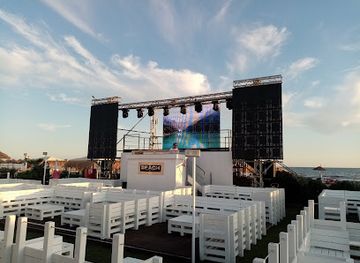
Beach Club Versilia
Experience sun-soaked days and electrifying nights at Beach Club Versilia, the ultimate coastal retreat in Cinquale.
-
Italian
Twiga Beach Club
Twiga Beach Club: The ultimate Italian dining and nightlife experience on the stunning shores of Marina di Pietrasanta.
-
Night club
Drop Club
Experience the vibrant nightlife at Drop Club in Piano di Coreglia, where music and dance come alive until dawn.
-
Night club
American Show Lucca
Experience electrifying performances and vibrant nightlife at American Show Lucca, the top destination for adult entertainment in Italy.


Best shops in Garfagnana
Shopping in Garfagnana is centred on practical market-town streets, local food and small independent businesses rather than large retail complexes. Castelnuovo di Garfagnana offers the widest selection of shops, cafés, bakeries and everyday services, while market activity and independent stores in towns such as Gallicano, Piazza al Serchio and Castiglione serve surrounding villages. Look for regional products including farro, chestnut flour and sweets, honey, mushrooms when legally and seasonally available, cured meats, cheeses, preserves and locally made liqueurs. Rural food shops and farm producers can be more rewarding than souvenir outlets, though availability and payment options vary. Craft traditions associated with mountain life may include woodwork, woven goods and practical household objects, while small galleries and artisan shops appear most often in historic centres and during seasonal events. Visitors should distinguish genuinely local produce from generic Tuscan souvenirs, and check transport arrangements before buying bulky goods. Farmers' markets, village festivals and autumn food events can provide the best opportunities for regional specialities, but their dates are not uniform and should be confirmed locally.
-
Cultural landmark
Grotta del Vento
Explore Grotta del Vento: A stunning cave system in Tuscany with breathtaking formations and rich geological history, perfect for nature lovers.
-
Cold cut store
L'Aia Di Piero
Discover the authentic taste of Tuscany at L'Aia Di Piero, a premier cold cut store in Castelnuovo di Garfagnana, renowned for its local delicacies.
-
Restaurant
La Bottega del Fattore 2
Discover the flavors of Tuscany at La Bottega del Fattore 2, a charming restaurant and wine store in Castelnuovo di Garfagnana.
-
Bar
IQOS RESELLER - Da Beppe Di Venturi Rosaria Natascia & C. Sas, Castelnuovo di Garfagnana
Experience local culture at Da Beppe Di Venturi in Castelnuovo di Garfagnana, where cozy ambiance meets quality tobacco and delightful refreshments.


Get your free copy of our complete guide to Garfagnana, delivered straight to you.
Everything on this page, from attractions and restaurants to essentials and local phrases, in one PDF you can read offline, print or share.
Already have an account? Sign in
Your Garfagnana guide is ready.
We'll send it to · Not you? Sign out

Getting your guide ready…
We are putting together a fresh copy of the Garfagnana guide. This can take up to a minute.
This can take a few moments. If your browser asks, choose Allow so the download can start. You'll find the guide in your Downloads folder.
Nothing happened? Download it again
Sorry, the guide is taking longer than usual. Please try again in a minute, or get it by email instead.
Garfagnana essentials
Currency and Payment
Safety
Emergency Situations
Do's and Don'ts
Local Tips
From Eve
Local phrases worth knowing
You don't need to get them perfect. A few words go a long way, and locals appreciate the effort.
Basics
| English | Local | Say it |
|---|---|---|
| Hello | Ciao | [chow] |
| Goodbye | Arrivederci | [ah-ree-veh-DER-chee] |
| Yes | Sì | [see] |
| No | No | [noh] |
| Please/You're welcome | Per favore/Prego | [per fah-VOH-ray/PRAY-go] |
| Thank you | Grazie | [GRAHT-see-eh] |
| Excuse me/Sorry | Mi scusi/Mi dispiace | [mee SKOO-zee/mee dis-PYA-che] |
| How are you? | Come stai? | [KOH-meh stah-ee] |
| Fine. And you? | Bene. E tu? | [BEH-neh. Eh too?] |
| Do you speak English? | Parli inglese? | [PAR-lee een-GLEH-zeh] |
| I don't understand | Non capisco | [non kah-PEE-skoh] |
Eating & Drinking
| English | Local | Say it |
|---|---|---|
| I'd like to see the menu, please | Vorrei vedere il menu, per favore | [vor-RAY veh-DER-ay eel meh-NOO, per fah-VOH-ray] |
| I don't eat meat | Non mangio carne | [non MAHN-joh CAR-neh] |
| Cheers! | Salute! | [sah-LOO-tay] |
| I would like to pay, please | Vorrei pagare, per favore | [vor-RAY pah-GAR-ay, per fah-VOH-ray] |
Emergencies
| English | Local | Say it |
|---|---|---|
| Help! | Aiuto! | [ah-YOO-toh] |
| Go away! | Vattene via! | [VAH-teh-neh VEE-ah] |
| Call the Police! | Chiama la Polizia! | [KYAH-mah lah poh-lee-TSEE-ah] |
| Call a doctor! | Chiama un dottore! | [KYAH-mah oon doh-TOH-ray] |
| I'm lost | Mi sono perso | [mee SOH-noh PER-soh] |
| I'm ill | Sono malato | [SOH-noh mah-LAH-toh] |
Shopping
| English | Local | Say it |
|---|---|---|
| I'd like to buy... | Vorrei comprare... | [vor-RAY kom-PRAH-ray] |
| I'm just looking | Sto solo guardando | [sto SOH-loh guar-DAN-doh] |
| How much is it? | Quanto costa? | [KWAN-toh KOH-stah] |
| That's too expensive | È troppo costoso | [eh TROH-poh koh-STOH-zoh] |
| Can you lower the price? | Puoi abbassare il prezzo? | [pwoy ahb-BAS-sah-ray eel PRET-soh] |
Time & Numbers
| English | Local | Say it |
|---|---|---|
| What time is it? | Che ore sono? | [keh OH-reh SOH-noh] |
| It's one o'clock | È l'una | [eh LOO-nah] |
| Half past (10) | Dieci e mezza | [DEE-eh-cheh eh MEH-zah] |
| Morning | Mattina | [maht-TEE-nah] |
| Afternoon | Pomeriggio | [poh-meh-REE-joh] |
| Evening | Sera | [SEH-rah] |
| Yesterday | Ieri | [YAY-ree] |
| Today | Oggi | [OHJ-ee] |
| Tomorrow | Domani | [doh-MAH-nee] |
| 1 | Uno | [OO-noh] |
| 2 | Due | [DOO-eh] |
| 3 | Tre | [TRAY] |
| 4 | Quattro | [KWAHT-troh] |
| 5 | Cinque | [CHEEN-kweh] |
| 6 | Sei | [SAY] |
| 7 | Sette | [SET-teh] |
| 8 | Otto | [OHT-toh] |
| 9 | Nove | [NOH-veh] |
| 10 | Dieci | [DEE-eh-chee] |
Transport & Directions
| English | Local | Say it |
|---|---|---|
| Where's a/the...? | Dove si trova...? | [DOH-veh see TROH-vah] |
| What's the address? | Qual è l'indirizzo? | [kwahl eh leen-DEE-rit-soh] |
| Can you show me (on the map)? | Puoi mostrarmi (sulla mappa)? | [pwoy mo-STRAHR-mee (SOOL-lah MAH-pah)] |
| When's the next (bus)? | Quando passa il prossimo (autobus)? | [KWAN-doh PAH-sah eel PROS-see-mo (OW-toh-boos)] |
| A ticket (to ....) | Un biglietto (per ....) | [oon bee-LYET-toh (per ....)] |
History of Garfagnana
The Liguri Apuani and Roman Garfagnana
Before Roman control, the mountains of Garfagnana were inhabited by Ligurian groups, including the Liguri Apuani, whose territory extended across parts of the Apuan region. Rome conquered the area during its campaigns against the Liguri in the second century BC and incorporated the valleys into its wider network of administration and movement. Roman influence was stronger along accessible routes and valley corridors than in the high mountains. Archaeological remains are less monumental than those found in Italy's major cities, but the enduring pattern of settlement along the Serchio and its tributaries reflects the importance of geography established in antiquity.
Medieval Castles and the Luccan Frontier
During the Middle Ages, Garfagnana was divided among local powers, ecclesiastical institutions and the expanding commune of Lucca. Control of the Serchio valley mattered because it linked the Luccan plain with passes towards Emilia and the Apennines. Castles and fortified villages were built or strengthened on ridges and at strategic crossings, leaving a legacy visible at Castiglione di Garfagnana, Camporgiano and other settlements. Rivalry between Lucca, local lords and neighbouring powers shaped the territory's political fragmentation and explains why so many communities retain walls, towers or hilltop fortifications.
The Este Acquisition of Garfagnana
In the fifteenth century, the Este dynasty of Ferrara expanded into Garfagnana, establishing a northern Tuscan territory that was politically distinct from the Luccan plain. The Este administration relied on fortresses and officials to control a difficult mountainous frontier, while local communities retained strong identities and considerable distance from central authority. Castelnuovo became the chief administrative centre. This division between the Este sphere and Lucca lasted for centuries and left a lasting mark on the region's architecture, historical memory and connections with Emilia.
Ludovico Ariosto as Este Governor, 1522–1525
The poet Ludovico Ariosto served as governor of Garfagnana for the Este rulers from 1522 to 1525, based in Castelnuovo. His appointment placed a major Renaissance literary figure in a demanding administrative role during a period marked by disputes, banditry and difficult communications. Ariosto's surviving letters provide an unusually vivid account of governing a rugged frontier, where the practical problems of roads, local allegiance and law enforcement mattered more than courtly ideals. The Rocca Ariostesca and local cultural references preserve this connection, although Garfagnana's history is broader than its association with one celebrated writer.
Agriculture, Chestnuts and Mountain Society
For centuries, Garfagnana's economy depended on a combination of small-scale farming, pastoralism, woodland resources and seasonal labour. Chestnut groves were especially important, providing flour and a storable food in a landscape where cereal cultivation was limited. Spelt, potatoes, beans, mushrooms, honey and livestock products supplemented the harvest. Drying structures and terraces remain reminders of this agricultural system, while recipes based on chestnut flour, soups and polenta express the practical adaptation of mountain communities. Emigration and seasonal movement later reduced the population of some upland villages, but food traditions and woodland management remain important parts of regional identity.
Roads, Railways and Modern Connections
The development of better roads and railway links in the nineteenth and twentieth centuries gradually connected Garfagnana with Lucca and the wider Tuscan network. The railway through the Serchio valley improved access for people and goods, although the terrain continued to limit rapid movement between the upper valleys. Improved communications encouraged trade, commuting and tourism while also accelerating the long-term movement of residents towards larger towns and cities. Today, the region's roads and rail line make the lower and central valley accessible, but the higher settlements still require slower journeys and careful planning.
The Second World War and the Gothic Line
In 1944 and 1945, the Garfagnana area lay close to the fighting associated with the Gothic Line, the German defensive system across northern Italy. The surrounding mountains and valleys were militarily important, and communities experienced requisitions, displacement, partisan activity and combat involving German and Allied forces, including the Brazilian Expeditionary Force in parts of the wider Serchio sector. The war left physical traces and a strong local memory of civilian hardship. Memorials, cemeteries and historical accounts across the valley place modern Garfagnana within the wider Italian campaign rather than treating the conflict as a distant national event.
Garfagnana in Photos
Browse through our photo collection highlighting the charm and character of the destination.
Neighbouring regions of Garfagnana
The closest regions to Garfagnana, if you have time for more than one.
-
-
-

-

-


Swipe for more regions
Explore more

Explore more of Italy
Discover Italy: A land of ancient history, artistic marvels, and culinary delights; where every corner reveals a new story and every meal is a celebration.
Explore Italy