

Sardinia, Italy Travel Guide
Discover Sardinia, Italy's Mediterranean gem, boasting stunning beaches, ancient ruins, rich culture, and breathtaking landscapes for the perfect getaway.
Sardinia, the second-largest island in the Mediterranean, is a paradise waiting to be discovered. With its stunning coastline, crystal-clear waters, and rich history, it offers a unique blend of natural beauty and cultural heritage. The island's beaches are some of the most beautiful in the world, with white sands and turquoise seas that are perfect for swimming, snorkeling, and sunbathing. Don't miss the famous Costa Smeralda, known for its luxury resorts and vibrant nightlife. Beyond its beaches, Sardinia is steeped in history and culture. Explore the ancient Nuragic ruins, mysterious stone towers that date back to the Bronze Age. Visit the charming towns of Alghero and Cagliari, where you can wander through narrow streets, enjoy local cuisine, and experience the island's warm hospitality. Sardinia's festivals, such as the colorful Sartiglia and the traditional Sagra del Redentore, offer a glimpse into its rich cultural traditions. For nature lovers, Sardinia's rugged interior is a haven. Hike through the Gennargentu mountain range, where you can discover hidden waterfalls, lush forests, and breathtaking vistas. The island is also home to unique wildlife, including the rare Sardinian wildcat and the endangered monk seal. Whether you're looking for adventure, relaxation, or a bit of both, Sardinia has something for everyone.

Know before you go
Hi, I'm Eve. Here are a few practical things to know before exploring Sardinia.
- Visit off-season to avoid crowds and enjoy a more authentic experience.
- Renting a car is recommended for exploring the island's hidden gems.
- Try local dishes like porceddu (roast suckling pig) and seadas (cheese pastries).
- Bring comfortable shoes for exploring the island's rugged terrain.
- Learn a few basic Italian phrases; locals appreciate the effort.
Explore Sardinia: Things to Do, Places to Eat, Hotels & More
Handpicked recommendations for top attractions, local dining, accommodations, and more

Top Attractions & Sightseeing in Sardinia
Top-rated picks
Best Attractions

Murale di Orgosolo
Explore the Murale di Orgosolo, an extraordinary open-air gallery showcasing vibrant murals that reflect Sardinia's rich culture and history.

Museo delle Maschere Mediterranee
Explore the rich traditions of mask-making at the Museo delle Maschere Mediterranee, a must-visit cultural treasure in Mamoiada.

Parco Sardegna in Miniatura - Parco dei Dinosauri
Explore the charming Parco Sardegna in Miniatura, a theme park featuring miniature landmarks, a botanical garden, and dinosaur attractions in the heart of Sardinia.

Plage du Grand Sperone
Discover the breathtaking beauty of Plage du Grand Sperone, a hidden gem in Bonifacio, Corsica, with crystal-clear waters and stunning landscapes.

Best landmarks in Sardinia
Top-rated picks
Best Landmarks
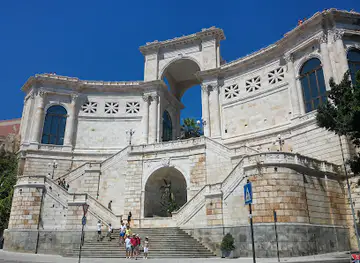
Bastione di Saint Remy
Experience the breathtaking views and rich history at Bastione di Saint Remy, a stunning monument in the heart of Cagliari.

Su Nuraxi di Barumini
Explore the ancient wonders of Su Nuraxi di Barumini, a UNESCO World Heritage site showcasing Sardinia’s rich Bronze Age history.

Sacred Well of Santa Cristina
Explore the Sacred Well of Santa Cristina in Sardinia, an enchanting archaeological site steeped in history and natural beauty.

Parco Archeologico Naturalistico di Santa Cristina
Explore the captivating history and natural beauty of Parco Archeologico Naturalistico di Santa Cristina, a remarkable open-air museum in Sardinia, Italy.

Best restaurants in Sardinia
Top-rated picks
Best Restaurants

Sa Domu Sarda
Discover the authentic taste of Sardinia at Sa Domu Sarda – where every dish tells a story.

Stella Marina Di Montecristo
Discover authentic Sardinian seafood at Stella Marina Di Montecristo - a culinary treasure in Cagliari.

Sa Cardiga e su Schironi
Discover Sa Cardiga e su Schironi, La Maddalena's exquisite seafood restaurant offering fresh local dishes amidst stunning coastal views.

Osteria Paradiso
Discover the heart of Italian cuisine at Osteria Paradiso in Cagliari – where tradition meets taste in every delightful dish.

Best bars in Sardinia
Top-rated picks
Best Bars

Old Square
Experience the lively ambiance and delicious cuisine of Old Square, a top gastropub in Cagliari, perfect for food lovers and beer enthusiasts.

Phi Beach
Experience the vibrant nightlife of Sardinia at Phi Beach, a stunning cocktail bar and dance club with breathtaking Mediterranean views.

Riservato Beach Bar
Discover the vibrant atmosphere and stunning seaside views at Riservato Beach Bar, where cocktails and tapas meet Mediterranean charm.

Ambra Day
Discover the flavors of San Teodoro at Ambra Day, where culinary delight meets a vibrant atmosphere in a charming bar and restaurant setting.

Best nightclubs in Sardinia
Top-rated picks
Best Nightclubs

Phi Beach
Discover the electric nightlife and exquisite dining at Phi Beach, a premier dance club and lounge in Arzachena, Sardinia.

Ritual Club
Experience the vibrant nightlife of Baja Sardinia at Ritual Club, where music, dance, and unforgettable moments come alive every night.

Billionaire Porto Cervo
Discover the ultimate luxury dining and nightlife experience at Billionaire Porto Cervo, where exquisite cuisine meets vibrant entertainment in Sardinia.

TOY ROOM CLUB PORTO CERVO
Dive into the vibrant nightlife of Porto Cervo at Toy Room Club, where luxury meets electrifying music for an unforgettable experience.

Best shops in Sardinia
Top-rated picks
Best Shops

Polo Commerciale "La Corte del Sole - Sardinia Outlet"
Discover the ultimate shopping experience at Polo Commerciale La Corte del Sole, Sardinia's premier outlet with great brands and delightful dining options.

Centro Commerciale Olbia Mare
Explore Centro Commerciale Olbia Mare, the vibrant shopping mall in Sardinia, offering diverse shops, delightful dining, and fun for all ages.

RINASCENTE Cagliari Store
Explore Rinascente Cagliari for an exquisite blend of fashion, beauty, and local culture in a stunning shopping environment.

Centro Commerciale Terranova
Discover the vibrant shopping scene at Centro Commerciale Terranova in Olbia, featuring diverse shops, delightful cafes, and tasty dining options.

Explore Sardinia on the Map
A handpicked selection of must-see spots in Sardinia, mapped for you.
Sardinia Essentials
-
Sardinia is accessible via several international airports, the largest being Cagliari Elmas Airport (CAG), followed by Olbia Costa Smeralda Airport (OLB) and Alghero-Fertilia Airport (AHO). Direct flights are available from major European cities. Ferries also connect Sardinia to mainland Italy, with major ports in Cagliari, Olbia, Porto Torres, Arbatax, and Golfo Aranci.
-
Public transportation in Sardinia includes buses and trains operated by ARST. While buses cover most areas, trains are limited to certain routes like Cagliari to Sassari and Olbia. Renting a car is highly recommended for exploring remote areas and coastal regions. Taxis and ride-sharing services are available but can be expensive for long distances.
-
The official currency in Sardinia is the Euro (EUR). Credit and debit cards are widely accepted in hotels, restaurants, and larger shops. However, it is advisable to carry some cash, especially when visiting smaller towns and rural areas. ATMs are available in most towns and cities.
-
Sardinia is generally a safe destination with low crime rates. However, tourists should exercise standard precautions such as avoiding poorly lit areas at night and keeping an eye on personal belongings in crowded places. No specific neighborhoods have high crime rates targeting tourists, but being vigilant is always recommended.
-
In case of emergency, dial 112, the European emergency number for police, fire, and medical assistance. Hospitals are located in major cities like Cagliari, Sassari, and Olbia. Pharmacies are abundant and usually open during regular business hours. It is advisable to have travel insurance that covers medical emergencies.
-
Fashion: Do dress stylishly but modestly. Beachwear is for the beach only. Religion: Do respect local customs, especially when visiting churches. Cover your shoulders and knees. Public Transport: Do validate your ticket before boarding trains or buses. Don't be loud or disruptive. Greetings: Do greet people with a smile and a handshake. Eating & Drinking: Do try local dishes like culurgiones and porceddu. Don't rush meals; dining is a leisurely activity.
-
Visit local markets such as San Benedetto Market in Cagliari to experience fresh produce and Sardinian specialties. Engage with locals; they are often willing to share insights about their culture and traditions. Take time to explore lesser-known beaches and hiking trails. For an authentic experience, participate in local festivals like Sant'Efisio in Cagliari.
When is the best time to visit Sardinia?
Useful Local Phrases for Sardinia
You don't need to speak the language perfectly. Even learning a few simple words can make conversations warmer—and locals usually appreciate the effort.
— Eve

Here are the phrases I use most often in Sardinia. Try a few—you'll be surprised how far they go! 😊
❤️
-
- HelloCiao
[chow] - GoodbyeAddio
[ah-dee-oh] - YesSì
[see] - NoNo
[noh] - Please/You're welcomePer favore
[per fah-voh-ray] - Thank youGrazie
[grah-tsee-eh] - Excuse me/SorryScusa
[scoo-zah] - How are you?Come stai?
[koh-meh stai] - Fine. And you?Bene. E tu?
[beh-neh eh too] - Do you speak English?Parli inglese?
[par-lee in-gleh-seh] - I don't understandNon capisco
[non kah-pees-koh]
- HelloCiao
-
- I'd like to see the menu, pleaseVorrei vedere il menù, per favore
[vor-ray veh-deh-ray eel meh-noo, per fah-voh-ray] - I don't eat meatNon mangio carne
[non mahn-jo kar-neh] - Cheers!Salute!
[sah-loo-teh] - I would like to pay, pleaseVorrei pagare, per favore
[vor-ray pah-gah-ray, per fah-voh-ray]
- I'd like to see the menu, pleaseVorrei vedere il menù, per favore
-
- Help!Aiuto!
[ah-yoo-toh] - Go away!Vai via!
[vy vee-ah] - Call the Police!Chiama la polizia!
[kyah-mah lah poh-leet-zee-ah] - Call a doctor!Chiama un dottore!
[kyah-mah oon doht-toh-ray] - I'm lostMi sono perso
[mee soh-noh pehr-soh] - I'm illSono malato
[soh-noh mah-lah-toh]
- Help!Aiuto!
-
- I'd like to buy...Vorrei comprare...
[vor-ray kom-prah-ray] - I'm just lookingSto solo guardando
[sto soh-loh gward-ahn-doh] - How much is it?Quanto costa?
[kwahn-toh koh-stah] - That's too expensiveÈ troppo caro
[eh troh-poh kah-roh] - Can you lower the price?Puoi abbassare il prezzo?
[pwoh-ee ah-bah-sah-ray eel pret-soh]
- I'd like to buy...Vorrei comprare...
-
- What time is it?Che ore sono?
[keh oh-ray soh-noh] - It's one o'clockÈ l'una
[eh loo-nah] - Half past (10)Dieci e mezza
[dee-eh-chee eh meh-tzah] - MorningMattina
[maht-tee-nah] - AfternoonPomeriggio
[poh-meh-reed-joh] - EveningSera
[seh-rah] - YesterdayIeri
[yeh-ree] - TodayOggi
[oh-gee] - TomorrowDomani
[doh-mah-nee] - 1Uno
[oo-noh] - 2Due
[doo-eh] - 3Tre
[treh] - 4Quattro
[kwah-troh] - 5Cinque
[cheen-kweh] - 6Sei
[say] - 7Sette
[seht-teh] - 8Otto
[oht-toh] - 9Nove
[noh-veh] - 10Dieci
[dee-eh-chee]
- What time is it?Che ore sono?
-
- Where's a/the...?Dove si trova un/il...?
[doh-veh see troh-vah oon/eel] - What's the address?Qual è l'indirizzo?
[kwahl eh leen-dee-reet-soh] - Can you show me (on the map)?Puoi mostrarmi (sulla mappa)?
[pwoh-ee mohs-trar-mee (sool-lah mahp-pah)] - When's the next (bus)?Quando passa il prossimo (autobus)?
[kwahn-doh pah-sah eel proh-see-mo (ow-toh-boos)] - A ticket (to ....)Un biglietto (per ...)
[oon bee-lyet-toh (per ...)]
- Where's a/the...?Dove si trova un/il...?
History of Sardinia
-
The Nuragic civilization flourished in Sardinia from the 18th century BCE until the Roman conquest in the 2nd century BCE. It is named after the 'nuraghi,' large megalithic towers that are found throughout the island. These structures, often found in complex villages, served various purposes including religious, military, and communal functions. The most famous is Su Nuraxi in Barumini, a UNESCO World Heritage site.
-
By the 9th century BCE, Phoenician traders had established colonies on the coast of Sardinia, including Tharros, Nora, and Bithia. These colonies significantly influenced local culture, commerce, and urban development. Later, in the 6th century BCE, Carthage took control of these colonies, further integrating Sardinia into the broader Carthaginian empire until the Roman conquest.
-
In 238 BCE, following the First Punic War, Sardinia came under Roman control. The island was fully integrated into the Roman Republic and later the Roman Empire. During this period, Sardinia experienced significant infrastructural development, including roads, aqueducts, and towns. The Roman legacy is still evident in places like Cagliari, where Roman amphitheatres and ruins remain.
-
After the fall of the Roman Empire, Sardinia was invaded by the Vandals and later became part of the Byzantine Empire. By the 8th century, the island was divided into four independent giudicati (judgeships): Cagliari, Arborea, Gallura, and Logudoro. These entities were often embroiled in conflicts but also fostered distinct local cultures and legal systems. The period saw the construction of numerous Romanesque churches, many of which still stand.
-
In the early 14th century, Sardinia came under the control of the Crown of Aragon, following a series of military campaigns. This marked the beginning of a long period of Spanish influence that lasted until the early 18th century. The Spanish period saw the fortification of coastal towns and the establishment of a feudal system. The Spanish legacy is still visible in Sardinian architecture, language, and customs.
-
In 1720, Sardinia was ceded to the House of Savoy, rulers of Piedmont, forming the Kingdom of Sardinia. This period brought about significant administrative and economic reforms. Sardinia played a crucial role in the Italian unification movement of the 19th century, eventually becoming part of the newly unified Kingdom of Italy in 1861. The island experienced modernization and industrial growth during this period.
-
The 20th century was a period of significant change for Sardinia. The island was heavily affected by both World Wars but also saw periods of economic growth and cultural revival. Post-World War II, Sardinia gained a degree of autonomy and focused on developing its tourism industry. Today, Sardinia is known for its rich cultural heritage, stunning landscapes, and vibrant traditions, attracting visitors from around the world.
Neighbouring Regions of Sardinia
The closest regions to Sardinia, if you have time for more than one.




Your all‑in‑one travel companion app
Explore expert travel guides, compare and book tours, experiences, hotels, and more—all from the palm of your hand. Download now for seamless trip planning wherever your wanderlust takes you.


Explore More of Italy

Looking beyond Sardinia? Discover Italy for broader travel guides, local hot-spots, and regional highlights.
Explore ItalySardinia in Photos
Browse through our photo collection highlighting the charm and character of the destination.


The Enchanting Island of Sardinia
Sardinia, the second-largest island in the Mediterranean, is a paradise waiting to be discovered. With its stunning coastline, crystal-clear waters, and rich history, it offers a unique blend of natural beauty and cultural heritage. The island's beaches are some of the most beautiful in the world, with white sands and turquoise seas that are perfect for swimming, snorkeling, and sunbathing. Don't miss the famous Costa Smeralda, known for its luxury resorts and vibrant nightlife. Beyond its beaches, Sardinia is steeped in history and culture. Explore the ancient Nuragic ruins, mysterious stone towers that date back to the Bronze Age. Visit the charming towns of Alghero and Cagliari, where you can wander through narrow streets, enjoy local cuisine, and experience the island's warm hospitality. Sardinia's festivals, such as the colorful Sartiglia and the traditional Sagra del Redentore, offer a glimpse into its rich cultural traditions. For nature lovers, Sardinia's rugged interior is a haven. Hike through the Gennargentu mountain range, where you can discover hidden waterfalls, lush forests, and breathtaking vistas. The island is also home to unique wildlife, including the rare Sardinian wildcat and the endangered monk seal. Whether you're looking for adventure, relaxation, or a bit of both, Sardinia has something for everyone.