

Free John Crow Mountains Travel Guide & Mobile App
Explore John Crow Mountains with free travel guides. Discover regional history, expert tips, proposed trips, and audio guides on web or mobile app.


Explore Jamaica’s John Crow Mountains for rainforest trails, endemic birds, Maroon heritage and demanding hikes in the country’s eastern highlands.
Read more about John Crow Mountains
When is the best time to visit John Crow Mountains?
Best: January–March · 28°C| Month | High (°C) | Rainfall (mm) |
|---|---|---|
| January (best) | 28 | 75 |
| February (best) | 28 | 70 |
| March (best) | 28 | 80 |
| April | 29 | 85 |
| May | 29 | 95 |
| June | 30 | 105 |
| July | 30 | 115 |
| August | 30 | 120 |
| September | 30 | 115 |
| October | 29 | 105 |
| November | 29 | 95 |
| December | 28 | 85 |
Getting to and around John Crow Mountains
How to get there
Transportation
Top city travel guides in John Crow Mountains
The cities of John Crow Mountains, and the easiest places to base yourself.

Swipe for more cities
Best attractions in John Crow Mountains
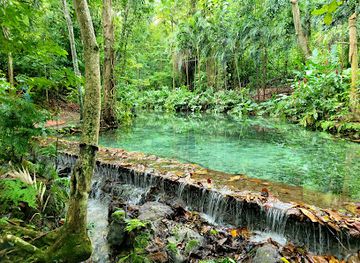
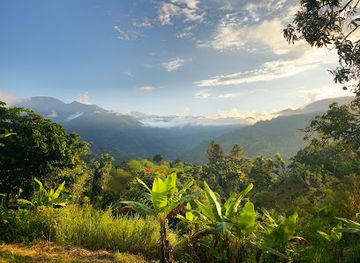
The John Crow Mountains are principally a destination for guided nature and heritage experiences rather than a concentration of built attractions. Forest trails lead through humid vegetation, streams and steep upland terrain, with opportunities to observe Jamaica’s endemic birds and distinctive mountain flora. Routes connected with Moore Town and Nanny Falls combine walking with an introduction to Windward Maroon history, while the Cunha Cunha Pass area provides a more demanding experience of the park’s protected interior. The boundaries and access arrangements of the Blue and John Crow Mountains National Park mean that routes should be confirmed locally before departure. Birdwatchers may encounter species such as the Jamaican tody, Jamaican crow and swallow-tailed hummingbird, although sightings are never guaranteed. The surrounding valleys add cultural and agricultural interest, with small farms, rivers and rural communities contrasting with the dense forest above. Hiking, birdwatching, photography, environmental interpretation and community-based cultural visits are the principal attractions; facilities are limited, and the landscape rewards preparation more than spontaneous sightseeing.
-
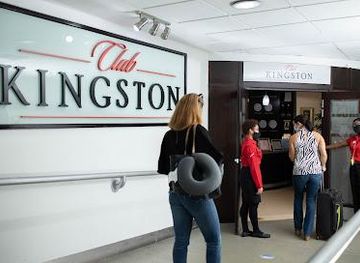
Travel lounge
Club Kingston - VIP Airport Lounge / VIP Attractions
Experience comfort and luxury at Club Kingston, the VIP lounge at Norman Manley International Airport, where relaxation meets Jamaican hospitality.
-
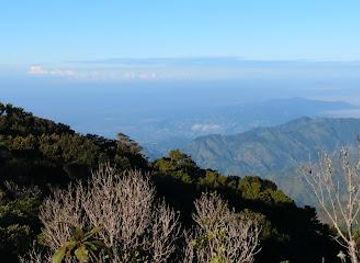
Mountain peak
Blue Mountain Peak
Experience the natural beauty of Blue Mountain Peak, Jamaica's highest point, offering breathtaking views and a rich cultural experience for all adventurers.
Best landmarks in John Crow Mountains
The most significant landmarks of the John Crow Mountains are closely connected with landscape and living history. The forested ridges and steep valleys themselves form part of the Blue and John Crow Mountains World Heritage Site, recognised for both exceptional biodiversity and cultural associations with Maroon resistance. Moore Town, in the surrounding eastern highlands of Portland, is the region’s defining cultural landmark: its history is linked with Queen Nanny, the Windward Maroons and an enduring community tradition. Nanny Falls is a prominent natural and heritage reference point on the Moore Town side of the mountains, reached by a rural trail rather than an urban promenade. The Cunha Cunha Pass route represents the historic importance of mountain crossings as well as the physical difficulty of the terrain. These places should be approached with local interpretation, since their significance lies not only in appearance but also in water, forest, memory, resistance and continuing community life.
-
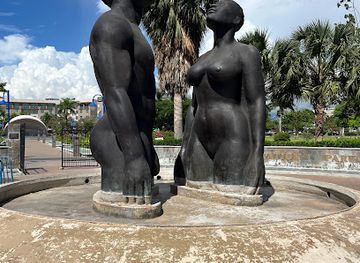
Park
Emancipation Park
Discover Emancipation Park in Kingston, Jamaica - a serene escape rich in history, lush gardens, and cultural significance.
-
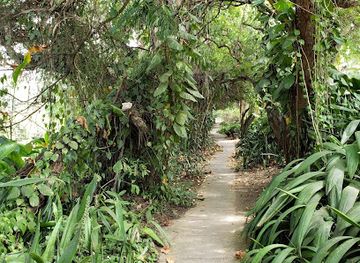
Botanical garden
Hope Botanical Gardens
Discover the lush landscapes and vibrant flora of Hope Botanical Gardens, a serene oasis in Kingston, Jamaica, perfect for relaxation and exploration.
-
Tourist attraction
Mystic Mountain
Discover the thrill of Mystic Mountain in Ocho Rios, Jamaica, where adventure and breathtaking views await every visitor.
-
National park
Blue Mountains National Park
Explore the stunning landscapes and rich biodiversity of Blue Mountains National Park, a UNESCO World Heritage Site in Jamaica.
Explore John Crow Mountains on the map
Plan your trip on one map. See where the top cities, national parks and sights are, and book hotels and experiences in a few clicks.
Best hotels in John Crow Mountains
Best restaurants in John Crow Mountains
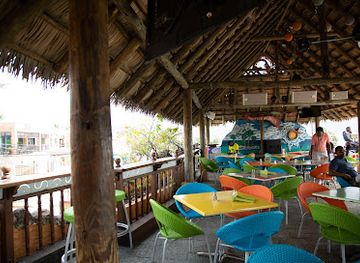
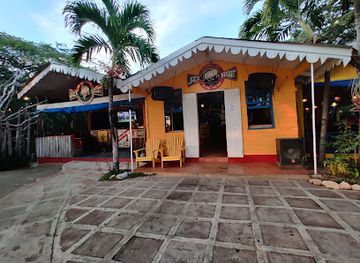
Dining around the John Crow Mountains is primarily local and informal, with meals found through rural cook shops, small eateries, guesthouses and community arrangements rather than a concentrated restaurant scene. Jamaican staples such as rice and peas, stewed chicken, fish, provisions, soup and fried snacks are common, with recipes and ingredients varying between households and communities. In the Portland and St Thomas surroundings, visitors may encounter fresh fruit, root vegetables, plantains, coconut-based dishes and produce from small farms. Maroon culinary traditions form part of the region’s living heritage, but should be experienced through respectful local introductions rather than treated as a menu theme detached from its community context. Port Antonio and larger settlements outside the mountain interior offer a wider choice of cafés and restaurants. Carry food and water for longer hikes, as there may be no dependable refreshment stop at a trailhead or on a ridge.
-
Restaurant
Margaritaville Montego Bay
Discover the ultimate Caribbean dining experience at Margaritaville Montego Bay – where flavor meets fun in paradise.
-
Jamaican
Jack Sprat Restaurant & Bar
Experience authentic Jamaican cuisine at Jack Sprat Restaurant & Bar in Treasure Beach, where fresh seafood meets stunning ocean views.
-
Restaurant
Milestone Restaurant Sports Bar & Grill
Experience vibrant Jamaican flavors and thrilling sports action at Milestone Restaurant Sports Bar & Grill in Runaway Bay.
-
Restaurant
The Coppers
Discover the vibrant flavors of Jamaica at The Coppers, where local ingredients meet creative culinary artistry in an inviting atmosphere.
Best bars in John Crow Mountains
Nightlife in the John Crow Mountains is quiet and community-based. Evenings generally centre on guesthouse dining, small local bars, conversation, music and early nights rather than nightclubs. Port Antonio, outside the mountain range, provides the broadest nearby choice of bars, restaurants and occasional live-music settings, while villages on the approaches have more limited and informal options. Community celebrations and Maroon cultural events may include music and dancing, but these are not performances to enter uninvited; attend only when arrangements and local protocol make participation appropriate. Rural roads can be dark and winding after sunset, so visitors should organise transport in advance and avoid assuming that a venue or taxi service will remain available late. The mountains are better suited to dawn birdwatching and an early trail start than to an elaborate evening entertainment itinerary.
-
Grill
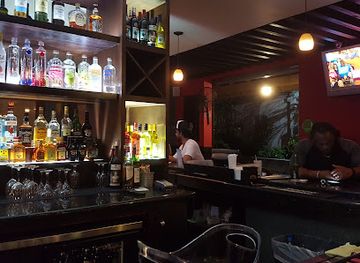
CRU Bar and Kitchen
Discover the vibrant flavors of Jamaica at CRU Bar and Kitchen, where grill meets great ambiance in the heart of Kingston.
-
Grill
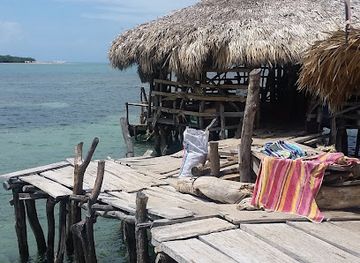
Floyd's Pelican Bar
Experience the vibrant flavors and stunning views at Floyd's Pelican Bar, a must-visit grill in Jamaica's scenic Parottee District.
-
Restaurant
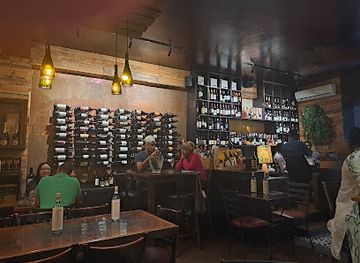
Uncorked!
Uncorked! in Kingston offers exquisite fine dining, gourmet cheeses, and an exceptional selection of wines for an unforgettable culinary journey.
-
Bar
John Crow's Tavern
Experience the vibrant atmosphere and delicious offerings at John Crow's Tavern, a must-visit bar and restaurant in Ocho Rios.
Best nightclubs in John Crow Mountains
Nightlife in the John Crow Mountains is quiet and community-based. Evenings generally centre on guesthouse dining, small local bars, conversation, music and early nights rather than nightclubs. Port Antonio, outside the mountain range, provides the broadest nearby choice of bars, restaurants and occasional live-music settings, while villages on the approaches have more limited and informal options. Community celebrations and Maroon cultural events may include music and dancing, but these are not performances to enter uninvited; attend only when arrangements and local protocol make participation appropriate. Rural roads can be dark and winding after sunset, so visitors should organise transport in advance and avoid assuming that a venue or taxi service will remain available late. The mountains are better suited to dawn birdwatching and an early trail start than to an elaborate evening entertainment itinerary.
-
Night club
Go Go Club
Embrace the exhilarating nightlife of Portmore at Go Go Club, where authentic Jamaican vibes and pulsating rhythms await every party-goer.
-
Night club
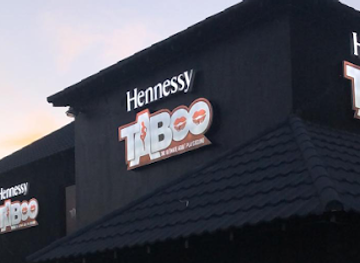
Taboo Ocho Rios
Discover the electrifying nightlife at Taboo Ocho Rios, a vibrant night club in Jamaica offering non-stop music and unforgettable memories.
-
Night club
Cristal Nightclub
Experience the electrifying atmosphere of Cristal Nightclub in Port Antonio, where dancing, music, and cocktails come together for an unforgettable night.
-
Night club
Cloud 9 Night Club & Lounge
Discover the electrifying nightlife at Cloud 9 Night Club & Lounge, where music, dancing, and fantastic cocktails await in Mandeville, Jamaica.

Best shops in John Crow Mountains
Shopping in the John Crow Mountains is small-scale and local rather than centred on retail districts. Visitors may buy fresh produce, fruit, handmade foods and everyday goods in villages on the approaches, while craft purchases are best made through reputable community-based initiatives or directly from makers when available. Maroon-associated products, music, storytelling and craft traditions should be bought respectfully and without assuming that every item sold in eastern Jamaica represents an authentic mountain tradition. Port Antonio and nearby larger settlements, outside the range itself, offer more dependable options for groceries, practical hiking supplies, art, craft goods and Jamaican food products. Bring essential equipment from Kingston or another major town, since specialist outdoor shops and cash facilities are limited near trailheads. Useful regional purchases include locally produced foods and responsibly made crafts, provided that plant material, shells and other natural objects are not removed from protected areas.
-
Shopping mall
Island Village Jamaica
Experience the vibrant shopping and cultural essence of Jamaica at Island Village in Ocho Rios, where unique finds and unforgettable memories await.
-
Shopping mall
Blue Diamond Shopping Mall
Unveil the ultimate shopping experience at Blue Diamond Shopping Mall in Montego Bay, where style, cuisine, and entertainment converge.
-
Jewelry store
Bijoux
Explore Bijoux in Kingston, a jewelry store offering exquisite craftsmanship and unique designs inspired by the beauty of Jamaica.
-
Shopping mall
Main Street Rose Hall
Discover the charm of Main Street Rose Hall, a shopping paradise in Jamaica with upscale stores, local art, and dining options, perfect for every tourist.

Get your free copy of our complete guide to John Crow Mountains, delivered straight to you.
Everything on this page, from attractions and restaurants to essentials and local phrases, in one PDF you can read offline, print or share.
Already have an account? Sign in
Your John Crow Mountains guide is ready.
We'll send it to · Not you? Sign out

Getting your guide ready…
We are putting together a fresh copy of the John Crow Mountains guide. This can take up to a minute.
This can take a few moments. If your browser asks, choose Allow so the download can start. You'll find the guide in your Downloads folder.
Nothing happened? Download it again
Sorry, the guide is taking longer than usual. Please try again in a minute, or get it by email instead.
John Crow Mountains essentials
Currency and Payment
Safety
Emergency Situations
Do's and Don'ts
Local Tips
From Eve
Local phrases worth knowing
You don't need to get them perfect. A few words go a long way, and locals appreciate the effort.
Basics
| English | Local | Say it |
|---|---|---|
| Hello | Wah gwaan | [Wah gwaan] |
| Goodbye | Likkle more | [Likkle more] |
| Yes | Yea | [Yea] |
| No | Nuh | [Nuh] |
| Please/You're welcome | Yuh welcome | [Yuh welcome] |
| Thank you | Thanks | [Thanks] |
| Excuse me/Sorry | Suhrry | [Suhrry] |
| How are you? | How yuh stay? | [How yuh stay?] |
| Fine. And you? | Mi deh yah. An yuh? | [Mi deh yah. An yuh?] |
| Do you speak English? | Yuh speak English? | [Yuh speak English?] |
| I don't understand | Mi nuh undastand | [Mi nuh undastand] |
Eating & Drinking
| English | Local | Say it |
|---|---|---|
| I'd like to see the menu, please | Mi wud like fi si di menu, please | [Mi wud like fi si di menu, please] |
| I don't eat meat | Mi nuh eat meat | [Mi nuh eat meat] |
| Cheers! | Cheers! | [Cheers!] |
| I would like to pay, please | Mi wud like fi pay, please | [Mi wud like fi pay, please] |
Emergencies
| English | Local | Say it |
|---|---|---|
| Help! | Help! | [Help!] |
| Go away! | Gweh! | [Gweh!] |
| Call the Police! | Call di police! | [Call di police!] |
| Call a doctor! | Call a doctor! | [Call a doctor!] |
| I'm lost | Mi lost | [Mi lost] |
| I'm ill | Mi sick | [Mi sick] |
Shopping
| English | Local | Say it |
|---|---|---|
| I'd like to buy... | Mi wud like fi buy... | [Mi wud like fi buy...] |
| I'm just looking | Mi jus a look | [Mi jus a look] |
| How much is it? | How much it cost? | [How much it cost?] |
| That's too expensive | Dat too expensive | [Dat too expensive] |
| Can you lower the price? | Yuh can lower di price? | [Yuh can lower di price?] |
Time & Numbers
| English | Local | Say it |
|---|---|---|
| What time is it? | Wah time it deh? | [Wah time it deh?] |
| It's one o'clock | It one o'clock | [It one o'clock] |
| Half past (10) | Half past ten | [Half past ten] |
| Morning | Mornin' | [Mornin'] |
| Afternoon | Afternoon | [Afternoon] |
| Evening | Evenin' | [Evenin'] |
| Yesterday | Yesterday | [Yesterday] |
| Today | Today | [Today] |
| Tomorrow | Tomorrow | [Tomorrow] |
| 1 | One | [One] |
| 2 | Two | [Two] |
| 3 | Three | [Three] |
| 4 | Four | [Four] |
| 5 | Five | [Five] |
| 6 | Six | [Six] |
| 7 | Seven | [Seven] |
| 8 | Eight | [Eight] |
| 9 | Nine | [Nine] |
| 10 | Ten | [Ten] |
Transport & Directions
| English | Local | Say it |
|---|---|---|
| Where's a/the...? | Whe di...? | [Whe di...?] |
| What's the address? | Wah di address? | [Wah di address?] |
| Can you show me (on the map)? | Yuh can show mi (pon di map)? | [Yuh can show mi (pon di map)?] |
| When's the next (bus)? | When di next (bus)? | [When di next (bus)?] |
| A ticket (to ....) | A ticket (to ....) | [A ticket (to ....)] |
History of John Crow Mountains
Taíno Jamaica and the Eastern Mountains
Before European colonisation, Jamaica was inhabited by Taíno communities whose settlements and movements were shaped by the island’s rivers, valleys and fertile coastal plains. The steep eastern mountains were not an isolated world, but part of a wider landscape used for travel, hunting and gathering. Archaeological evidence across Jamaica is uneven, and the John Crow range is better known for its later Maroon history than for large surviving Taíno monuments. Nevertheless, the pre-colonial period forms an important part of the region’s deeper human history and reminds visitors that Jamaica’s landscapes were inhabited and understood long before Spanish and English rule.
Spanish and English Colonial Expansion
Spain established colonial control in Jamaica after 1494, and England seized the island in 1655. As plantation agriculture expanded under English rule, the eastern mountains became increasingly important as difficult terrain beyond the direct reach of colonial authorities. Forested valleys and steep ridges offered routes of escape and refuge for Africans resisting enslavement. The John Crow Mountains therefore acquired significance not simply as a natural barrier, but as part of the geography of colonial conflict, plantation expansion and African resistance in eastern Jamaica.
Windward Maroon Resistance in the Eighteenth Century
The Windward Maroons developed communities in eastern Jamaica during the seventeenth and eighteenth centuries, using the mountains and surrounding valleys as defensive territory. Queen Nanny is the best-known figure associated with this resistance. Oral tradition and historical memory credit her with leadership, military organisation and spiritual authority during the conflicts commonly called the First Maroon War. Britain recognised Maroon autonomy through treaties in the 1730s, although the agreements remain contested in interpretation. The rugged John Crow landscape helped make sustained resistance possible and continues to shape Maroon identity in eastern Jamaica.
Moore Town and Maroon Cultural Continuity
Moore Town, in the eastern Jamaican highlands of Portland, became one of the principal Windward Maroon communities and remains a living centre of Maroon culture. Its significance extends beyond historic conflict: language, music, oral history, foodways, ritual practices and community institutions have carried elements of African heritage through successive generations. The settlement is closely associated with Queen Nanny and with the continuing cultural landscape of the mountains. Visitors should approach its heritage through local interpretation and remember that the community is a lived social environment rather than a staged historical attraction.
Plantations, Roads and Mountain Agriculture
From the colonial period into modern Jamaica, agriculture shaped the lower slopes and valleys around the John Crow Mountains. Estate production, small farming and the cultivation of crops suited to humid upland conditions linked mountain communities with coastal ports and market towns. Roads and later motor transport improved access, but the terrain continued to limit large-scale development in the range itself. The resulting pattern of scattered settlements, farms and forest has helped preserve the mountains’ distinct character while also leaving communities dependent on careful management of roads, water and agricultural land.
Protection of the Blue and John Crow Mountains
Conservation efforts increasingly recognised the ecological importance of Jamaica’s eastern highlands, including their endemic plants, birds and watershed forests. The Blue and John Crow Mountains National Park was established to protect this wider mountain system, and the area was inscribed on the UNESCO World Heritage List in 2015 for its natural and cultural significance. The designation reflects an intertwined heritage: biologically distinctive rainforest and a landscape shaped by Maroon resistance and cultural continuity. Conservation today must balance habitat protection, local livelihoods, tourism and the rights of communities with longstanding connections to the mountains.
John Crow Mountains in Photos
Browse through our photo collection highlighting the charm and character of the destination.
Neighbouring regions of John Crow Mountains
The closest regions to John Crow Mountains, if you have time for more than one.
-

-

-
-

-


Swipe for more regions
Explore more
Explore more of Jamaica
Discover Jamaica: A Caribbean paradise with stunning beaches, rich culture, and thrilling adventures. Experience the island's vibrant music, delicious cuisine, and warm hospitality.
Explore Jamaica