

Free Morant Bay Area Travel Guide & Mobile App
Explore Morant Bay Area with free travel guides. Discover regional history, expert tips, proposed trips, and audio guides on web or mobile app.


Explore the Morant Bay Area in Jamaica for pivotal history, coastal communities, St Thomas landscapes and a quieter route through the island’s east.
Read more about Morant Bay Area
When is the best time to visit Morant Bay Area?
Best: January–March · 30–31°C| Month | High (°C) | Rainfall (mm) |
|---|---|---|
| January (best) | 30 | 40 |
| February (best) | 30 | 40 |
| March (best) | 31 | 60 |
| April | 32 | 100 |
| May | 32 | 140 |
| June | 32 | 160 |
| July | 32 | 180 |
| August | 32 | 200 |
| September | 32 | 200 |
| October | 32 | 180 |
| November | 31 | 120 |
| December | 31 | 80 |
Getting to and around Morant Bay Area
How to get there
Transportation
Top city travel guides in Morant Bay Area
The cities of Morant Bay Area, and the easiest places to base yourself.

Swipe for more cities
Best attractions in Morant Bay Area
The Morant Bay Area’s attractions are concentrated around history, community life and the wider St Thomas landscape rather than large commercial theme parks or resort complexes. In Morant Bay, the courthouse site and associated memorial spaces introduce the Morant Bay Rebellion, while St Thomas Parish Church adds architectural and religious context to the town’s historic centre. The nearby Paul Bogle memorials connect local places with Jamaica’s national story. Port Morant offers a different perspective, with coastal settlement and maritime associations. Beyond the town, roads lead through cultivated country, river valleys and foothills where the experience is primarily scenic and rural. Visitors interested in Jamaica’s eastern landscape can use the area as a base for carefully planned drives towards inland St Thomas, but should check road conditions and allow generous travel time. Local churches, markets, small food businesses and community interactions can be as revealing as formal attractions. The area is best approached as a historical and geographical circuit, with stops chosen for context rather than as a checklist of ticketed sights.
-
Ecological park
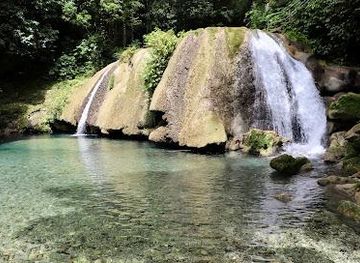
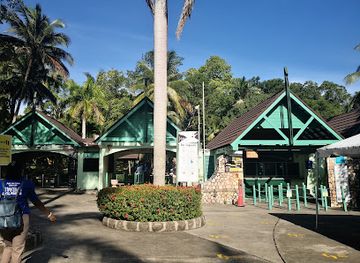
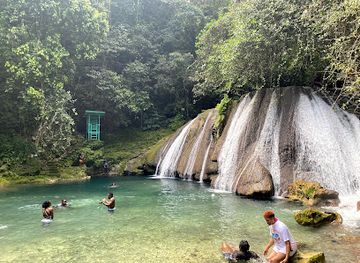
Reach Falls
Discover the enchanting beauty of Reach Falls, a serene ecological park in Jamaica offering stunning waterfalls and lush landscapes for nature lovers.
-
Tourist attraction
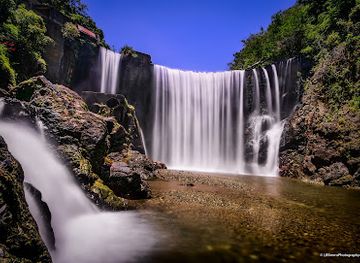
Reggae Falls Travel & Tours
Experience the captivating beauty of Reggae Falls, where nature and reggae culture come together in a stunning Jamaican paradise.
-
Travel lounge
Club Kingston - VIP Airport Lounge / VIP Attractions
Discover comfort and luxury at Club Kingston, the VIP airport lounge offering Jamaican hospitality and relaxation before your travels.
-
Tourist attraction
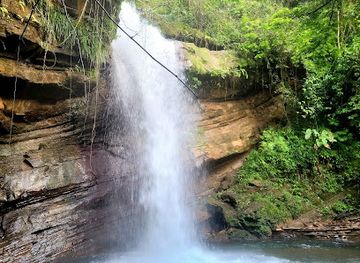
Nanny Falls
Explore the enchanting Nanny Falls in Jamaica, a serene escape with stunning waterfalls, lush landscapes, and vibrant local culture.
Best landmarks in Morant Bay Area
The Morant Bay Courthouse site is the area’s defining landmark, both for its civic architecture and for the events of October 1865 that made it central to Jamaica’s political history. Memorials to Paul Bogle and other figures associated with the Morant Bay Rebellion give the surrounding area national symbolic importance. St Thomas Parish Church is another significant feature of Morant Bay, representing the long-standing role of religious institutions in Jamaican community life and colonial-era administration. Port Morant provides a contrasting coastal landmark environment, linking the region’s history to shipping, fishing and the sea. Inland, the rising country towards the Blue Mountains forms a natural backdrop rather than a single monument: forested slopes, valleys and winding roads express the geographical transition from coastal plain to upland parish. These places are most meaningful when considered together, since the area’s identity rests on the relationship between landscape, colonial institutions, local communities and the struggle for political rights.
-
Park
The World Famous Dunn's River Falls & Park
Experience the natural beauty and rich history of Dunn's River Falls, a unique and refreshing Jamaican treasure near Ocho Rios.
-
Ecological park
Reach Falls
Explore the breathtaking beauty of Reach Falls, an ecological park in Jamaica, where nature's tranquility meets vibrant landscapes and refreshing waters.
-
Fortress
Fort Charles
Discover the rich history and stunning views at Fort Charles, Port Royal's iconic fortress facing the Caribbean Sea.
-
 Lodging
Whispering Bamboo Cove Resort
Experience tranquility at Whispering Bamboo Cove Resort in Jamaica: comfortable rooms, local cuisine, and stunning Caribbean views await!

Explore Morant Bay Area on the map
Plan your trip on one map. See where the top cities, national parks and sights are, and book hotels and experiences in a few clicks.
Best hotels in Morant Bay Area
Best restaurants in Morant Bay Area
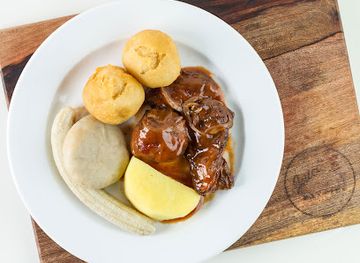
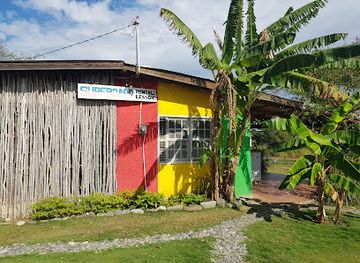
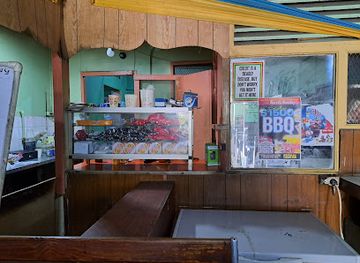
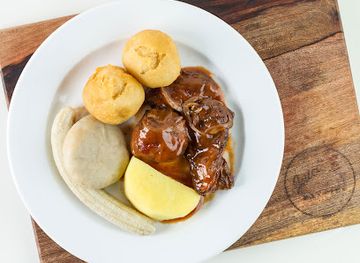
Dining in the Morant Bay Area is informal and closely connected to Jamaican everyday food rather than a concentrated fine-dining scene. Small restaurants, cookshops, roadside stalls and cafés commonly serve staples such as rice and peas, fried or stewed chicken, curried goat, soups, patties and seasonal vegetable dishes. Fish and seafood are particularly relevant in coastal communities, although menus and daily availability depend on local supply. Fresh fruit, coconut-based preparations and provisions such as yam, cassava and plantain reflect the island’s agricultural traditions. Visitors may also find jerk-seasoned dishes, a Jamaican style associated with the wider island rather than exclusively with St Thomas. Morant Bay is the most practical place in the immediate area for comparing several modest dining options, while rural stops tend to be simpler and may close early. Carry cash, expect service to be unhurried at small establishments, and ask about ingredients when ordering unfamiliar dishes.
-
Restaurant
Fish Cove
Experience authentic Jamaican cuisine and breathtaking views at Fish Cove in Lyssons – where every meal is a celebration of flavor and culture.
-
Fast Food
Juici Patties
Experience authentic Jamaican flavors at Juici Patties in Morant Bay – your destination for delicious patties and local cuisine.
-
Grill
The Longboarder Bar & Grill
Experience mouthwatering cuisine with breathtaking ocean views at The Longboarder Bar & Grill in Morant Bay.
-
Restaurant
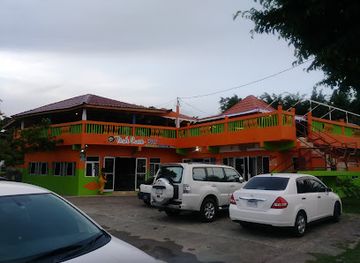
Robbie's Restaurant
Experience authentic Jamaican flavors in Morant Bay at Robbie's Restaurant, where every dish tells a story.
Best bars in Morant Bay Area
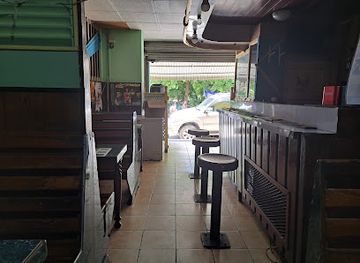
Evening life in the Morant Bay Area is generally modest and community-oriented. Local bars, rum shops, small restaurants and occasional live-music settings provide the main social venues, particularly in Morant Bay and along busier roads. The atmosphere is more suited to conversation, food and music than to a large, organised nightclub circuit. Some guesthouses and restaurants may offer an evening bar service, while nightlife in rural districts can be very limited and seasonal. Visitors should ask locally about current events rather than rely on old listings, as opening arrangements and venues change. Drink responsibly, arrange transport before travelling between communities at night, and respect residential areas. The area’s evening character is best understood through local music, food and social spaces rather than through a dedicated entertainment district.
-
Fast Food
Juici Patties
Experience the authentic taste of Jamaica at Juici Patties in Morant Bay, where delicious patties meet vibrant local culture.
-
Grill
The Longboarder Bar & Grill
Experience the vibrant atmosphere and delectable Caribbean cuisine at The Longboarder Bar & Grill on Roselle Beach.
-
Lounge
V.I.P. Beach Lounge
Discover relaxation at V.I.P. Beach Lounge, where tropical drinks meet stunning ocean views in a vibrant atmosphere.
-
Restaurant
Robbie's Restaurant
Savor authentic Jamaican flavors at Robbie's Restaurant in Morant Bay, where every dish tells a delicious story of the island's culinary heritage.


Best nightclubs in Morant Bay Area
Evening life in the Morant Bay Area is generally modest and community-oriented. Local bars, rum shops, small restaurants and occasional live-music settings provide the main social venues, particularly in Morant Bay and along busier roads. The atmosphere is more suited to conversation, food and music than to a large, organised nightclub circuit. Some guesthouses and restaurants may offer an evening bar service, while nightlife in rural districts can be very limited and seasonal. Visitors should ask locally about current events rather than rely on old listings, as opening arrangements and venues change. Drink responsibly, arrange transport before travelling between communities at night, and respect residential areas. The area’s evening character is best understood through local music, food and social spaces rather than through a dedicated entertainment district.
-
Night club
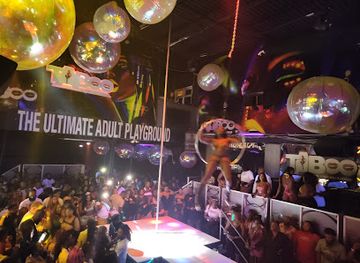
Taboo Montego Bay
Discover the vibrant nightlife at Taboo Montego Bay, where music, dance, and cocktails blend for an unforgettable experience in Jamaica.
-
Night club
Chappy Records /The Untouchable Chappy Night Club & Restaurant Villa Maine Entertainment Ground
Chappy Records in Morant Bay: Your gateway to unforgettable nights filled with vibrant music, delicious food, and unforgettable entertainment.
-
Night club
Occasion Night Club
Immerse yourself in the vibrant nightlife at Occasion Night Club, a premier destination in Morant Bay for music, dance, and unforgettable experiences.
Best shops in Morant Bay Area
Shopping in the Morant Bay Area is practical and locally focused, with small groceries, produce sellers, market stalls, pharmacies, clothing shops and independent traders serving surrounding communities. Morant Bay is the main place to look for everyday provisions and locally prepared food, while roadside sellers may offer seasonal fruit, vegetables, coconuts and ground provisions. Visitors can find Jamaican staples such as packaged spices, coffee, sauces, rum and confectionery through established shops, although product ranges vary. Craft and souvenir shopping is less concentrated than in Jamaica’s major resort centres, so locally made items should be purchased from reputable sellers rather than assumed to be available in every town. Markets and street trading may be busiest at particular times of day, but schedules can change. Carry small notes and coins, compare prices politely, and remember that many small businesses operate on a cash basis.
-
Market
Morant Bay Market
Discover the vibrant Morant Bay Market, where local culture, fresh produce, and lively interactions await in the heart of Jamaica.
-
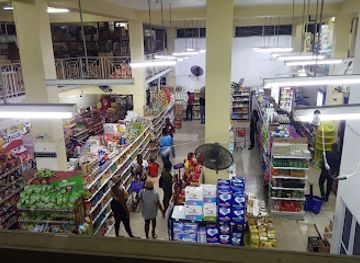
Supermarket
Essential Discount Mart
Explore local shopping at Essential Discount Mart in Morant Bay, where affordability meets a diverse selection of Jamaican products.
-
Book store
Lee's Books &Things Limited
Discover the literary charm of Lee's Books & Things Limited in Morant Bay, where every book tells a story and local culture comes alive.
-
Grocery store
Classic supermarket
Experience authentic Jamaican culture at Classic Supermarket in Morant Bay, where local flavors and community life come together.
Get your free copy of our complete guide to Morant Bay Area, delivered straight to you.
Everything on this page, from attractions and restaurants to essentials and local phrases, in one PDF you can read offline, print or share.
Already have an account? Sign in
Your Morant Bay Area guide is ready.
We'll send it to · Not you? Sign out

Getting your guide ready…
We are putting together a fresh copy of the Morant Bay Area guide. This can take up to a minute.
This can take a few moments. If your browser asks, choose Allow so the download can start. You'll find the guide in your Downloads folder.
Nothing happened? Download it again
Sorry, the guide is taking longer than usual. Please try again in a minute, or get it by email instead.
Morant Bay Area essentials
Currency and Payment
Safety
Emergency Situations
Do's and Don'ts
Local Tips
From Eve
Local phrases worth knowing
You don't need to get them perfect. A few words go a long way, and locals appreciate the effort.
Basics
| English | Local | Say it |
|---|---|---|
| Hello | Wah Gwaan | [Wah Gwaan] |
| Goodbye | Likkle more | [Likkle more] |
| Yes | Yea | [Yea] |
| No | No | [No] |
| Please/You're welcome | Mi a beg yuh | [Mi a beg yuh] |
| Thank you | Tank yuh | [Tank yuh] |
| Excuse me/Sorry | Scuse me/Sorry | [Scuse me/Sorry] |
| How are you? | How yuh stay? | [How yuh stay?] |
| Fine. And you? | Mi deh yah. An yuh? | [Mi deh yah. An yuh?] |
| Do you speak English? | Yuh speak English? | [Yuh speak English?] |
| I don't understand | Mi nuh undastand | [Mi nuh undastand] |
Eating & Drinking
| English | Local | Say it |
|---|---|---|
| I'd like to see the menu, please | Mi wud like fi si di menu, please | [Mi wud like fi si di menu, please] |
| I don't eat meat | Mi nuh eat meat | [Mi nuh eat meat] |
| Cheers! | Cheers! | [Cheers!] |
| I would like to pay, please | Mi wud like fi pay, please | [Mi wud like fi pay, please] |
Emergencies
| English | Local | Say it |
|---|---|---|
| Help! | Help! | [Help!] |
| Go away! | Gweh! | [Gweh!] |
| Call the Police! | Call di police! | [Call di police!] |
| Call a doctor! | Call a doctor! | [Call a doctor!] |
| I'm lost | Mi lost | [Mi lost] |
| I'm ill | Mi sick | [Mi sick] |
Shopping
| English | Local | Say it |
|---|---|---|
| I'd like to buy... | Mi wud like fi buy... | [Mi wud like fi buy...] |
| I'm just looking | Mi a just a look | [Mi a just a look] |
| How much is it? | How much fi dat? | [How much fi dat?] |
| That's too expensive | Dat too pricey | [Dat too pricey] |
| Can you lower the price? | Yuh can lower di price? | [Yuh can lower di price?] |
Time & Numbers
| English | Local | Say it |
|---|---|---|
| What time is it? | Wah time it? | [Wah time it?] |
| It's one o'clock | A one o'clock | [A one o'clock] |
| Half past (10) | Half past ten | [Half past ten] |
| Morning | Mornin' | [Mornin'] |
| Afternoon | Aftanun | [Aftanun] |
| Evening | Evenin' | [Evenin'] |
| Yesterday | Yesterday | [Yesterday] |
| Today | Today | [Today] |
| Tomorrow | Tomorrow | [Tomorrow] |
| 1 | One | [One] |
| 2 | Two | [Two] |
| 3 | Three | [Three] |
| 4 | Four | [Four] |
| 5 | Five | [Five] |
| 6 | Six | [Six] |
| 7 | Seven | [Seven] |
| 8 | Eight | [Eight] |
| 9 | Nine | [Nine] |
| 10 | Ten | [Ten] |
Transport & Directions
| English | Local | Say it |
|---|---|---|
| Where's a/the...? | Whey di...? | [Whey di...?] |
| What's the address? | Wah di address? | [Wah di address?] |
| Can you show me (on the map)? | Yuh can show mi (pon di map)? | [Yuh can show mi (pon di map)?] |
| When's the next (bus)? | When di next (bus)? | [When di next (bus)?] |
| A ticket (to ....) | A ticket (to....) | [A ticket (to....)] |
History of Morant Bay Area
Taíno Jamaica and Early Settlement
Before European colonisation, Jamaica was inhabited by Taíno communities whose economy combined cultivation, fishing and use of forest and coastal resources. The southeastern coast and its river valleys formed part of the island’s wider inhabited landscape, although surviving evidence is uneven and many early sites are not presented as formal visitor attractions. Taíno words and food crops remain part of Jamaica’s wider cultural inheritance. European arrival brought profound disruption through disease, forced labour, displacement and the establishment of Spanish colonial authority.
Spanish and British Colonial Rule
Jamaica passed from Spanish to British control in 1655, after which plantation slavery and the export economy expanded across the island. St Thomas developed within this colonial system, with coastal shipping points and agricultural estates linking the parish to wider markets. Port Morant and other coastal locations were shaped by maritime movement, while inland communities supplied labour and produce. The plantation economy depended on the forced labour of Africans and their descendants, leaving social and landholding patterns that continued to influence the parish long after emancipation.
Emancipation and Post-Slavery Jamaica
Slavery was abolished in Jamaica through staged emancipation between 1834 and 1838. Freedom did not bring equal access to land, secure employment or political power, and many formerly enslaved people faced difficult conditions as they built independent communities. In St Thomas, as elsewhere in Jamaica, small farming, wage work and village institutions developed alongside estates and commercial agriculture. Churches became important centres of education, organisation and public life, helping shape the communities from which later political movements emerged.
The Morant Bay Rebellion, 1865
On 11 October 1865, a protest connected with grievances over poverty, land, justice and political representation reached the courthouse at Morant Bay. Violence followed, the courthouse was burned, and Custos Baron von Ketelhodt and others were killed. Governor Edward Eyre’s administration responded with martial law and severe reprisals, including the execution of Paul Bogle and George William Gordon. The episode caused intense debate in Britain and Jamaica about colonial governance and racial justice. The courthouse site and nearby memorials preserve the area’s central place in Jamaican political history.
Paul Bogle and the Growth of Jamaican National Consciousness
Paul Bogle, a Baptist deacon from Stony Gut in St Thomas, became the best-known figure associated with the Morant Bay Rebellion. His leadership and execution turned him into a symbol of resistance to unjust rule, while George William Gordon became associated with demands for representation and reform. In independent Jamaica their memories were incorporated into the national story: Bogle and Gordon were named National Heroes, and the Morant Bay sites became places of civic remembrance. Their legacy continues to shape museums, school history and public discussion.
Agriculture, Coastal Trade and Modern St Thomas
After the nineteenth century, St Thomas remained primarily rural, with agriculture, fishing, small commerce and public-sector employment supporting communities around Morant Bay and the parish’s inland districts. Bananas and other crops formed part of the eastern parish economy, while roads and improved communications altered links with Kingston and neighbouring communities. Modern Morant Bay is a parish administrative and commercial centre rather than a large resort town. Its importance now rests on local services, cultural memory and access to the varied landscapes of eastern Jamaica.
Morant Bay Area in Photos
Browse through our photo collection highlighting the charm and character of the destination.
Neighbouring regions of Morant Bay Area
The closest regions to Morant Bay Area, if you have time for more than one.
-

-

-

-

-


Swipe for more regions
Explore more
Explore more of Jamaica
Discover Jamaica: A Caribbean paradise with stunning beaches, rich culture, and thrilling adventures. Experience the island's vibrant music, delicious cuisine, and warm hospitality.
Explore Jamaica