

Free Liguanea Plains Travel Guide & Mobile App
Explore Liguanea Plains with free travel guides. Discover regional history, expert tips, proposed trips, and audio guides on web or mobile app.


Explore Liguanea Plains in Jamaica for Kingston culture, historic houses, university gardens, museums, shopping and mountain-framed urban life.
Read more about Liguanea Plains
When is the best time to visit Liguanea Plains?
Best: January–March · 30–31°C| Month | High (°C) | Rainfall (mm) |
|---|---|---|
| January (best) | 30 | 20 |
| February (best) | 31 | 15 |
| March (best) | 31 | 15 |
| April | 32 | 25 |
| May | 32 | 35 |
| June | 33 | 45 |
| July | 33 | 55 |
| August | 34 | 65 |
| September | 33 | 110 |
| October | 33 | 130 |
| November | 32 | 90 |
| December | 32 | 40 |
Getting to and around Liguanea Plains
How to get there
Transportation
Top city travel guides in Liguanea Plains
The cities of Liguanea Plains, and the easiest places to base yourself.
-

-


Swipe for more cities
Best attractions in Liguanea Plains
Liguanea Plains offers an urban mix of historic properties, museums, gardens, educational spaces and contemporary Kingston culture rather than a single concentrated sightseeing quarter. Devon House is one of the area’s best-known heritage properties, presenting a nineteenth-century mansion and estate setting alongside public food and leisure spaces. The Bob Marley Museum provides a focused encounter with the musician’s life and international influence. In the east, Hope Botanical Gardens and Hope Zoo give the metropolitan area substantial green space, while the University of the West Indies Mona campus adds Caribbean academic history, architecture and landscaped grounds. Emancipation Park and National Heroes Park offer civic spaces shaped by national memory, public art and commemoration. Galleries, theatres, churches, markets and restaurants fill out the cultural offering, while the plain’s proximity to the Blue Mountain foothills creates opportunities for excursions beyond the urban basin. Visitors should distinguish these foothill and mountain journeys from attractions actually located on the lowland plain, and allow for Kingston traffic when combining sites.
-
State park
Emancipation Park
Explore Emancipation Park in Kingston, Jamaica, a beautiful historical landmark that combines nature and culture for a serene escape.
-
Museum
Bob Marley Museum
Explore the Bob Marley Museum in Kingston, Jamaica, and delve into the life of reggae's legendary icon. Experience music, culture, and history in one vibrant location.
-
Botanical garden
Hope Botanical Gardens
Discover the serene beauty of Hope Botanical Gardens in Kingston, a lush retreat showcasing Jamaica's vibrant flora and rich biodiversity.
-
Park
Saint William Grant Park
Discover the tranquility and cultural richness of Saint William Grant Park in the heart of Kingston, Jamaica, a must-visit destination for every traveler.


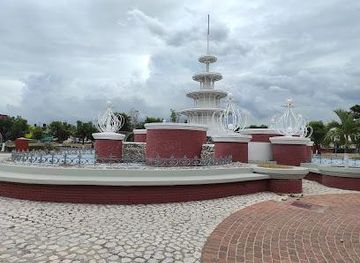
Best landmarks in Liguanea Plains
Devon House is a key architectural landmark of the plain, its nineteenth-century Great House representing the wealth and social structure of post-emancipation Jamaica while its grounds have become a familiar public meeting place. On Hope Road, the Bob Marley Museum occupies the former home and recording environment of one of Jamaica’s most influential musicians, giving the building international cultural significance. The University of the West Indies Mona campus is an important landmark in its own right, linking the landscape of the former estate with the development of Caribbean higher education. Hope Botanical Gardens, formally the Royal Botanical Gardens at Hope, are a major urban green landmark on the eastern plain, with mature planting and longstanding public recreational value. Emancipation Park is recognised by its public sculpture and civic role, while National Heroes Park provides a more formal setting of monuments and national remembrance. Long Mountain and the Blue Mountain foothills form the dramatic eastern and northern visual frame, although the higher mountain terrain lies beyond the lowland region described as Liguanea Plains.
-
Park
Emancipation Park
Discover the beauty of Jamaica at Emancipation Park, a historical landmark and serene oasis in the heart of Kingston, perfect for relaxation and cultural experiences.
-
Shopping mall
Sovereign Centre
Discover the vibrant Sovereign Centre in Kingston, Jamaica - a premier shopping mall with diverse stores, dining options, and entertainment for all.
-
Museum
Bob Marley Museum
Explore the Bob Marley Museum in Kingston, a vibrant tribute to reggae's legend, showcasing his life, music, and cultural impact.
-
Botanical garden
Hope Botanical Gardens
Discover Jamaica's natural beauty at Kingston's Hope Botanical Gardens: a historic oasis of tranquility, flora, and fauna.
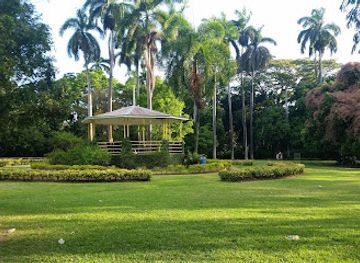
Explore Liguanea Plains on the map
Plan your trip on one map. See where the top cities, national parks and sights are, and book hotels and experiences in a few clicks.
Best hotels in Liguanea Plains
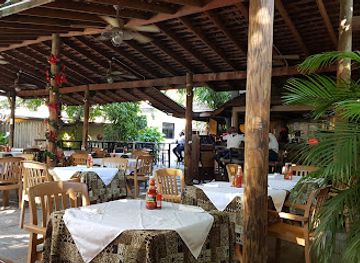
Best restaurants in Liguanea Plains
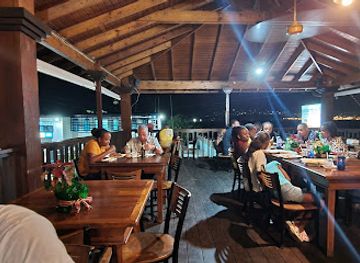
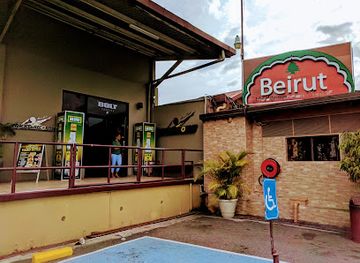
Dining across Liguanea Plains reflects Kingston’s role as Jamaica’s commercial and cultural centre. Traditional Jamaican cooking appears in casual restaurants, takeaway counters and markets, with jerk chicken and pork, rice and peas, curried goat, brown stew, fried fish, patties, festival and hearty breakfast plates among the familiar choices. Fresh fruit, juices, callaloo, bammy and seafood connect the city’s menus with the island’s agricultural and coastal food traditions. Liguanea, New Kingston and the areas around Devon House have a broad selection of cafés, bakeries, hotel restaurants and contemporary Jamaican kitchens, while smaller local eateries provide more informal meals. Chinese-Jamaican, Indian, Middle Eastern and other international influences are also part of Kingston’s established urban food culture. Markets and food shops are useful for tasting seasonal produce, while locally made rum, beer and fruit drinks appear widely; visitors should ask about preparation and spice levels rather than assuming every dish is hot.
-
Seafood
Gloria's
Discover authentic Caribbean seafood at Gloria's in Port Royal - where every dish tells a story of flavor and tradition.
-
Restaurant
Usain Bolt's Tracks & Records
Discover Jamaican cuisine infused with sports culture at Usain Bolt's Tracks & Records in Kingston.
-
Restaurant
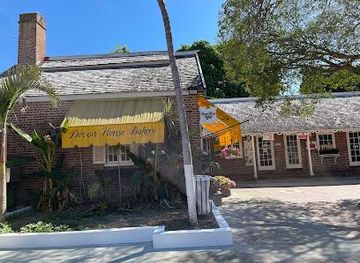
Devon House Bakery
Savor Jamaica's sweetest heritage at Devon House Bakery, where historic kitchen fires up triangular patties, lush carrot cakes, and oven-fresh delights amid Stiebel's iconic mansion grounds.
-
Restaurant
South Avenue Grill
Experience Jamaica's vibrant flavors at South Avenue Grill – where every meal tells a story of culture and culinary excellence.
Best bars in Liguanea Plains
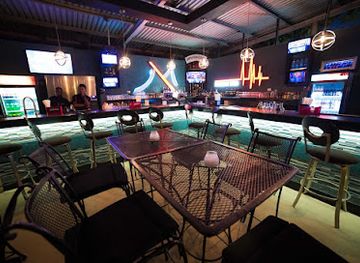
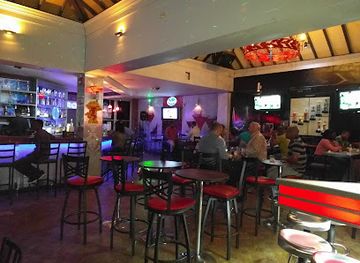
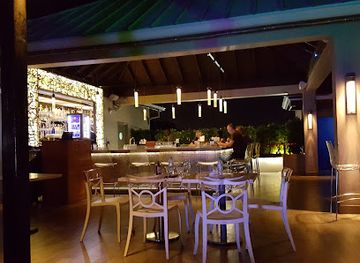
Evening life on Liguanea Plains is varied but dispersed. New Kingston has the broadest concentration of hotel bars, restaurants, lounges and venues hosting live music or cultural events, while Liguanea and the Hope Road corridor offer quieter dining-led evenings. Traditional pubs and rum bars sit alongside cocktail-focused establishments, sports bars and places presenting reggae, dancehall, jazz or acoustic performances. University influence gives parts of Mona and Papine a younger evening clientele, although activity changes with the academic calendar. Kingston’s major clubs and events can be busy and may operate in changing locations, so current local information is more dependable than old listings. In residential and institutional areas, nightlife is subdued; visitors should leave venues using pre-arranged or reputable transport rather than assuming that all districts remain easy to navigate late at night.
-
Bar
Macau Gaming Lounge & Bar
Discover the perfect blend of gaming, dining, and nightlife at Macau Gaming Lounge & Bar, the ultimate destination for fun in Kingston.
-
Grill
Ribbiz UltraLounge
Discover the vibrant flavors and nightlife of Kingston at Ribbiz UltraLounge, where delicious grill cuisine meets an energetic atmosphere.
-
Grill
CRU Bar and Kitchen
Experience the vibrant culinary scene at CRU Bar and Kitchen, offering local Jamaican flavors and a lively atmosphere for all food enthusiasts.
-
Bar
Epican Tapas Lounge
Discover the culinary delights of Kingston at Epican Tapas Lounge, where vibrant tapas and refreshing drinks create an unforgettable dining experience.
Best nightclubs in Liguanea Plains
Evening life on Liguanea Plains is varied but dispersed. New Kingston has the broadest concentration of hotel bars, restaurants, lounges and venues hosting live music or cultural events, while Liguanea and the Hope Road corridor offer quieter dining-led evenings. Traditional pubs and rum bars sit alongside cocktail-focused establishments, sports bars and places presenting reggae, dancehall, jazz or acoustic performances. University influence gives parts of Mona and Papine a younger evening clientele, although activity changes with the academic calendar. Kingston’s major clubs and events can be busy and may operate in changing locations, so current local information is more dependable than old listings. In residential and institutional areas, nightlife is subdued; visitors should leave venues using pre-arranged or reputable transport rather than assuming that all districts remain easy to navigate late at night.
-
Lounge
420 hookah lounge
Discover the ultimate chill at 420 Hookah Lounge in Kingston, where flavorful hookah meets lively ambiance for an unforgettable night out.
-
Night club
Go Go Club
Experience the vibrant nightlife of Portmore at Go Go Club, where music, dancing, and excitement await every night.
-
Sports bar
Mello Sports Bar and Lounge
Immerse yourself in Kingston's nightlife at Mello Sports Bar and Lounge, where sports, food, and fun come together in a vibrant setting.
-
Night club
Taboo Kingston
Explore Kingston's Nightlife at Taboo: A Premier Night Club for Dance, Drinks, and Entertainment!


Best shops in Liguanea Plains
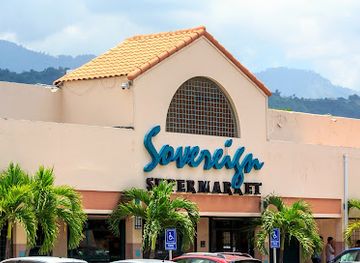
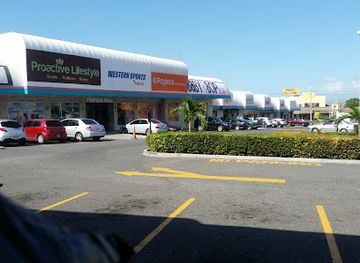
Shopping on Liguanea Plains ranges from established commercial centres to informal food and produce trading. Sovereign Centre in Liguanea is a major modern retail reference point, with shops, services and dining, while Half-Way Tree and nearby commercial corridors have a busier, more mixed urban character. Smaller stores and markets are useful for Jamaican snacks, spices, coffee, rum, sauces, fruit preserves, craft items and locally designed clothing. Art galleries and boutique retailers in Kingston’s more affluent districts offer paintings, jewellery, books and contemporary Caribbean design, although stock and trading locations change over time. Papine has a strongly practical, student-oriented and neighbourhood shopping environment connected to the university and eastern communities. For dependable souvenirs, compare labels and packaging, especially for food and spirits, and favour recognised retailers for expensive artwork or jewellery. The plain is better suited to independent browsing and regional products than to a single traditional craft market.
-
Shopping mall
Sovereign Centre
Explore Sovereign Centre in Kingston for a delightful mix of shopping, dining, and entertainment, embodying the vibrant Jamaican spirit.
-
Shopping mall
Tropical Plaza
Explore Tropical Plaza in Kingston: A vibrant shopping destination blending local charm with global brands and delicious dining options.
-
Restaurant
Devon House Bakery
Experience the rich heritage and delectable flavors at Devon House Bakery, a culinary gem in the heart of Kingston, Jamaica.
-
Home improvement store
Active Home Centre
Explore Active Home Centre in Kingston, Jamaica - your ultimate destination for home improvement, stylish furniture, and creative inspiration.

Get your free copy of our complete guide to Liguanea Plains, delivered straight to you.
Everything on this page, from attractions and restaurants to essentials and local phrases, in one PDF you can read offline, print or share.
Already have an account? Sign in
Your Liguanea Plains guide is ready.
We'll send it to · Not you? Sign out

Getting your guide ready…
We are putting together a fresh copy of the Liguanea Plains guide. This can take up to a minute.
This can take a few moments. If your browser asks, choose Allow so the download can start. You'll find the guide in your Downloads folder.
Nothing happened? Download it again
Sorry, the guide is taking longer than usual. Please try again in a minute, or get it by email instead.
Liguanea Plains essentials
Currency and Payment
Safety
Emergency Situations
Do's and Don'ts
Local Tips
From Eve
Local phrases worth knowing
You don't need to get them perfect. A few words go a long way, and locals appreciate the effort.
Basics
| English | Local | Say it |
|---|---|---|
| Hello | Wah Gwaan | [Wah Gwaan] |
| Goodbye | Likkle More | [Likkle More] |
| Yes | Yea | [Yea] |
| No | Nuh | [Nuh] |
| Please/You're welcome | Please | [Please] |
| Thank you | Tank yuh | [Tank yuh] |
| Excuse me/Sorry | Scuse mi | [Scuse mi] |
| How are you? | How yuh stay? | [How yuh stay?] |
| Fine. And you? | Mi deh yah. An yuh? | [Mi deh yah. An yuh?] |
| Do you speak English? | Yuh speak English? | [Yuh speak English?] |
| I don't understand | Mi nuh understand | [Mi nuh understand] |
Eating & Drinking
| English | Local | Say it |
|---|---|---|
| I'd like to see the menu, please | Mi wud like fi si di menu, please | [Mi wud like fi si di menu, please] |
| I don't eat meat | Mi nuh eat meat | [Mi nuh eat meat] |
| Cheers! | Cheers! | [Cheers!] |
| I would like to pay, please | Mi wud like fi pay, please | [Mi wud like fi pay, please] |
Emergencies
| English | Local | Say it |
|---|---|---|
| Help! | Help! | [Help!] |
| Go away! | Gweh! | [Gweh!] |
| Call the Police! | Call di Police! | [Call di Police!] |
| Call a doctor! | Call a doctor! | [Call a doctor!] |
| I'm lost | Mi lost | [Mi lost] |
| I'm ill | Mi sick | [Mi sick] |
Shopping
| English | Local | Say it |
|---|---|---|
| I'd like to buy... | Mi wud like fi buy... | [Mi wud like fi buy...] |
| I'm just looking | Mi a just look | [Mi a just look] |
| How much is it? | How much fi dis? | [How much fi dis?] |
| That's too expensive | Dat too expensive | [Dat too expensive] |
| Can you lower the price? | Yuh can lower di price? | [Yuh can lower di price?] |
Time & Numbers
| English | Local | Say it |
|---|---|---|
| What time is it? | Wah time it deh? | [Wah time it deh?] |
| It's one o'clock | It one o'clock | [It one o'clock] |
| Half past (10) | Half past ten | [Half past ten] |
| Morning | Mornin' | [Mornin'] |
| Afternoon | Afternoon | [Afternoon] |
| Evening | Evening | [Evening] |
| Yesterday | Yesterday | [Yesterday] |
| Today | Today | [Today] |
| Tomorrow | Tomorrow | [Tomorrow] |
| 1 | One | [One] |
| 2 | Two | [Two] |
| 3 | Three | [Three] |
| 4 | Four | [Four] |
| 5 | Five | [Five] |
| 6 | Six | [Six] |
| 7 | Seven | [Seven] |
| 8 | Eight | [Eight] |
| 9 | Nine | [Nine] |
| 10 | Ten | [Ten] |
Transport & Directions
| English | Local | Say it |
|---|---|---|
| Where's a/the...? | Whe di...? | [Whe di...?] |
| What's the address? | Wah di address? | [Wah di address?] |
| Can you show me (on the map)? | Yuh can show mi (pon di map)? | [Yuh can show mi (pon di map)?] |
| When's the next (bus)? | When di next (bus)? | [When di next (bus)?] |
| A ticket (to ....) | A ticket (fi ....) | [A ticket (fi ....)] |
History of Liguanea Plains
Taíno Settlement and the Liguanea Landscape
Before European colonisation, Jamaica was inhabited by Taíno communities whose settlements and agricultural practices were adapted to the island’s coastal plains, river valleys and uplands. The name Liguanea is generally linked to an Indigenous word associated with the area, although interpretations of the term vary. The plain’s access to water, fertile soils and the nearby harbour helped make it a significant human landscape long before modern Kingston developed. Much of the archaeological record has been altered by later farming and urban growth, but the Indigenous foundation remains important to understanding Jamaica’s place names and early history.
Spanish and Early British Jamaica
Spanish colonisation beginning in the sixteenth century introduced new political, religious and economic structures to Jamaica, followed by the British conquest of the island in 1655. Under British rule, the Kingston area became increasingly connected to plantation agriculture and maritime trade. The Liguanea Plain supported estates and provision grounds, while the harbour and nearby settlements gained strategic importance. Enslaved Africans formed the labour force that sustained the colonial economy, and African cultural practices became foundational to Jamaica’s language, religion, music and foodways.
Kingston’s Foundation after the 1692 Earthquake
The earthquake of 1692 destroyed much of Port Royal and encouraged the growth of Kingston on the mainland beside the harbour. Kingston developed as a port and commercial centre, while the surrounding Liguanea Plain remained a mixture of estates, agricultural land and expanding settlement. The plain’s relative openness allowed roads and later urban districts to spread inland from the waterfront. Kingston’s emergence changed the economic geography of south-eastern Jamaica and established the metropolitan relationship between the city, the harbour and the Saint Andrew countryside.
Plantations, Estates and Emancipation
For much of the eighteenth and nineteenth centuries, the plain was shaped by plantations and estates producing sugar, coffee, livestock and provisions. These enterprises depended on enslaved labour until emancipation was implemented in the British Caribbean during the 1830s. Estate landscapes survived in altered form after emancipation, with some lands becoming market gardens, residential properties, public institutions or roads. Devon House and the former Mona estate are among the places that help visitors examine the social hierarchy, architecture and economic systems of colonial Jamaica, including the difficult history behind their wealth.
The Growth of Modern Kingston and Saint Andrew
During the late nineteenth and twentieth centuries, Kingston and Saint Andrew expanded inland across the lowlands and foothills. Roads, tramways, public buildings, schools and commercial premises connected formerly separate settlements, while the plain’s agricultural land steadily gave way to housing and business districts. The 1907 Kingston earthquake caused extensive damage and influenced subsequent construction, planning and architectural practice. New Kingston later became a major administrative, diplomatic and commercial area, while Half-Way Tree, Cross Roads and Liguanea developed as important transport and retail centres.
Mona Estate and the University of the West Indies
The establishment of the University College of the West Indies at Mona in 1948, later part of the University of the West Indies, transformed the eastern plain. The campus developed on land associated with the former Mona estate and became a leading centre for higher education, research and Caribbean intellectual life. Its presence drew students and academics from across the region and helped shape the surrounding neighbourhoods of Mona and Papine. The campus, gardens and surviving estate-related features form an important link between Jamaica’s plantation past and its modern regional identity.
Independence, Cultural Influence and Metropolitan Change
Jamaica’s independence in 1962 brought new national institutions and cultural confidence to a Kingston metropolitan area that already functioned as the island’s political and creative centre. Liguanea Plains became closely associated with museums, music, education, business and public memory. The international impact of reggae, the preservation of historic properties and the growth of cultural institutions helped give the area significance beyond its commercial role. Today, redevelopment, traffic, housing pressure and changing retail patterns continue to reshape the plain while its gardens, campuses, monuments and historic buildings preserve older layers of Jamaican life.
Liguanea Plains in Photos
Browse through our photo collection highlighting the charm and character of the destination.
Neighbouring regions of Liguanea Plains
The closest regions to Liguanea Plains, if you have time for more than one.
-

-

-

-

-


Swipe for more regions
Explore more
Explore more of Jamaica
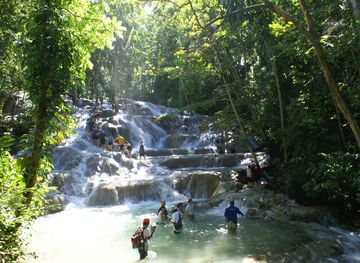
Discover Jamaica: A Caribbean paradise with stunning beaches, rich culture, and thrilling adventures. Experience the island's vibrant music, delicious cuisine, and warm hospitality.
Explore Jamaica