

Free Middlesex County Travel Guide & Mobile App
Explore Middlesex County with free travel guides. Discover regional history, expert tips, proposed trips, and audio guides on web or mobile app.


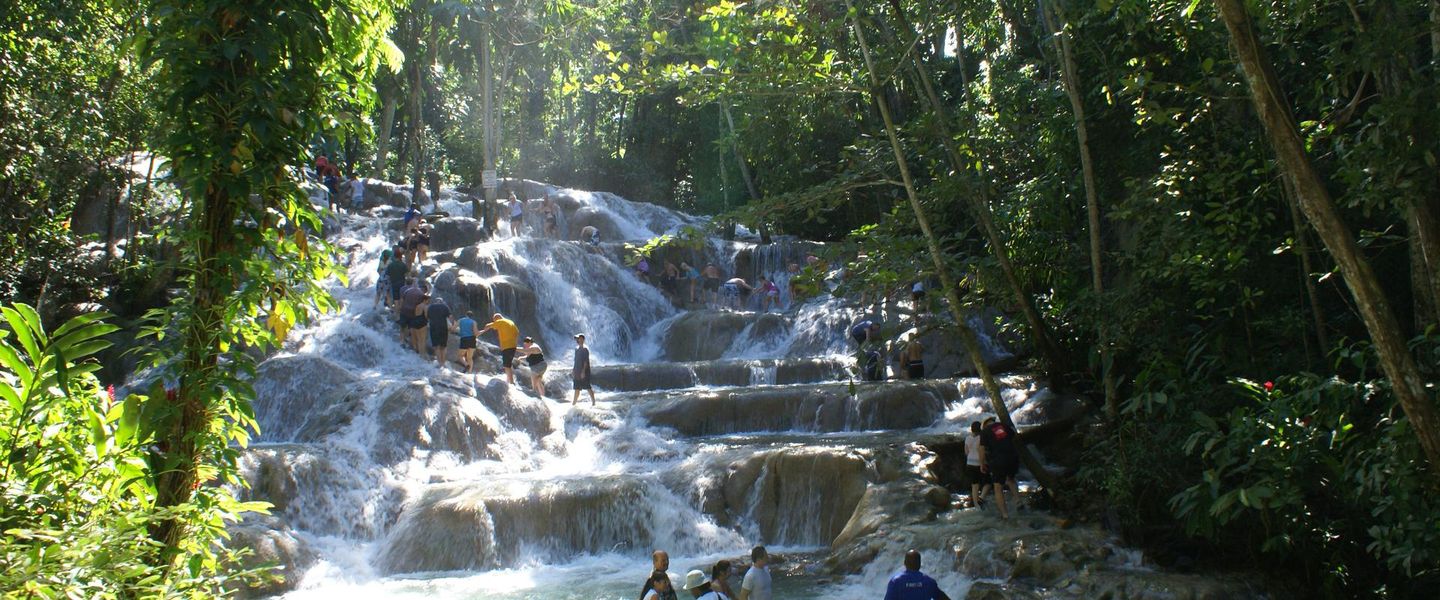


Explore Middlesex County’s Jamaican heritage, north-coast waterfalls, limestone landscapes, market towns and cooler inland hills from varied regional bases.
Read more about Middlesex County
When is the best time to visit Middlesex County?
Best: July–September · 23–26°C| Month | High (°C) | Rainfall (mm) |
|---|---|---|
| January | 6 | 80 |
| February | 6 | 70 |
| March | 9 | 80 |
| April | 14 | 90 |
| May | 20 | 100 |
| June | 23 | 100 |
| July (best) | 26 | 90 |
| August (best) | 26 | 90 |
| September (best) | 23 | 90 |
| October | 17 | 80 |
| November | 11 | 80 |
| December | 7 | 80 |
Getting to and around Middlesex County
How to get there
Transportation
Top city travel guides in Middlesex County
The cities of Middlesex County, and the easiest places to base yourself.
-

-

-

-

-


Swipe for more cities
Destinations in Middlesex County
Resorts, valleys and scenic spots worth a trip of their own.

Swipe for more destinations
Best attractions in Middlesex County
Middlesex County’s attractions range from north-coast recreation to historic towns, caves, gardens and inland landscapes. Saint Ann is the county’s principal visitor hub, with the waterfalls of Dunn’s River, the Green Grotto Caves, heritage at Seville and the cultural significance of Nine Mile. Around Ocho Rios and Runaway Bay, visitors will find organised beach, marine and adventure activities, while Saint Mary offers a quieter mixture of coastal settlements, rural scenery and historic associations. Spanish Town provides the strongest concentration of colonial civic heritage, and nearby Saint Catherine combines historic districts with rivers, agricultural land and the more urban environment of Portmore. Mandeville and the Manchester uplands suit visitors interested in cooler weather, market-town life and countryside drives, whereas Clarendon offers broad plains, farming landscapes and industrial history. Outdoor activities should be judged by season and local conditions: limestone caves, rivers, forested hills and waterfalls can become hazardous after heavy rain. The county is best experienced through a balanced itinerary rather than a checklist, since the coastal resort landscape, former capital, agricultural interior and industrial south each reveal a different part of central Jamaica.
-
Recreation center
Braco Stables
Discover the natural beauty of Jamaica at Braco Stables, where adventure meets relaxation in a stunning equestrian environment.
-
Tour operator
Best Of Jamaica Adventure Tours Ltd
Experience Jamaica's breathtaking landscapes and vibrant culture with Best Of Jamaica Adventure Tours Ltd, a premier tour operator for unforgettable adventures.
-
Distillery
Worthy Park Estate
Discover the rich heritage of Jamaican rum at Worthy Park Estate, where tradition meets craftsmanship in a breathtaking setting.
-
Tourist attraction
Firefly Estate
Experience the historical beauty of Firefly Estate in Galina, Jamaica - a serene retreat with breathtaking views and rich cultural heritage.


Best landmarks in Middlesex County
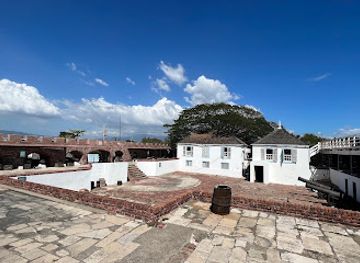
Spanish Town’s historic core is Middlesex County’s most important architectural landmark landscape. The former capital’s central square, the Old King’s House area, the Rodney Memorial and the House of Assembly reflect Jamaica’s long period of colonial administration, although the town remains a living commercial centre rather than a preserved museum district. In Saint Ann, Seville’s archaeological and historic setting marks the site of an early Spanish colonial capital and later plantation development, while Dunn’s River is both a natural feature and one of the county’s most recognisable visitor symbols. Nine Mile has cultural and biographical significance as the birthplace and burial place associated with Bob Marley. Mandeville’s elevated setting and civic streets express the character of Jamaica’s central highlands, while the limestone formations of Saint Ann and Saint Mary help explain the caves, springs and rugged terrain found across the north. In Clarendon and Saint Catherine, broad agricultural plains, former estate landscapes and industrial sites provide less theatrical but important evidence of the county’s economic history. These landmarks are best understood as connected signs of settlement, colonial power, Jamaican culture, geology and modern development rather than as isolated scenic stops.
-
Park
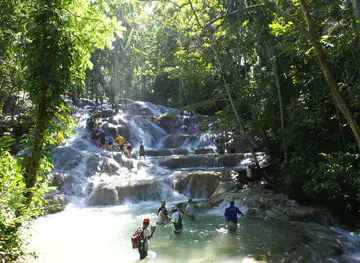
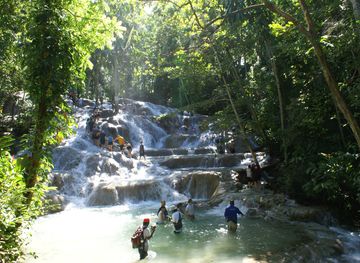
The World Famous Dunn's River Falls & Park
Discover the breathtaking beauty and exhilarating fun of Dunn's River Falls & Park in Ocho Rios, Jamaica, a must-visit Caribbean attraction.
-
Park
Emancipation Park
Explore Emancipation Park in Kingston, Jamaica, where nature, history, and culture unite in a serene urban oasis.
-
Museum
Bob Marley Museum
Discover the life and legacy of Bob Marley at the Bob Marley Museum, a cultural gem in Kingston showcasing the rhythm of reggae and its iconic figure.
-
Fortress
Fort Charles
Discover the captivating history and breathtaking views at Fort Charles, a must-visit fortress in Jamaica's Port Royal.


Explore Middlesex County on the map
Plan your trip on one map. See where the top cities, national parks and sights are, and book hotels and experiences in a few clicks.
Best hotels in Middlesex County
Best restaurants in Middlesex County
Dining across Middlesex County reflects Jamaica’s wider culinary tradition while changing noticeably between resort coast, market town and countryside. Along the Saint Ann and Saint Mary coasts, menus commonly feature fish, prawns, lobster where seasonally available, rice and peas, festival, escovitch preparations and grilled or steamed seafood. Jerk cooking, patties, curry goat, stewed chicken, soups and porridge are widely encountered in local eateries, roadside kitchens and casual restaurants rather than belonging to one single parish. Manchester’s cooler uplands and the agricultural districts of Clarendon and Saint Catherine supply fruit, vegetables, provisions and other ingredients for town markets; seasonal produce may include mangoes, bananas, citrus, yams and other root crops. Ocho Rios offers the broadest range of hotel dining and international menus, while Mandeville, Spanish Town and May Pen are better places to observe everyday Jamaican eating through bakeries, cafés, cook shops and markets. Prices, service styles and menu availability vary, so asking what is freshly prepared is often more useful than relying on a fixed regional dish list.
-
Jamaican
Murray's Fish and Jerk Hut
Experience the vibrant flavors of Jamaica at Murray's Fish and Jerk Hut – where every dish tells a story.
-
Jamaican
Little Ochie Seafood Restaurant & Bar
Experience authentic Jamaican seafood at Little Ochie Seafood Restaurant & Bar—where every dish tells a story of flavor and culture.
-
Jamaican
Miss T's Kitchen
Discover the heart of Jamaican cuisine at Miss T's Kitchen in Ocho Rios – where every dish tells a story.
-
Restaurant
Bamboo Blu
Experience the best of Jamaican cuisine at Bamboo Blu, where fresh flavors meet stunning ocean views in a vibrant beachside setting.


Best bars in Middlesex County
Nightlife in Middlesex County is concentrated along the north coast and in the larger towns rather than spread evenly across the countryside. Ocho Rios has the widest selection of hotel bars, rum bars, restaurants, live-music settings and late venues, with activity often shaped by resort occupancy and cruise traffic. Other Saint Ann and Saint Mary coast communities offer smaller bars, beachside venues and informal evening gatherings, while Mandeville, Spanish Town and May Pen provide local bars, sports viewing, restaurants and occasional live entertainment. In rural districts, evening life generally centres on neighbourhood bars, family events and community music rather than nightclubs. Jamaican rum, beer, fruit drinks and locally influenced cocktails are widely available, but alcohol is not necessary to engage with the region’s evening culture. Visitors should use reputable transport after dark, confirm venue arrangements locally and remember that opening patterns can change with season, day of the week and special events.
-
Bar
John Crow's Tavern
Discover the vibrant nightlife and culinary delights at John Crow's Tavern in Ocho Rios, where every visit is a celebration of Jamaican culture.
-
Restaurant
The Ultimate Dining Nightclub and Lounge
Discover the perfect fusion of dining and nightlife at The Ultimate Dining Nightclub and Lounge in Mandeville, Jamaica.
-
Bar
Bizot Bar at GoldenEye Resort
Experience the vibrant atmosphere and exquisite cocktails at Bizot Bar, a tropical gem in Jamaica's GoldenEye Resort.
-
Grill
Top Deck
Discover Top Deck in Grateful Hill: where delicious grilled cuisine meets the excitement of a sports bar with stunning views.


Best nightclubs in Middlesex County
Nightlife in Middlesex County is concentrated along the north coast and in the larger towns rather than spread evenly across the countryside. Ocho Rios has the widest selection of hotel bars, rum bars, restaurants, live-music settings and late venues, with activity often shaped by resort occupancy and cruise traffic. Other Saint Ann and Saint Mary coast communities offer smaller bars, beachside venues and informal evening gatherings, while Mandeville, Spanish Town and May Pen provide local bars, sports viewing, restaurants and occasional live entertainment. In rural districts, evening life generally centres on neighbourhood bars, family events and community music rather than nightclubs. Jamaican rum, beer, fruit drinks and locally influenced cocktails are widely available, but alcohol is not necessary to engage with the region’s evening culture. Visitors should use reputable transport after dark, confirm venue arrangements locally and remember that opening patterns can change with season, day of the week and special events.
-
Night club
Sailors Night Club
Experience the vibrant nightlife at Sailors Night Club, where music, dance, and Jamaican culture come together for an unforgettable evening.
-
Night club
Cloud 9 Night Club & Lounge
Experience vibrant nightlife at Cloud 9 Night Club & Lounge in Mandeville, where music, dance, and delicious cocktails come together for an unforgettable evening.
-
Night club
De Spot Exotic Lounge
Discover the vibrant nightlife of Stewart Town at De Spot Exotic Lounge, where music, dance, and exotic drinks create unforgettable memories.
-
Night club
PARISVILLE NIGHT CLUB-MANDEVILLE
Discover the vibrant nightlife at Parisville Night Club in Mandeville – a top destination for music, dancing, and unforgettable experiences.



Best shops in Middlesex County
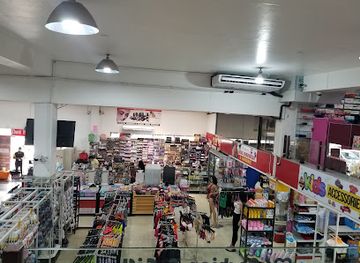
Shopping in Middlesex County is most varied in Ocho Rios, where craft markets, resort retail and shops selling Jamaican food products, woodwork, textiles, jewellery and souvenirs serve a large visitor trade. Bargaining may be expected in some craft settings, but prices and payment arrangements should be established politely before purchase. Spanish Town, Mandeville, May Pen and Port Maria offer a more everyday shopping experience through town centres, bakeries, supermarkets, local boutiques and produce markets. Fresh fruit, vegetables, spices, coffee, rum and packaged Jamaican foods are practical gifts, provided they can legally enter the traveller’s destination country. Rural markets and roadside stalls may offer seasonal produce and handmade goods, while galleries and craft outlets are more likely to be found in established visitor areas than in remote districts. Large commercial shopping centres are concentrated around the county’s bigger urban and resort zones; the interior is better suited to market browsing and locally made products than to extensive luxury retail.
-
 Shopping mall
Island Village Jamaica
Experience the vibrant fusion of culture, shopping, and dining at Island Village Jamaica, a must-visit destination in Ocho Rios.
-
Clothing store
CARBY'S SOUVENIR DISCOUNT CENTRE & CRAFT VILLAGE
Explore Kingston's vibrant culture at Carby's Souvenir Discount Centre & Craft Village, where unique clothing and crafts await every visitor.
-
Clothing store
MK Fashion & Gift
Explore MK Fashion & Gift in Ocho Rios for unique clothing and authentic Jamaican souvenirs that embody the island's vibrant culture.
-
Department store
Sinclair's Bargain Center
Explore unbeatable deals and a diverse selection at Sinclair's Bargain Center, the ultimate shopping destination for savvy travelers.


Get your free copy of our complete guide to Middlesex County, delivered straight to you.
Everything on this page, from attractions and restaurants to essentials and local phrases, in one PDF you can read offline, print or share.
Already have an account? Sign in
Your Middlesex County guide is ready.
We'll send it to · Not you? Sign out

Getting your guide ready…
We are putting together a fresh copy of the Middlesex County guide. This can take up to a minute.
This can take a few moments. If your browser asks, choose Allow so the download can start. You'll find the guide in your Downloads folder.
Nothing happened? Download it again
Sorry, the guide is taking longer than usual. Please try again in a minute, or get it by email instead.
Middlesex County essentials
Currency and Payment
Safety
Emergency Situations
Do's and Don'ts
Local Tips
From Eve
Local phrases worth knowing
You don't need to get them perfect. A few words go a long way, and locals appreciate the effort.
Basics
| English | Local | Say it |
|---|---|---|
| Hello | Wah gwaan | [Wah gwohn] |
| Goodbye | Likkle more | [Lik-l more] |
| Yes | Yea | [Yea] |
| No | No | [No] |
| Please/You're welcome | Pleas/No problem | [Pleas/No prob-lum] |
| Thank you | Tanks | [Tanks] |
| Excuse me/Sorry | Scuse mi/Sorry | [Skewz mi/Sor-ree] |
| How are you? | How yuh do? | [How yuh do?] |
| Fine. And you? | Mi fine. And yuh? | [Mi fine. And yuh?] |
| Do you speak English? | Yuh speak English? | [Yuh speak English?] |
| I don't understand | Mi nuh undastand | [Mi nuh un-dah-stand] |
Eating & Drinking
| English | Local | Say it |
|---|---|---|
| I'd like to see the menu, please | Mi wud like fi si di menu, pleease | [Mi wud like fi see di men-u, pleeze] |
| I don't eat meat | Mi nuh eat meat | [Mi nuh eet meat] |
| Cheers! | Cheers! | [Cheers!] |
| I would like to pay, please | Mi wud like fi pay, pleease | [Mi wud like fi pay, pleeze] |
Emergencies
| English | Local | Say it |
|---|---|---|
| Help! | Help! | [Help!] |
| Go away! | Gweh! | [Gweh!] |
| Call the Police! | Call di police! | [Call di po-lees!] |
| Call a doctor! | Call a doctor! | [Call a doc-tah!] |
| I'm lost | Mi lost | [Mi lost] |
| I'm ill | Mi sick | [Mi sick] |
Shopping
| English | Local | Say it |
|---|---|---|
| I'd like to buy... | Mi wud like fi buy... | [Mi wud like fi bye...] |
| I'm just looking | Mi jus a look | [Mi jus a look] |
| How much is it? | How much dat? | [How much dat?] |
| That's too expensive | Dat too costly | [Dat too cost-lee] |
| Can you lower the price? | Yuh can lower di price? | [Yuh can lower di price?] |
Time & Numbers
| English | Local | Say it |
|---|---|---|
| What time is it? | Wah time it? | [Wah time it?] |
| It's one o'clock | It one o'clock | [It one o'clock] |
| Half past (10) | Half past ten | [Half past ten] |
| Morning | Mornin' | [Morn-in'] |
| Afternoon | Afternoon | [Afternoon] |
| Evening | Evenin' | [Eve-nin'] |
| Yesterday | Yestaday | [Yes-ta-day] |
| Today | Today | [Today] |
| Tomorrow | Tomorrow | [Tomorrow] |
| 1 | One | [One] |
| 2 | Two | [Two] |
| 3 | Three | [Three] |
| 4 | Four | [Four] |
| 5 | Five | [Five] |
| 6 | Six | [Six] |
| 7 | Seven | [Seven] |
| 8 | Eight | [Eight] |
| 9 | Nine | [Nine] |
| 10 | Ten | [Ten] |
Transport & Directions
| English | Local | Say it |
|---|---|---|
| Where's a/the...? | Wheh di...? | [Wheh di...?] |
| What's the address? | Wah di address? | [Wah di ad-dress?] |
| Can you show me (on the map)? | Yuh can show mi (pon di map)? | [Yuh can show mi (pon di map)?] |
| When's the next (bus)? | When di next (bus)? | [When di next (bus)?] |
| A ticket (to ....) | A ticket (to ....) | [A ticket (to ....)] |
History of Middlesex County
Taíno Jamaica before European rule
Before European colonisation, Taíno communities lived throughout the area now associated with Middlesex County, using the fertile plains, rivers, forests and coastal resources of central and northern Jamaica. Archaeological evidence, including material associated with settlements around Saint Catherine and other parts of the island, shows organised communities engaged in farming, fishing, craft production and regional exchange. The Taíno legacy survives in place names, food plants and aspects of Jamaica’s cultural vocabulary, although much of their society was disrupted by Spanish conquest, disease, forced labour and displacement.
Spanish colonisation and the first capital
The Spanish established Sevilla la Nueva, commonly called Seville, on the north coast of Saint Ann in the early sixteenth century. The settlement was Jamaica’s first Spanish capital, but its location proved unsuitable and the colonial centre shifted to the area of present-day Spanish Town in Saint Catherine during the 1530s. Seville’s archaeological remains and later plantation buildings illustrate the island’s transition from Taíno society to European colonial rule. Spanish agriculture, livestock raising, Catholic institutions and enslaved labour shaped the foundations of the society later inherited and transformed by the English.
English conquest and Spanish Town’s political importance
England captured Jamaica from Spain in 1655, after which the island became an English and later British colony. Spanish Town, then known as St Jago de la Vega, became the administrative and political centre and remained Jamaica’s capital until 1872. Its square, churches, former government buildings and surviving civic architecture reflect centuries of colonial government. During this period, sugar plantations expanded across parts of Saint Catherine, Clarendon and Saint Ann, while enslaved Africans formed the majority of the population and resisted the violence and restrictions of plantation society.
Plantation economy, slavery and emancipation
Sugar, rum, livestock and provisions shaped the rural economy of central Jamaica from the seventeenth century through the abolition of slavery in 1834, followed by a four-year apprenticeship period. Estates and works such as those associated with Worthy Park in Saint Catherine and other former plantation districts left traces in landscapes, buildings and place names, though many original structures have disappeared or changed use. Emancipation transformed labour relations without ending economic inequality. Freed communities developed villages, smallholdings, churches and markets, creating social patterns that remain important in the county’s countryside.
Railways, roads and the growth of market towns
Modern transport altered central Jamaica’s geography. Jamaica’s first railway opened between Kingston and Spanish Town in 1845, later extending towards agricultural and mineral-producing districts. Roads and rail links strengthened the role of Spanish Town, May Pen and Mandeville as commercial centres, while northern ports connected plantation produce and later tourism to wider markets. Mandeville’s growth was encouraged by its healthier highland climate and administrative importance, and towns across the county expanded as transport, education and public services reached more rural communities.
Bauxite and twentieth-century industrial change
The discovery and commercial development of bauxite transformed parts of Middlesex County during the twentieth century, especially around Manchester, Clarendon and Saint Ann. Mining introduced large-scale industrial operations, altered land use and created employment, while also producing environmental and social debates over excavation, water, transport and the rehabilitation of mined land. The industry helped diversify an economy previously dominated by agriculture and remains part of the county’s contemporary identity, even though tourism, services, manufacturing and trade now contribute substantially to urban and rural livelihoods.
Independence, tourism and a changing coastline
Jamaica became independent from Britain in 1962, and the decades since have brought major changes to Middlesex. Ocho Rios and the surrounding Saint Ann coast developed into an important tourism area, supported by hotels, attractions, cruise calls and improved roads. Spanish Town, Portmore, May Pen and Mandeville expanded as population and commerce grew, while agricultural districts continued to supply domestic and export markets. The county today therefore combines colonial heritage and post-emancipation communities with modern tourism, bauxite, urban development and continuing efforts to balance economic growth with environmental protection.
Middlesex County in Photos
Browse through our photo collection highlighting the charm and character of the destination.
Neighbouring regions of Middlesex County
The closest regions to Middlesex County, if you have time for more than one.
-
-

-

-

-


Swipe for more regions
Explore more
Explore more of Jamaica
Discover Jamaica: A Caribbean paradise with stunning beaches, rich culture, and thrilling adventures. Experience the island's vibrant music, delicious cuisine, and warm hospitality.
Explore Jamaica