

Free Runaway Bay Travel Guide & Mobile App
Plan your Runaway Bay trip with Evendo. Get free guides to top attractions, restaurants, hotels, and bars. Web access or download the mobile app.


Runaway Bay, Jamaica pairs calm Caribbean beaches with Green Grotto Caves, reef excursions, coastal history and easy access to St Ann’s attractions.
Coastal Setting and Character
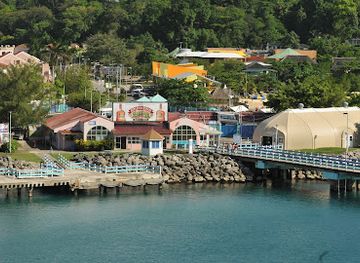
Runaway Bay is a small resort community on Jamaica’s north coast, positioned between Discovery Bay and Ocho Rios in the parish of Saint Ann. Its appeal lies in a broad sweep of Caribbean coastline, sheltered coves, pale sand and clear offshore water, with the hills of Jamaica rising inland. The town is quieter and less urban than Ocho Rios, making it suited to travellers who prefer beach time, water-based excursions and an unhurried base for exploring the surrounding coast.Read more about Runaway Bay
Caves, Reefs and Local History
Exploring Saint Ann
When is the best time to visit Runaway Bay?
Best: June–August · 31°C| Month | High (°C) | Rainfall (mm) |
|---|---|---|
| January | 30 | 56 |
| February | 30 | 49 |
| March | 31 | 45 |
| April | 31 | 34 |
| May | 32 | 24 |
| June (best) | 31 | 14 |
| July (best) | 31 | 13 |
| August (best) | 31 | 14 |
| September | 31 | 19 |
| October | 31 | 49 |
| November | 30 | 68 |
| December | 31 | 71 |
Getting to and around Runaway Bay
How to get there
Transportation
Best attractions in Runaway Bay
Runaway Bay’s attractions centre on the coast and the limestone landscape behind it. The town’s beaches and sheltered coves provide opportunities for swimming, sunbathing and snorkelling, while local marine operators organise glass-bottom boat trips, fishing and diving around the north-coast reefs. Just west in Discovery Bay, Green Grotto Caves leads visitors through chambers marked by stalactites, stalagmites and underground pools, offering a geological experience as well as a glimpse into the region’s past. Runaway Bay Golf Course provides a landscaped inland alternative to the beach, with views towards the sea from parts of the course. A short drive east brings the broader attractions of Ocho Rios, including Dunn’s River Falls and the gardens at Shaw Park, though these are outside Runaway Bay itself. The former Columbus Park area in Discovery Bay adds historical context to the coast’s early European encounters, while roadside fruit stalls and local eateries reveal everyday life beyond the resort compounds.
-
Park
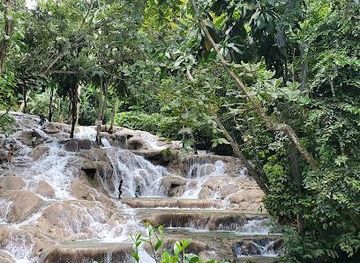
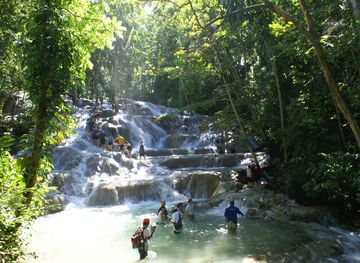
The World Famous Dunn's River Falls & Park
Explore the breathtaking beauty of Dunn's River Falls & Park, a premier natural attraction in Ocho Rios, Jamaica, perfect for adventure and relaxation.
42 min drive · 22 km from city centre
-
Tourist attraction
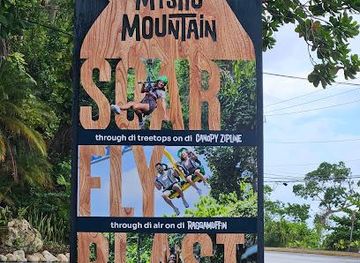
Mystic Mountain
Experience the thrill of adventure and breathtaking views at Mystic Mountain, a top tourist attraction in Ocho Rios, Jamaica.
43 min drive · 23 km from city centre
-
Beach club
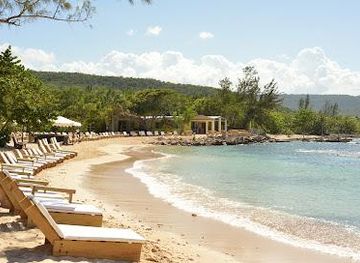
Bamboo Beach Club
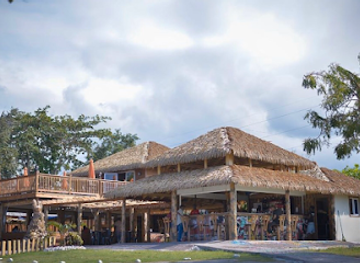
Experience the beauty of Jamaica at Bamboo Beach Club in Falmouth, where sun, sea, and mouth-watering cuisine come together for an unforgettable day.
35 min drive · 15 km from city centre
-
Resort hotel
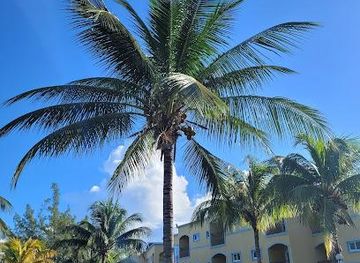
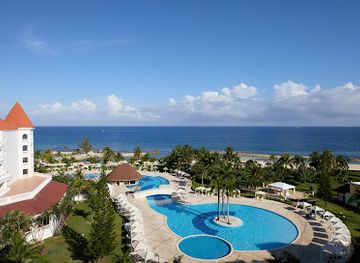
Jewel Paradise Cove Beach Resort & Spa – All-Inclusive Adult Resort
Experience the ultimate escape at Jewel Paradise Cove Beach Resort & Spa, where luxury meets tranquility on the shores of Runaway Bay, Jamaica.
7 min drive · 2.3 km from city centre
Best landmarks in Runaway Bay
Runaway Bay’s most distinctive landmarks are connected to its coastal setting and the wider history of Saint Ann. Green Grotto Caves, near Discovery Bay, is a notable natural landmark formed in Jamaica’s limestone interior; its chambers and subterranean pools also reflect the region’s use as a place of refuge and passage. The Columbus Park area in Discovery Bay commemorates the bay’s role in accounts of early European contact, although interpretations of that history must be understood within the broader consequences of colonisation. Along the shore, historic harbour landscapes and the A1 highway reveal how coastal transport shaped settlement and tourism. Inland churches, plantation-era traces and older Jamaican communities provide quieter reminders of the parish’s agricultural past. Runaway Bay’s beaches and reef-fringed coves are landmarks of landscape rather than monumental architecture, defining the town’s visual identity and its development as a resort centre.
-
 Hotel
HotelBahia Principe Luxury Runaway Bay
Experience luxurious, adults-only beachfront bliss in Runaway Bay, Jamaica. Enjoy upscale accommodations, diverse dining, and endless activities.
18 min walk · 1.4 km from city centre
-
Resort hotel
Bahia Principe Grand Jamaica
Experience all-inclusive luxury on Jamaica's Runaway Bay. Pristine beaches, diverse dining, and endless activities await at this Caribbean paradise.
5 min drive · 1.5 km from city centre
-
Park
The World Famous Dunn's River Falls & Park
Discover the breathtaking beauty of Dunn's River Falls & Park in Ocho Rios, Jamaica - a natural wonder perfect for adventure and relaxation.
42 min drive · 22 km from city centre
-
Resort hotel
Jewel Runaway Bay Beach Resort & Waterpark – All-Inclusive Resort
All-inclusive beachfront resort in Runaway Bay, Jamaica, featuring a water park, golf course, multiple dining options, and activities for all ages.
10 min walk · 0.8 km from city centre
Explore Runaway Bay on the map
Plan your Runaway Bay trip on one map. See where the top attractions, landmarks, restaurants, bars and hotels are, find what's near where you're staying, and book hotels and experiences in a few clicks.
Best hotels in Runaway Bay
Best restaurants in Runaway Bay
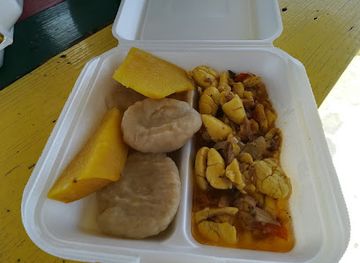
Runaway Bay’s dining scene draws on Jamaica’s classic home cooking, north-coast seafood and the relaxed habits of a resort community. Menus commonly feature jerk chicken or pork, curry goat, rice and peas, fried fish, escovitch fish, patties, festival and dishes of ackee with saltfish, Jamaica’s national dish. Small restaurants and roadside stands often provide the most informal atmosphere, while hotels and villas offer broader menus shaped by international guests. Fresh snapper, lobster when in season and other seafood reflect the town’s coastal setting, although sustainable and locally available choices vary. Fruit sellers add mangoes, pineapple, coconut and other tropical produce to the roadside food culture. Travellers can find casual eating along the main coastal route and in nearby Discovery Bay, while Ocho Rios offers a larger selection of restaurants and more formal dining rooms.
-
Restaurant
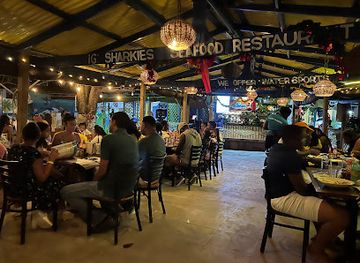
Sharkies Seafood Restaurant
Experience authentic Caribbean cuisine with stunning ocean views at Sharkies Seafood Restaurant in Runaway Bay.
12 min drive · 3.9 km from city centre
-
Restaurant
Plantation Smokehouse
Discover authentic Jamaican BBQ at Plantation Smokehouse in Richmond—where smoky flavors meet vibrant Caribbean hospitality.
31 min drive · 11 km from city centre
-
Jamaican
Ultimate Jerk Centre
Experience authentic Jamaican cuisine at Ultimate Jerk Centre - where every bite tells a flavorful story of tradition.
12 min drive · 4.1 km from city centre
-
Restaurant
Glistening Waters Restaurant and Marina
Savor fresh Jamaican seafood and rum punches at this marina restaurant overlooking Falmouth's glowing Luminous Lagoon, where bioluminescent waters create magical night tours.
51 min drive · 31 km from city centre
Best bars in Runaway Bay
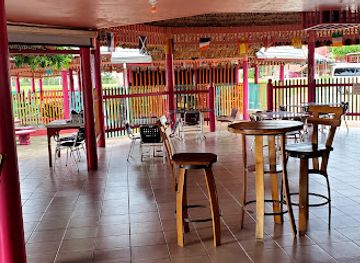
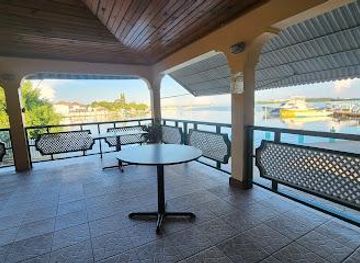
Evenings in Runaway Bay tend to be relaxed rather than built around a large independent club scene. Hotel bars and beachside venues provide rum drinks, Jamaican beer, music and sunset views, while small local bars offer a more informal setting where reggae, dancehall and conversation shape the night. Live music and themed entertainment are more commonly organised by resorts or appear as occasional events than as a continuous programme of venues. Visitors looking for a wider choice of late-night entertainment generally travel towards Ocho Rios, where bars, music venues and nightlife associated with the larger resort centre are concentrated. Transport should be arranged in advance for journeys after dark, and local advice is useful because opening patterns and event schedules can change. The atmosphere is usually sociable and unhurried, with evening activity closely tied to accommodation and the coastal road.
-
Restaurant
Milestone Restaurant Sports Bar & Grill
Experience the best of Jamaican cuisine and vibrant nightlife at Milestone Restaurant Sports Bar & Grill in Runaway Bay.
11 min drive · 3.7 km from city centre
-
Jamaican
Flavours Beach Bar and Restaurant
Discover authentic Jamaican cuisine at Flavours Beach Bar and Restaurant, where delicious dishes meet stunning seaside views in Runaway Bay.
19 min walk · 1.5 km from city centre
-
Grill
Redstep Seafood Bar & Grill
Experience the best of Caribbean cuisine at Redstep Seafood Bar & Grill in Montego Bay, where fresh seafood meets vibrant flavors.
1 h 6 min drive · 46 km from city centre
-
Grill
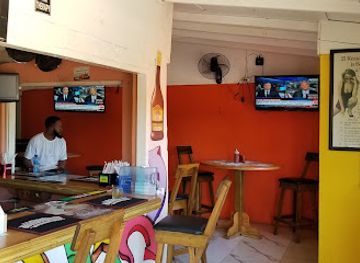
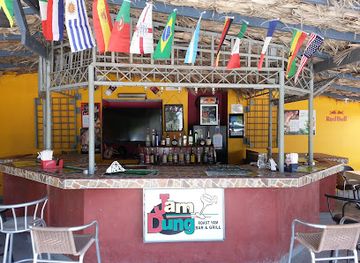
Jam Dung Food 2 Go
Experience authentic Jamaican grill cuisine at Jam Dung Food 2 Go in Runaway Bay, where every dish tells a flavorful story.
6 min drive · 2.1 km from city centre
Best nightclubs in Runaway Bay
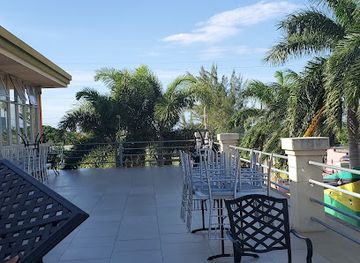
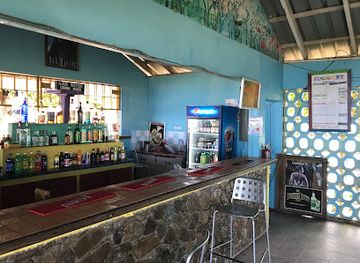
Evenings in Runaway Bay tend to be relaxed rather than built around a large independent club scene. Hotel bars and beachside venues provide rum drinks, Jamaican beer, music and sunset views, while small local bars offer a more informal setting where reggae, dancehall and conversation shape the night. Live music and themed entertainment are more commonly organised by resorts or appear as occasional events than as a continuous programme of venues. Visitors looking for a wider choice of late-night entertainment generally travel towards Ocho Rios, where bars, music venues and nightlife associated with the larger resort centre are concentrated. Transport should be arranged in advance for journeys after dark, and local advice is useful because opening patterns and event schedules can change. The atmosphere is usually sociable and unhurried, with evening activity closely tied to accommodation and the coastal road.
-
Night club
Lighthouse Bar & Grill
Lighthouse Bar & Grill: A lively night club and sports bar in Runaway Bay, Jamaica, offering great food, drinks, and entertainment for all.
12 min drive · 4.0 km from city centre
-
Night club
Sailors Night Club
Discover the heart of nightlife at Sailors Night Club, where unforgettable music and vibrant energy create the perfect party atmosphere.
24 min drive · 7.9 km from city centre
-
Bar
Tonyas Bar
Experience the true essence of Jamaican hospitality at Tonyas Bar in Runaway Bay, where relaxation meets vibrant local culture.
5 min drive · 1.7 km from city centre
-
Bar
Royal Club Sport's Bar & Games
Experience vibrant nightlife and friendly competition at Royal Club Sport's Bar & Games in Salem, Jamaica, a perfect blend of fun and relaxation.
10 min drive · 3.3 km from city centre

Best shops in Runaway Bay
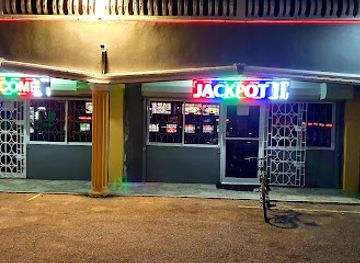
Shopping in Runaway Bay is modest and practical, centred on small supermarkets, convenience shops, roadside stalls, craft sellers and businesses serving hotel guests rather than a large retail district. Visitors may find Jamaican coffee, rum, sauces, spices, woven goods, wood carvings, paintings, T-shirts and other souvenirs, with prices and quality varying between vendors. Fresh fruit and locally prepared snacks offer a more immediate connection with the region’s food culture than imported resort merchandise. Discovery Bay provides additional local shopping, while Ocho Rios has a larger selection of craft markets, souvenir outlets and commercial shops, making it the more extensive regional option. Bargaining may be possible with some independent craft sellers, but it is not appropriate everywhere; ask politely and agree on a price before completing a purchase. Travellers should distinguish locally made items from mass-produced souvenirs and respect vendors’ working spaces when browsing.
-
Shopping mall
Island Village Jamaica
Discover Island Village Jamaica, a vibrant shopping mall in Ocho Rios offering local crafts, dining, and cultural experiences amidst tropical beauty.
44 min drive · 24 km from city centre
-
Shopping mall
Runaway Bay Commercial Center
Explore the lively Runaway Bay Commercial Center, a shopping oasis with local boutiques, international brands, and delicious dining options in Jamaica.
3 min walk · 0.3 km from city centre
-
Home goods store
Williams Hardware
Explore Williams Hardware in Runaway Bay for a unique selection of home goods and local treasures that enhance your Jamaican getaway.
4 min walk · 0.3 km from city centre
-
Shopping mall
Western Union
Discover a unique shopping experience at Western Union in Runaway Bay, where local culture meets vibrant shopping opportunities.
4 min walk · 0.3 km from city centre


Get your free copy of our complete guide to Runaway Bay, delivered straight to you.
Everything on this page, from attractions and restaurants to essentials and local phrases, in one PDF you can read offline, print or share.
Already have an account? Sign in
Your Runaway Bay guide is ready.
We'll send it to · Not you? Sign out

Getting your guide ready…
We are putting together a fresh copy of the Runaway Bay guide. This can take up to a minute.
This can take a few moments. If your browser asks, choose Allow so the download can start. You'll find the guide in your Downloads folder.
Nothing happened? Download it again
Sorry, the guide is taking longer than usual. Please try again in a minute, or get it by email instead.
Runaway Bay essentials
Currency and Payment
Safety
Emergency Situations
Do's and Don'ts
Local Tips
From Eve
Local phrases worth knowing
You don't need to get them perfect. A few words go a long way, and locals appreciate the effort.
Basics
| English | Local | Say it |
|---|---|---|
| Hello | Wa gwaan | [Wa gwaan] |
| Goodbye | Mi a guh now | [Mi a guh now] |
| Yes | Ya man | [Ya man] |
| No | Nuh | [Nuh] |
| Please/You're welcome | Likkle more | [Likkle more] |
| Thank you | Respect | [Respect] |
| Excuse me/Sorry | Sarry | [Sarry] |
| How are you? | How yuh stay? | [How yuh stay?] |
| Fine. And you? | Mi deh yah. An yuh? | [Mi deh yah. An yuh?] |
| Do you speak English? | Yu chat English? | [Yu chat English?] |
| I don't understand | Mi nuh ondastan | [Mi nuh ondastan] |
Eating & Drinking
| English | Local | Say it |
|---|---|---|
| I'd like to see the menu, please | Mi waan si di menu, pliz | [Mi waan si di menu, pliz] |
| I don't eat meat | Mi nuh nyam meat | [Mi nuh nyam meat] |
| Cheers! | Cheers! | [Cheers!] |
| I would like to pay, please | Mi waan pay, pliz | [Mi waan pay, pliz] |
Emergencies
| English | Local | Say it |
|---|---|---|
| Help! | Help! | [Help!] |
| Go away! | Gwaan weh! | [Gwaan weh!] |
| Call the Police! | Call di police! | [Call di police!] |
| Call a doctor! | Call a dokta! | [Call a dokta!] |
| I'm lost | Mi lost | [Mi lost] |
| I'm ill | Mi sick | [Mi sick] |
Shopping
| English | Local | Say it |
|---|---|---|
| I'd like to buy... | Mi waan buy... | [Mi waan buy...] |
| I'm just looking | Mi jus a look | [Mi jus a look] |
| How much is it? | A wah price dat? | [A wah price dat?] |
| That's too expensive | Dat too much | [Dat too much] |
| Can you lower the price? | Yu can drop di price? | [Yu can drop di price?] |
Time & Numbers
| English | Local | Say it |
|---|---|---|
| What time is it? | A wah time dat? | [A wah time dat?] |
| It's one o'clock | A one o'clock | [A one o'clock] |
| Half past (10) | Haaf pas ten | [Haaf pas ten] |
| Morning | Mawnin | [Mawnin] |
| Afternoon | Evenin | [Evenin] |
| Evening | Evenin | [Evenin] |
| Yesterday | Yestadeh | [Yestadeh] |
| Today | Today | [Today] |
| Tomorrow | Tomara | [Tomara] |
| 1 | One | [One] |
| 2 | Two | [Two] |
| 3 | Tree | [Tree] |
| 4 | Fo | [Fo] |
| 5 | Five | [Five] |
| 6 | Six | [Six] |
| 7 | Seven | [Seven] |
| 8 | Eight | [Eight] |
| 9 | Nine | [Nine] |
| 10 | Ten | [Ten] |
Transport & Directions
| English | Local | Say it |
|---|---|---|
| Where's a/the...? | Weh di... | [Weh di...] |
| What's the address? | A wah di address deh? | [A wah di address deh?] |
| Can you show me (on the map)? | Yu can show mi? | [Yu can show mi?] |
| When's the next (bus)? | When di nex (bus)? | [When di nex (bus)?] |
| A ticket (to ....) | A tikkit (to ....) | [A tikkit (to ....)] |
History of Runaway Bay
Taíno Jamaica and the North Coast
Before European colonisation, the north coast of Jamaica was inhabited by Taíno communities who cultivated crops, fished coastal waters and travelled between settlements by canoe. Saint Ann’s sheltered bays and fertile interior supported this way of life, although little of the pre-colonial settlement pattern remains visible in modern Runaway Bay. Archaeological evidence from the wider parish helps establish the importance of the coast before Spanish arrival, while local place names and traditions preserve fragments of the island’s indigenous past. The region’s natural harbours later attracted European navigators for the same reasons that had made it useful to earlier communities: access to the sea, freshwater and routes inland.
Spanish Settlement and Colonial Conflict
Spain established permanent control over Jamaica after 1494, with Spanish Town becoming the colonial capital and coastal harbours supporting communication and trade. The bay now known as Runaway Bay is traditionally linked with Spanish military withdrawal during the English invasion of 1655, when Spanish forces and settlers left the island. The name also reflects Jamaica’s history of resistance, as enslaved people escaped plantations and sought refuge in the island’s interior. The nearby coast therefore belongs to a wider landscape shaped by colonisation, forced labour, resistance and changing European power, rather than being only a modern leisure destination.
Plantations, Slavery and Emancipation
Under English and later British rule, Saint Ann developed within Jamaica’s plantation economy, producing sugar and other crops through the labour of enslaved Africans. Estates, ports and roads connected the parish to wider Atlantic trade, while enslaved communities created religious, musical and culinary traditions that remain central to Jamaican culture. Emancipation in 1834, followed by full freedom in 1838, transformed the island’s labour system but did not remove economic inequality or the influence of plantation landholding. The communities around Runaway Bay and neighbouring Discovery Bay grew from this complex colonial history, in which African cultural survival became a defining part of Jamaica’s identity.
From Coastal Agriculture to Tourism
During the twentieth century, Jamaica’s north coast gradually shifted from an economy centred on agriculture, shipping and local commerce towards tourism. Improved roads made the coastal settlements more accessible, and hotels and recreational facilities began to shape Runaway Bay’s shoreline. The town’s sheltered waters, beaches and proximity to Ocho Rios and inland attractions encouraged its development as a resort area. Tourism brought employment and new infrastructure, while also changing access to parts of the coast and increasing dependence on international visitors. Runaway Bay’s present form reflects this transition: a small Jamaican community integrated into a larger north-coast tourism corridor.
A Contemporary North-Coast Community
Today Runaway Bay combines permanent Jamaican communities with hotels, villas, restaurants, marine operators and services supporting visitors. It is less intensely urbanised than larger resort centres, and its identity remains closely tied to the sea, road connections along the A1 and the attractions of Saint Ann. Nearby Green Grotto Caves, Discovery Bay and Ocho Rios broaden the area’s cultural and recreational reach, while local food, music and everyday commerce keep the town connected to Jamaican life beyond the resort economy. Contemporary Runaway Bay is therefore both a holiday base and part of a living coastal parish shaped by centuries of migration, labour and exchange.
Travel experiences inspired by this city
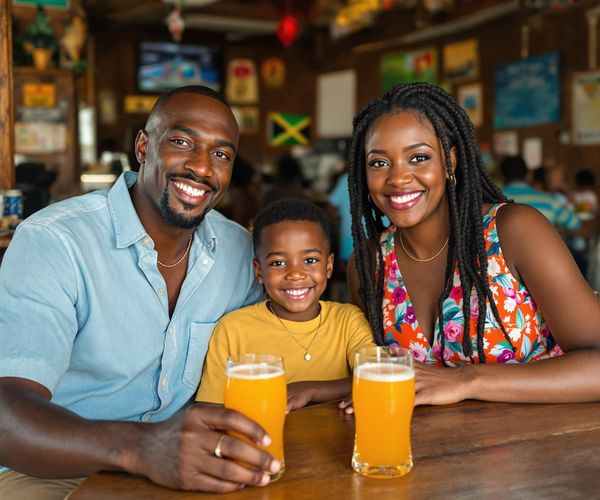

Swipe for more travel diaries
Runaway Bay in Photos
Browse through our photo collection highlighting the charm and character of the destination.
Cities near Runaway Bay
The closest cities to Runaway Bay, if you have time for more than one stop.
-

-

-

-

-


Swipe for more cities
Explore more
Explore more of Jamaica
Discover Jamaica: A Caribbean paradise with stunning beaches, rich culture, and thrilling adventures. Experience the island's vibrant music, delicious cuisine, and warm hospitality.
Explore Jamaica