

Free Portland Ridge Travel Guide & Mobile App
Explore Portland Ridge with free travel guides. Discover regional history, expert tips, proposed trips, and audio guides on web or mobile app.


Explore Portland Ridge in southern Jamaica for limestone scenery, salt wetlands, fishing communities, dry forest and the coast at Portland Point.
Read more about Portland Ridge
When is the best time to visit Portland Ridge?
Best: January–March · 29°C| Month | High (°C) | Rainfall (mm) |
|---|---|---|
| January (best) | 29 | 30 |
| February (best) | 29 | 30 |
| March (best) | 29 | 40 |
| April | 31 | 50 |
| May | 31 | 60 |
| June | 32 | 70 |
| July | 32 | 80 |
| August | 32 | 100 |
| September | 31 | 130 |
| October | 31 | 120 |
| November | 30 | 80 |
| December | 29 | 50 |
Getting to and around Portland Ridge
How to get there
Transportation
Best landmarks in Portland Ridge
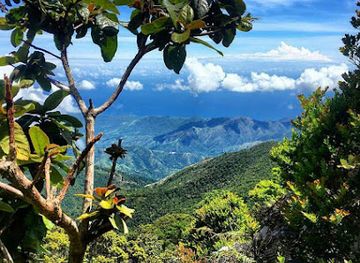
Portland Point is the defining geographical landmark of the area, marking the southernmost tip of mainland Jamaica and giving the surrounding coastline a clear sense of direction and place. Its significance is primarily geographical and maritime: low coastal terrain, open water and the meeting of land and sea create a stark contrast with Jamaica’s mountainous interior. The limestone formations of Portland Ridge are another important natural landmark, with pale rock, dry woodland and uneven terrain illustrating the island’s geological structure. Around the coastal settlements, salt ponds and wetland margins are notable landscape features rather than monumental buildings, revealing how water, evaporation and seasonal conditions have shaped local livelihoods. Portland Cottage and Jackson Bay are culturally important working settlements whose boats, shorelines and fishing activity help explain the human geography of the ridge. The wider Portland Bight wetland and coastal system adds ecological significance, although its habitats are dispersed and should be visited with local guidance. Visitors should not expect a dense sequence of castles, cathedrals or grand civic architecture; Portland Ridge’s landmarks are chiefly natural, maritime and community-based.
-
 Park
The World Famous Dunn's River Falls & Park
Discover the breathtaking beauty of Dunn's River Falls & Park in Ocho Rios, Jamaica, a must-see natural attraction for every traveler.
-
Park
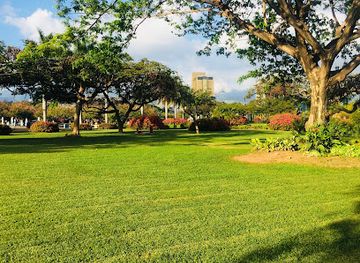
Emancipation Park
A symbol of freedom and resilience in the heart of Kingston, commemorating Jamaica's emancipation and celebrating its cultural heritage.
-
Botanical garden
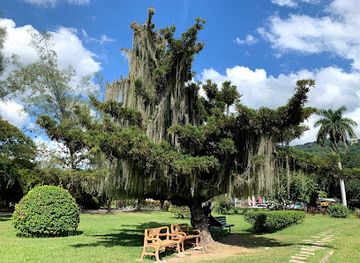
Hope Botanical Gardens
Discover Kingston's largest green space: a historic botanical garden with diverse flora, tranquil gardens, and a peaceful escape.
-
Tourist attraction
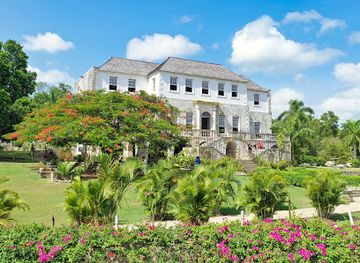
Rose Hall Great House
Explore the legendary Rose Hall Great House in Montego Bay, Jamaica, and uncover the captivating tales of the infamous White Witch, Annie Palmer.
Explore Portland Ridge on the map
Plan your trip on one map. See where the top cities, national parks and sights are, and book hotels and experiences in a few clicks.
Best hotels in Portland Ridge
Best restaurants in Portland Ridge
Portland Ridge has a modest, locally oriented food scene rather than a concentration of destination restaurants. In coastal communities, fresh fish and seafood may feature alongside rice and peas, festival, bammy, fried plantain and other Jamaican staples, although availability depends on the day’s catch and the facilities of individual vendors. Small shops, roadside cooks and simple eateries are more representative than formal dining rooms, while larger selections can be found in the principal towns outside the immediate ridge. Visitors travelling into remote areas should carry water and consider arranging food in advance, since cafés and restaurants are not continuous along the rural roads. Ask politely about what is freshly prepared, confirm prices before ordering from informal vendors and remember that locally prepared food may take time. The region’s culinary interest lies in the relationship between fishing communities, southern Jamaican ingredients and practical home-style cooking, rather than in a distinct Portland Ridge cuisine or a substantial fine-dining sector.
-
Seafood
Gloria's
Experience authentic Jamaican seafood at Gloria's in Port Royal – where tradition meets taste along the beautiful Caribbean coast.
-
Jamaican
Murray's Fish and Jerk Hut
Experience authentic Jamaican flavors at Murray's Fish and Jerk Hut in Toll Gate – where every dish tells a story.
-
Jamaican
Fyah Side Restaurant
Discover the heart of Jamaican cuisine at Fyah Side Restaurant - where every dish tells a story.
-
Restaurant
Rocky Point White Sand Beach Seafood Restaurant
Savor exquisite seafood with breathtaking ocean views at Rocky Point White Sand Beach Seafood Restaurant in Jamaica.


Best bars in Portland Ridge
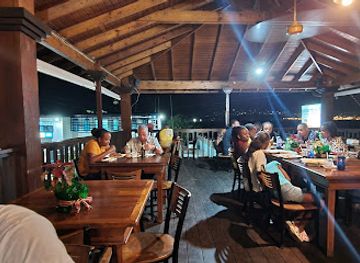
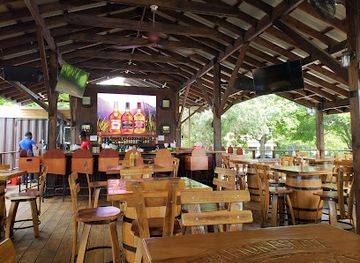
Evening life on Portland Ridge is quiet and community based. Small bars, rum shops and informal gathering places in settlements such as Portland Cottage provide opportunities for conversation, music and refreshments, while simple restaurants may serve as social venues earlier in the evening. This is not a major clubbing destination, and there is no continuous nightlife district comparable with Jamaica’s principal resort centres. Larger entertainment choices are generally found outside the immediate ridge, requiring planned transport and a safe return journey. Visitors should avoid wandering unfamiliar rural roads after dark, drink moderately and follow local advice about where to go. A relaxed evening near the coast, accompanied by food, music or conversation in an established local venue, is more characteristic of Portland Ridge than late-night dancing or a large programme of organised events.
-
Grill
The Pub Bar and Grill
Discover the vibrant taste of Jamaica at The Pub Bar and Grill, where delicious food meets lively nightlife in the heart of Kingston.
-
Restaurant
Roots 21 Bar & Kitchen
Experience the vibrant culinary scene of Port Antonio at Roots 21 Bar & Kitchen, where local flavors meet contemporary cuisine.
-
Restaurant
The Ultimate Dining Nightclub and Lounge
Discover the fusion of exquisite dining and vibrant nightlife at The Ultimate Dining Nightclub and Lounge in Mandeville, Jamaica.
-
Restaurant
Di Hip Strip Ultra Lounge
Savor the taste of Jamaica at Di Hip Strip Ultra Lounge, where delicious food meets vibrant nightlife in Port Antonio.



Best nightclubs in Portland Ridge
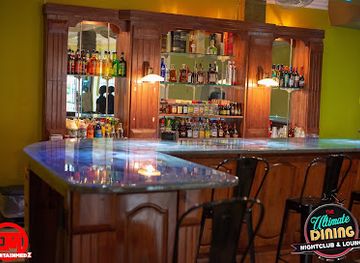
Evening life on Portland Ridge is quiet and community based. Small bars, rum shops and informal gathering places in settlements such as Portland Cottage provide opportunities for conversation, music and refreshments, while simple restaurants may serve as social venues earlier in the evening. This is not a major clubbing destination, and there is no continuous nightlife district comparable with Jamaica’s principal resort centres. Larger entertainment choices are generally found outside the immediate ridge, requiring planned transport and a safe return journey. Visitors should avoid wandering unfamiliar rural roads after dark, drink moderately and follow local advice about where to go. A relaxed evening near the coast, accompanied by food, music or conversation in an established local venue, is more characteristic of Portland Ridge than late-night dancing or a large programme of organised events.
-
Night club
Go Go Club
Discover the heartbeat of Jamaican nightlife at Go Go Club in Portmore, where energetic music and vibrant crowds create unforgettable experiences.
-
Club
Klub Ova-Dose
Dive into the energetic nightlife at Klub Ova-Dose in Portmore, Jamaica, where music, dancing, and unforgettable experiences await.
-
Night club
Cristal Nightclub
Discover the heart of Jamaican nightlife at Cristal Nightclub in Port Antonio, where music and fun come alive in a vibrant atmosphere.
-
Night club
Cloud 9 Night Club & Lounge
Dive into the heart of Mandeville's nightlife at Cloud 9 Night Club & Lounge, where music, dance, and fun come alive every night.


Best shops in Portland Ridge
Shopping on Portland Ridge is practical and small scale, centred on village shops, roadside sellers and local services rather than dedicated retail streets. Visitors may find fresh fish, seasonal produce, Jamaican snacks, drinks and everyday goods in coastal communities, while a wider choice of groceries, clothing, pharmacies and general shopping is available in larger Clarendon towns outside the immediate ridge. Craft and souvenir provision is limited, so purchases are more likely to be useful local products than a standardised range of tourist merchandise. Where legally and sustainably available, locally produced food can provide a meaningful reminder of the region, but visitors should not buy shells, coral, wildlife products or objects taken from protected habitats. Carry cash in Jamaican dollars for small transactions, ask permission before photographing or handling goods and agree prices with informal sellers in advance. For books, art, distinctive crafts or more extensive retail, plan a separate stop beyond Portland Ridge rather than expecting a resort-style shopping experience.
-
Shopping mall
Island Village Jamaica
Discover shopping, dining, and vibrant local culture at Island Village Jamaica - the heart of Ocho Rios shopping and entertainment.
-
Shopping mall
Blue Diamond Shopping Mall
Discover a shopping paradise in Montego Bay at Blue Diamond Shopping Mall, featuring diverse stores, delightful dining, and vibrant entertainment options.
-
Shopping mall
Main Street Rose Hall
Explore Main Street Rose Hall for a unique shopping experience featuring upscale boutiques, local crafts, and delicious Jamaican cuisine.
-
Shopping mall
Royal Mall
Discover Royal Mall in Port Antonio – your vibrant shopping destination for local culture, unique shops, and delightful dining experiences.



Get your free copy of our complete guide to Portland Ridge, delivered straight to you.
Everything on this page, from attractions and restaurants to essentials and local phrases, in one PDF you can read offline, print or share.
Already have an account? Sign in
Your Portland Ridge guide is ready.
We'll send it to · Not you? Sign out

Getting your guide ready…
We are putting together a fresh copy of the Portland Ridge guide. This can take up to a minute.
This can take a few moments. If your browser asks, choose Allow so the download can start. You'll find the guide in your Downloads folder.
Nothing happened? Download it again
Sorry, the guide is taking longer than usual. Please try again in a minute, or get it by email instead.
Portland Ridge essentials
Currency and Payment
Safety
Emergency Situations
Do's and Don'ts
Local Tips
From Eve
Local phrases worth knowing
You don't need to get them perfect. A few words go a long way, and locals appreciate the effort.
Basics
| English | Local | Say it |
|---|---|---|
| Hello | Wah Gwaan | [Wah Gwaan] |
| Goodbye | Likkle more | [Likkle more] |
| Yes | Yea | [Yea] |
| No | Nuh | [Nuh] |
| Please/You're welcome | No problem | [No problem] |
| Thank you | Thanks | [Thanks] |
| Excuse me/Sorry | Mi a beg yuh pardon | [Mi a beg yuh pardon] |
| How are you? | How yuh stay? | [How yuh stay?] |
| Fine. And you? | Mi good. An yuh? | [Mi good. An yuh?] |
| Do you speak English? | Yuh speak English? | [Yuh speak English?] |
| I don't understand | Mi nuh understand | [Mi nuh understand] |
Eating & Drinking
| English | Local | Say it |
|---|---|---|
| I'd like to see the menu, please | Mi wud like fi si di menu, please | [Mi wud like fi si di menu, please] |
| I don't eat meat | Mi nuh eat meat | [Mi nuh eat meat] |
| Cheers! | Cheers! | [Cheers!] |
| I would like to pay, please | Mi wud like fi pay, please | [Mi wud like fi pay, please] |
Emergencies
| English | Local | Say it |
|---|---|---|
| Help! | Help! | [Help!] |
| Go away! | Gweh! | [Gweh!] |
| Call the Police! | Call di police! | [Call di police!] |
| Call a doctor! | Call a doctor! | [Call a doctor!] |
| I'm lost | Mi lost | [Mi lost] |
| I'm ill | Mi sick | [Mi sick] |
Shopping
| English | Local | Say it |
|---|---|---|
| I'd like to buy... | Mi wud like fi buy... | [Mi wud like fi buy...] |
| I'm just looking | Mi jus a look | [Mi jus a look] |
| How much is it? | How much fi dis? | [How much fi dis?] |
| That's too expensive | Dat too pricey | [Dat too pricey] |
| Can you lower the price? | Yuh can lower di price? | [Yuh can lower di price?] |
Time & Numbers
| English | Local | Say it |
|---|---|---|
| What time is it? | Wah time it? | [Wah time it?] |
| It's one o'clock | A one o'clock | [A one o'clock] |
| Half past (10) | Half past ten | [Half past ten] |
| Morning | Mornin' | [Mornin'] |
| Afternoon | Afternoon | [Afternoon] |
| Evening | Evenin' | [Evenin'] |
| Yesterday | Yestahday | [Yestahday] |
| Today | Today | [Today] |
| Tomorrow | Tamarra | [Tamarra] |
| 1 | One | [One] |
| 2 | Two | [Two] |
| 3 | Three | [Three] |
| 4 | Four | [Four] |
| 5 | Five | [Five] |
| 6 | Six | [Six] |
| 7 | Seven | [Seven] |
| 8 | Eight | [Eight] |
| 9 | Nine | [Nine] |
| 10 | Ten | [Ten] |
Transport & Directions
| English | Local | Say it |
|---|---|---|
| Where's a/the...? | Wah di...? | [Wah di...?] |
| What's the address? | Wah di address? | [Wah di address?] |
| Can you show me (on the map)? | Yuh can show mi (pan di map)? | [Yuh can show mi (pan di map)?] |
| When's the next (bus)? | When di next (bus)? | [When di next (bus)?] |
| A ticket (to ....) | A ticket (to ....) | [A ticket (to ....)] |
History of Portland Ridge
Taíno Settlement and the Southern Coast
Before European colonisation, Jamaica was inhabited by Taíno communities whose settlements and activities were connected to the island’s coastal waters, rivers and fertile lowlands. Southern Clarendon’s limestone terrain, wetlands and access to the sea formed part of a wider environment supporting fishing, gathering and cultivation. Archaeological evidence across Jamaica shows the importance of coastal resources and inland water systems, although the surviving record around Portland Ridge is less monumental than that of some better-known sites. The pre-colonial landscape remains an important part of understanding the region as a lived environment rather than an empty wilderness encountered by later visitors.
Spanish and British Colonial Expansion
Spanish rule in Jamaica began in the sixteenth century, followed by the British conquest of the island in 1655. Under British colonial administration, southern Jamaica became increasingly connected to plantation agriculture, landholding and export commerce. Clarendon’s lowlands were more suitable for cultivation than the driest parts of the ridge, while coastal inlets and settlements supported movement, fishing and local trade. Colonial transformation brought profound disruption to Taíno communities and relied on the enslavement of Africans, whose labour and descendants became central to Jamaica’s society, economy and culture.
Sugar, Slavery and Estate Agriculture
For much of the eighteenth and nineteenth centuries, sugar production shaped Clarendon’s economy and settlement patterns. Plantations depended on enslaved African labour before emancipation in 1834, with full freedom arriving in 1838. The limestone country around Portland Ridge was less uniformly productive than wetter agricultural districts, but it formed part of the wider network of estates, roads, markets and coastal activity that supported southern Jamaica. After emancipation, formerly enslaved people established independent communities and livelihoods, while the plantation economy gradually changed. The region’s scattered settlements and working countryside carry traces of this long transition.
Salt Ponds, Fishing and Coastal Livelihoods
The shallow wetlands and seasonally dry conditions of southern Clarendon encouraged salt making and other coastal activities alongside fishing. Salt ponds depend on the evaporation of seawater or brackish water and require close knowledge of weather, water levels and the landscape. In communities such as Portland Cottage, fishing and small-scale commerce have remained important elements of local life, even as employment and economic opportunities have changed. These activities connect the human history of Portland Ridge to its natural environment: the same wetlands, lagoons and sheltered coastal waters that attract birds and marine life have also supported generations of residents.
Emancipation, Rural Communities and Modern Jamaica
The post-emancipation period brought the consolidation of village life, small farming, fishing and informal trade across Jamaica. In southern Clarendon, communities developed around roads, coastal access and available agricultural land rather than around a single large urban centre. The twentieth century brought improved connections with the rest of the parish, changing markets and greater movement between rural districts and towns. Despite these changes, Portland Ridge has retained a comparatively open character, with local livelihoods and environmental concerns remaining closely linked to the condition of the coast, wetlands and dry forest.
Portland Bight Conservation and Environmental Stewardship
In modern Jamaica, the ecological importance of southern Clarendon has encouraged greater attention to the Portland Bight area and its connected wetlands, mangroves, cays, coastal waters and dry forests. Conservation work recognises that these habitats support birds, fish, reptiles and other wildlife while also sustaining communities through fishing and related activities. Portland Ridge is consequently valued not only for scenery but for its role in a larger coastal ecosystem. The contemporary challenge is to balance livelihoods, access, development and habitat protection without separating environmental conservation from the needs of local residents.
Portland Ridge in Photos
Browse through our photo collection highlighting the charm and character of the destination.
Neighbouring regions of Portland Ridge
The closest regions to Portland Ridge, if you have time for more than one.
-

-
-
-

-


Swipe for more regions
Explore more
Explore more of Jamaica
Discover Jamaica: A Caribbean paradise with stunning beaches, rich culture, and thrilling adventures. Experience the island's vibrant music, delicious cuisine, and warm hospitality.
Explore Jamaica